
Media Library for the Construction Site Diary
Browse through the gallery to get a sense of how the Walcker organ was installed at St. Antonius.
The New Play Table (March 17–July 23, 2020)
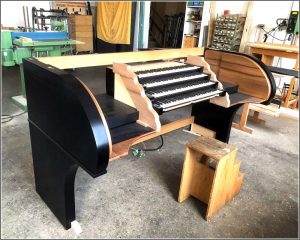
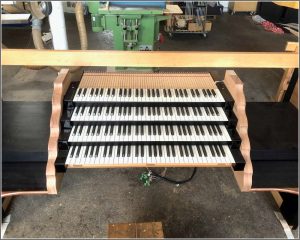
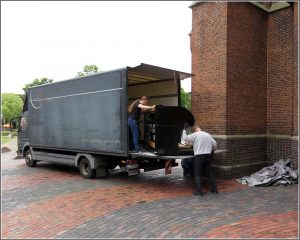
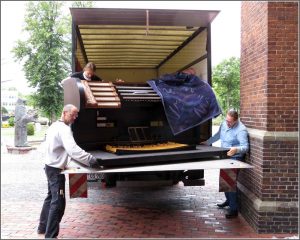


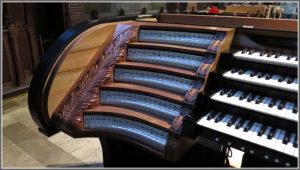
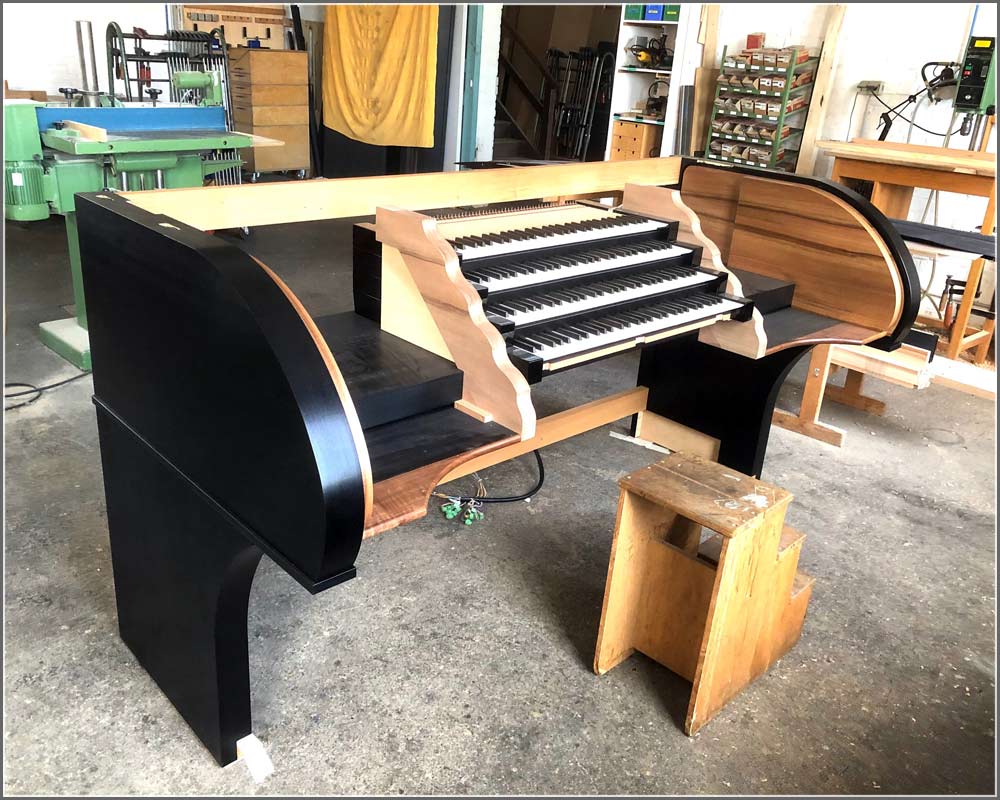
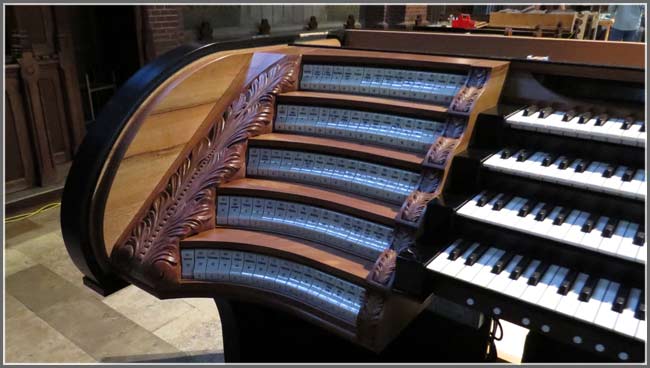
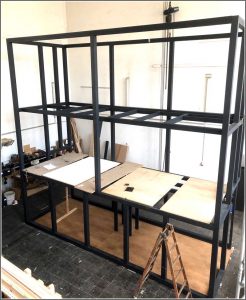
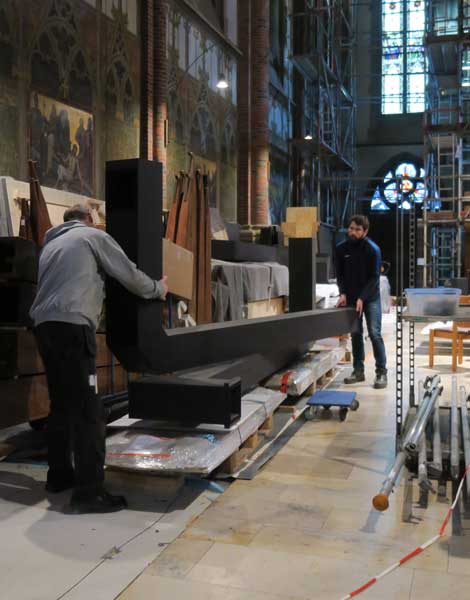
The new game table in its rough-in stage (March 17, 2020).
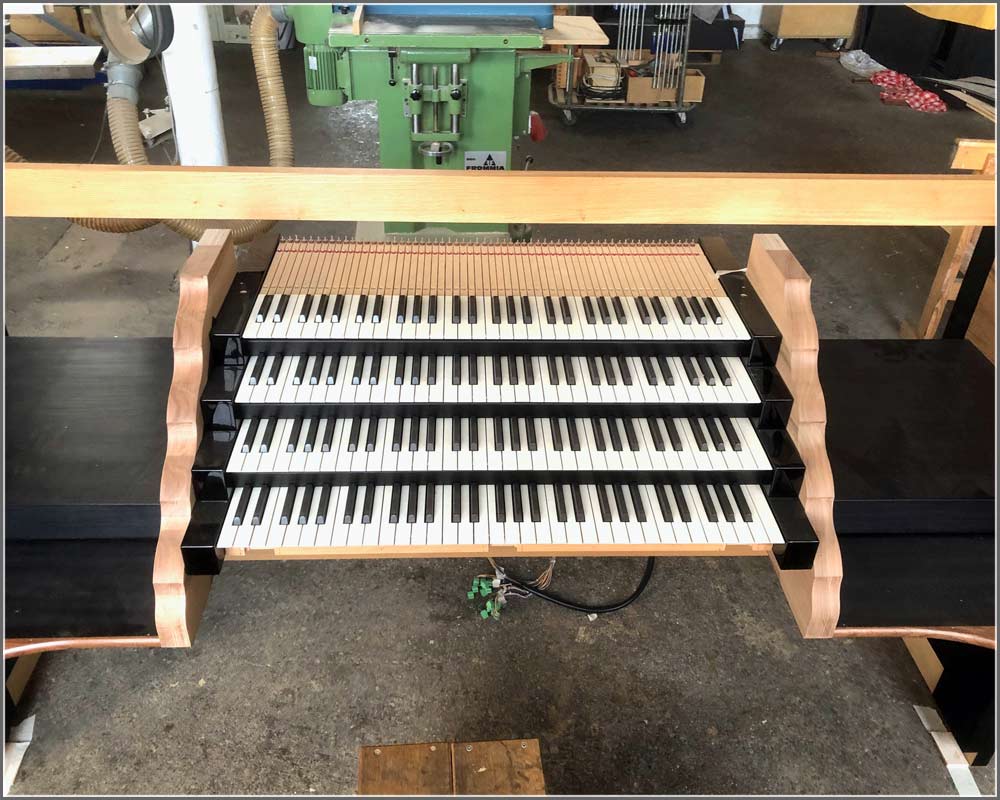

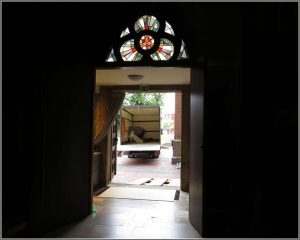
It had arrived the previous evening, but it was too late to unload the game table (July 22, 2020).
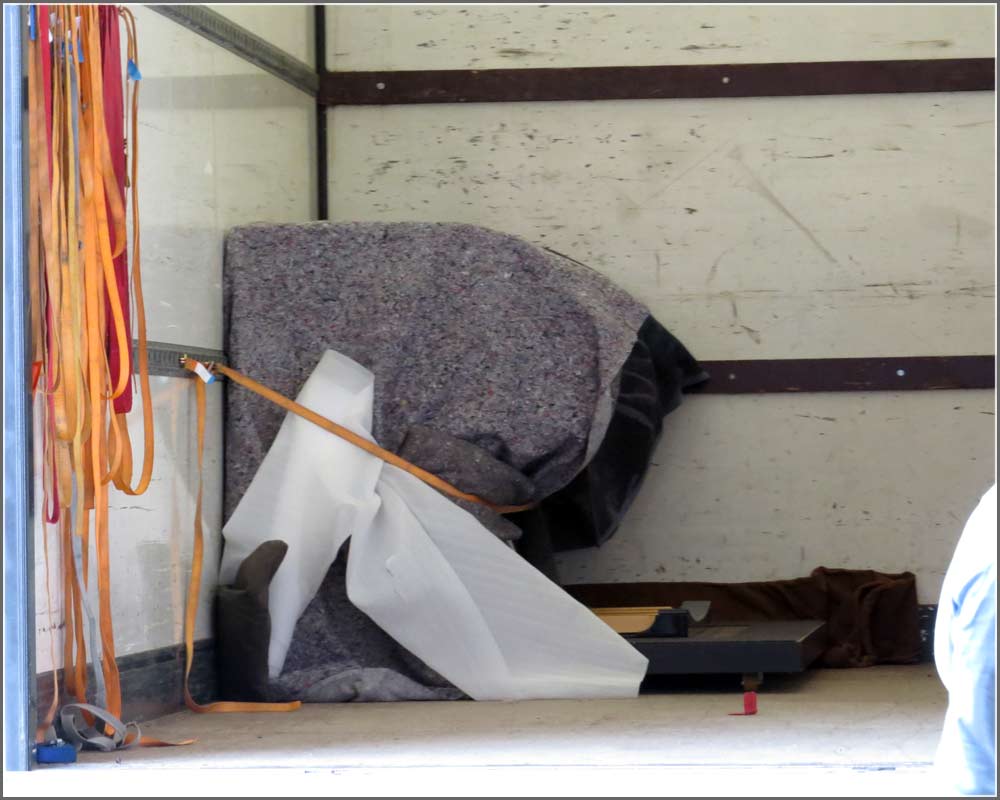
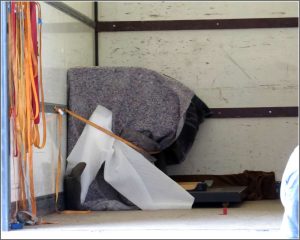
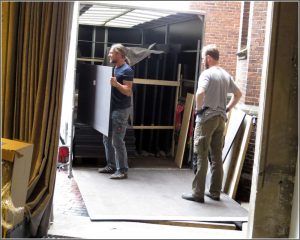
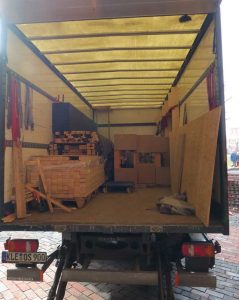
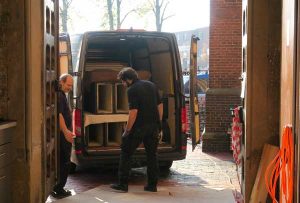
The game table was well padded and secured in the van.
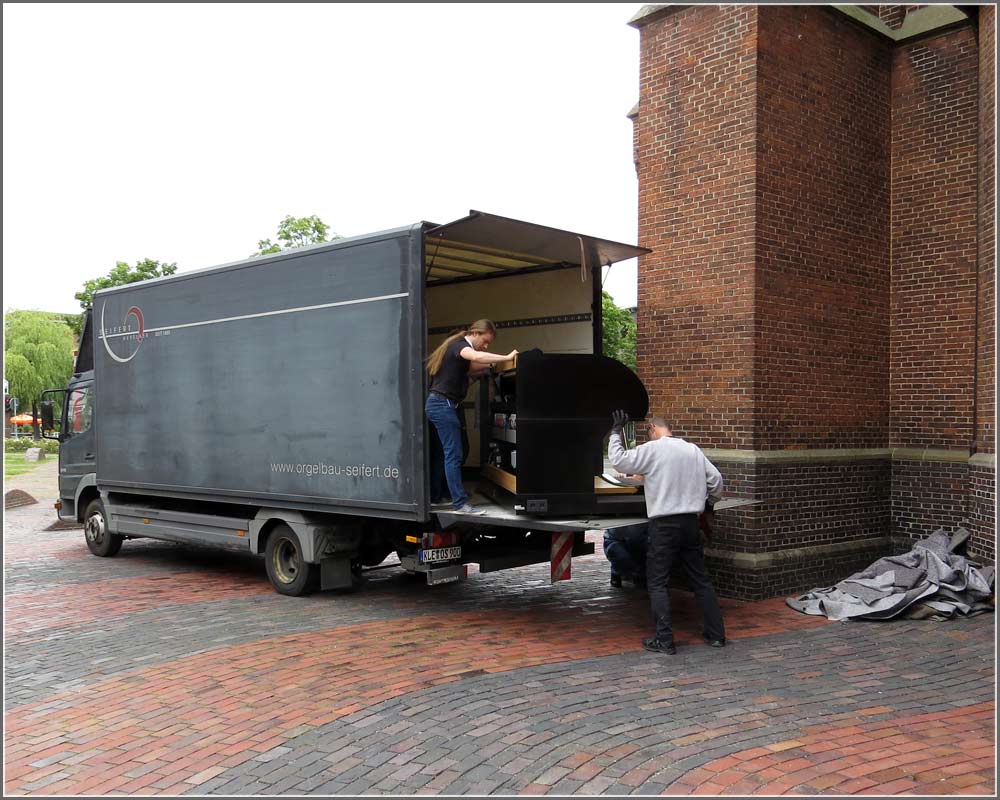
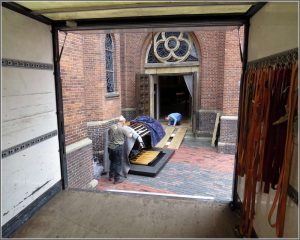
Unloading required the utmost caution.
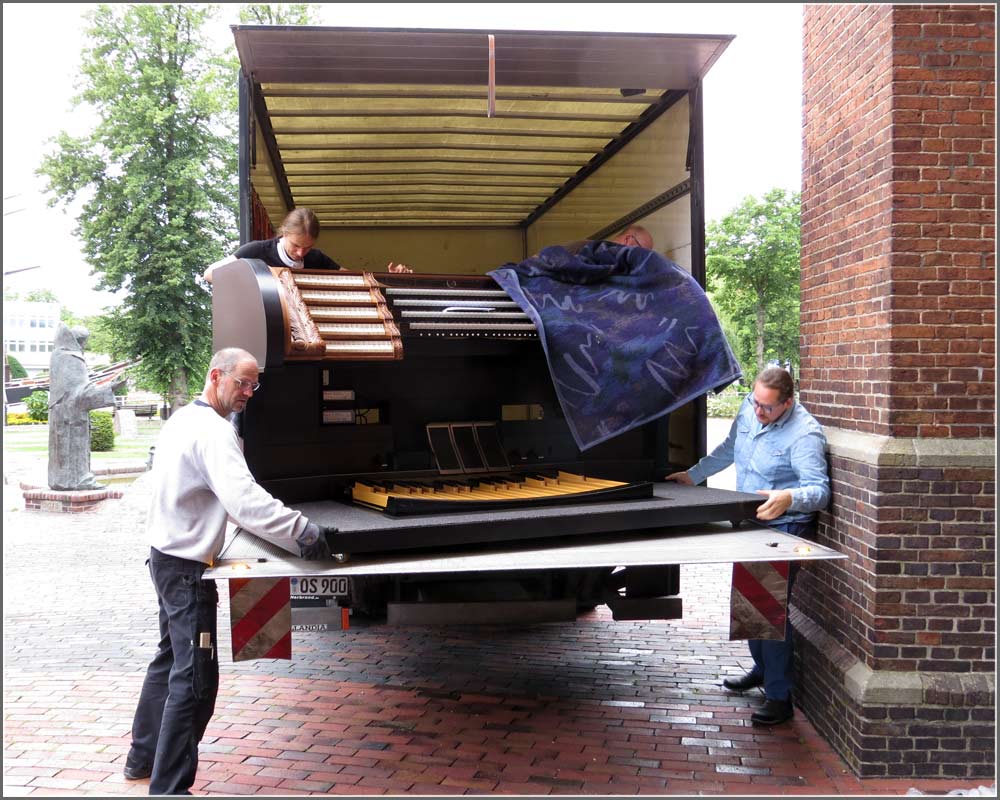
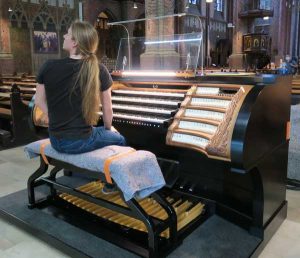
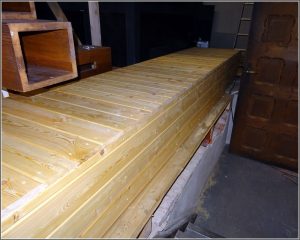
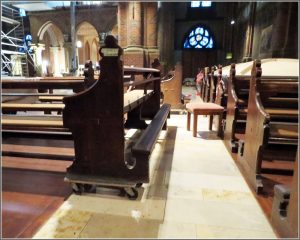
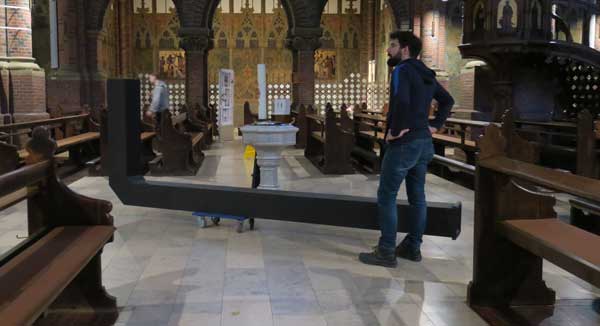
The game table, mounted on a platform with casters, can be easily moved on a flat surface.
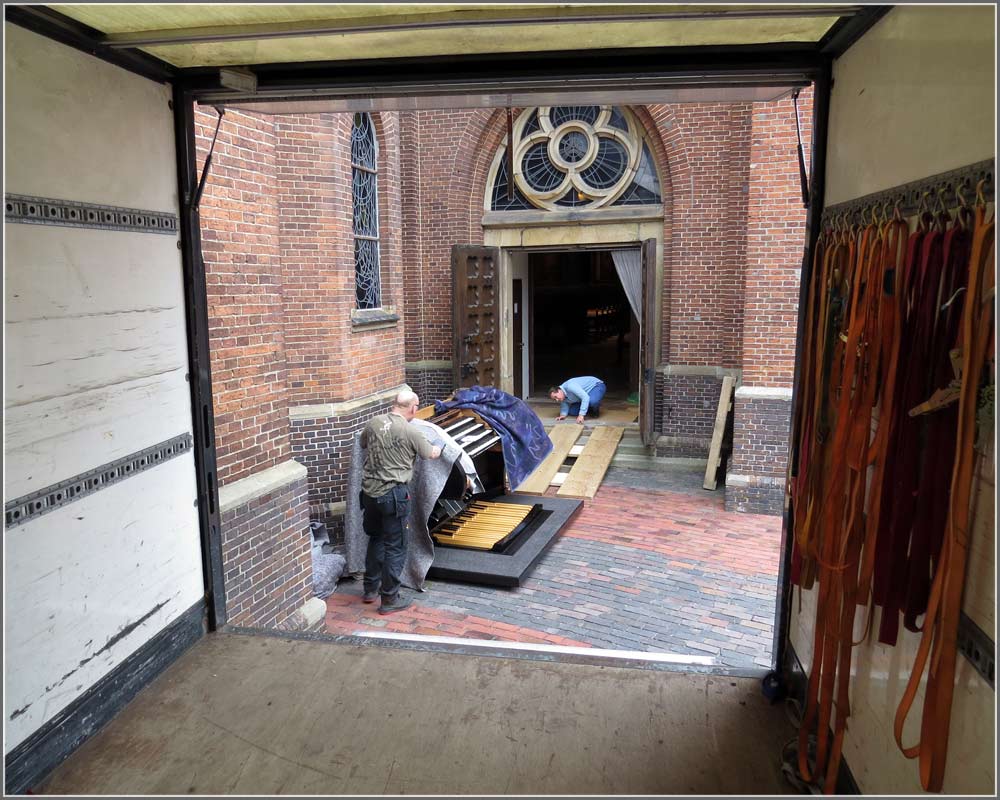

On the way to the church, there were three steps to climb, so it took a great deal of effort to push the console—which weighed about 400 kg—up the ramp.

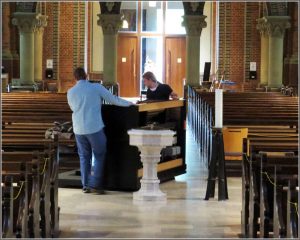
However, moving the game table on the church's tile floor is no problem.
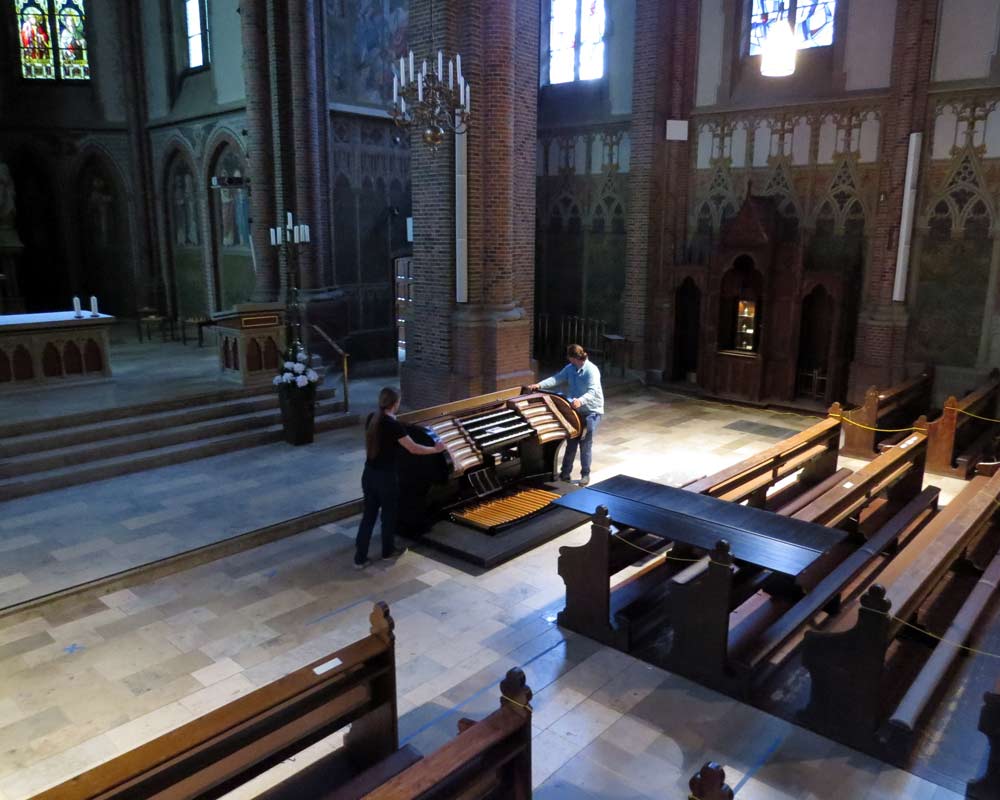
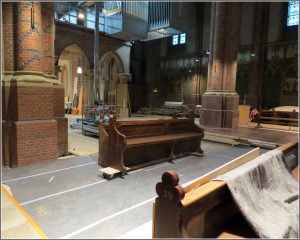
The console is now ready for final assembly in the choir loft.
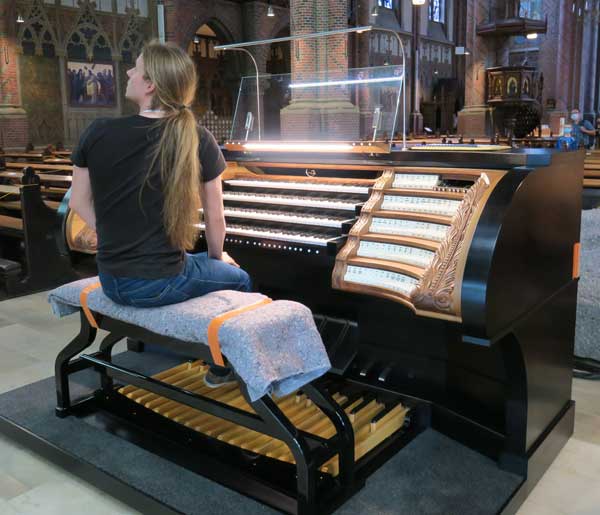
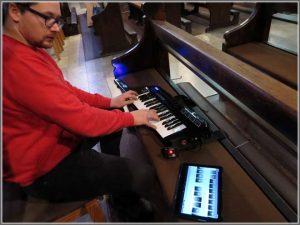
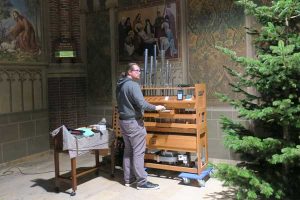
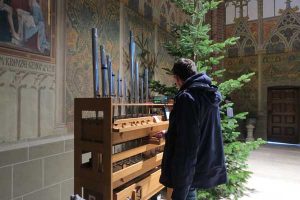
First intonation exercises from the console.
Installation of the choir organ (June 8–July 23, 2020)


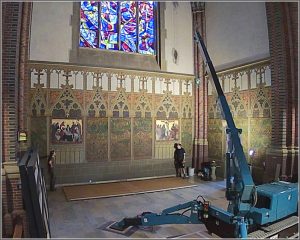
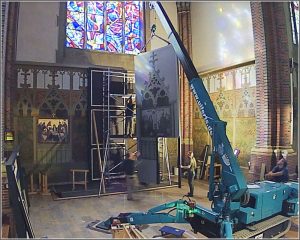

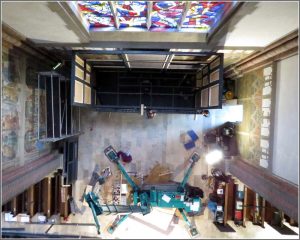

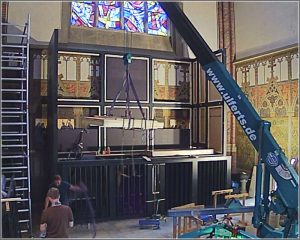

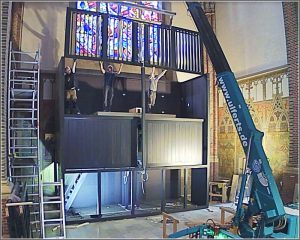
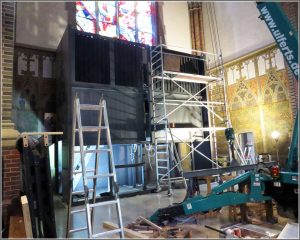
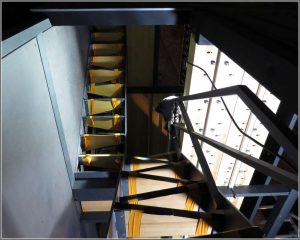
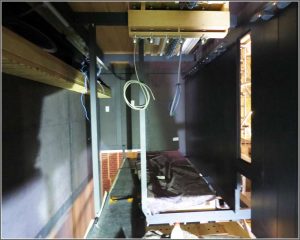
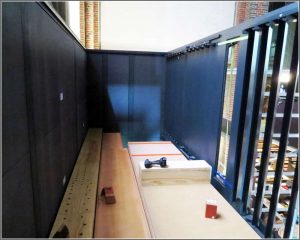
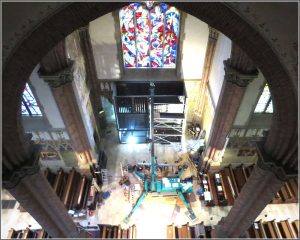
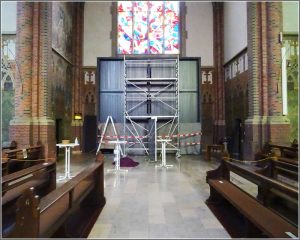
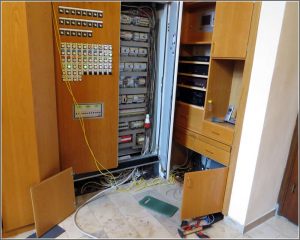

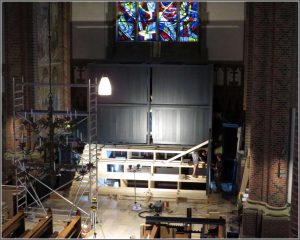
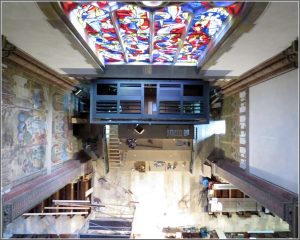
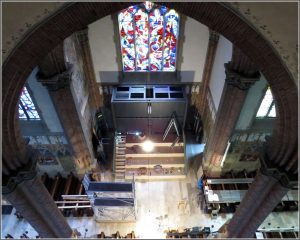
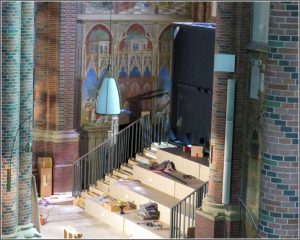
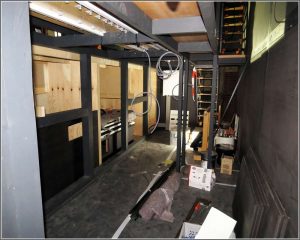


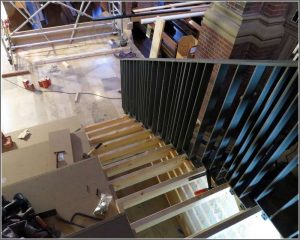
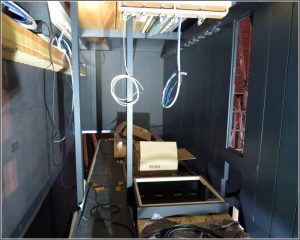
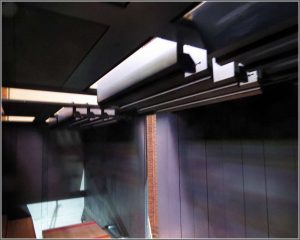

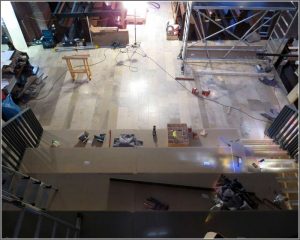
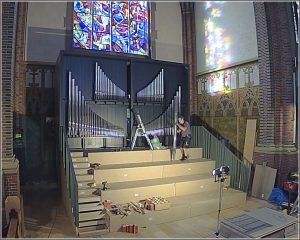

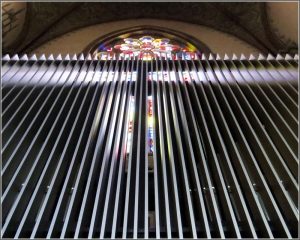
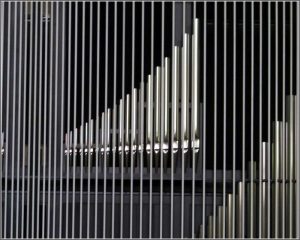

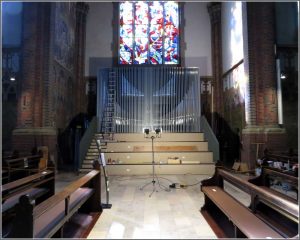
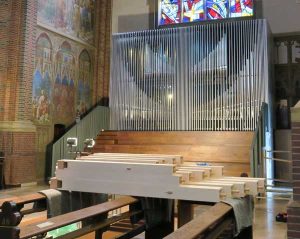
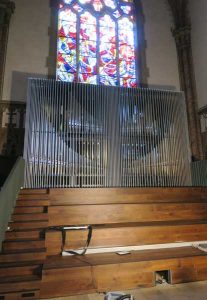
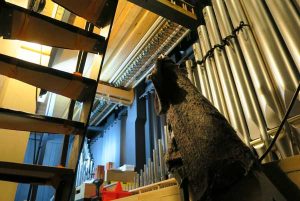

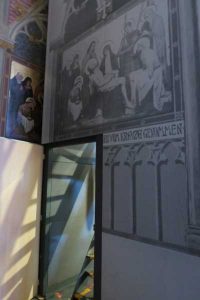

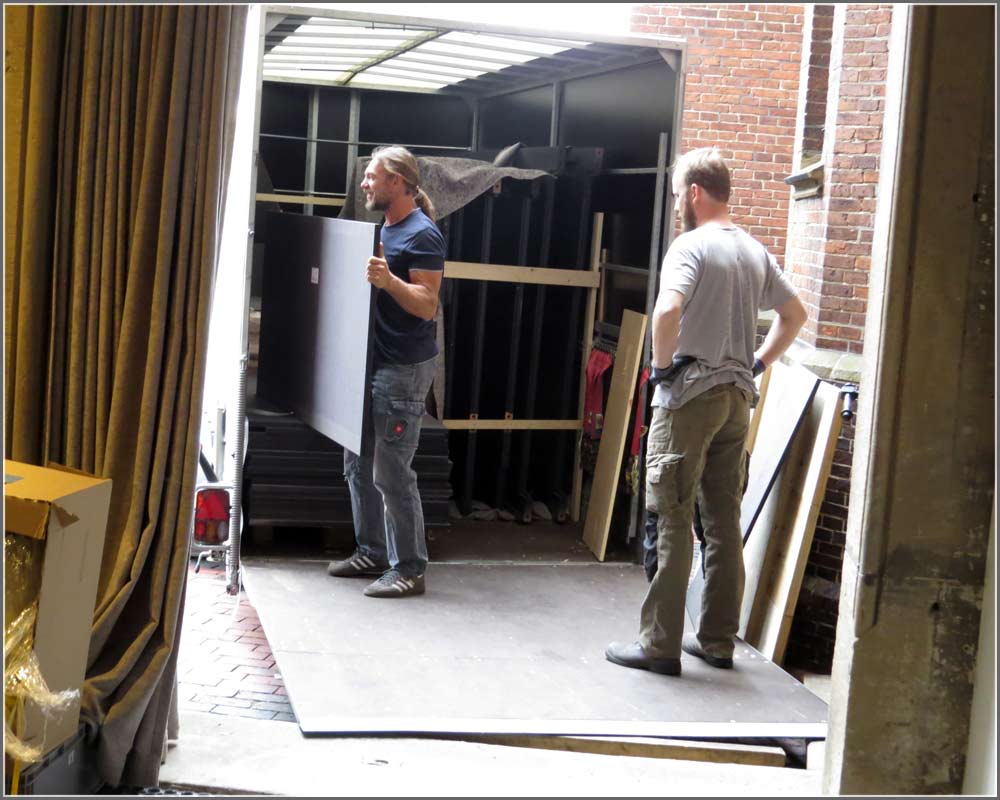
After several months of voicing the main organ, the organ builders from Seifert returned to Papenburg on June 8 to install the choir organ.
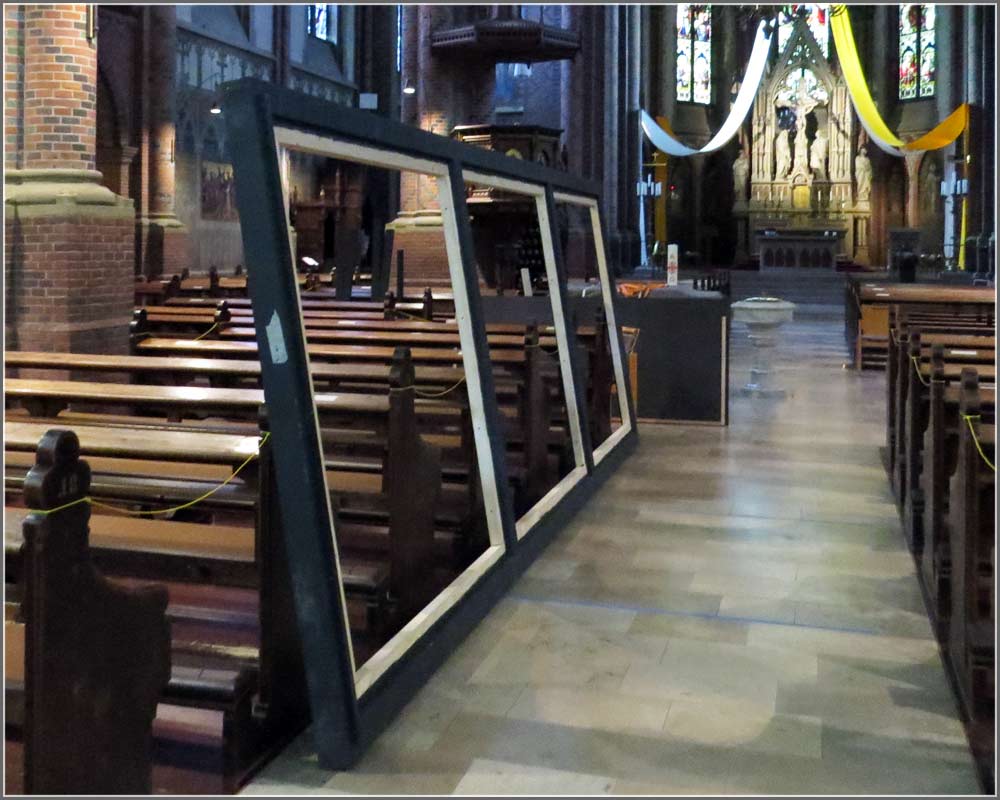
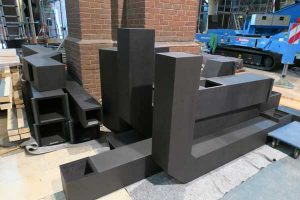
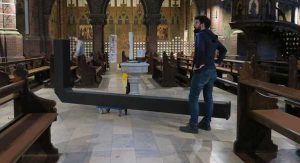
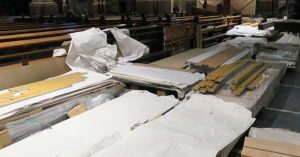
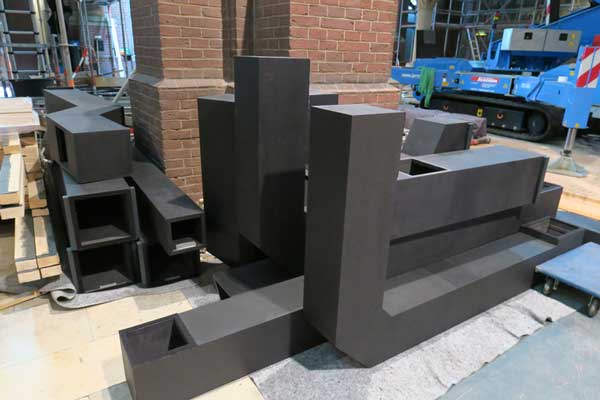
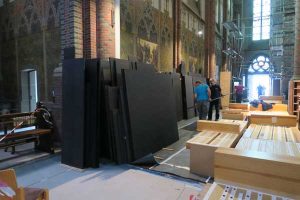
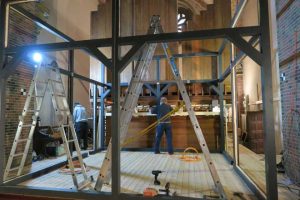
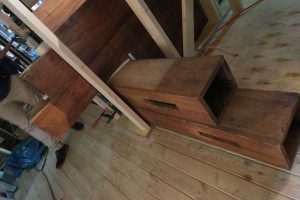
The individual pieces were first scattered throughout the church.
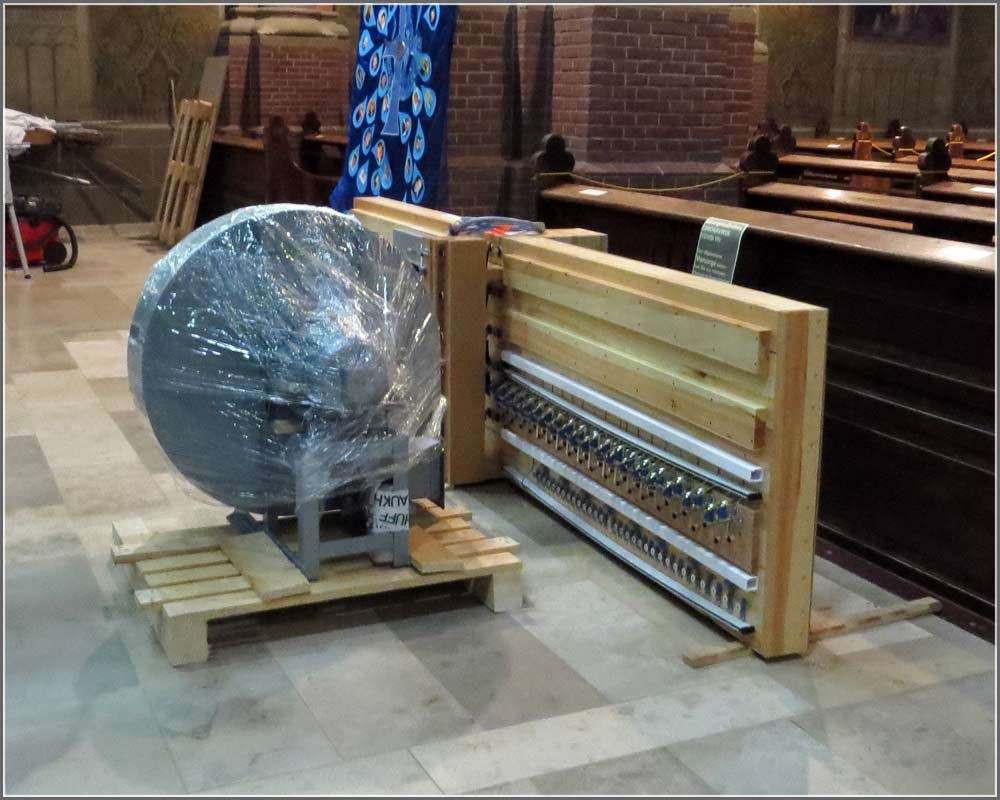
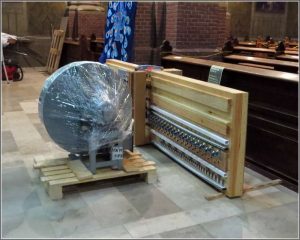
Wind machine and wind chest
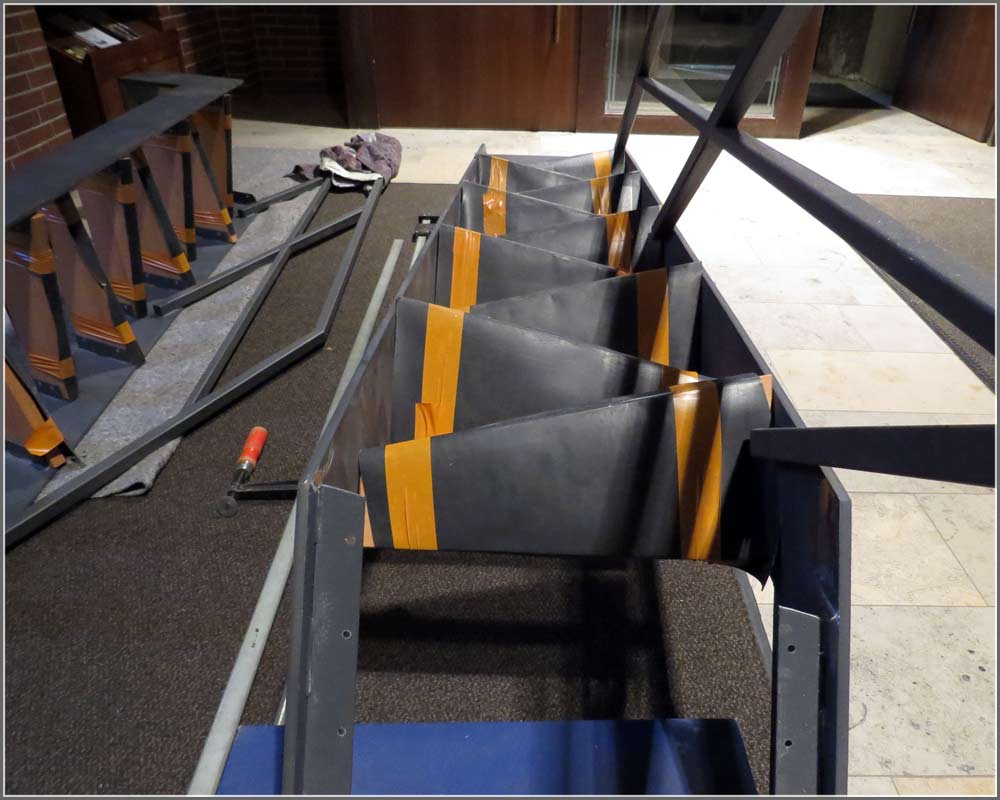
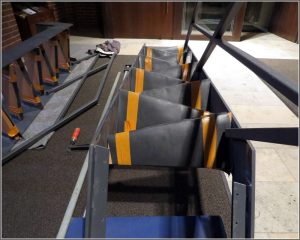
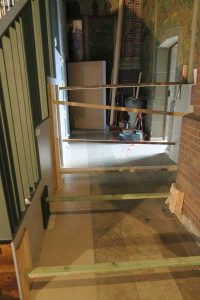
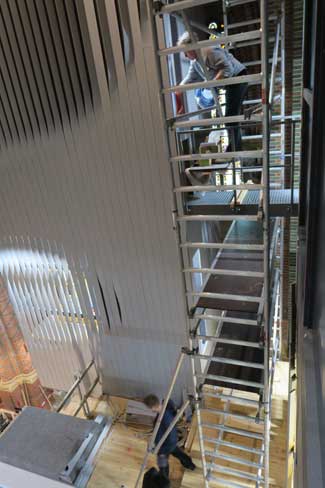
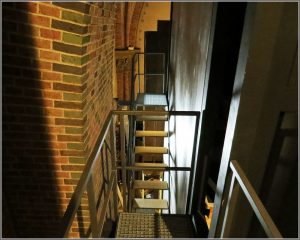
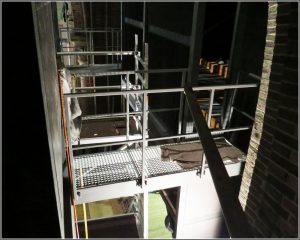
Maintenance Stairs
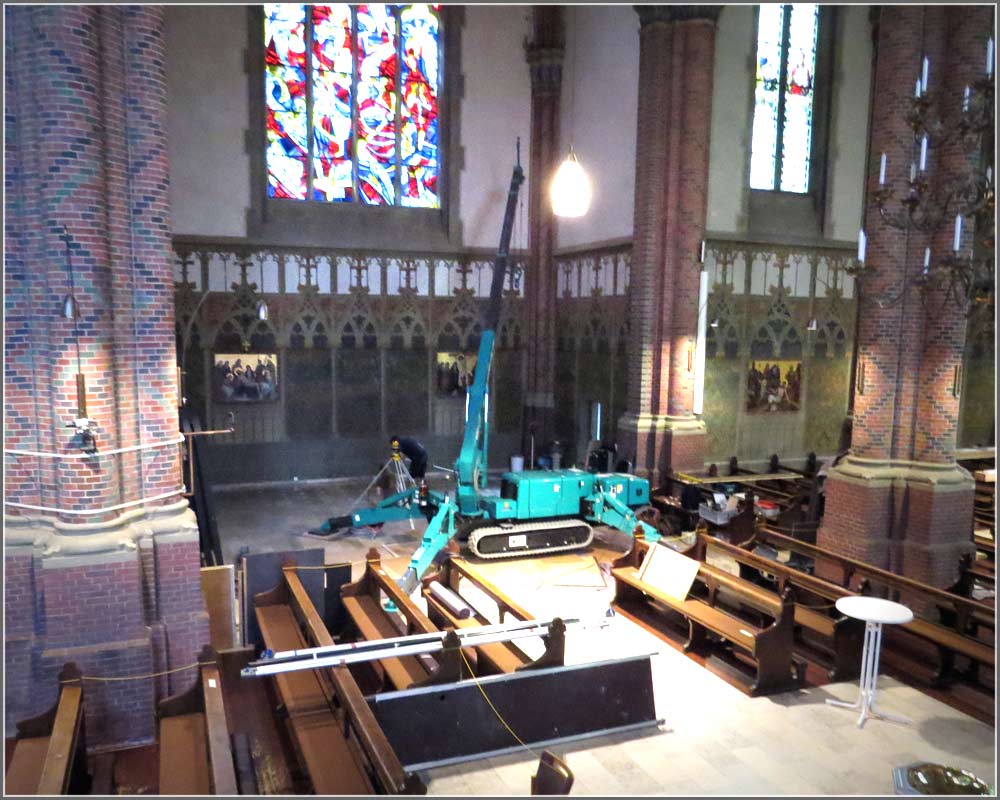
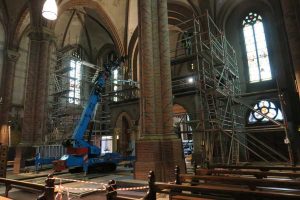
This crane was the most important piece of equipment used during assembly.
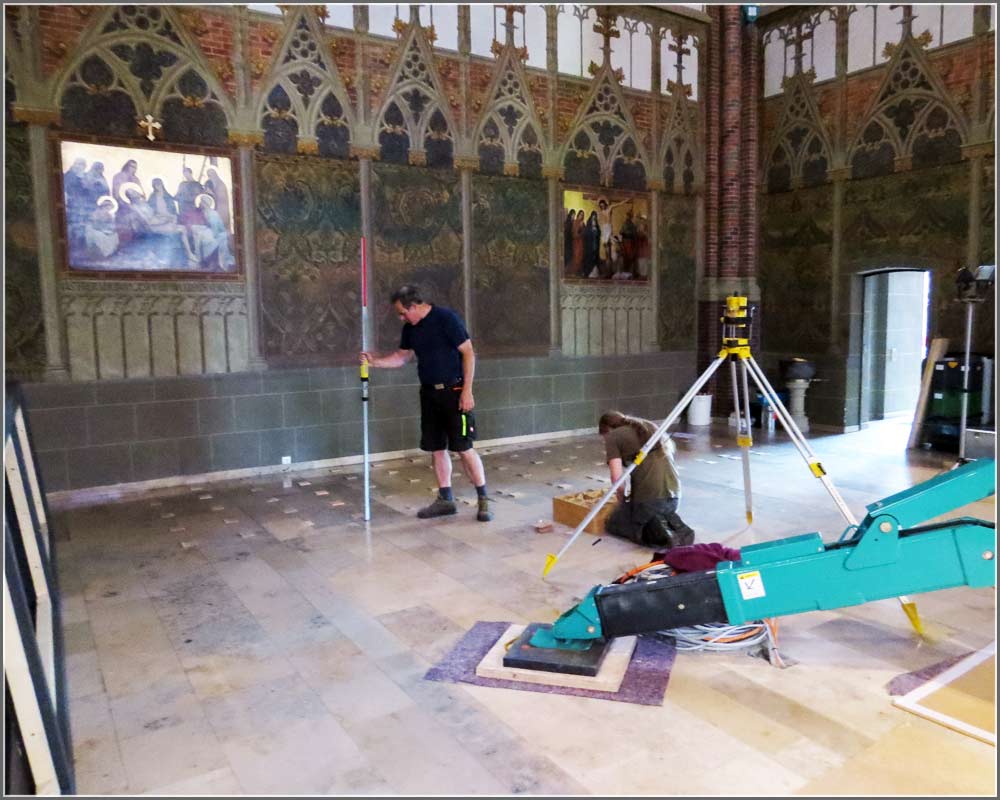
Leveling the subfloor.
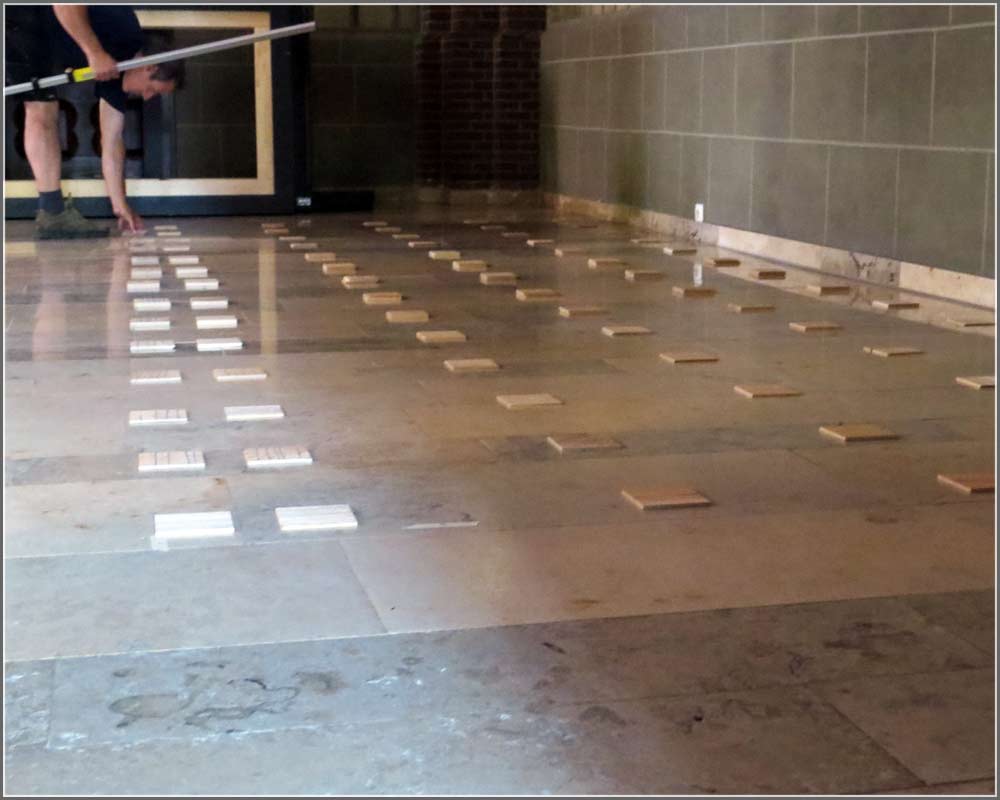
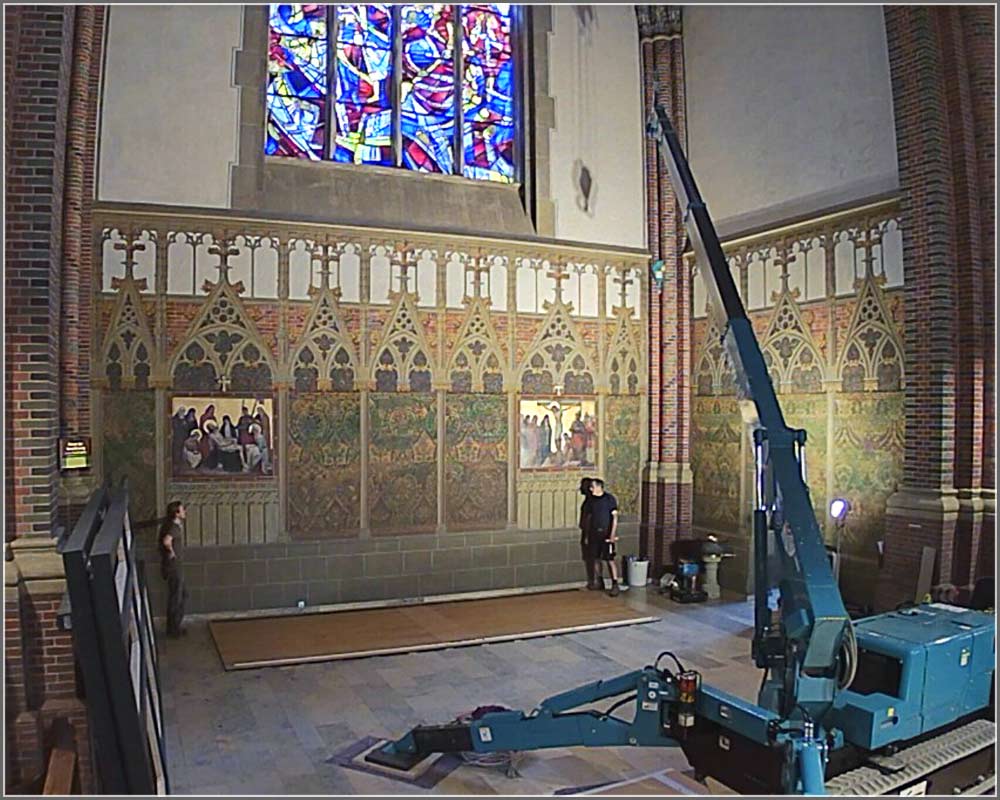
By the end of the workday, the floor slab had been poured.
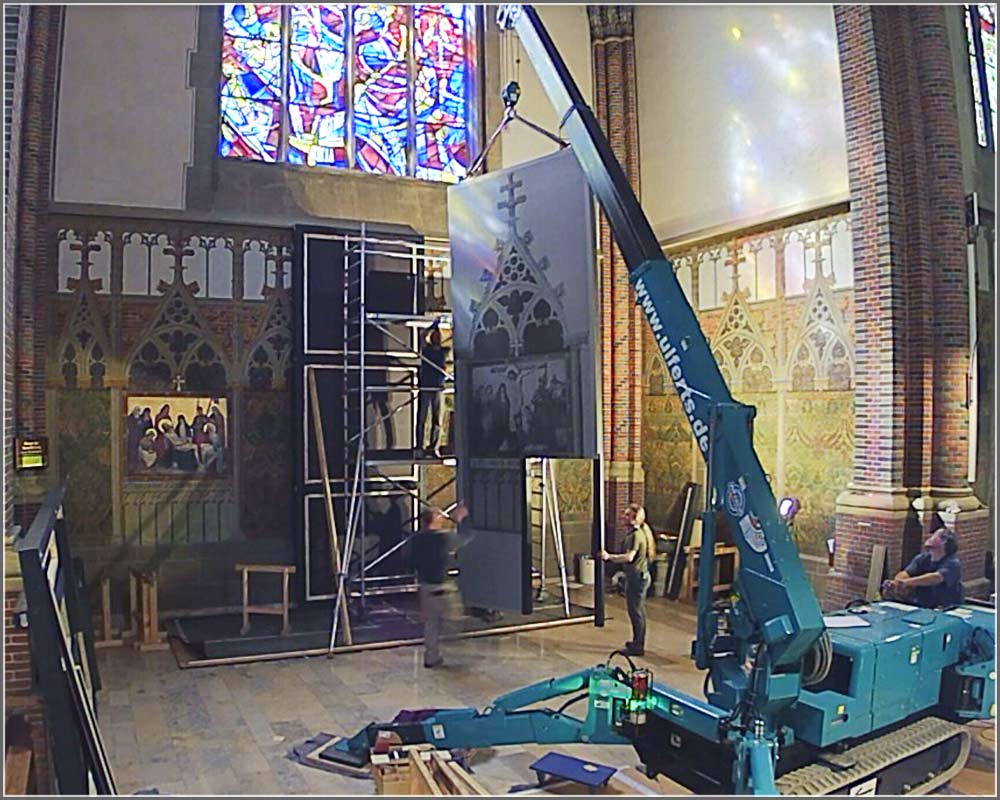
The installation of the choir organ is proceeding much more quickly than that of the main organ (June 9). The reasons for this are that the choir organ is much smaller, that it could be pre-assembled at the organ-building workshop, and that work does not have to be done at such dangerous heights.

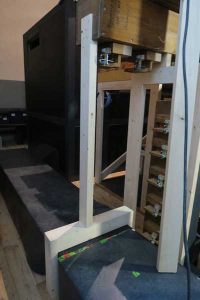
Installation of the first maintenance staircase.
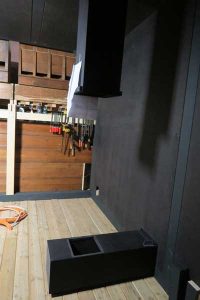
The case is still empty.
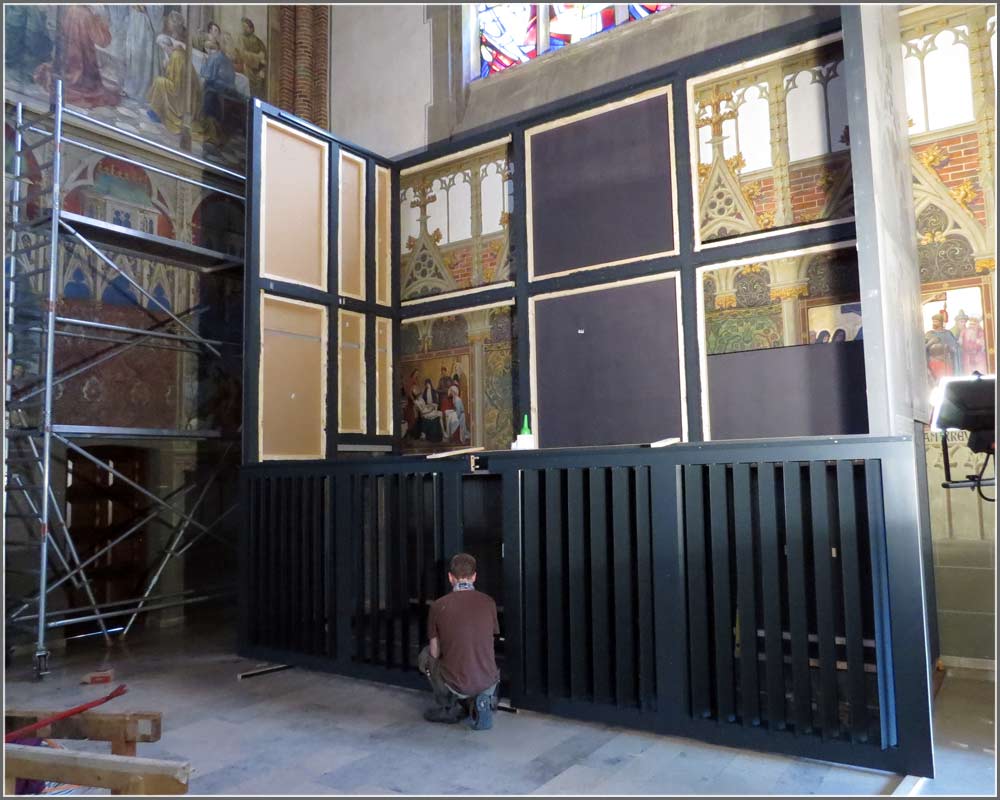
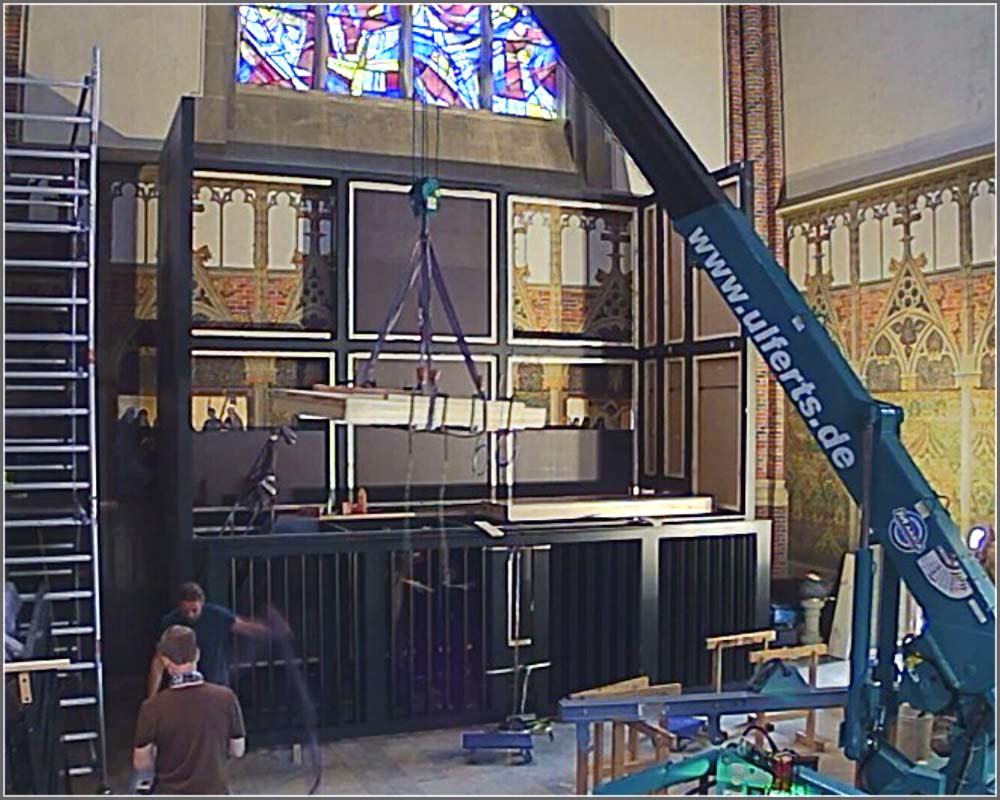
The windchests were installed in the afternoon.
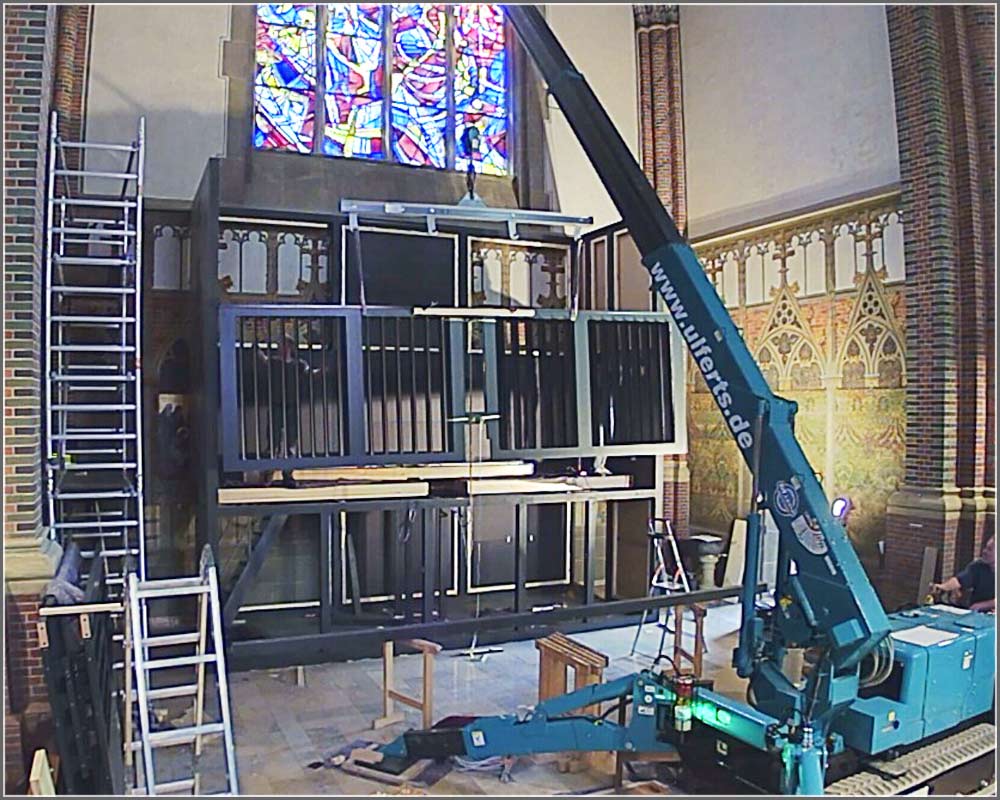
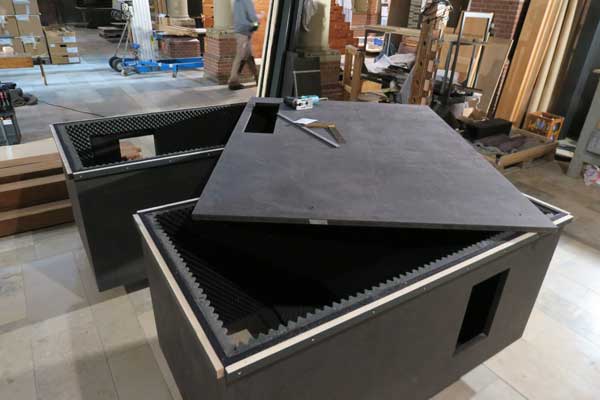
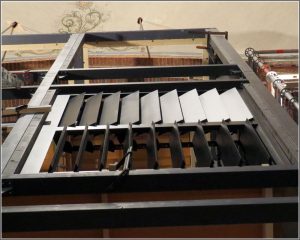
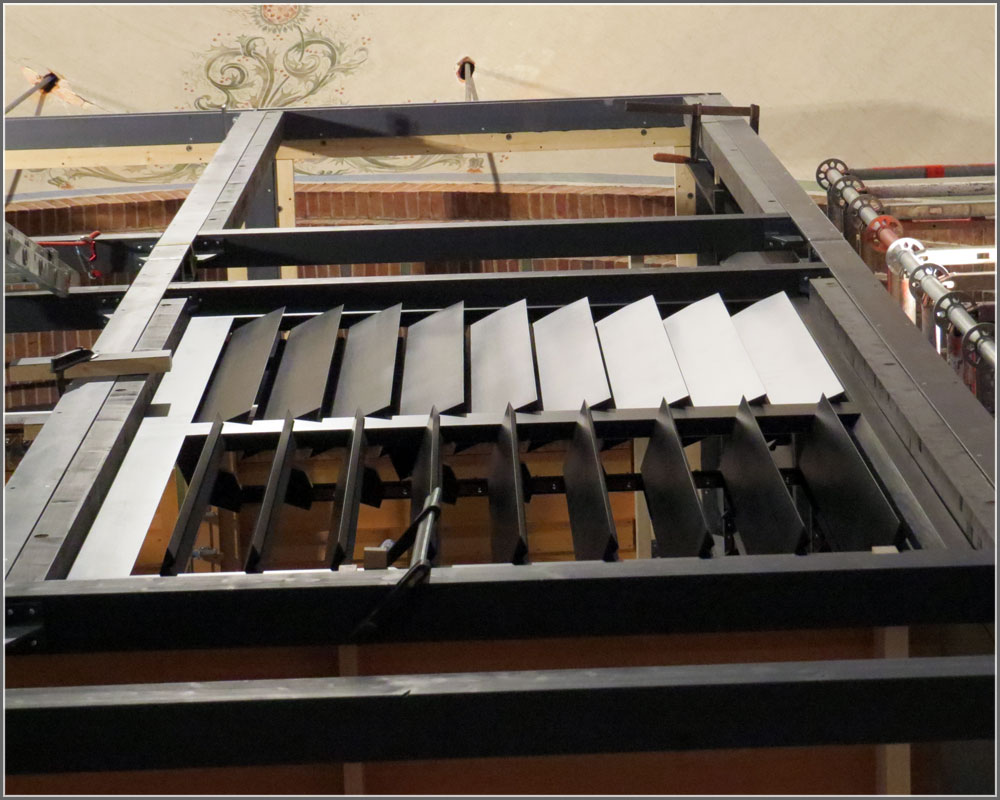
Installation of the sound hatches.
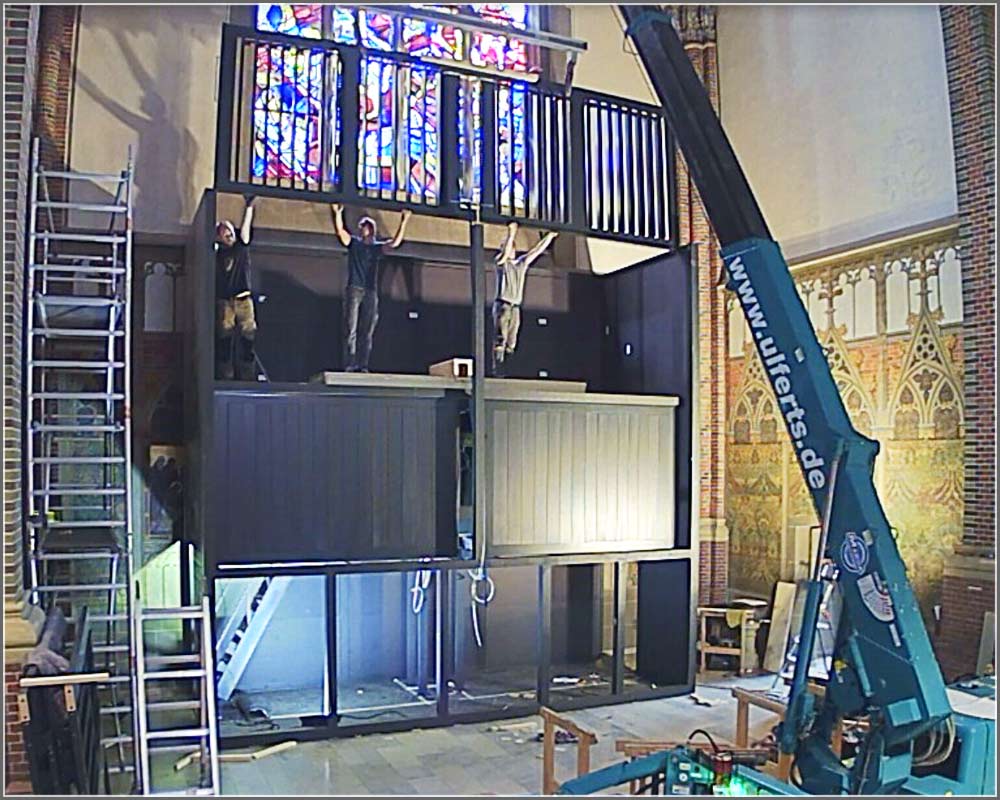
Installation of the last major component of the housing (June 10)
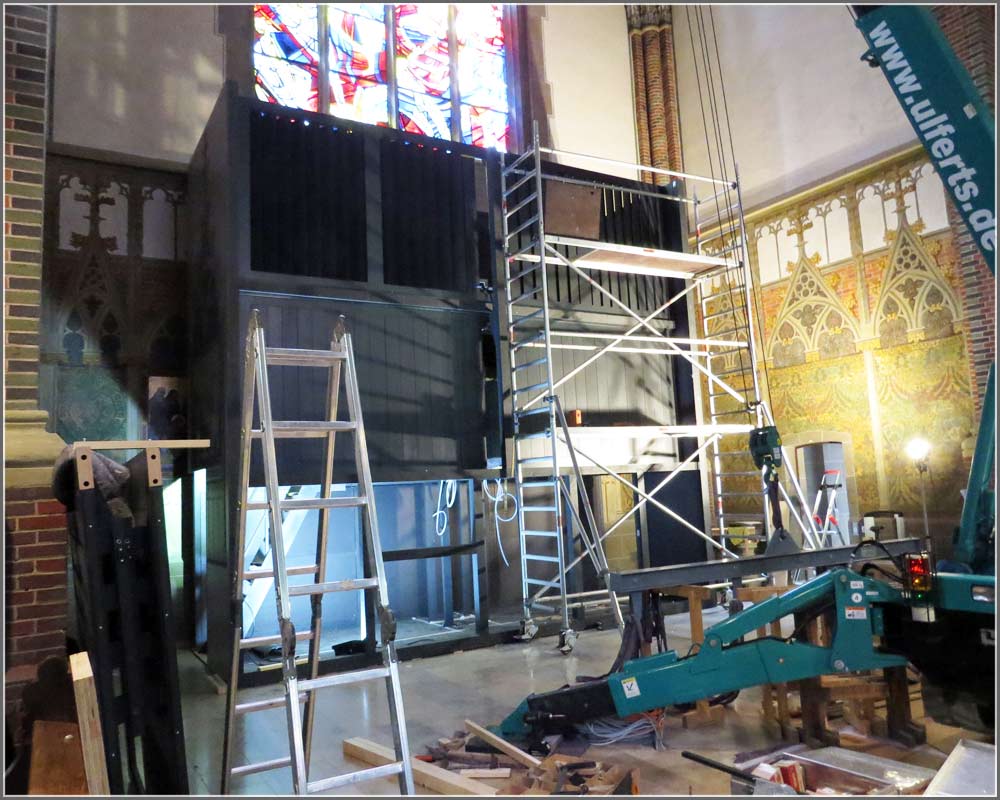
On that day, work was carried out primarily inside the organ case. By late afternoon, however, the work had to be wrapped up for the week, as the church had to be prepared for the Feast of Corpus Christi.
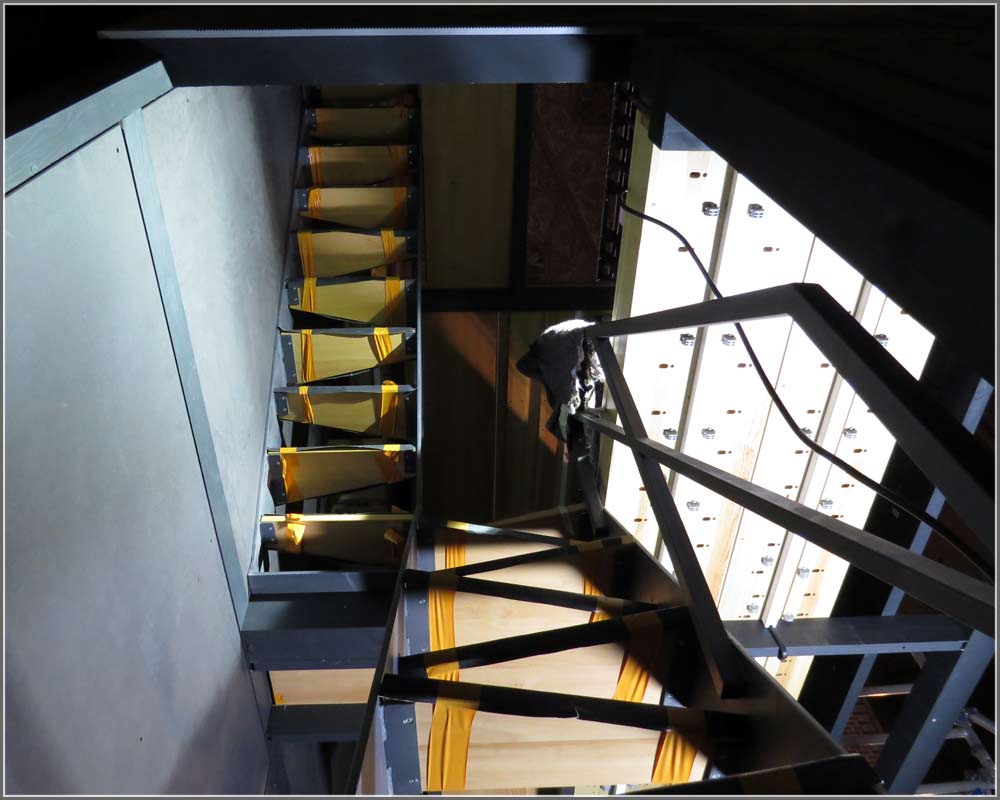
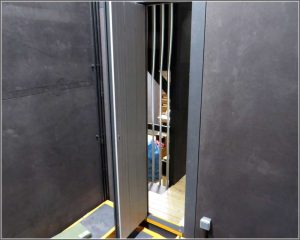
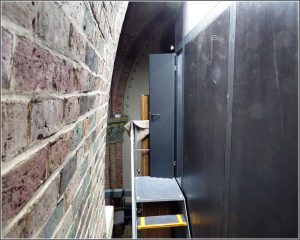
Staircase leading to the 2nd and 3rd levels of the choir organ.

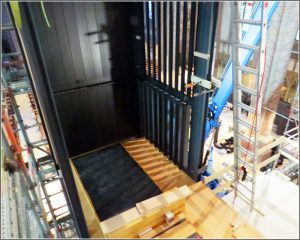
View of the second level. The windchests can be seen at the bottom, top, and left.
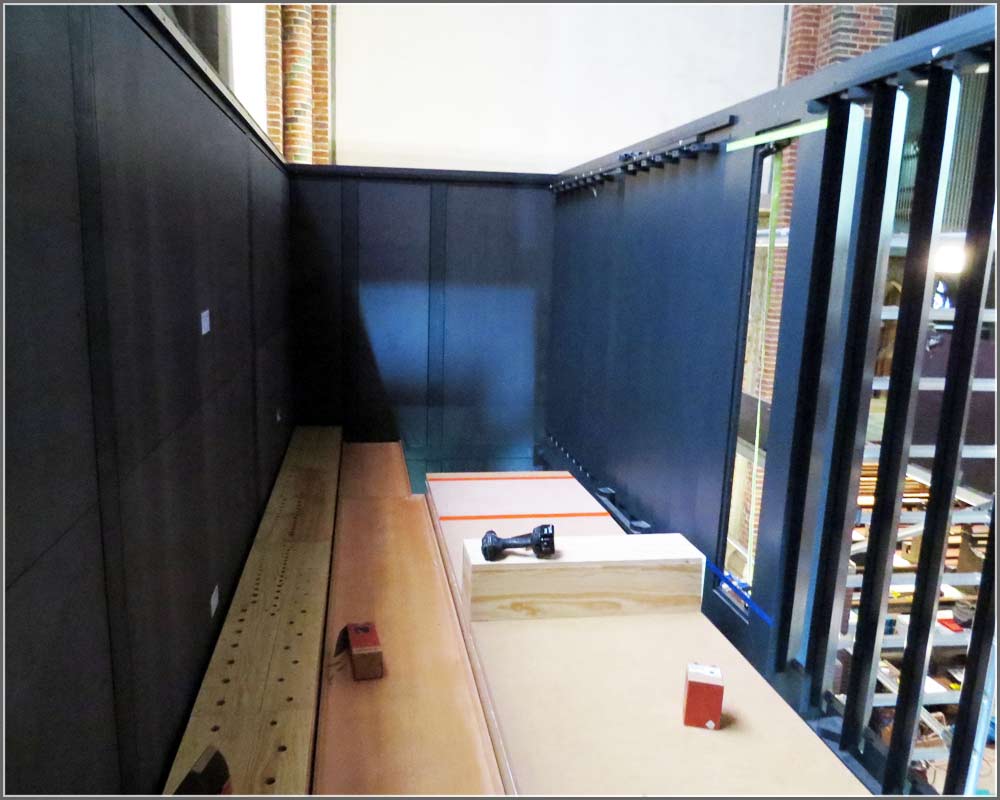
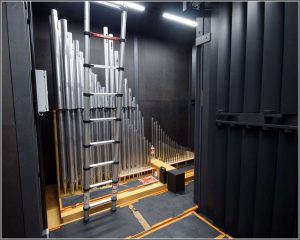
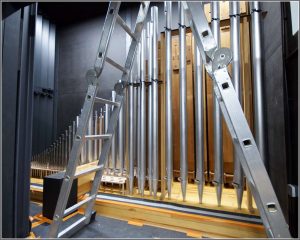
In total, the choir organ will have 16 stops.
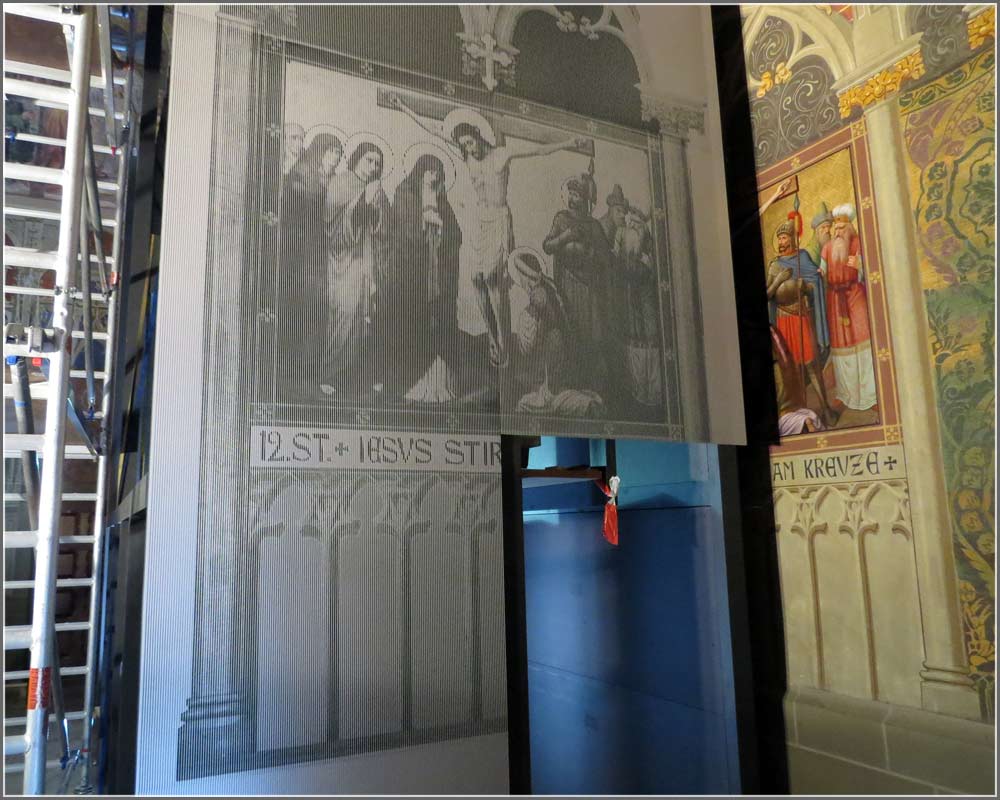
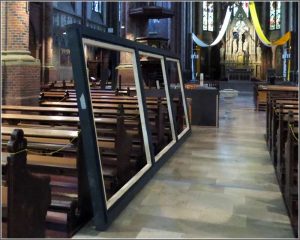
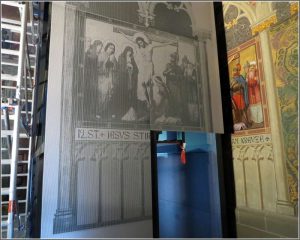
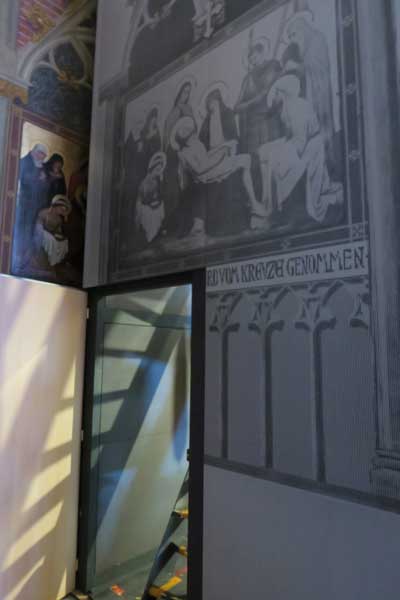
To replace the Stations of the Cross, which are now concealed, illustrations of the Stations of the Cross have been mounted on the sides of the choir organ case.
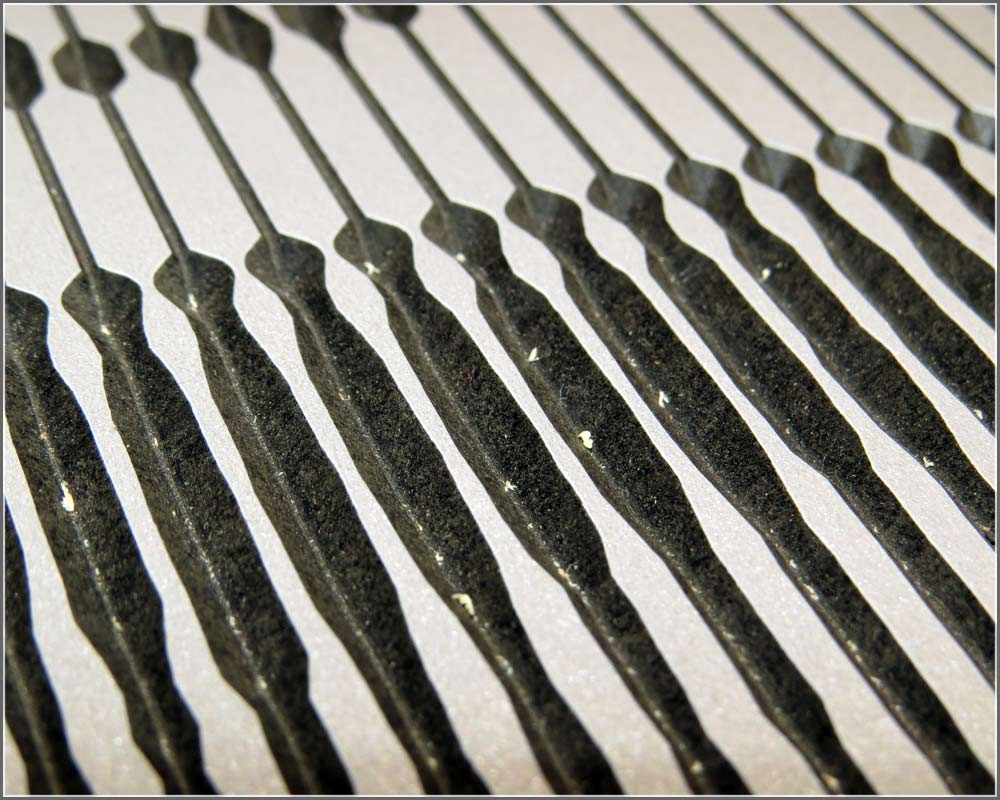
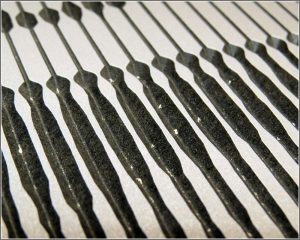
These images were milled into the material.
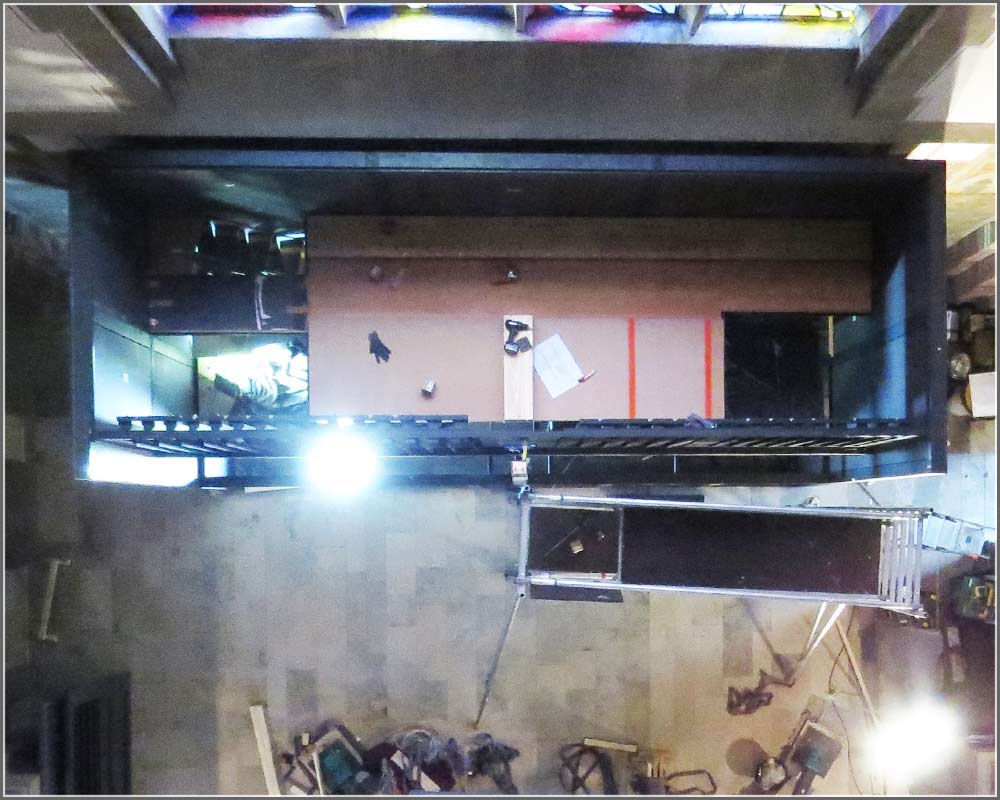
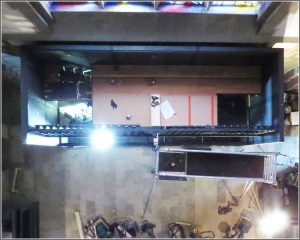
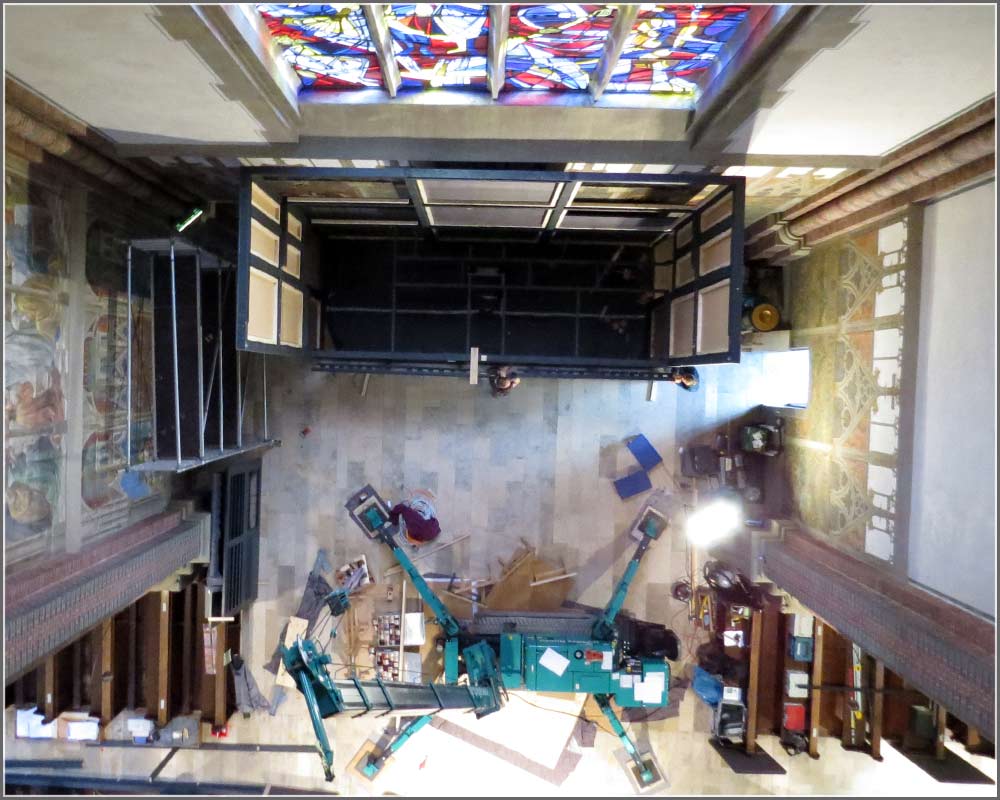
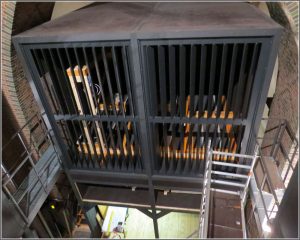
Top view of the choir organ.
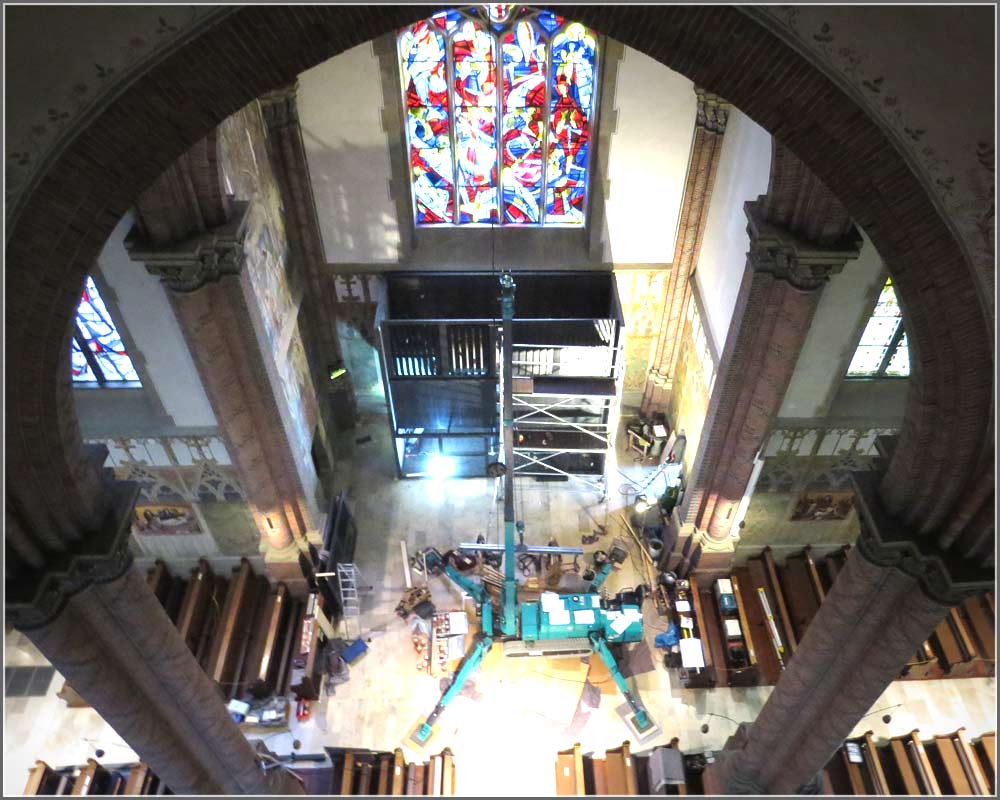
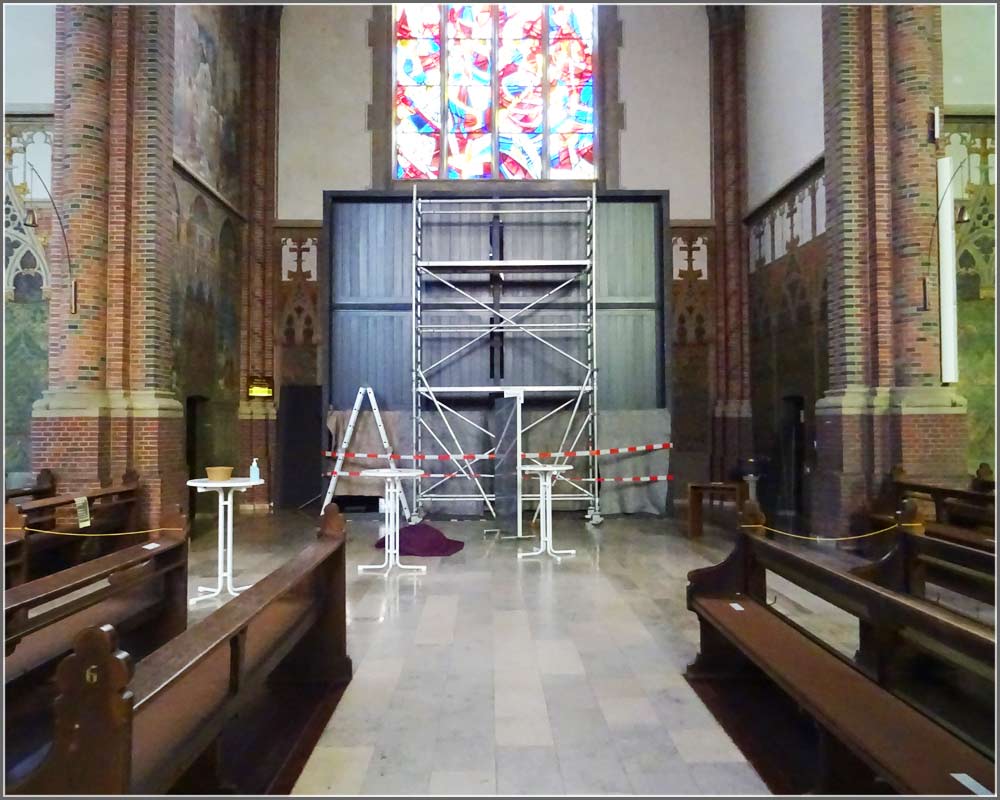
By the evening of June 10, the crane was gone, and the organ builders had cleared their materials out of the way.
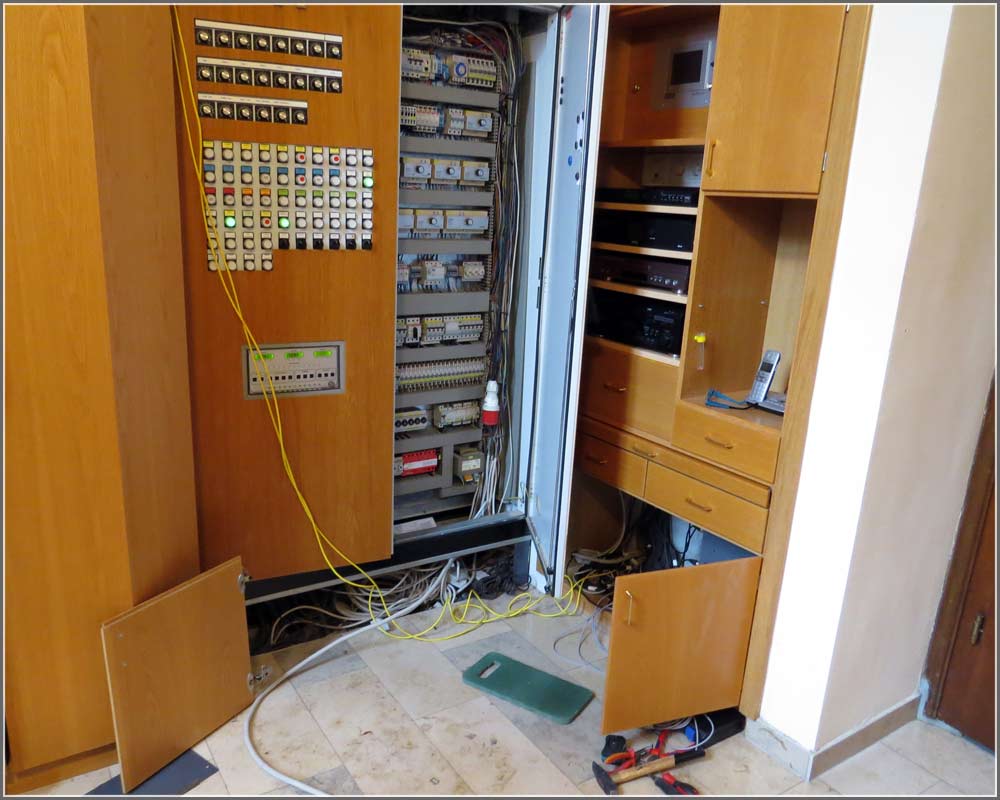
On June 15, 2020 (Tue), the electrician was there. He had to run the electrical cable from the choir organ to the control panel in the sacristy.
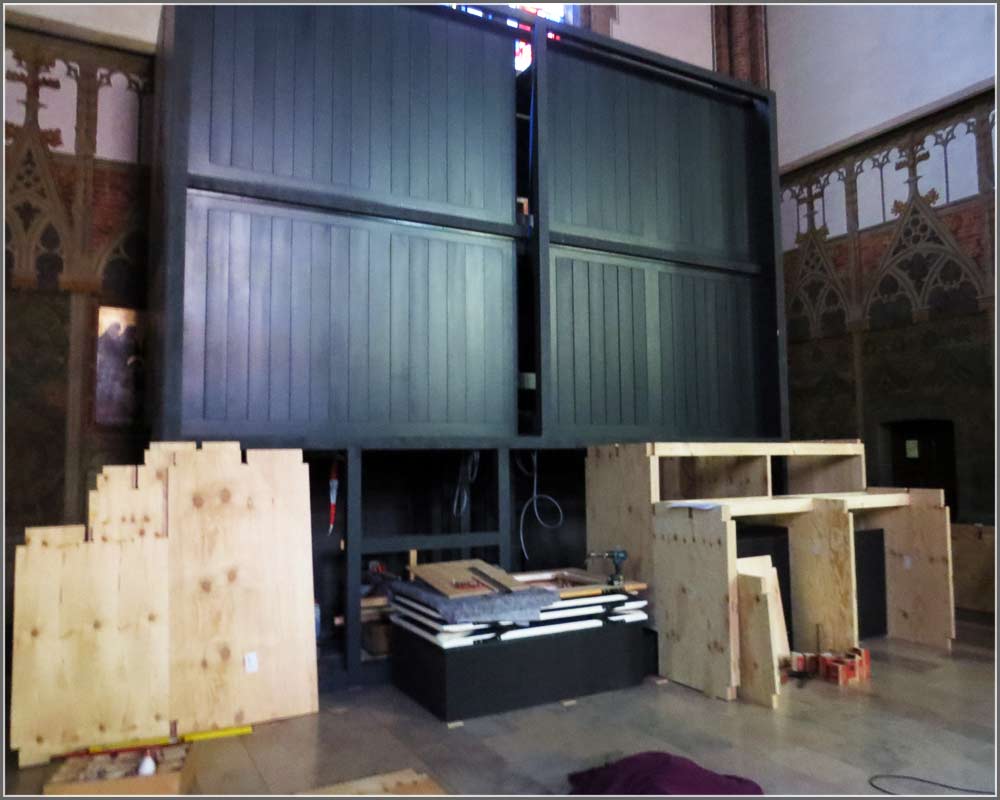
On Wednesday, the organ builders returned and brought a lot of materials with them.
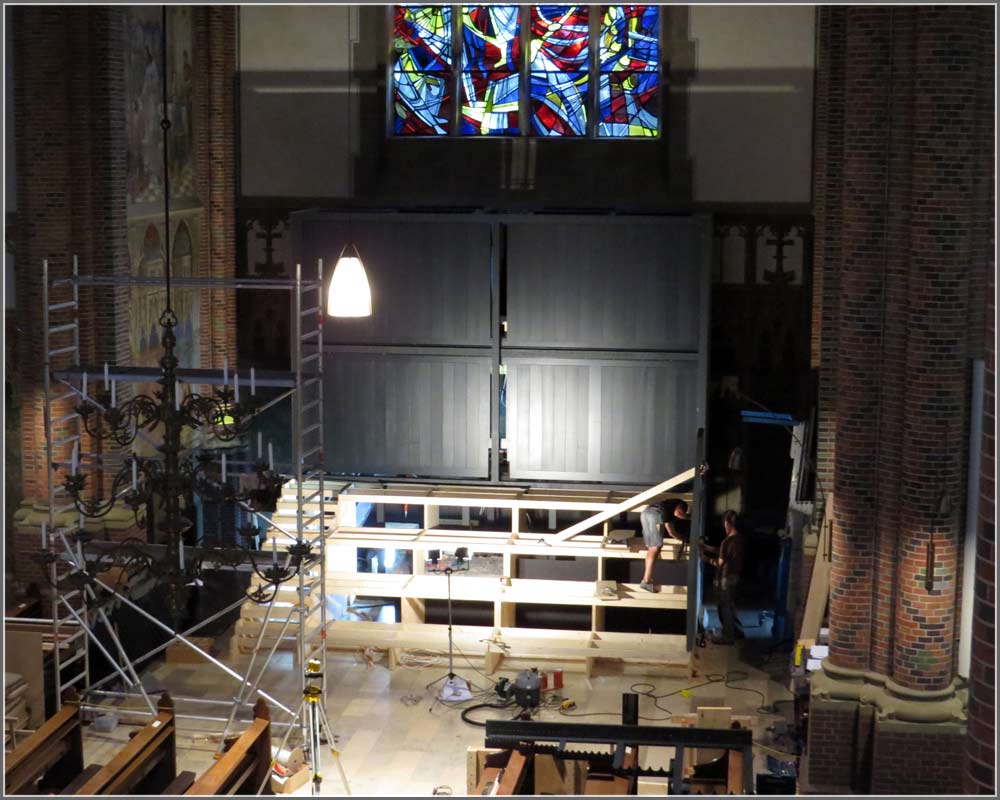
On Thursday, the assembly of the choir loft really got underway.
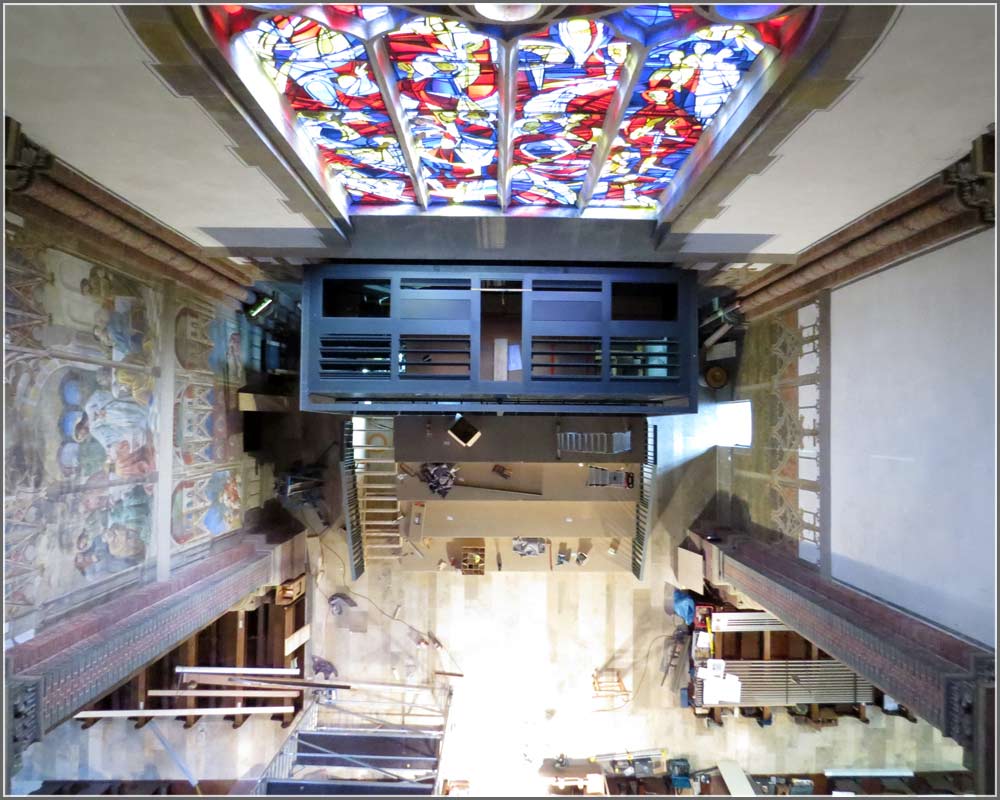
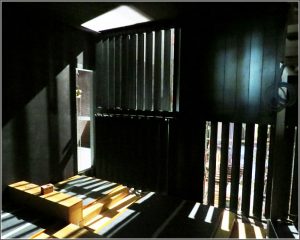
The upper slats of the sill are clearly visible.
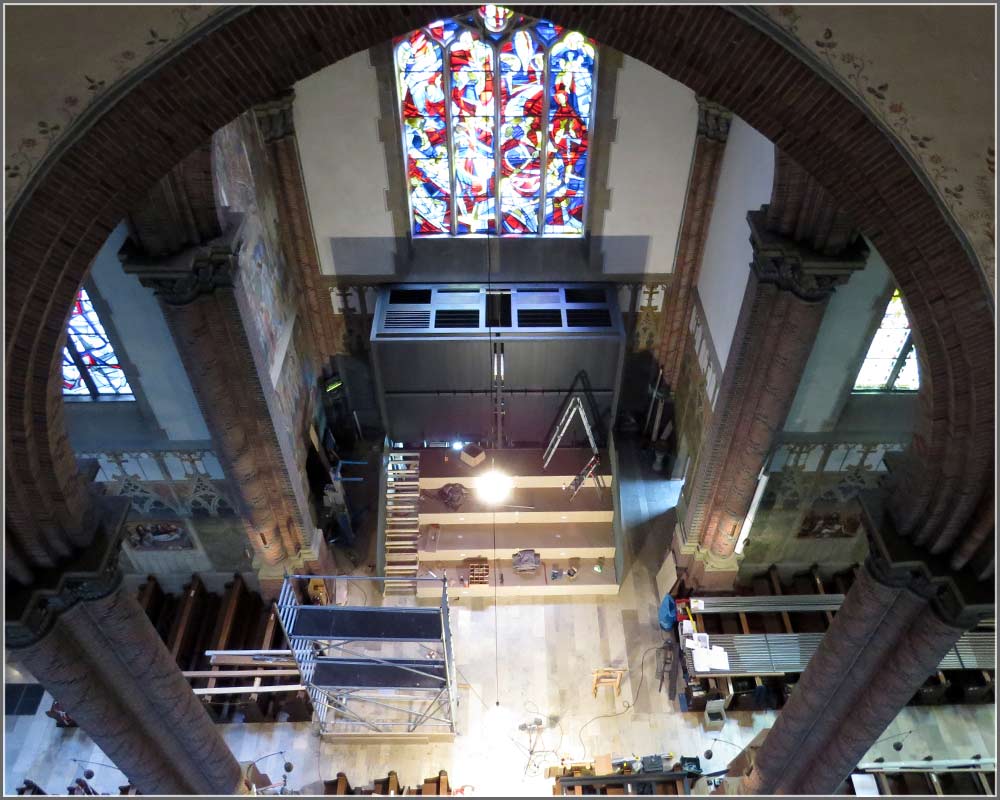
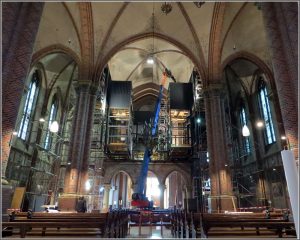
The entire structure takes up a lot of space in the church.
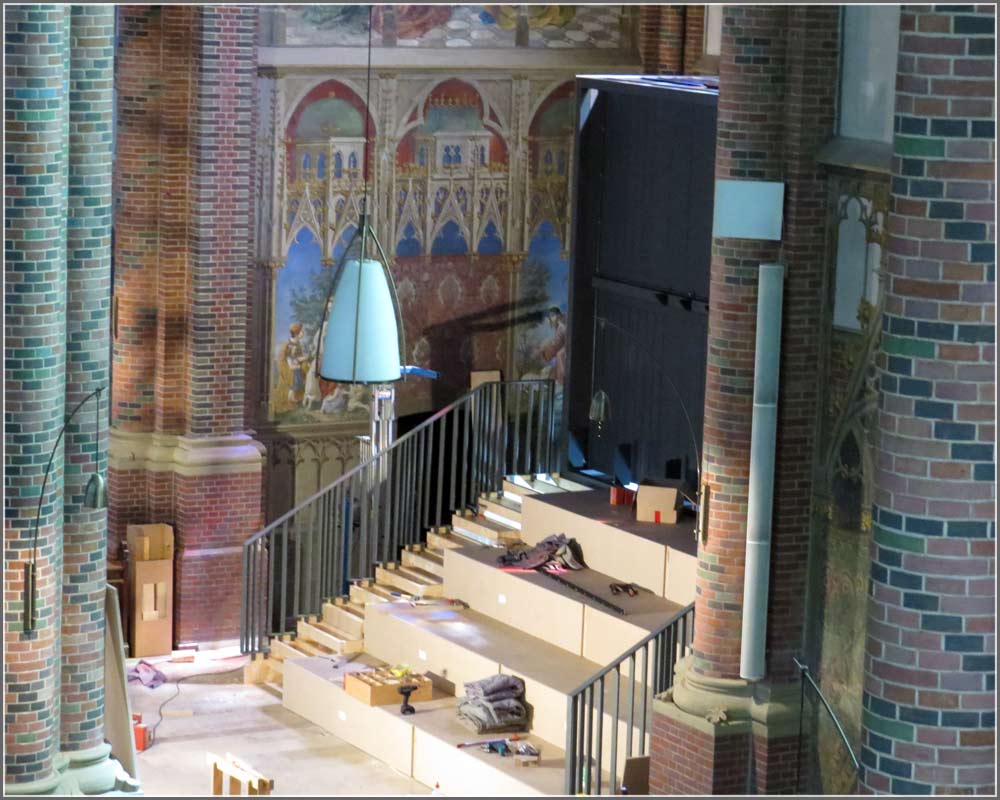
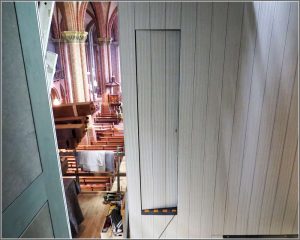
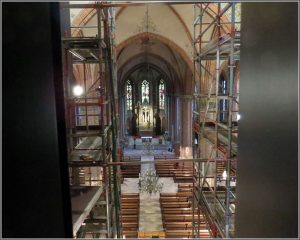
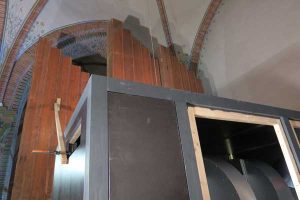
View from the main organ gallery of the choir organ, also known as the Fernwerk.
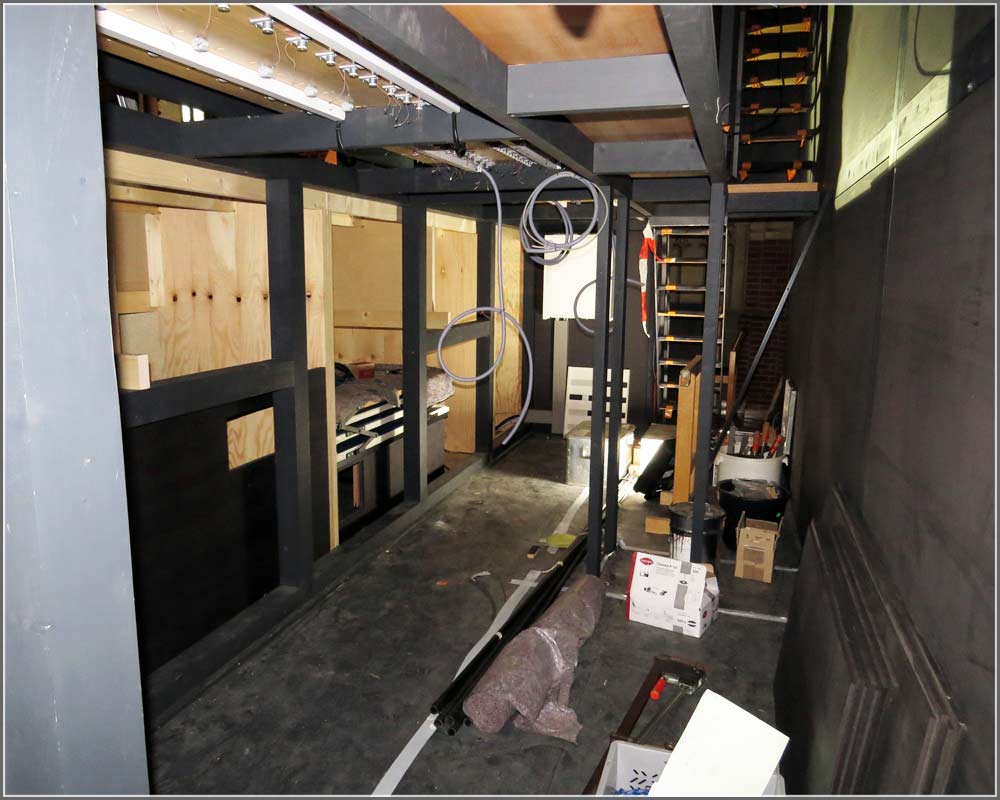
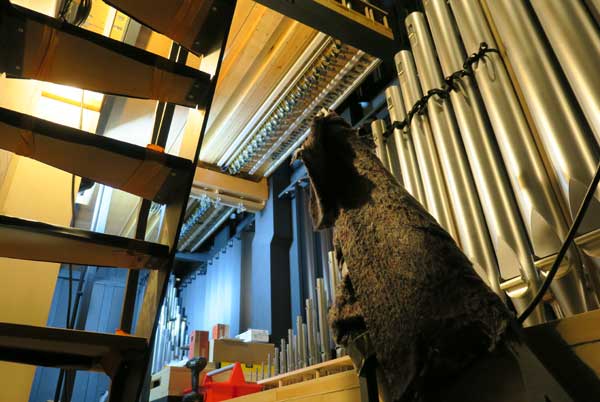
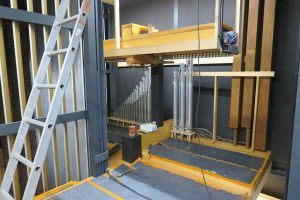
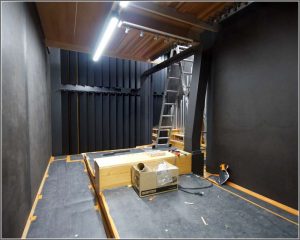
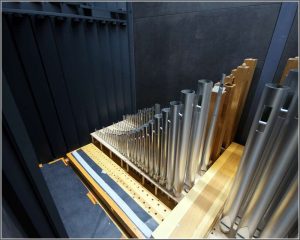
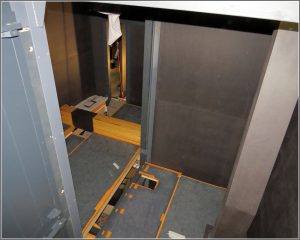
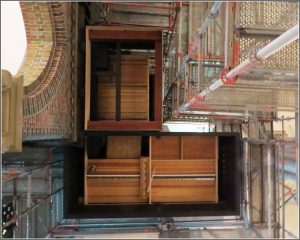
A view inside the choir organ.
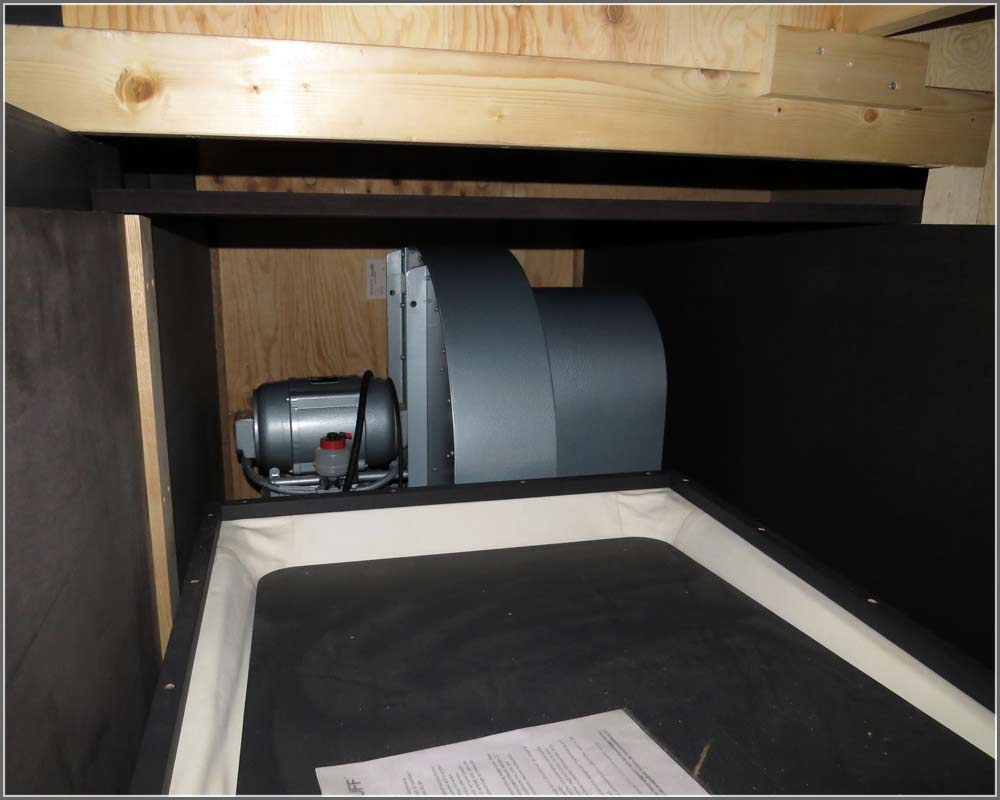
The choir organ's wind machine is located under the gallery.
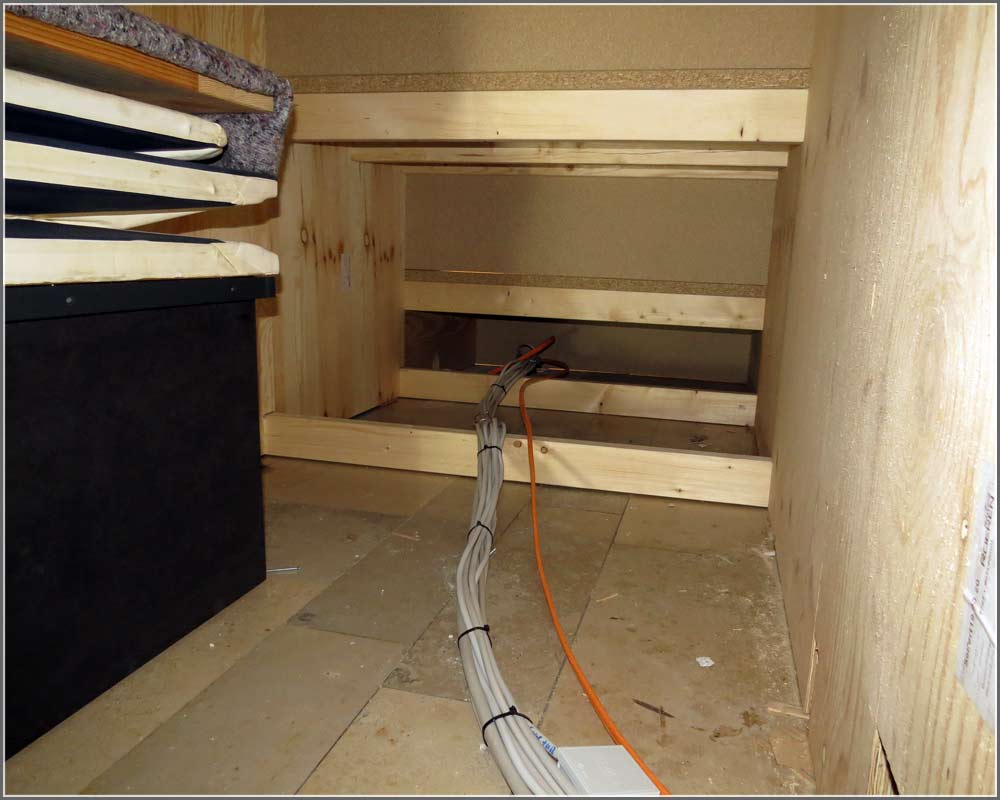
These supply lines had been covered up in the transept for months. Now they are connected.
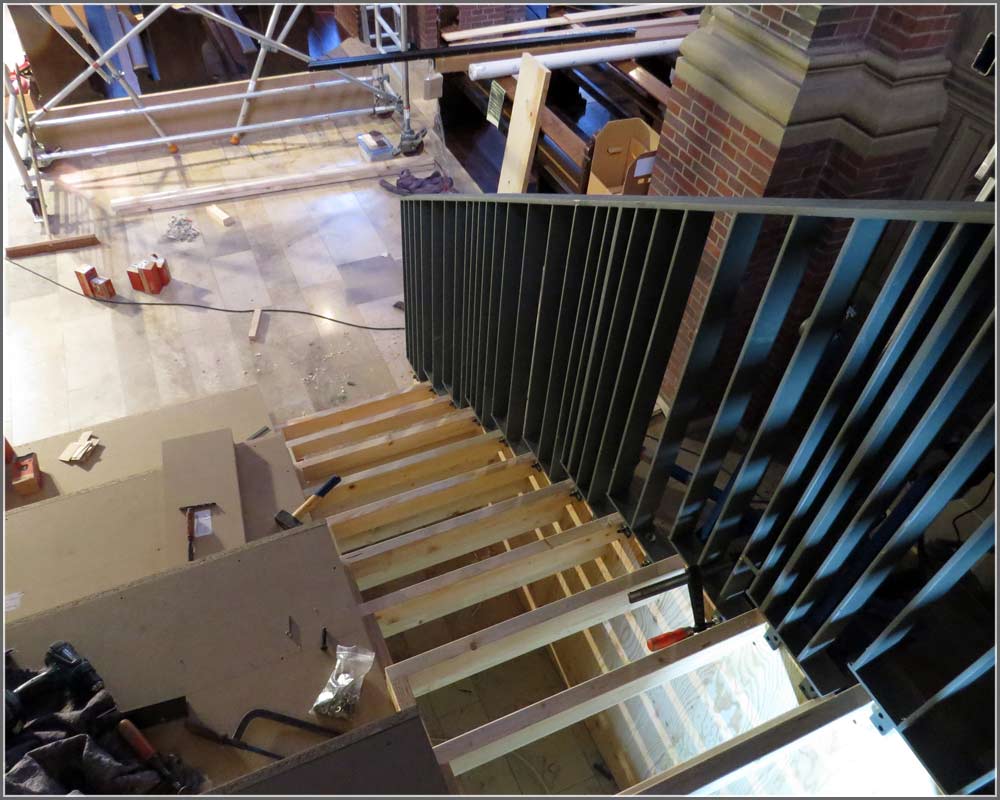
The staircase isn't covered yet.
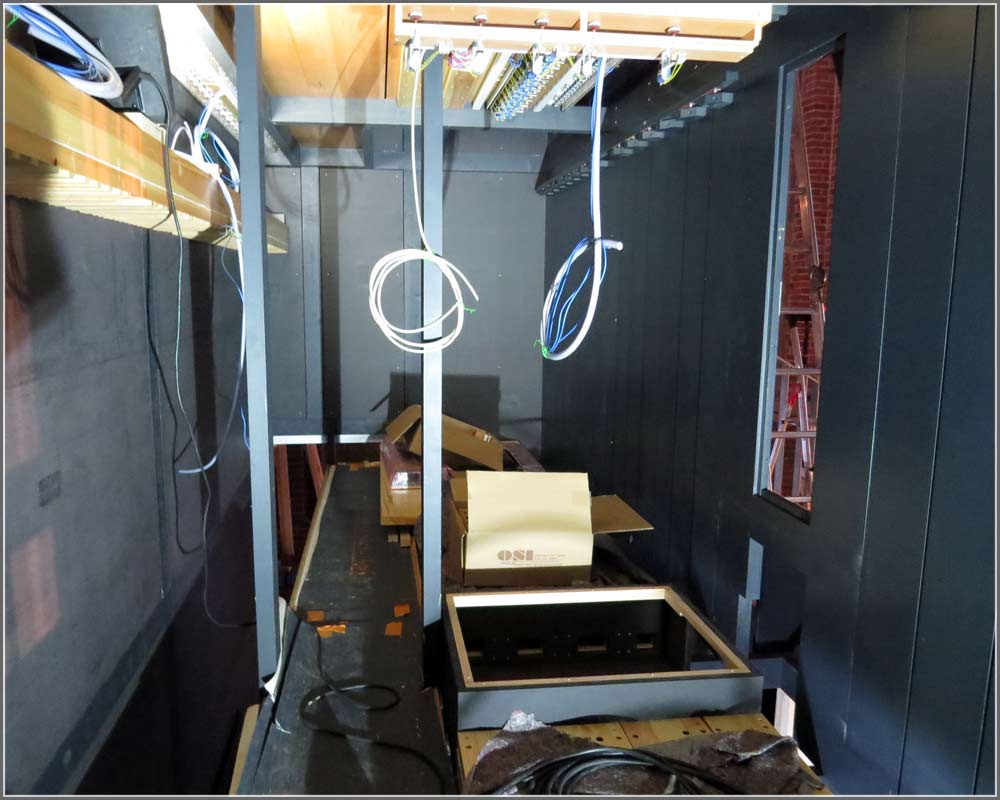
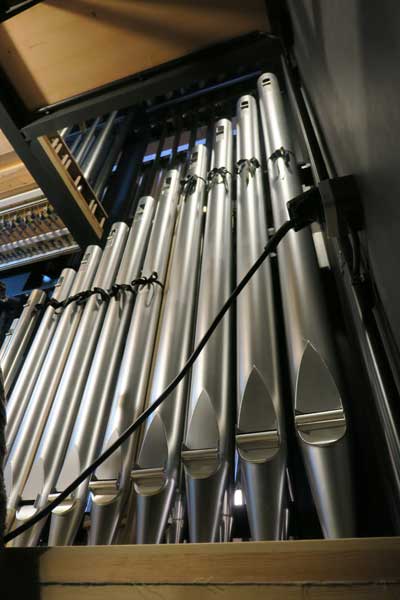
The upper organ stop openings on the third level are clearly visible.
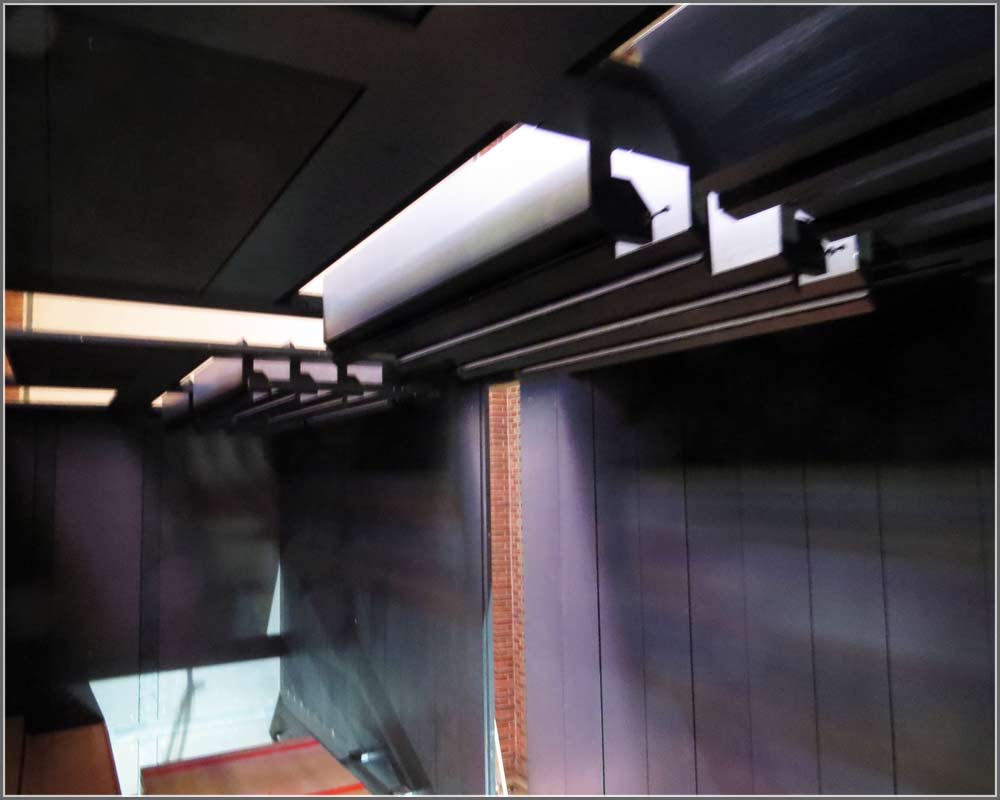
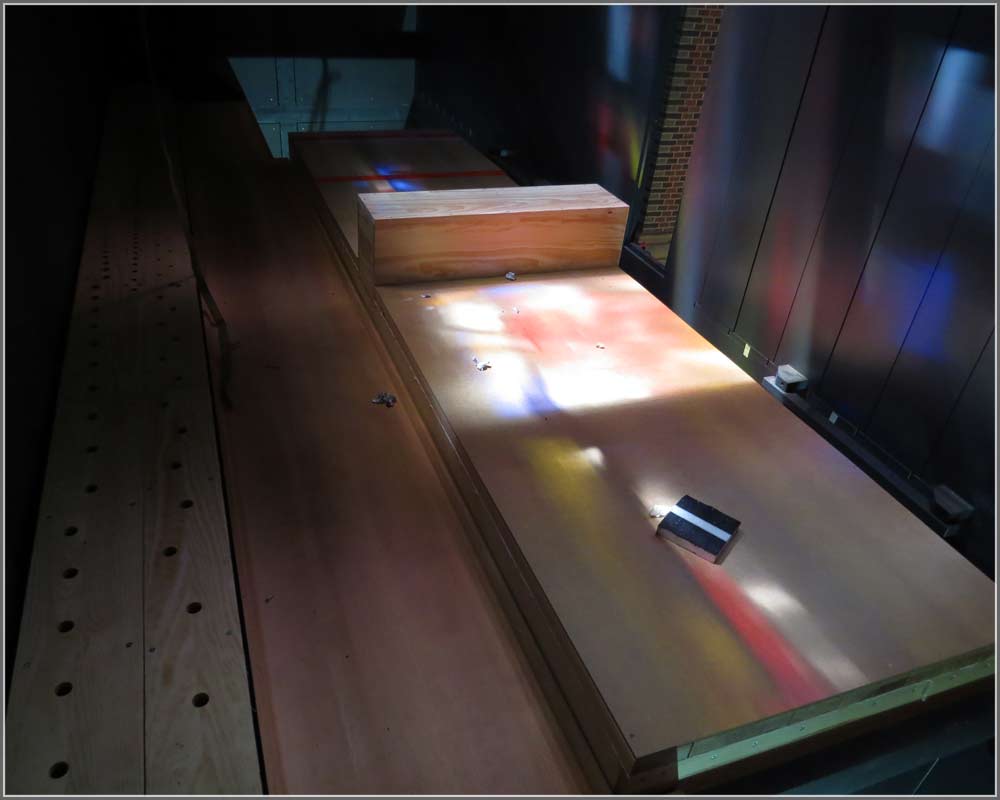
The choir gallery as seen from the Schwellwerk (June 19).
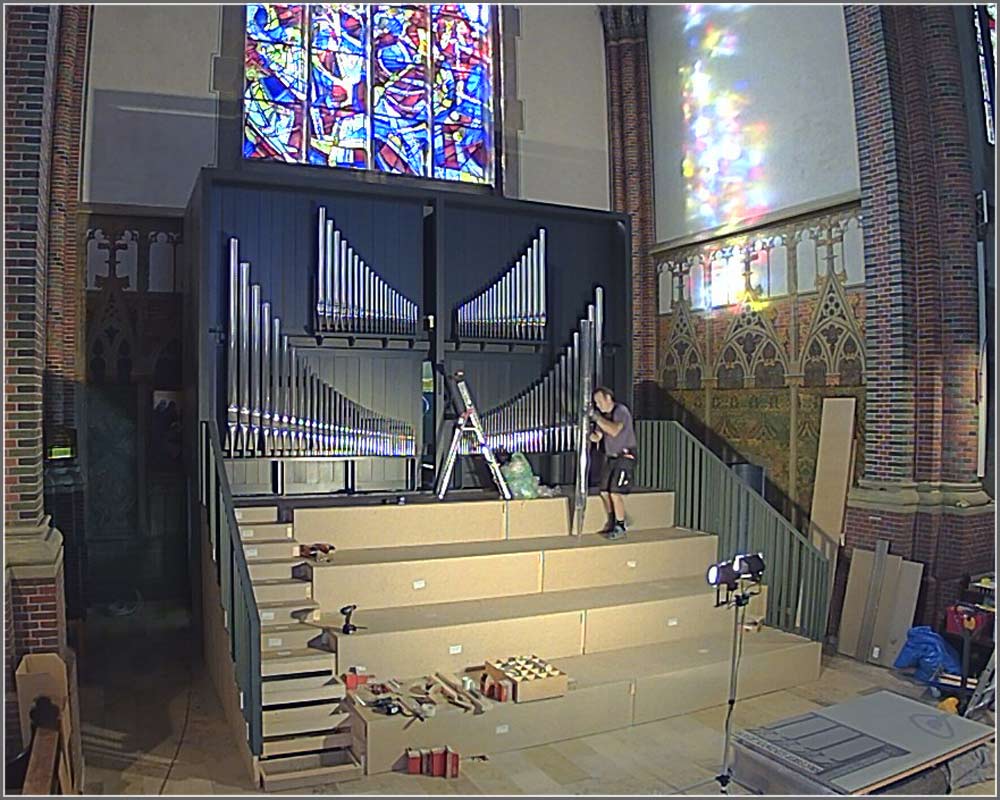
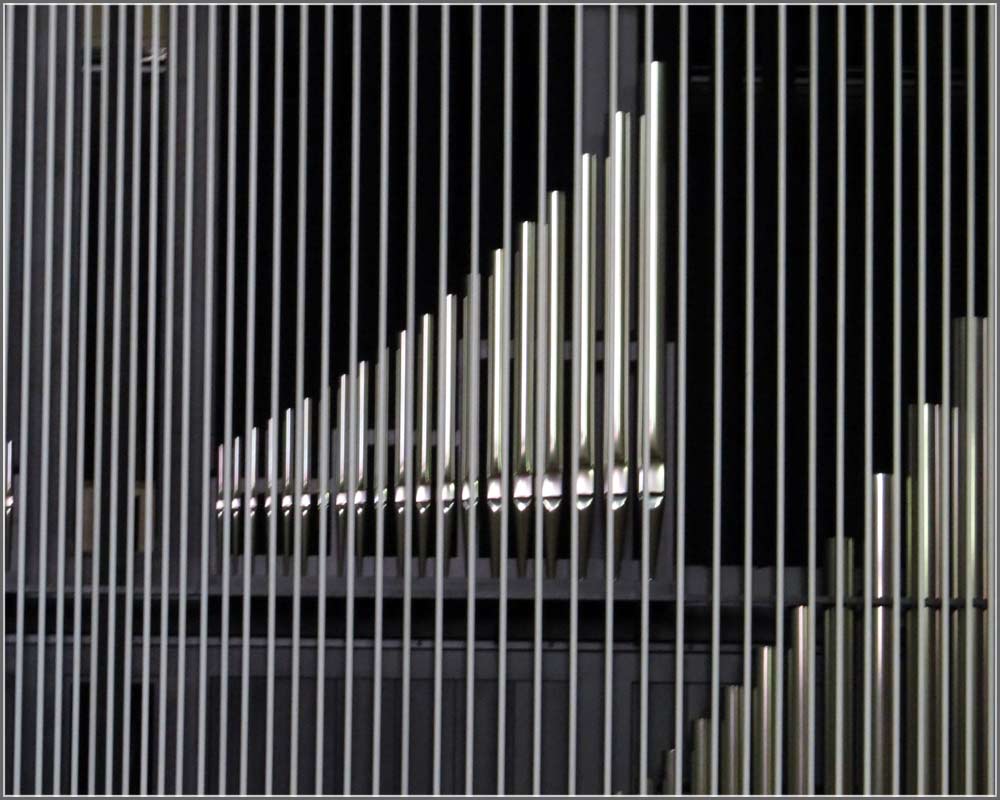
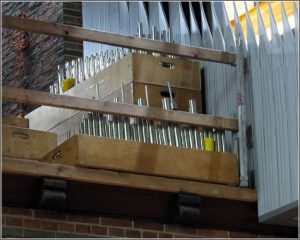
The decorative pipes were installed here. These pipes serve only decorative purposes (June 20, 2020).
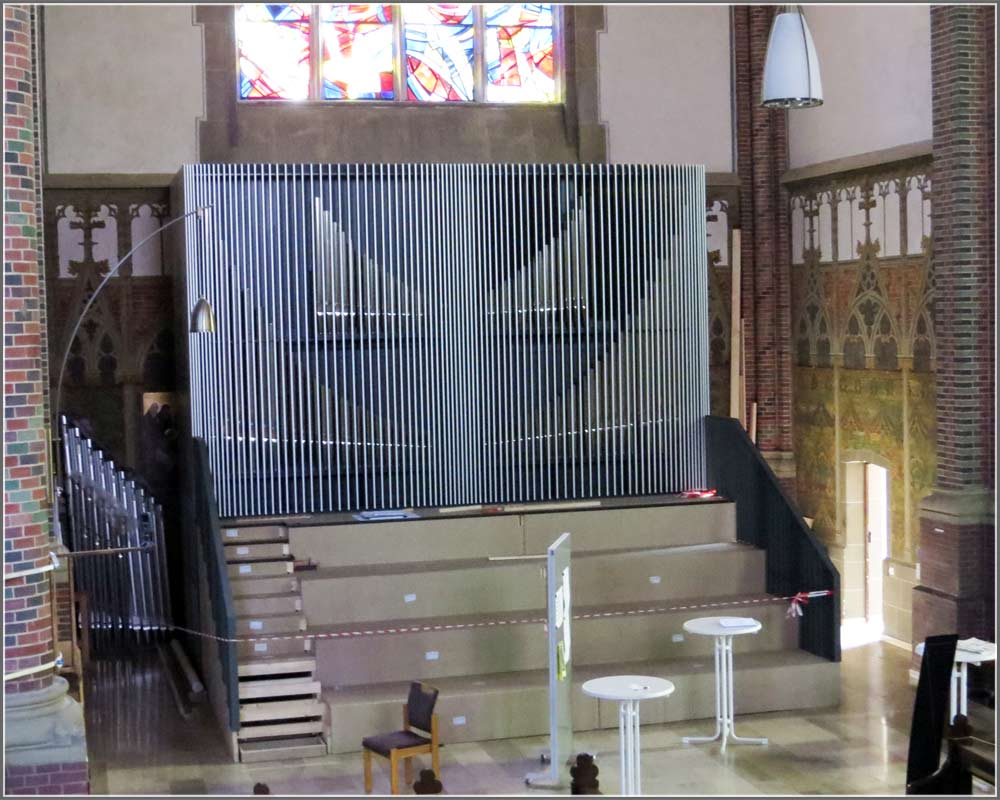
Facing was then installed on these pipes.
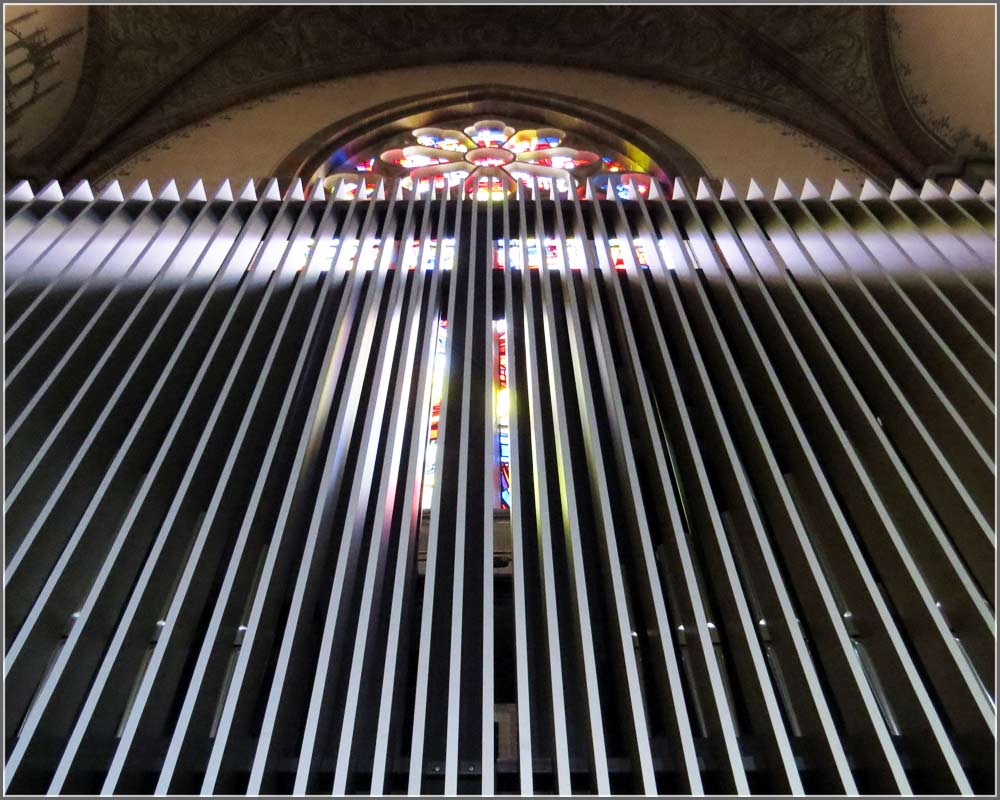
All of this adds up to an impressive brochure. The music, however, takes place behind the scenes.
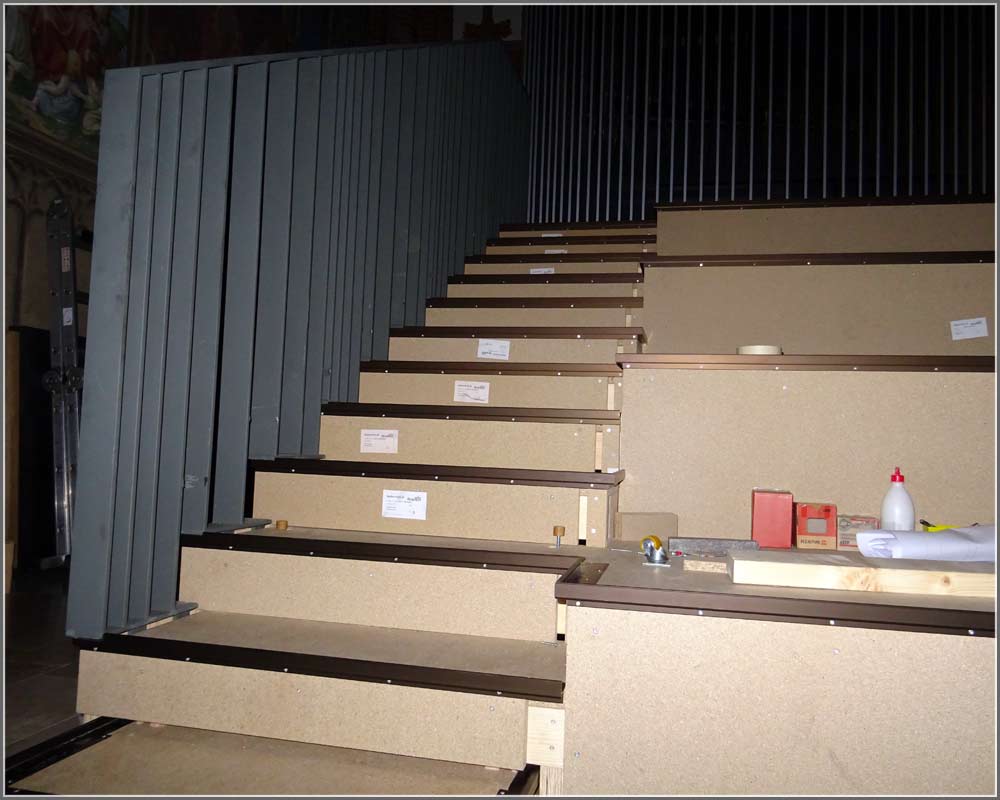
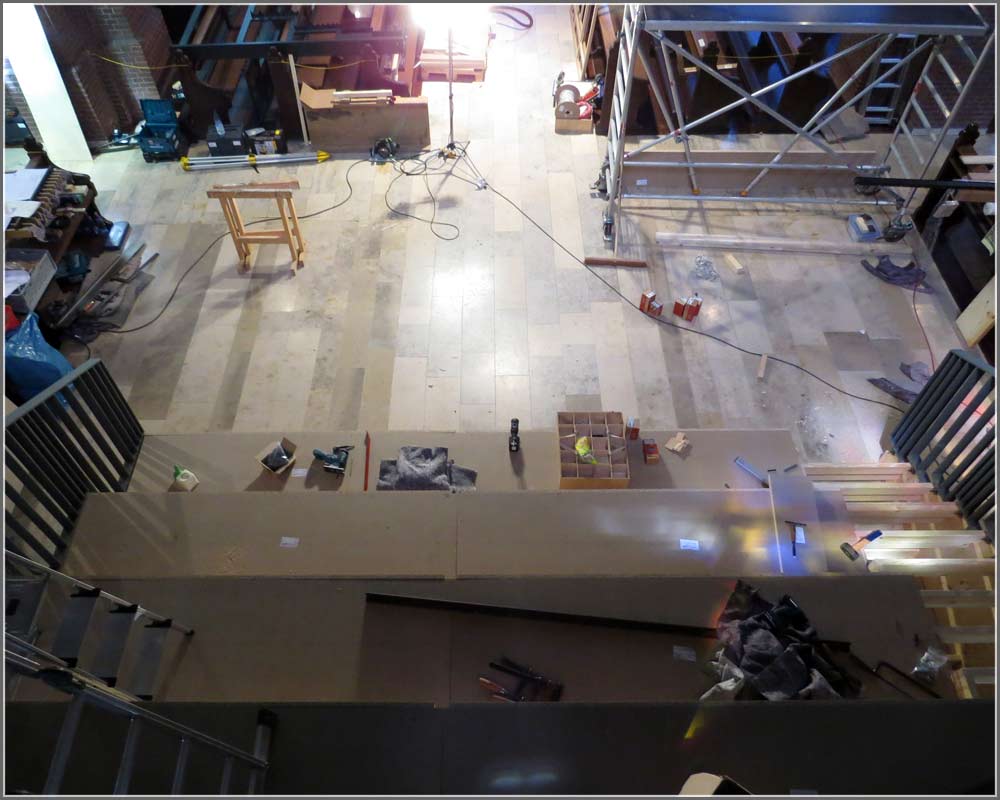
The plain grandstand substructure, made of particleboard, will be fitted with flooring.
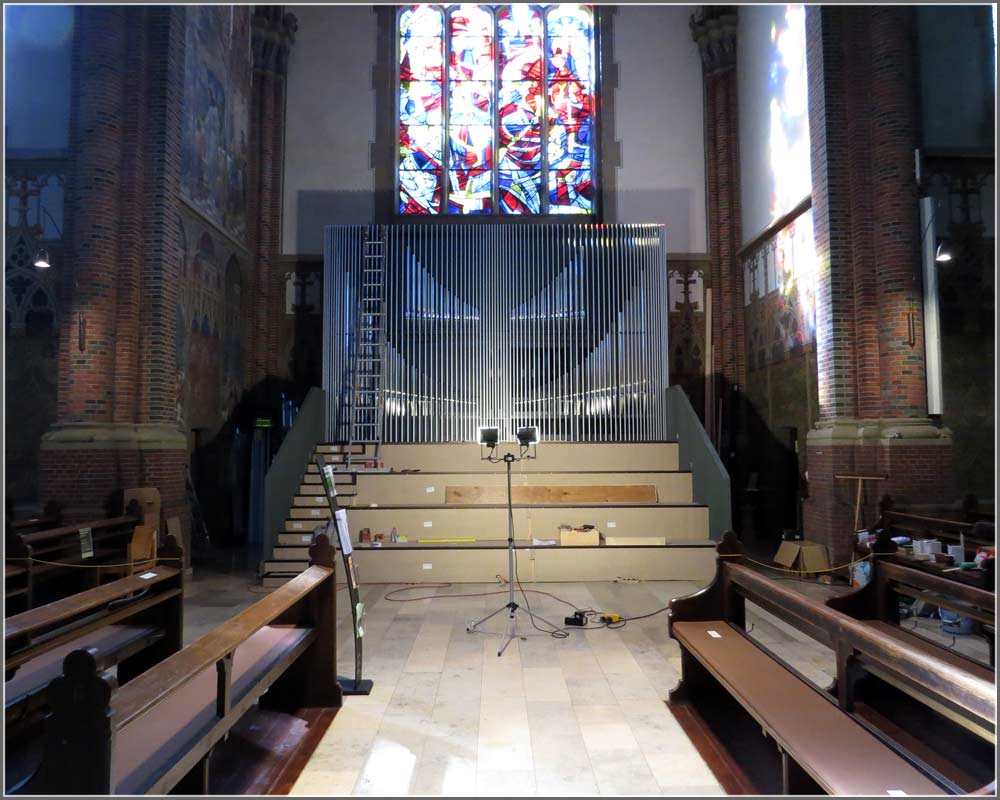
After that, flooring panels will be installed in the stands (June 26, 2020).
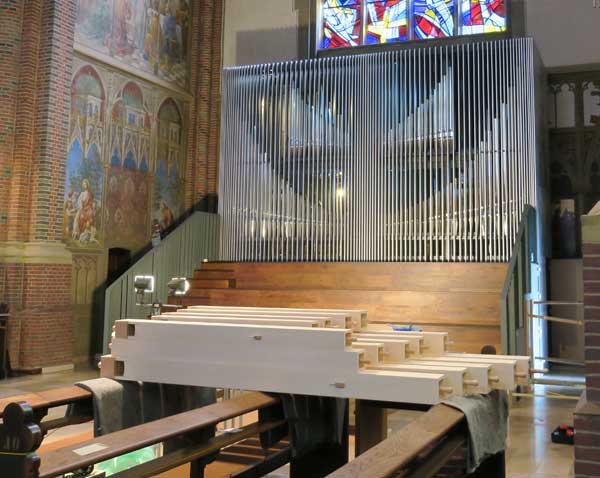
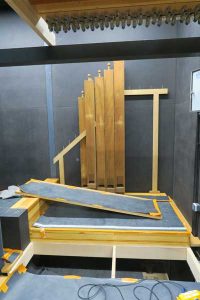
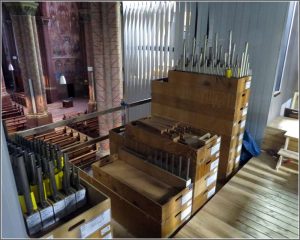
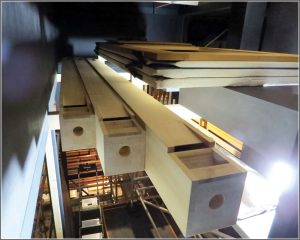
Work on the remote organ is progressing. The wood stain on the floor blends harmoniously with the church interior. In the foreground of the picture are wooden pipes for the remote organ, which are still waiting to be installed.
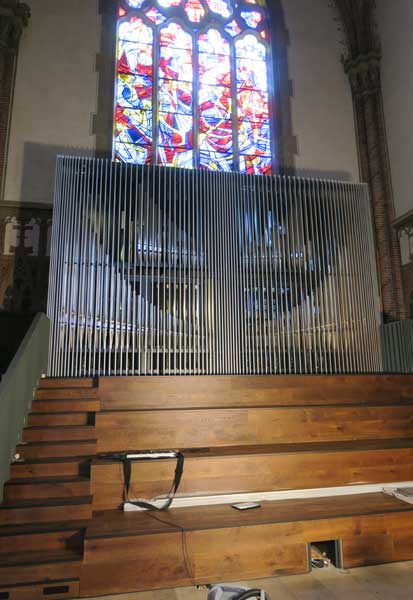
The side exterior paneling of the remote control unit
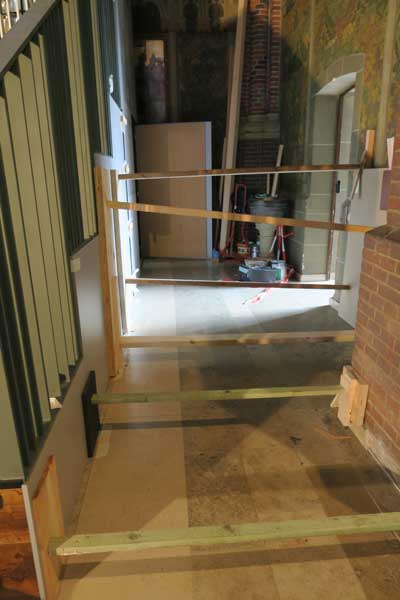
The choir organ case during the construction phase (March 17, 2020).
Whistling & Intonation, Part 4 (January 6–March 6, 2020)
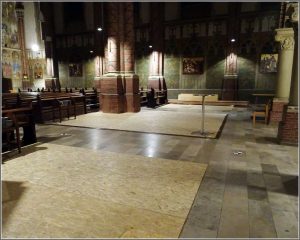
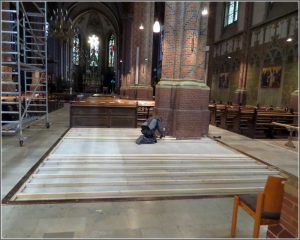
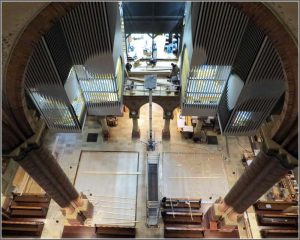


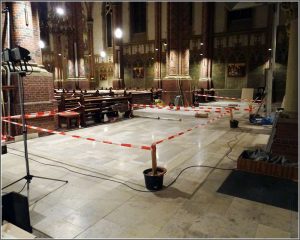



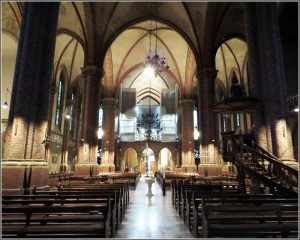
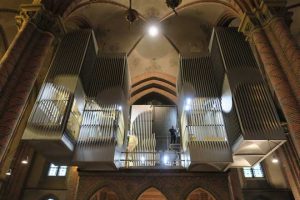
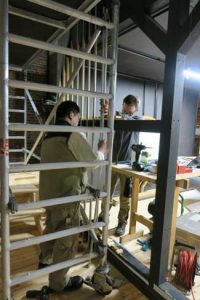
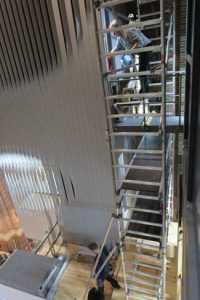
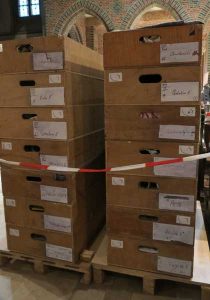
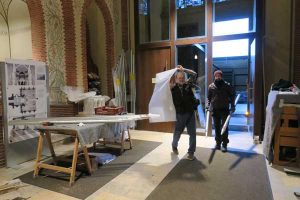

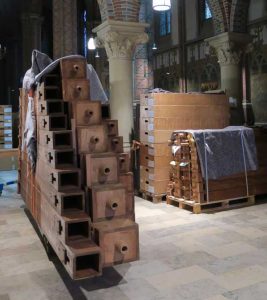
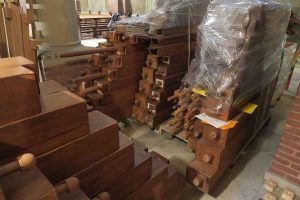




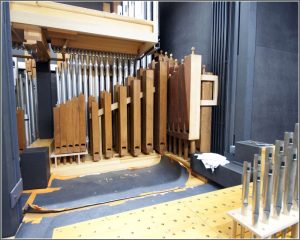
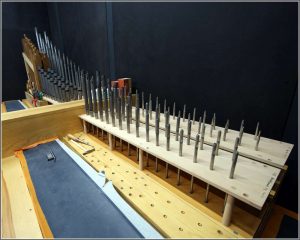
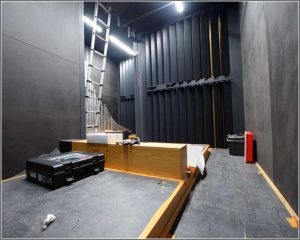
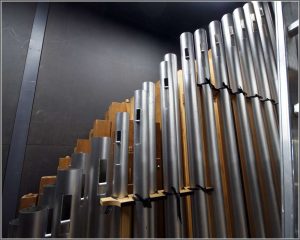
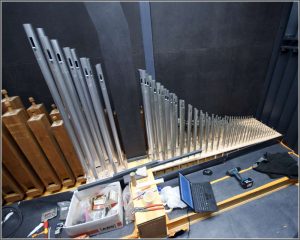
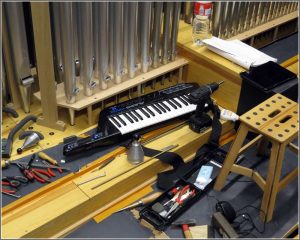
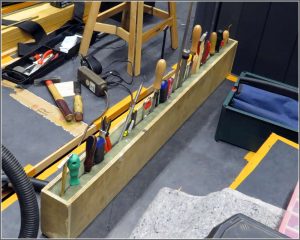
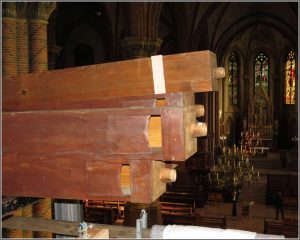
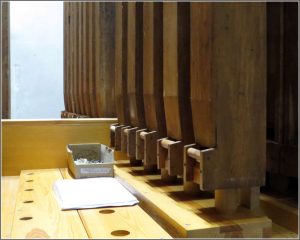
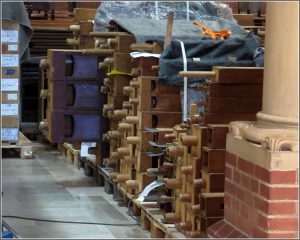
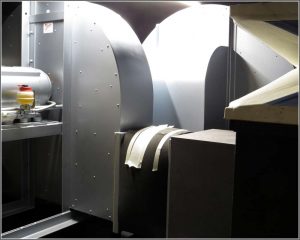
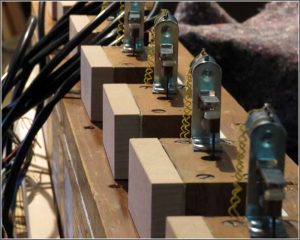
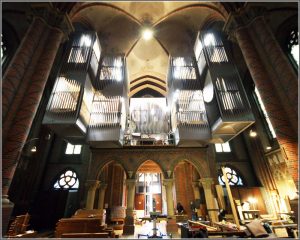
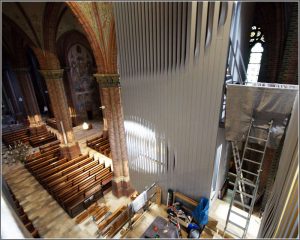
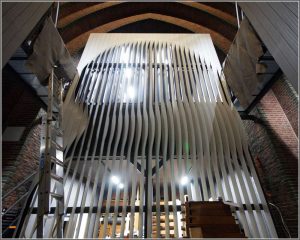


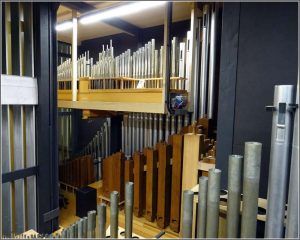
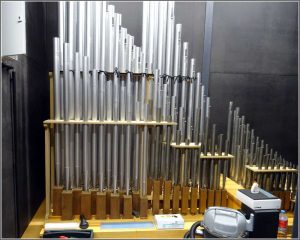
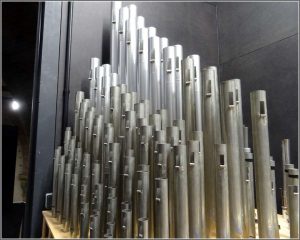
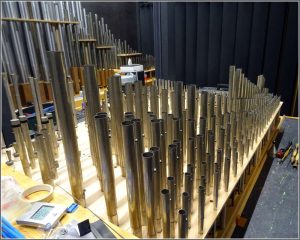
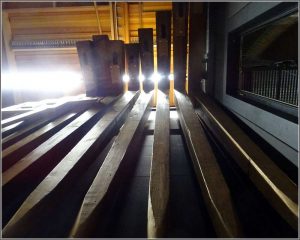

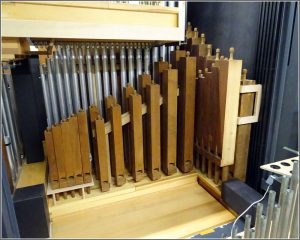
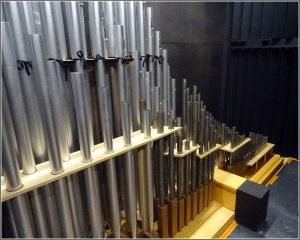
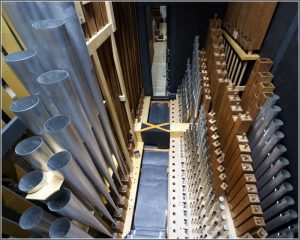
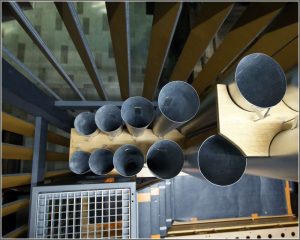

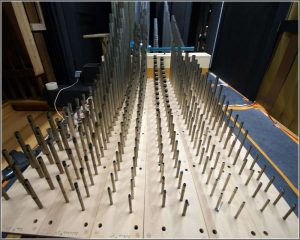
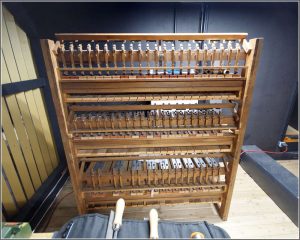

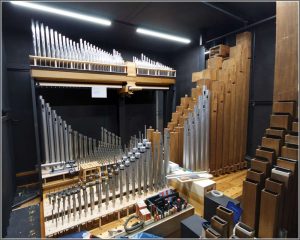
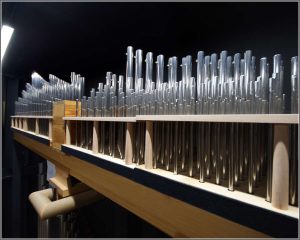
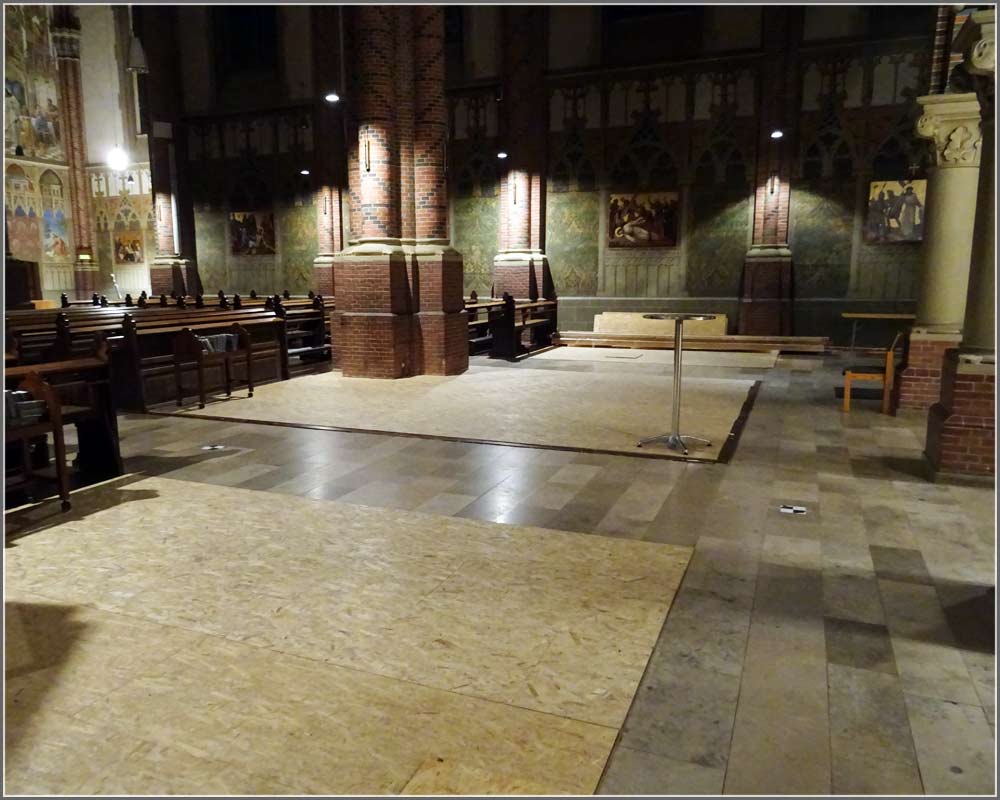
This is what the area under the new organ looked like at Christmas 2019, with a temporary OSB floor.
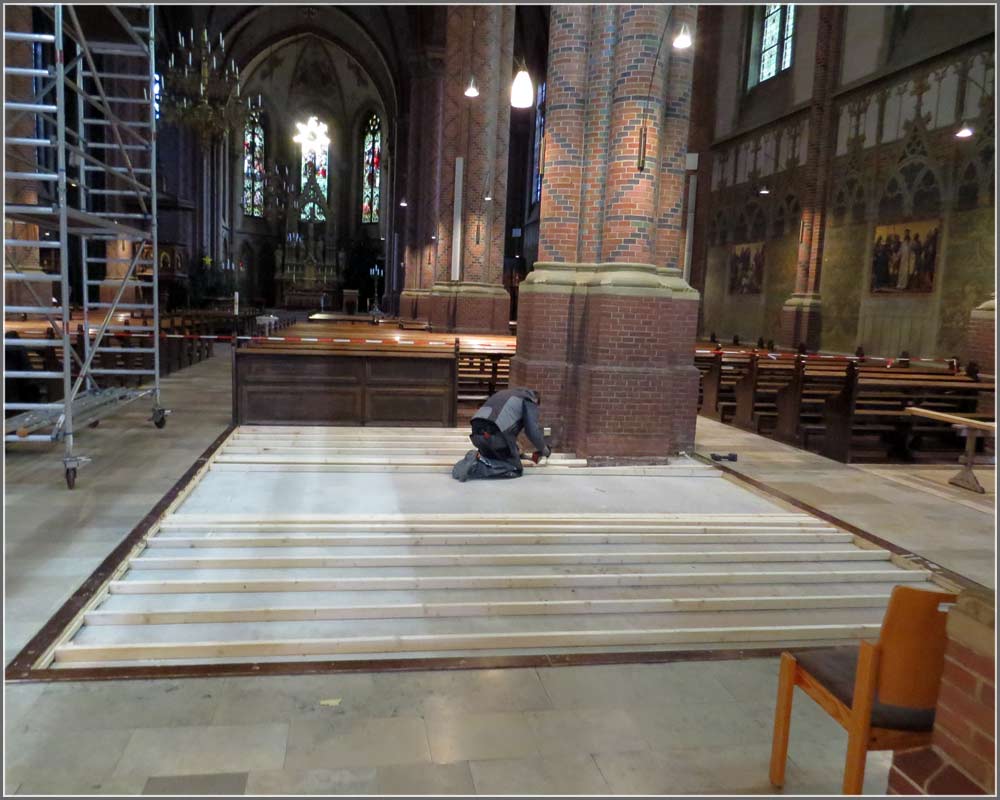
This temporary measure was removed on January 6, 2020.
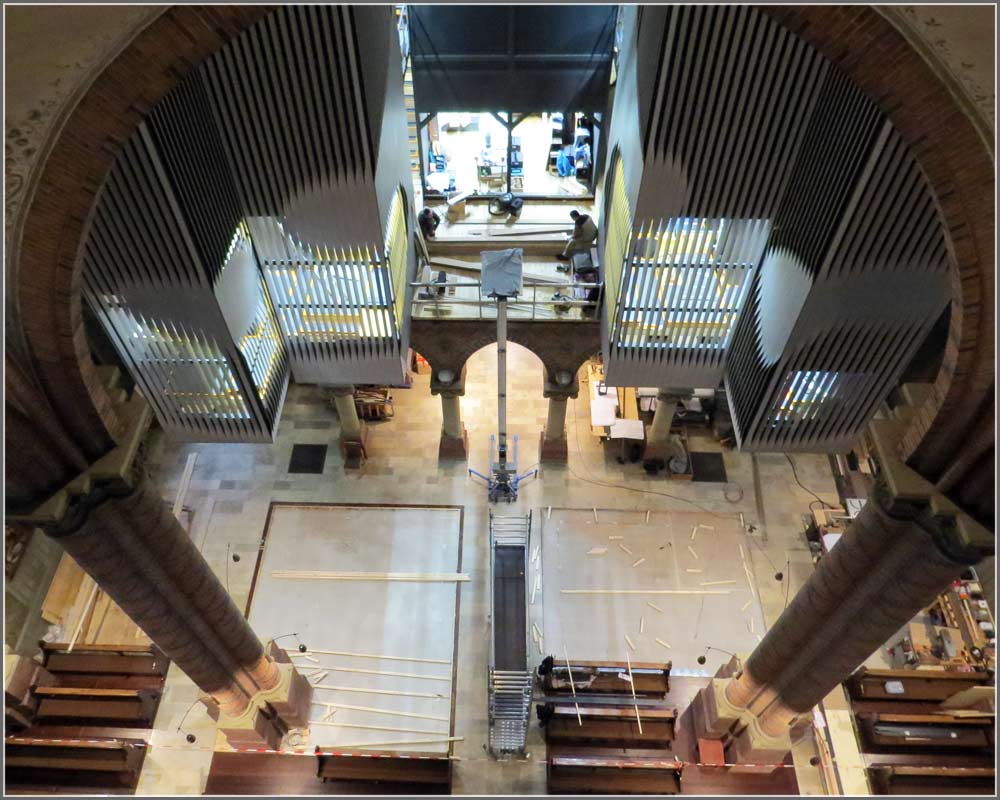
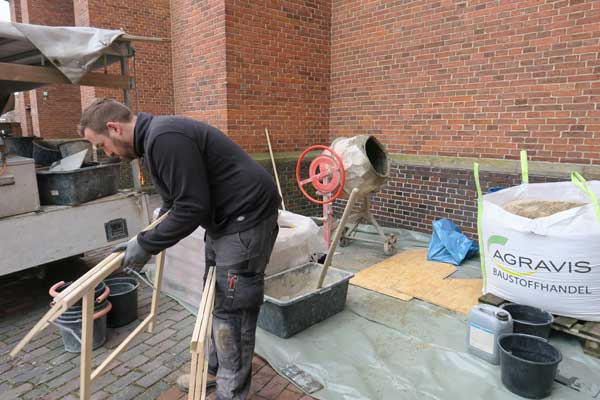
The craftsmen are back at work. While the organ builders are working somewhat out of sight in the organ towers, the work of the tilers and carpenters is clearly visible.
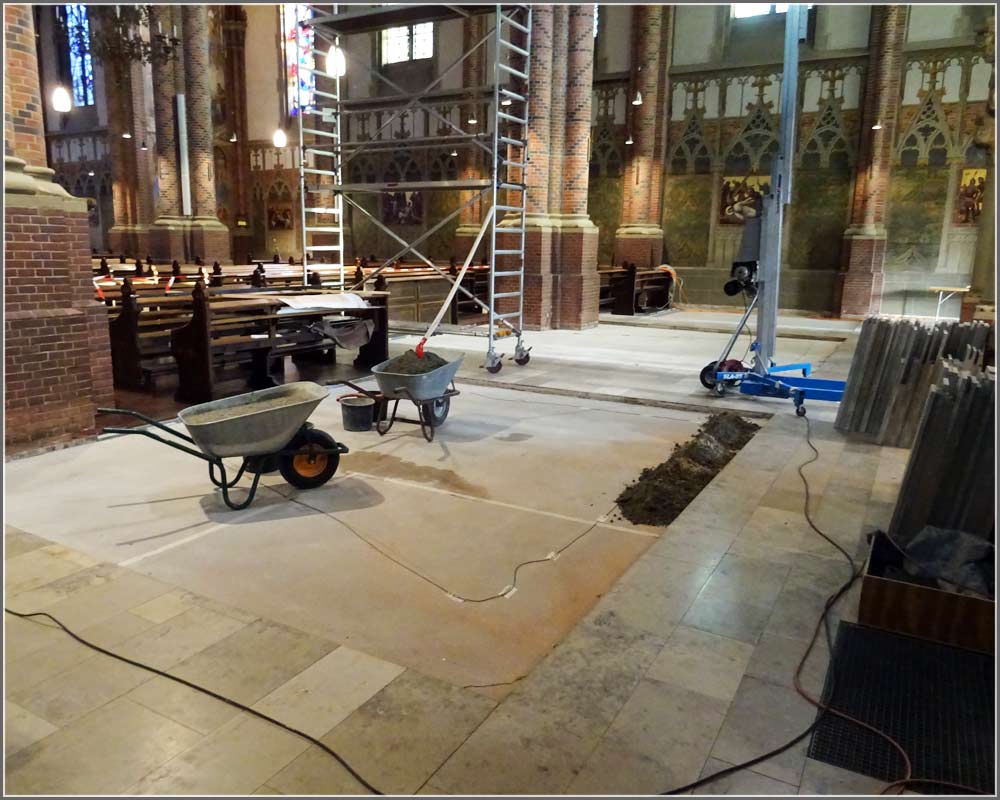
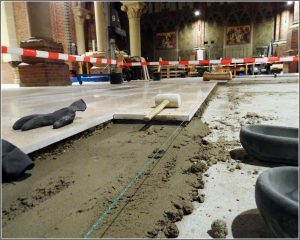
Now the tile setters were able to get to work.
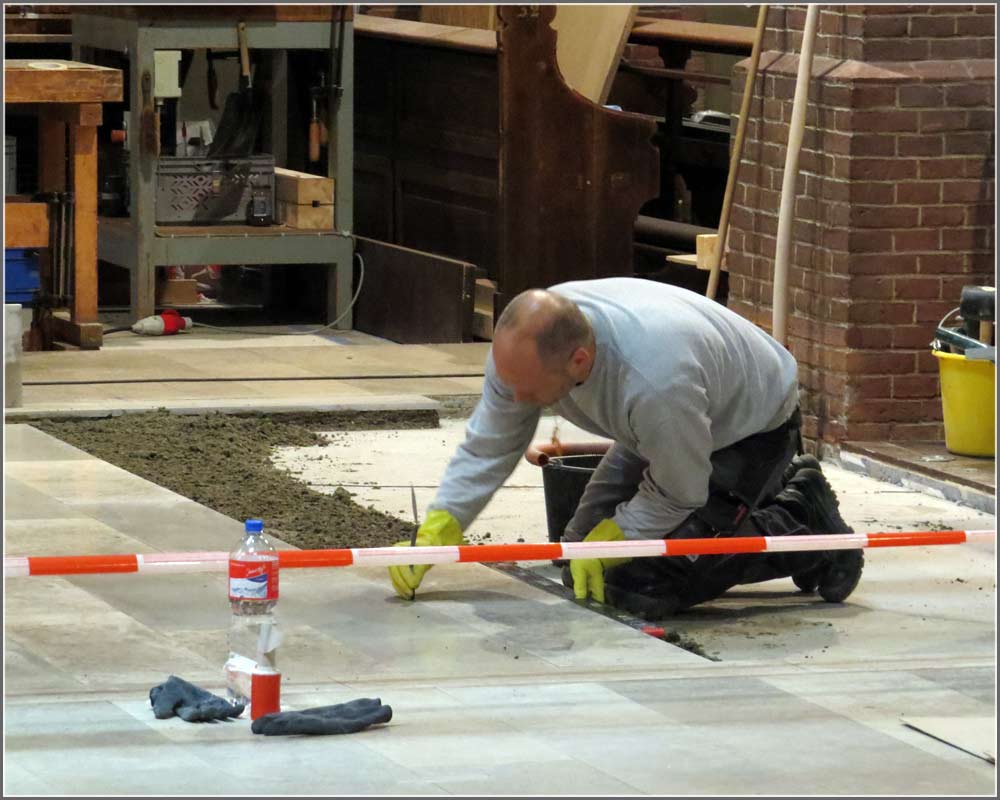
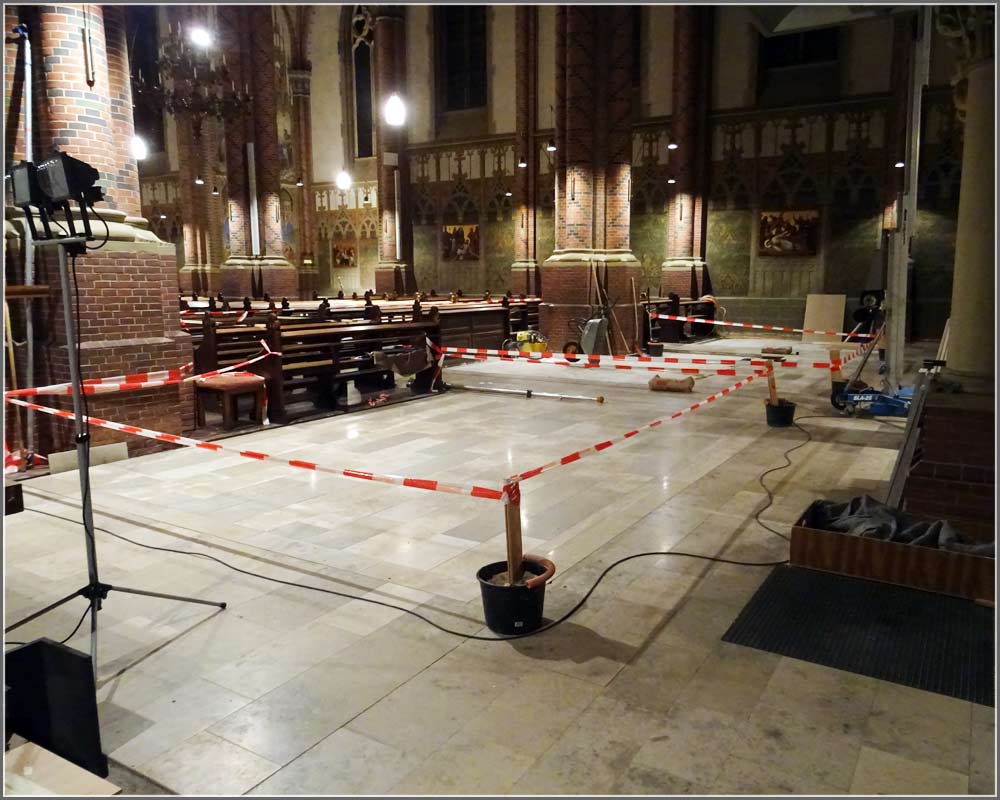
By Tuesday evening (January 7), the first section was finished.
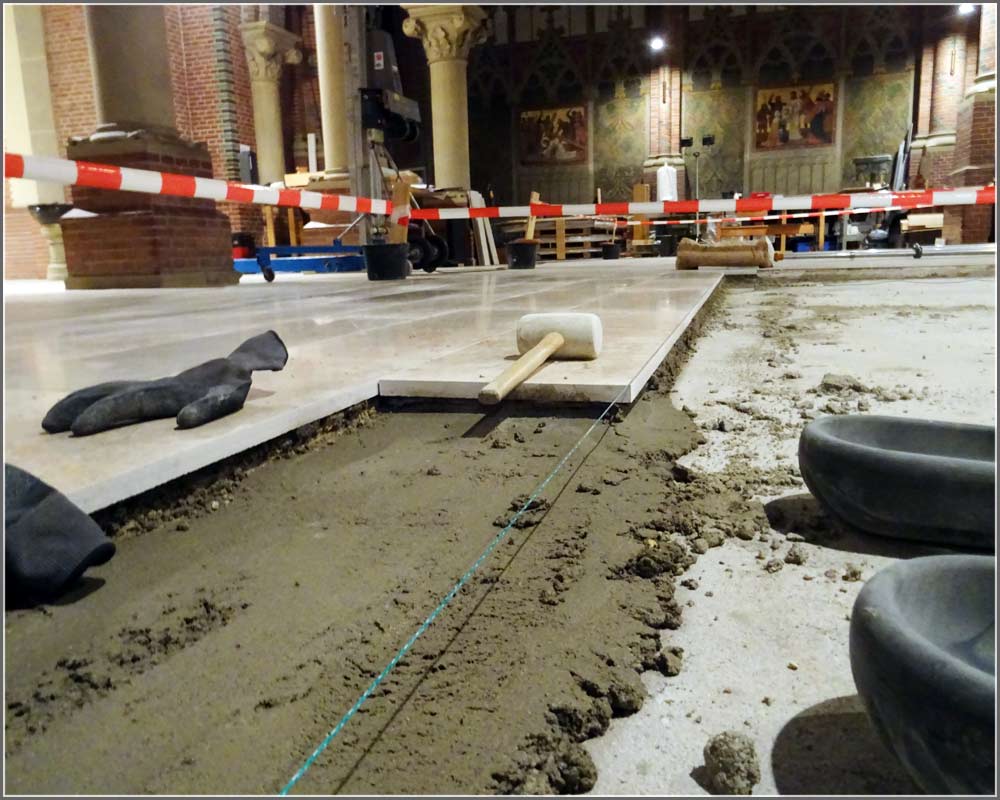

By Friday, three-quarters of the area had been poured.
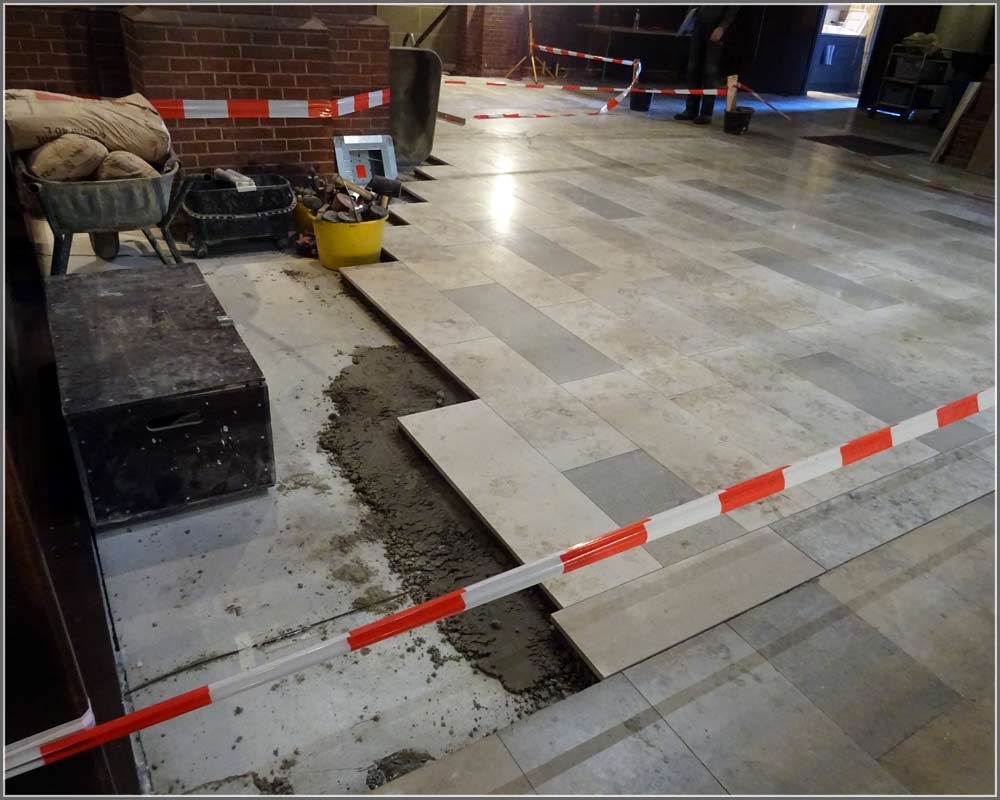
The tiles will have to wait in this area, because the wiring for the game table still needs to be installed here.
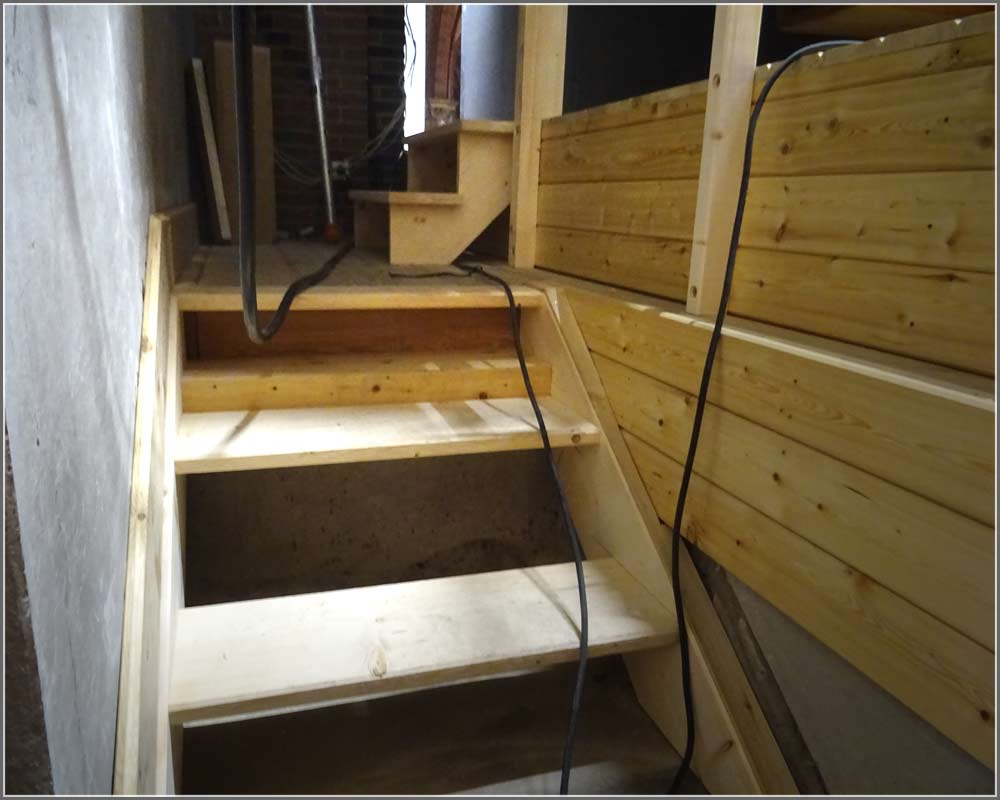
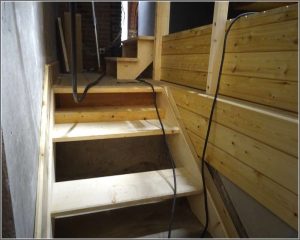
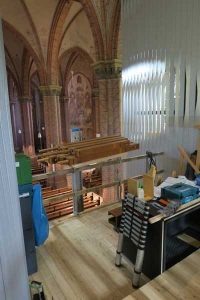
The carpenters have built a lot of steps on the organ loft this week.
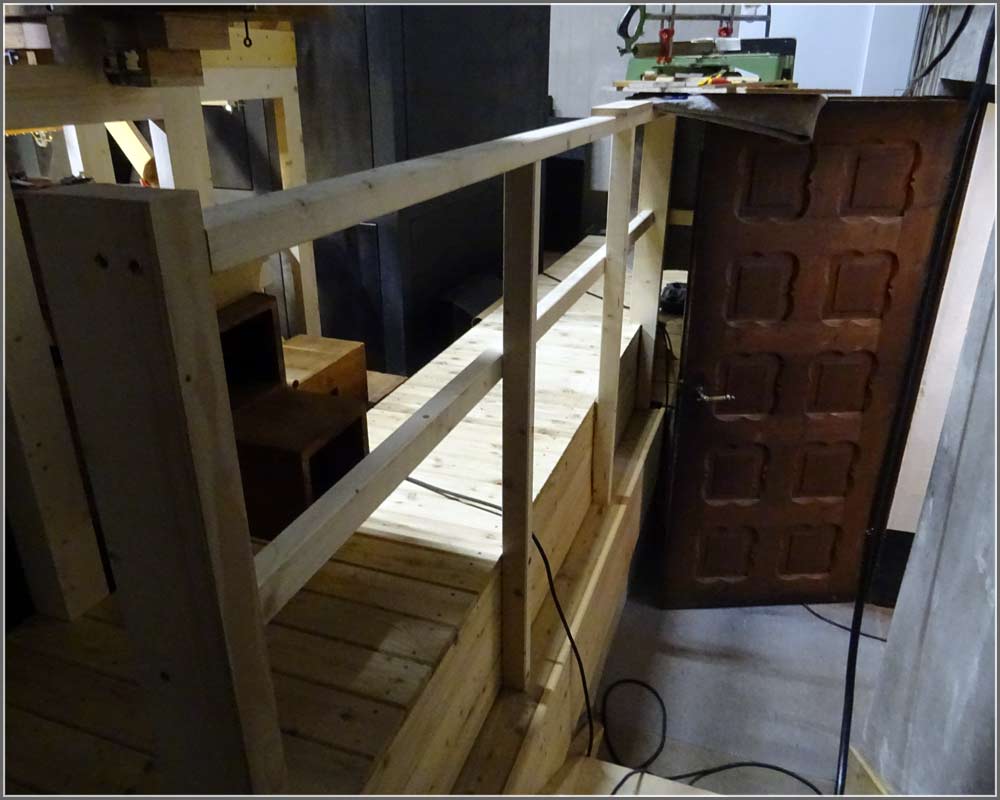
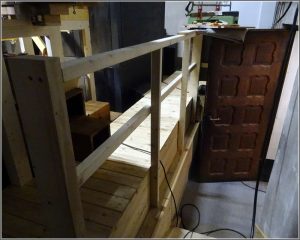
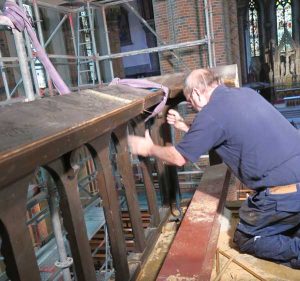
A railing was also installed for safety.
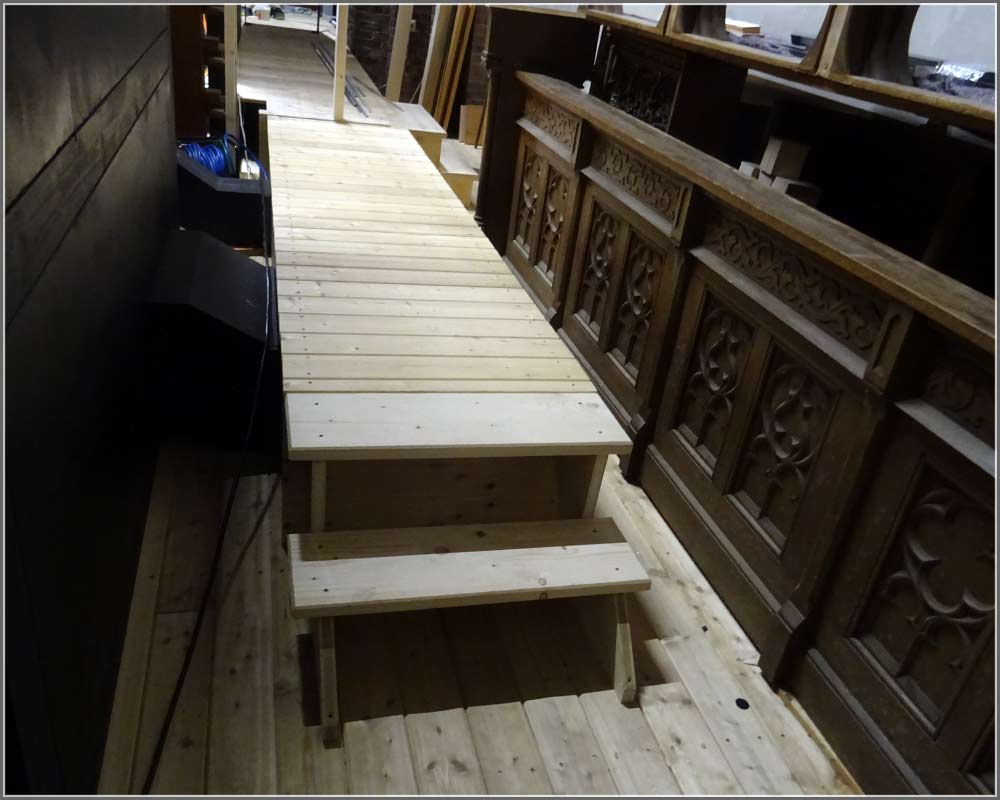
One of the organ's windchannels is located beneath this walkway.
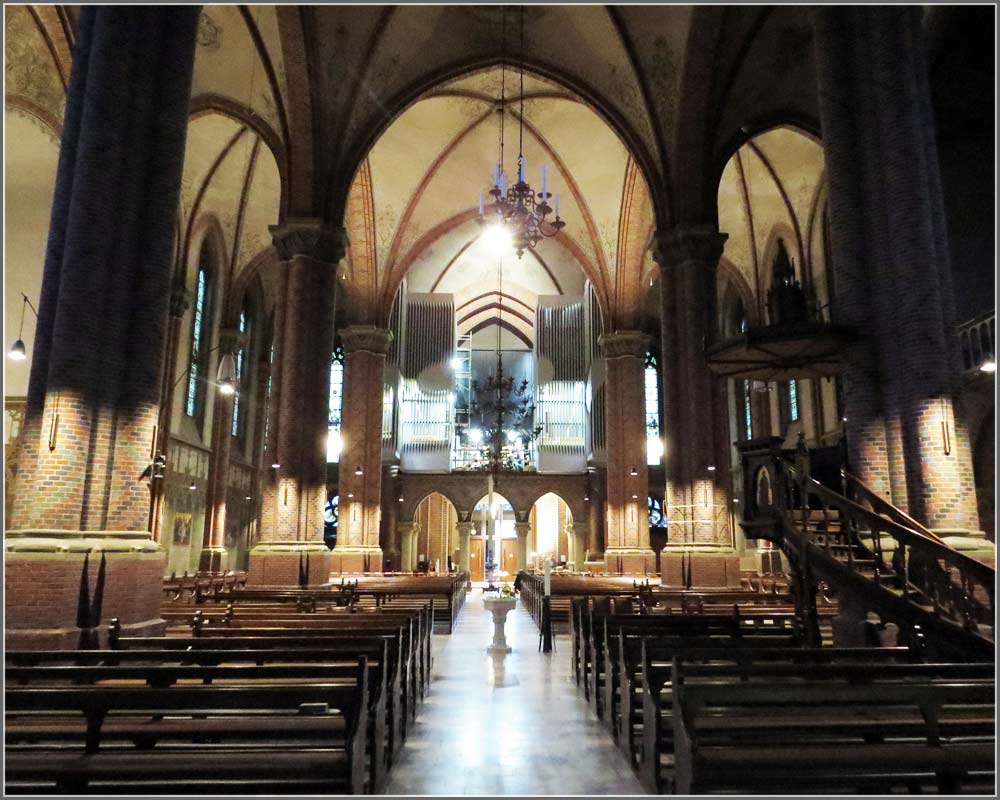
A full view of the Walcker organ on January 10, 2020.
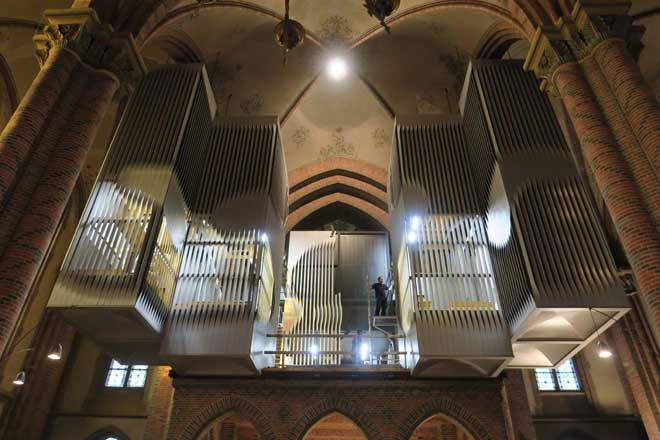
The final parts of the organ's casing will be installed during the second week of January.

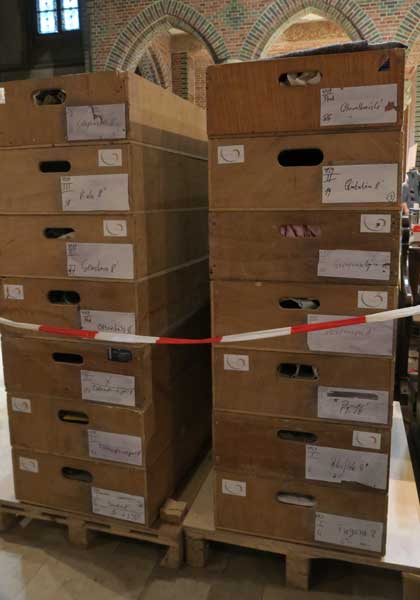
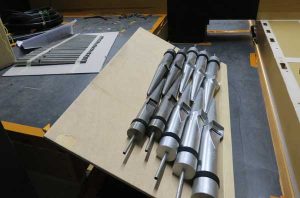
The organ pipes have arrived (Jan. 16–17)!
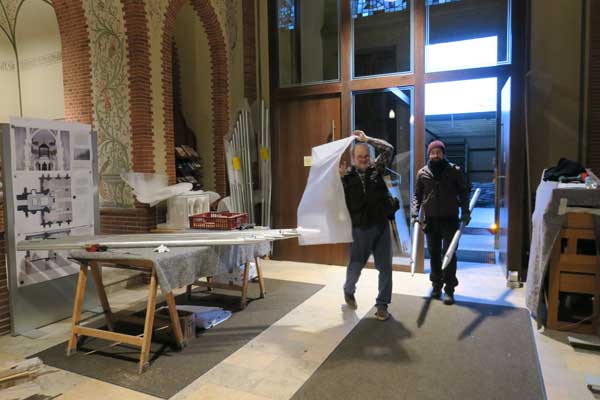
The smaller ones were packed in boxes; the larger ones were carried in one by one.
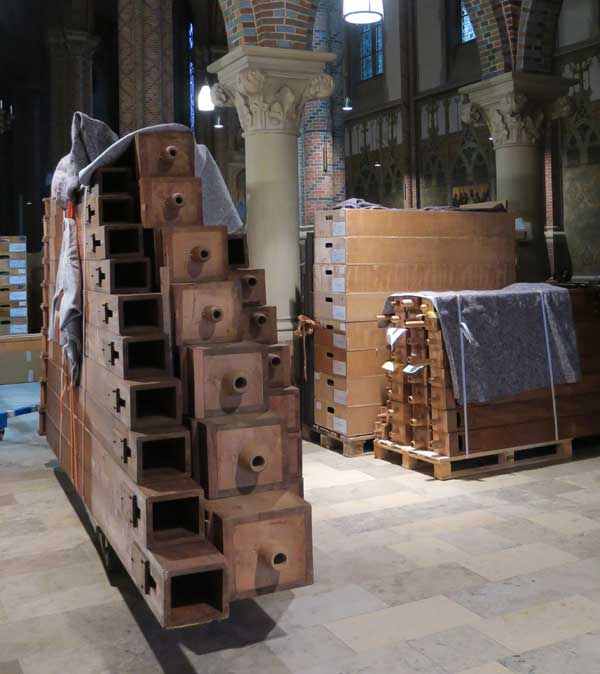


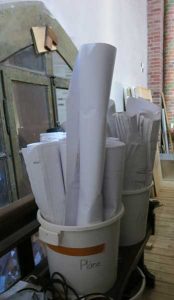
The rolled-up, discarded blueprints for the organ case, which are no longer needed.
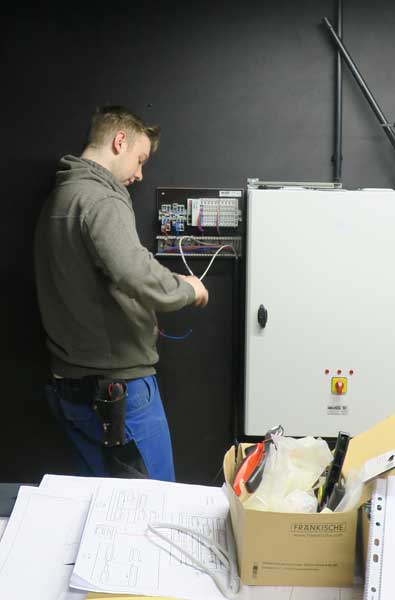
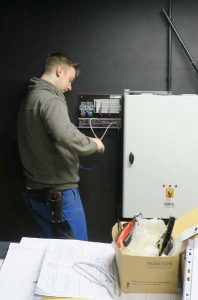
Electrical Systems (Jan. 20).
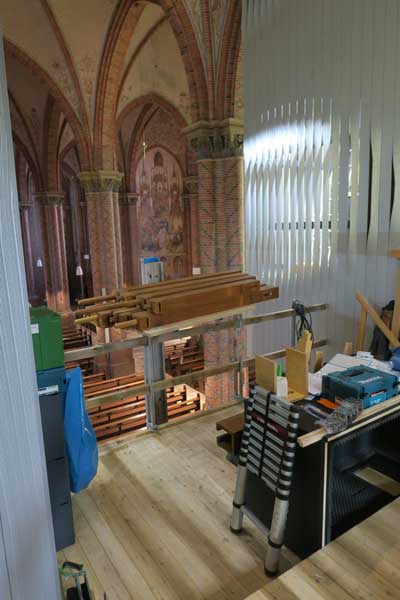
Transport.
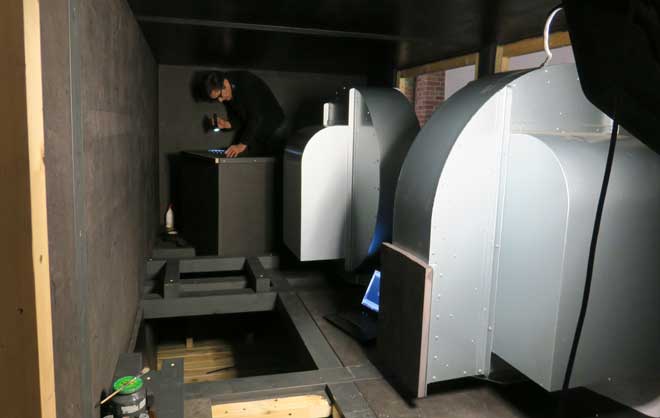
Work on the wind turbine.
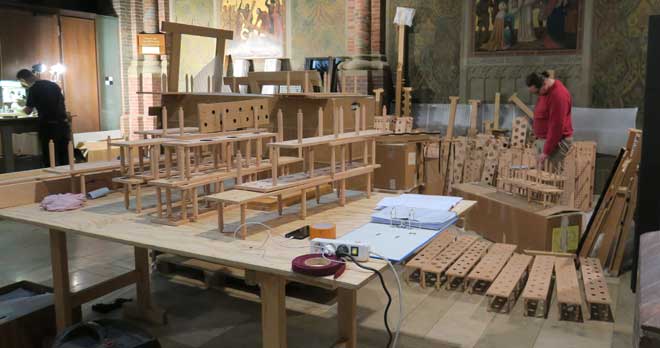
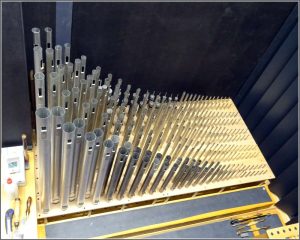
Countless "pipe benches."
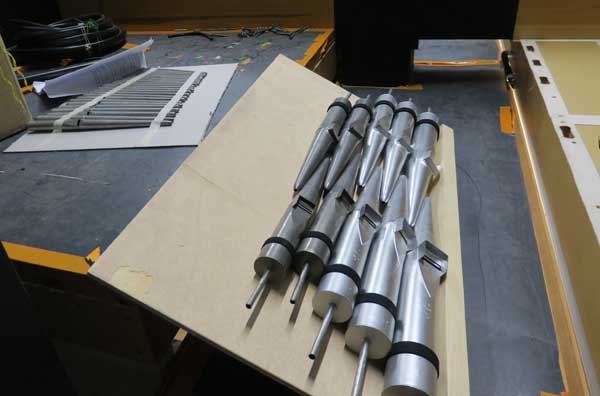
Organ pipes arranged in precise order before installation.
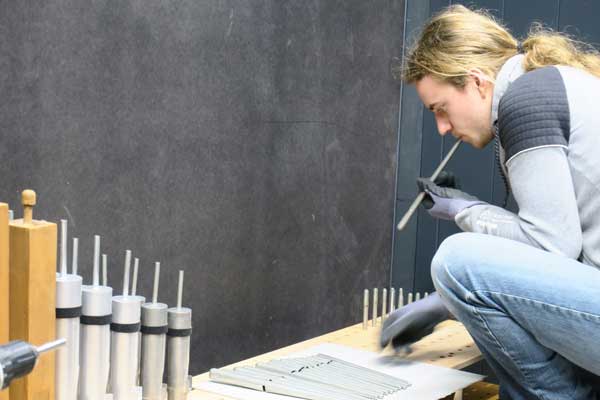
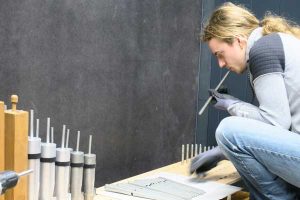
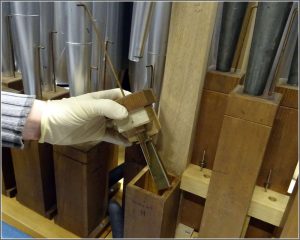
The correct orientation is also verified acoustically by blowing into the connector before inserting it.
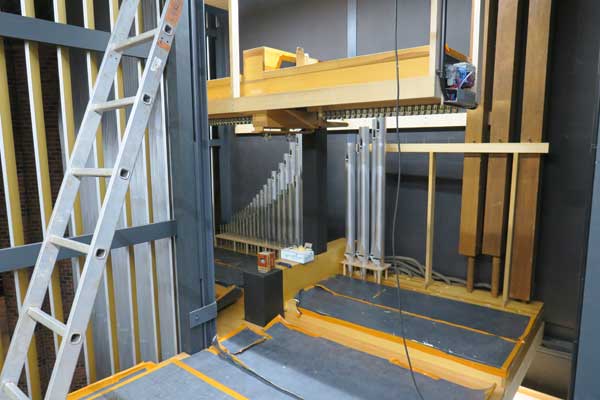
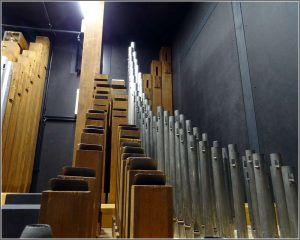
Little by little, the organ chambers are being filled with pipes.
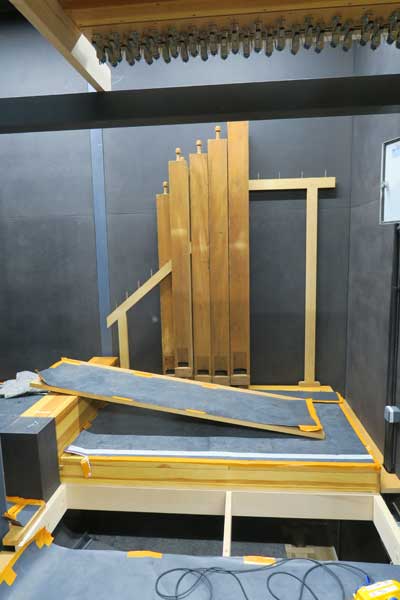
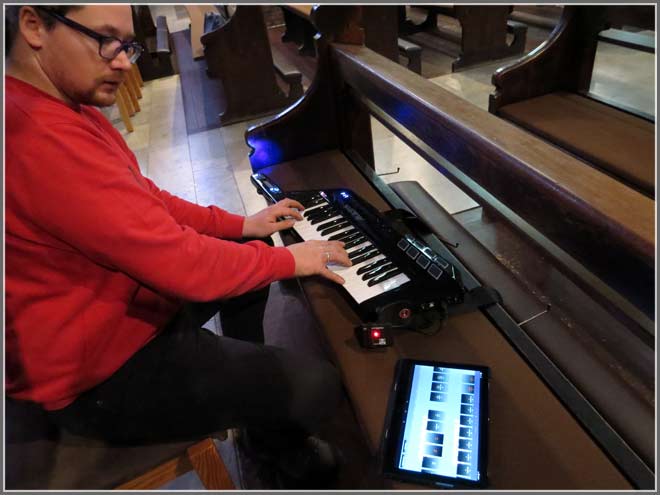
Since February 3, the parish church has been closed on weekdays because the organ tuners need time to work on the organ's tuning.
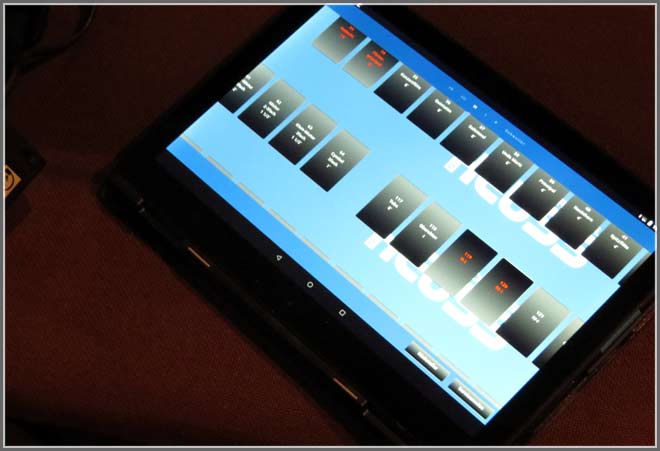
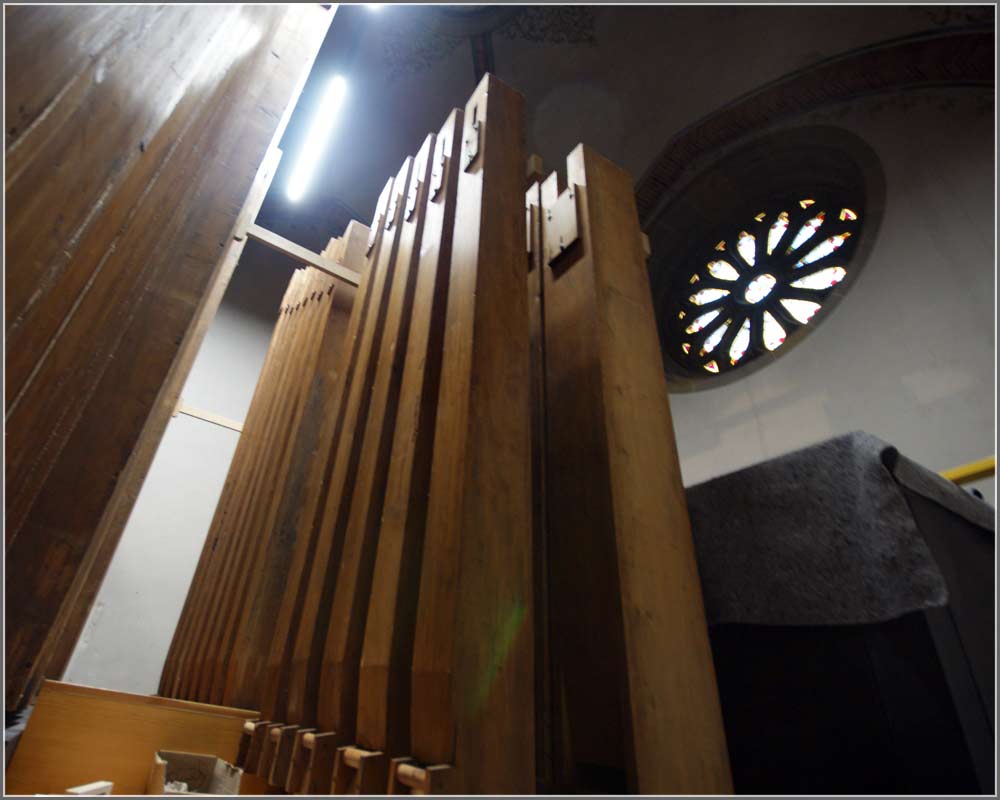
The organ towers, which have been empty until now, are gradually being filled with pipes.
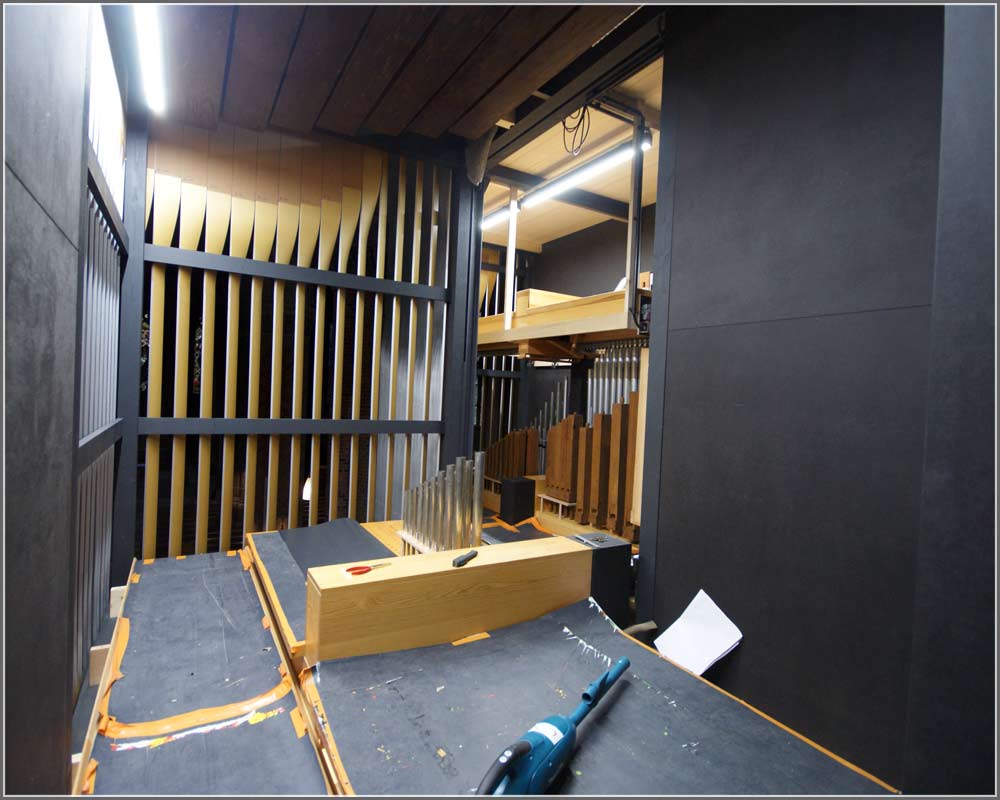
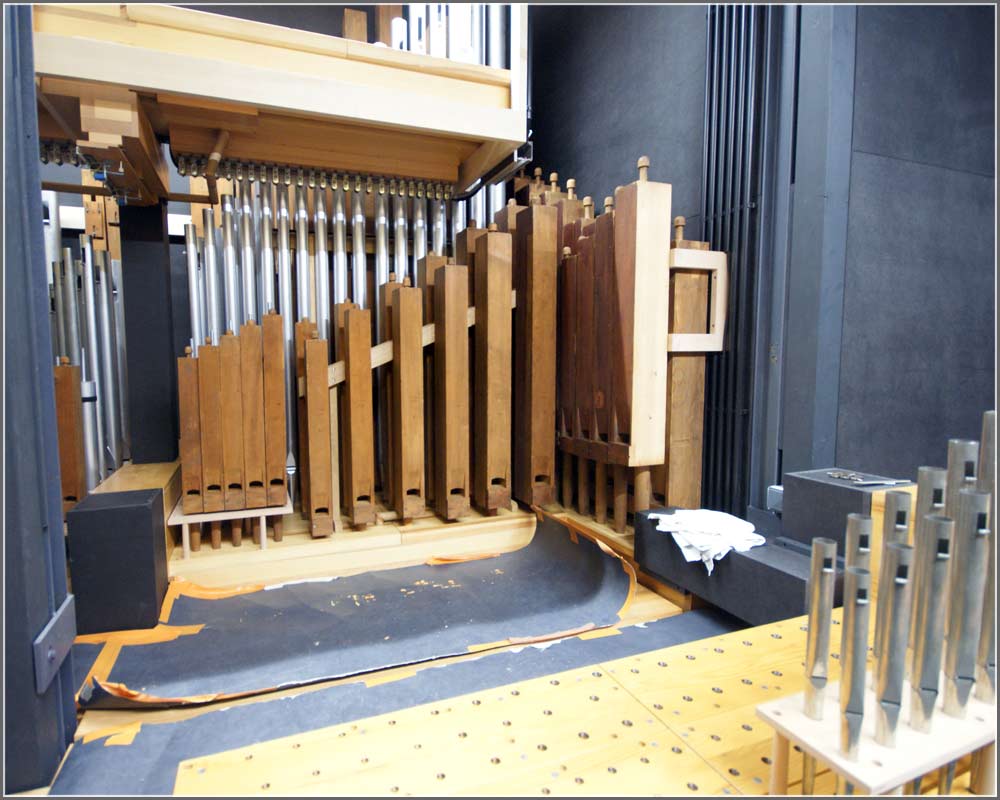
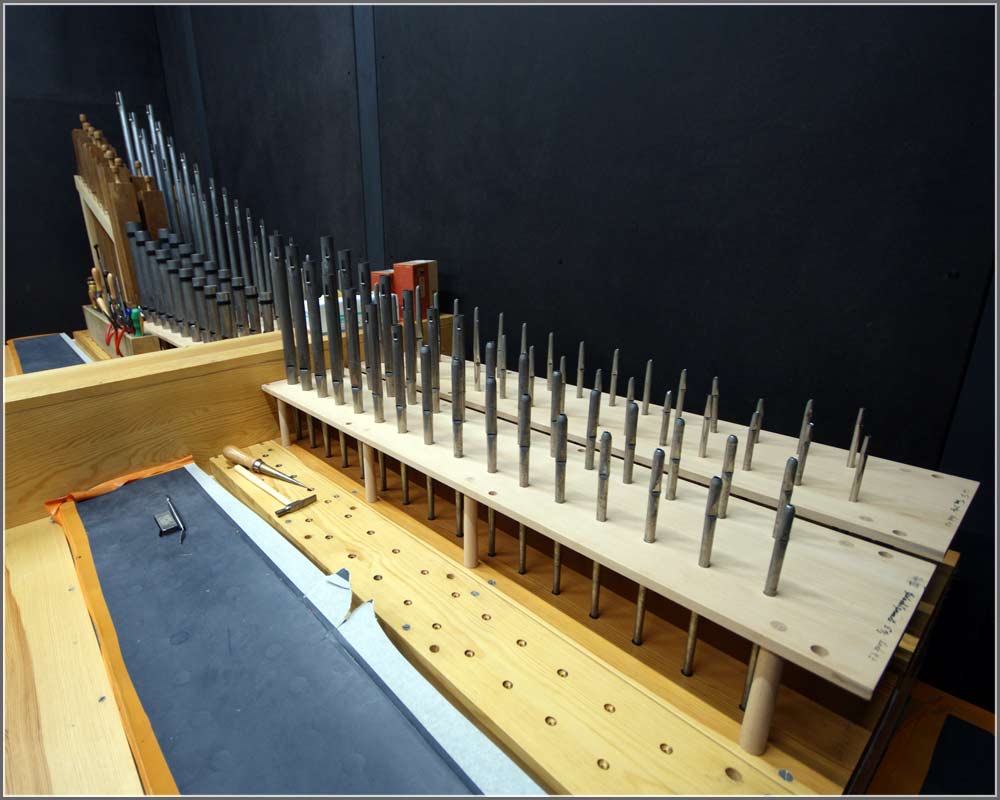
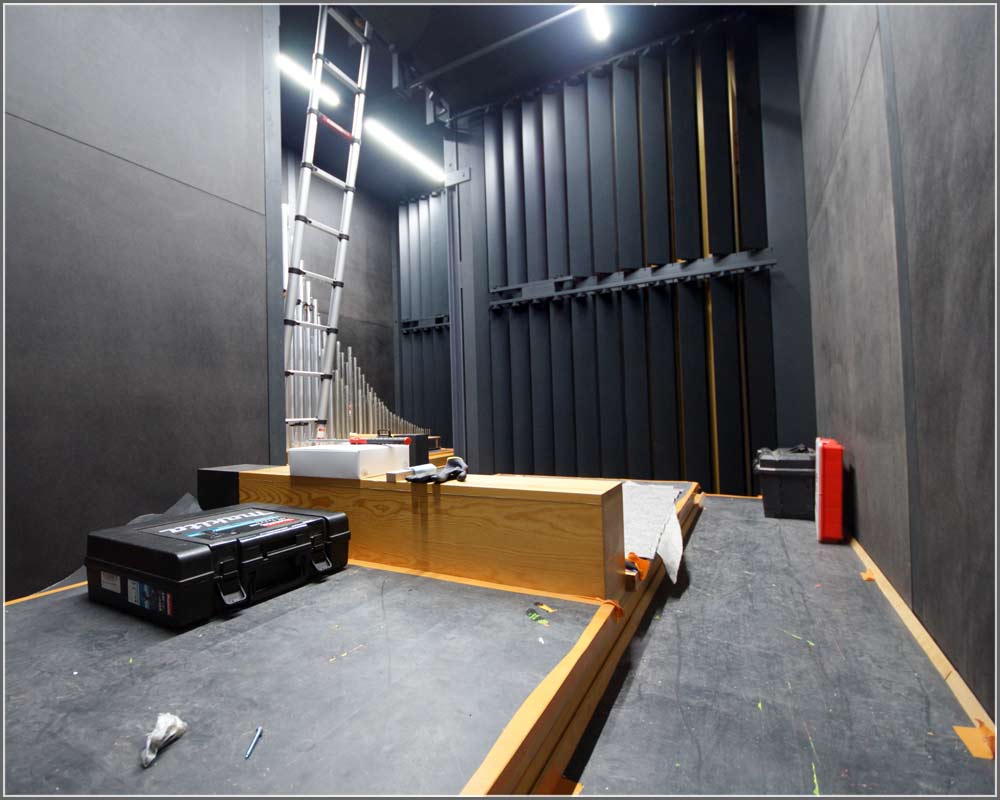
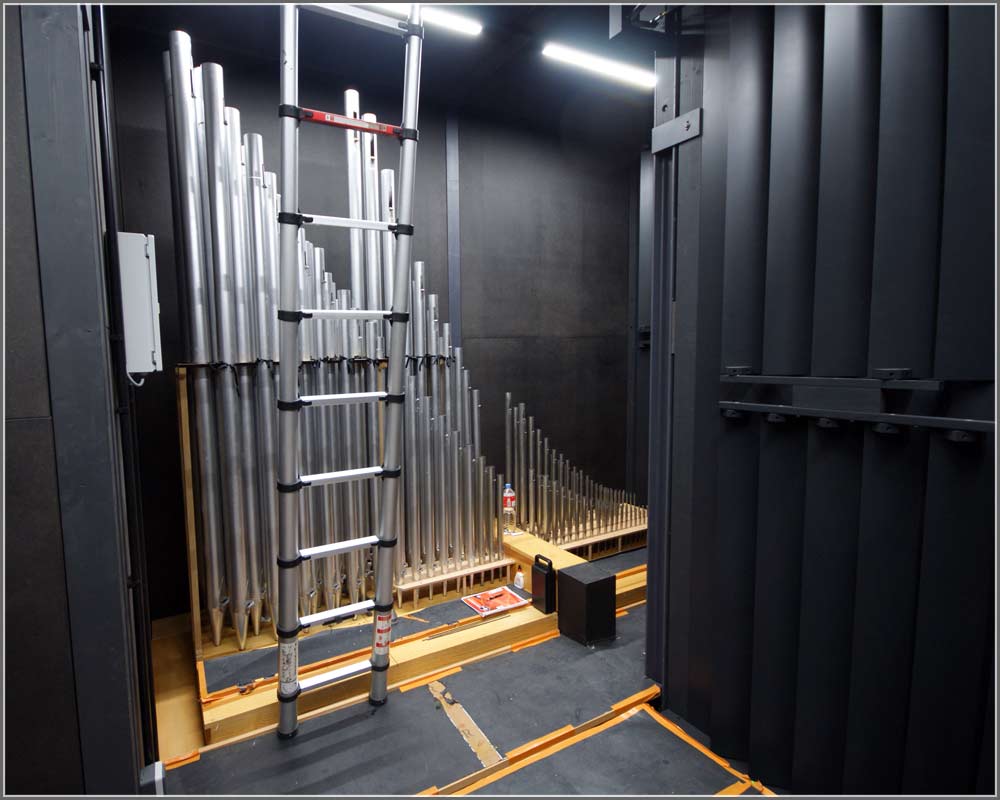
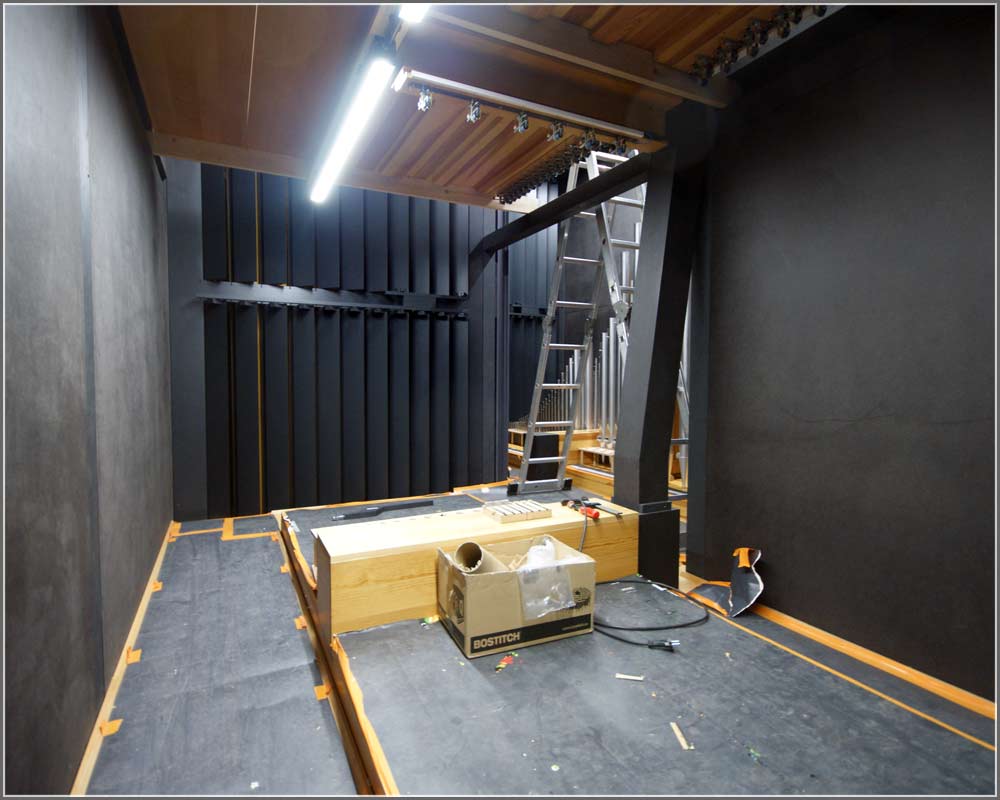
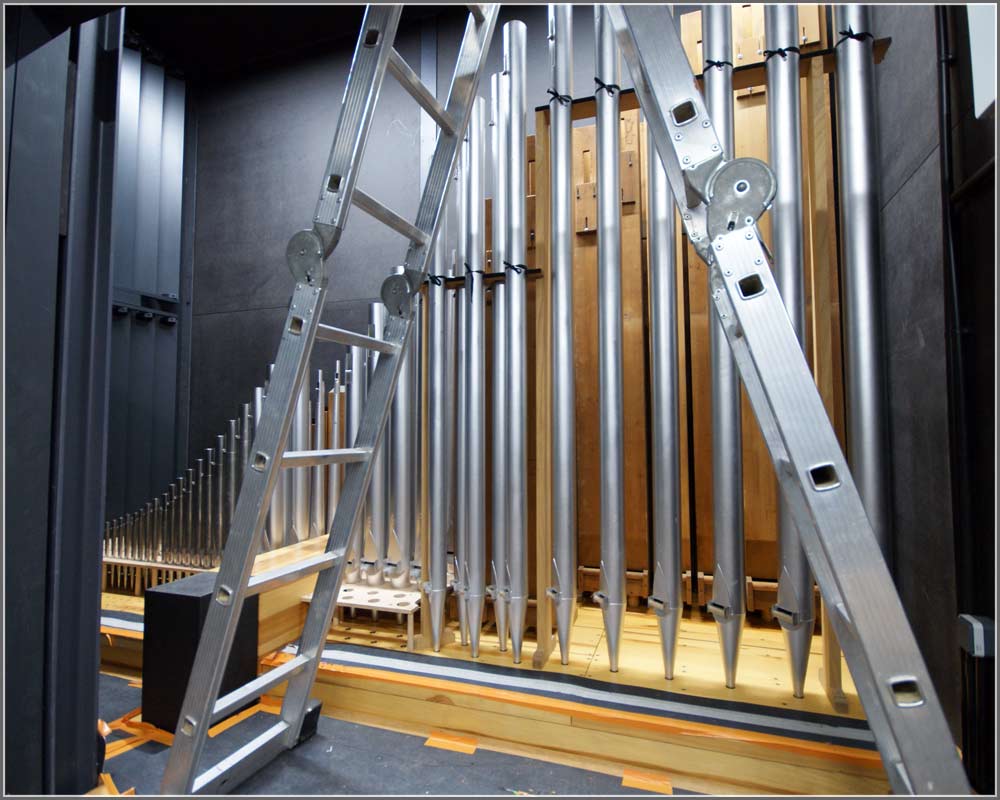
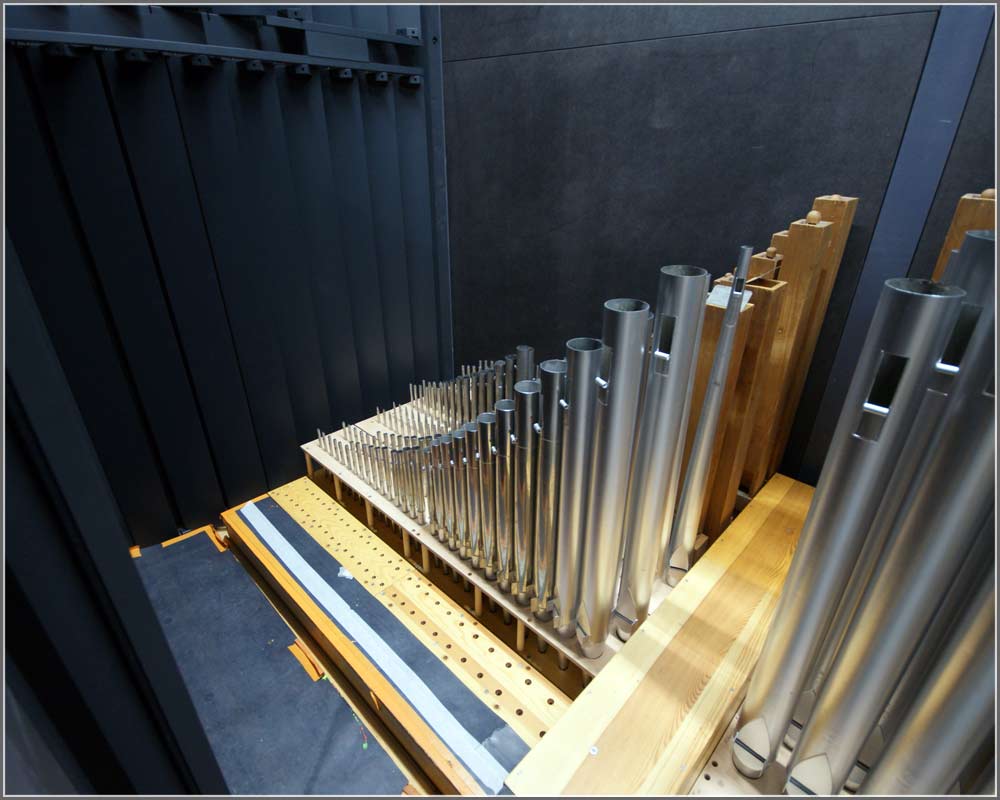
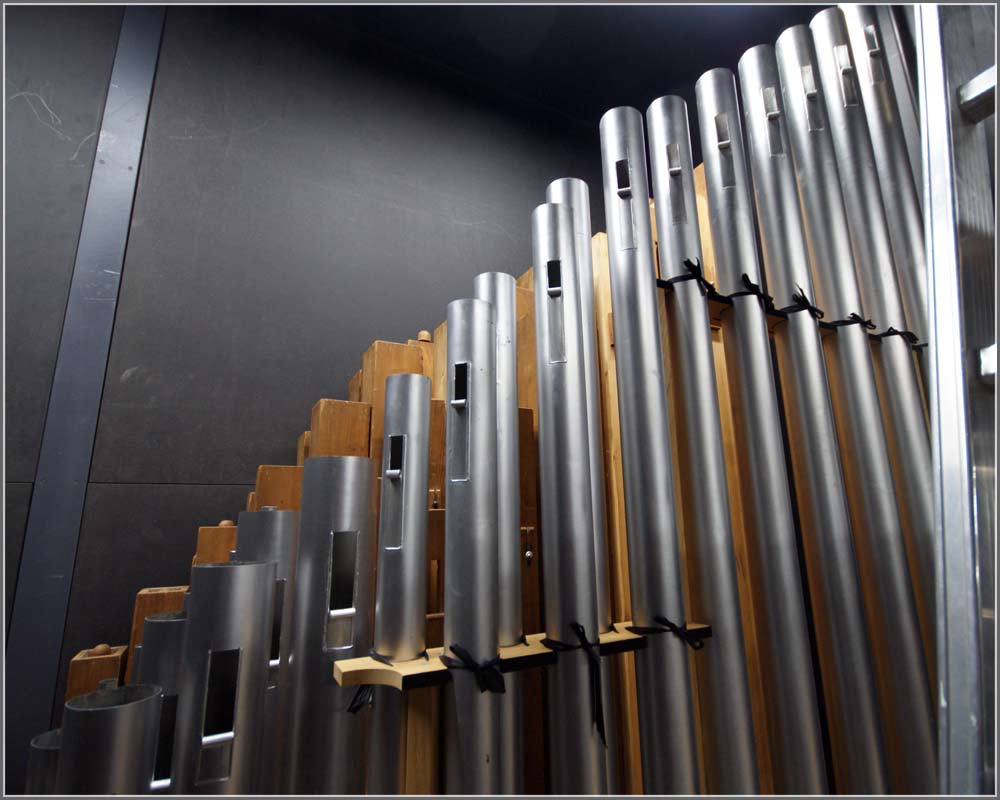
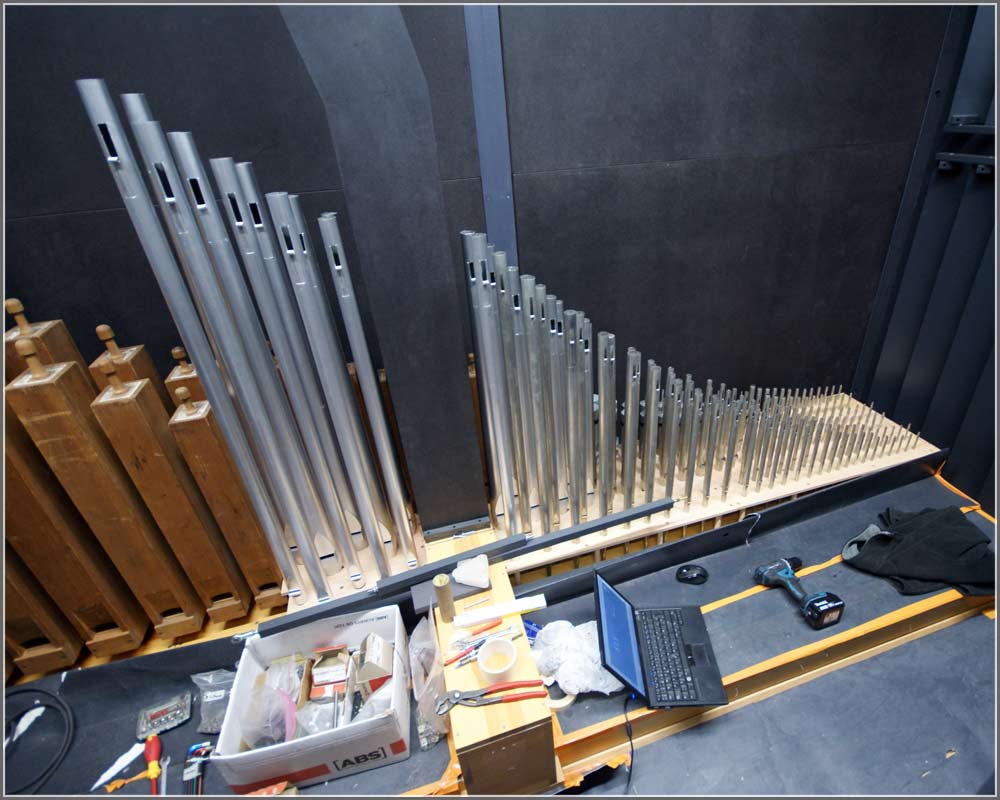
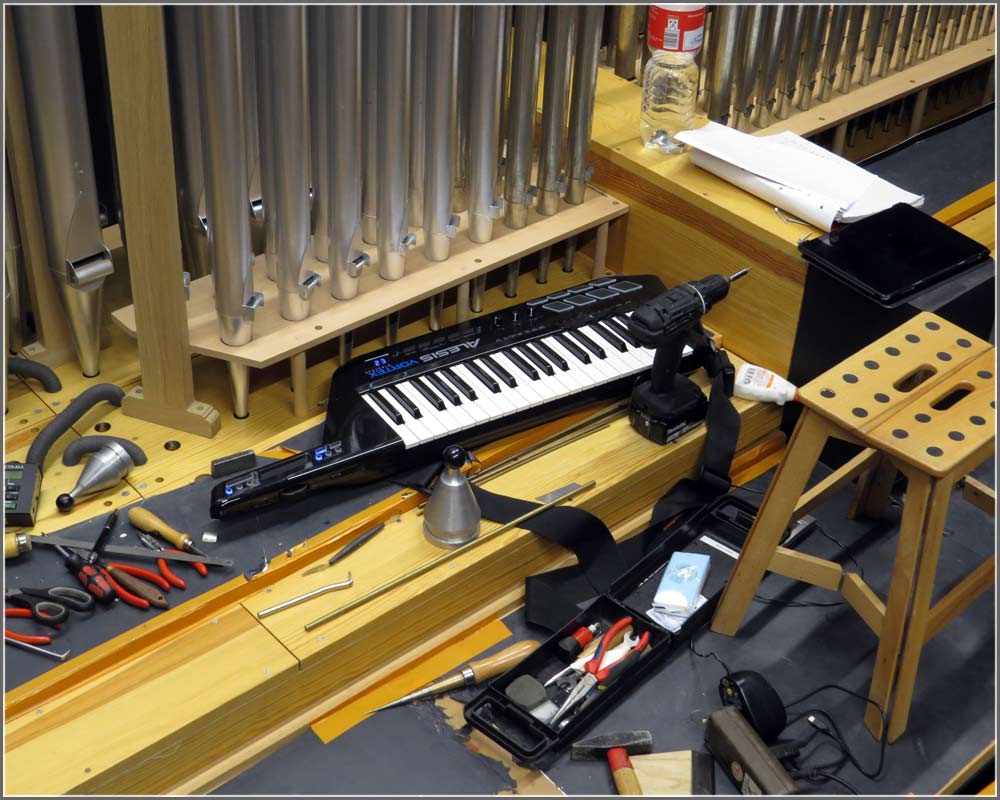
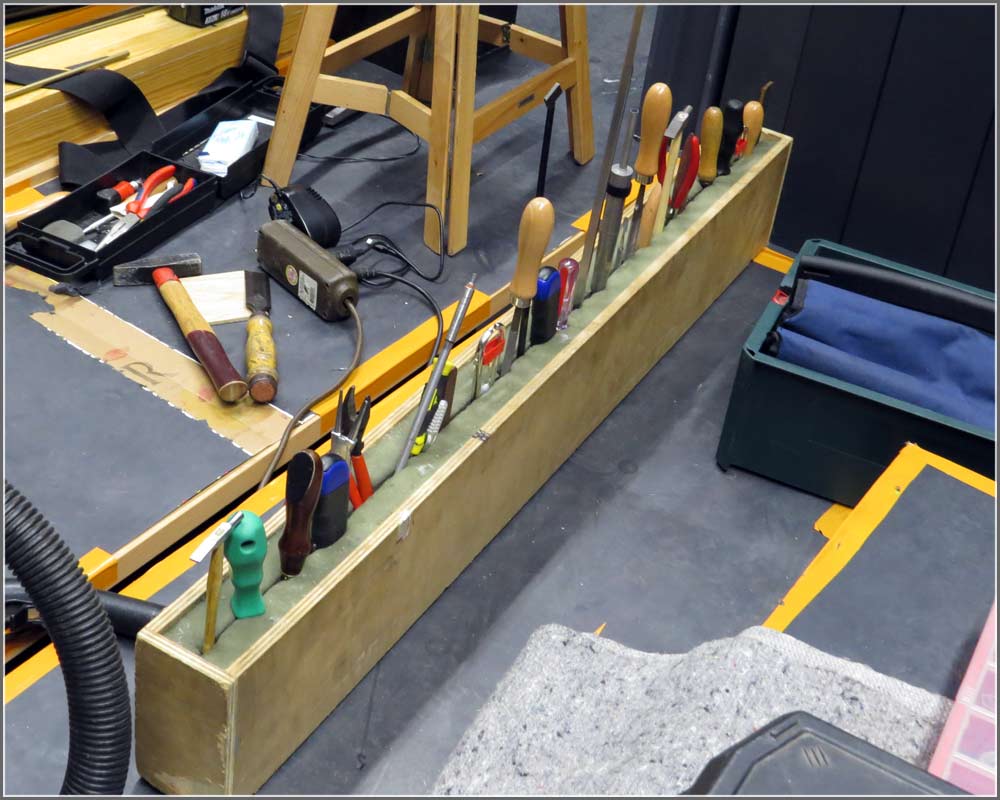
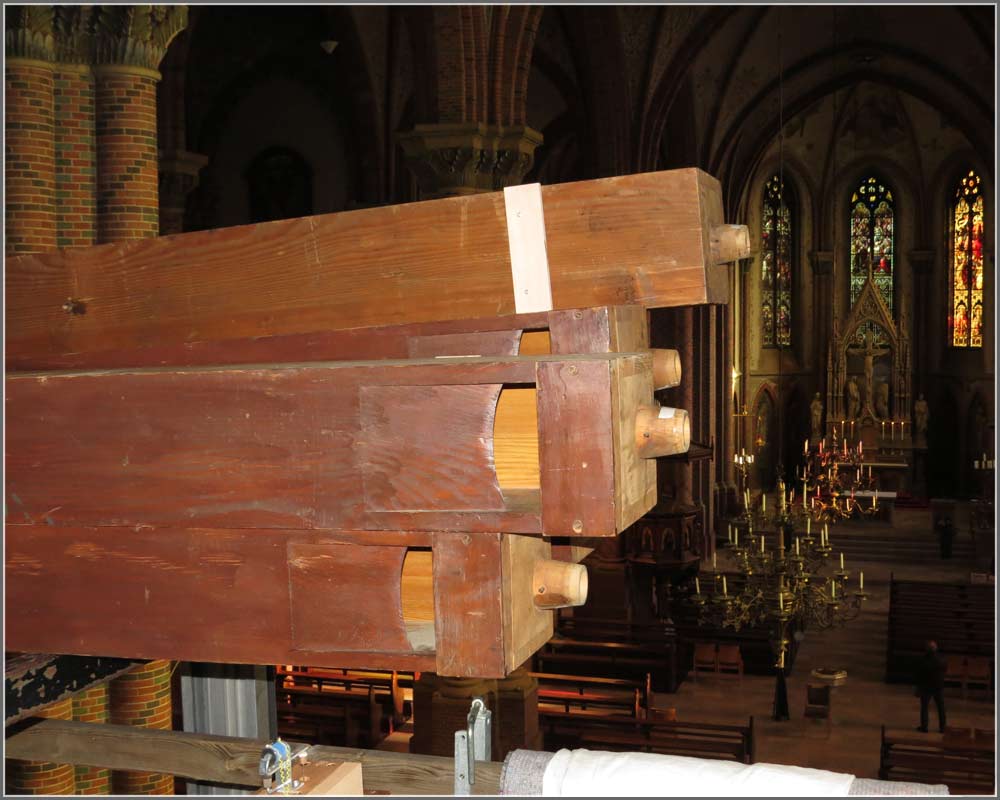

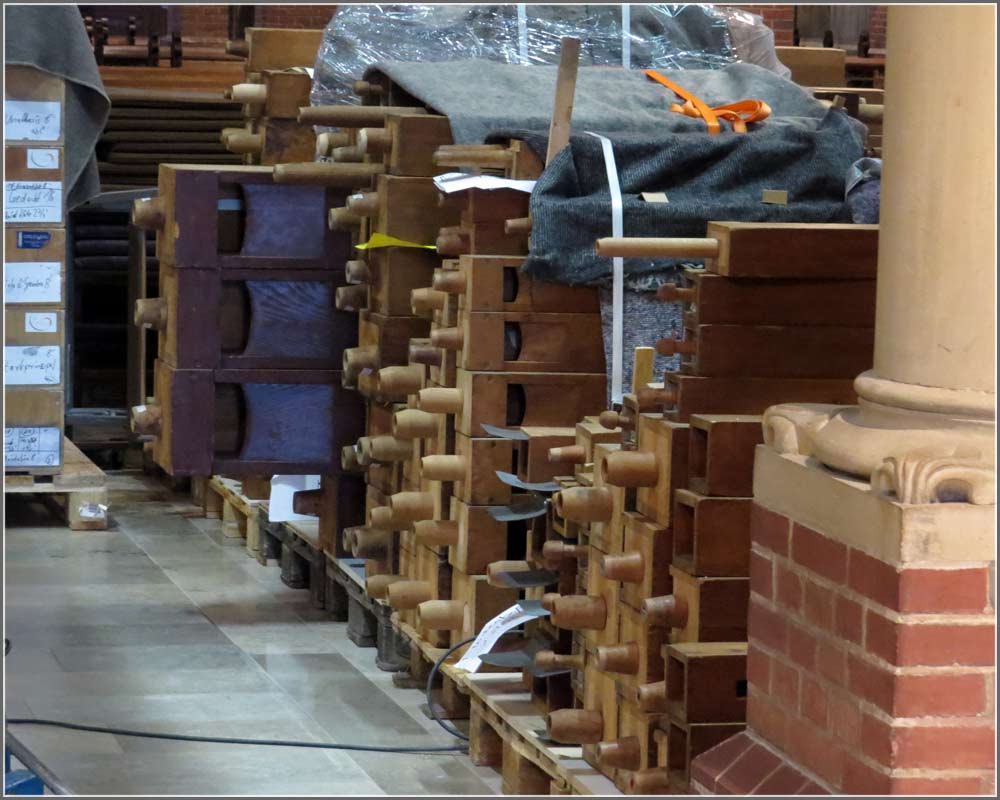
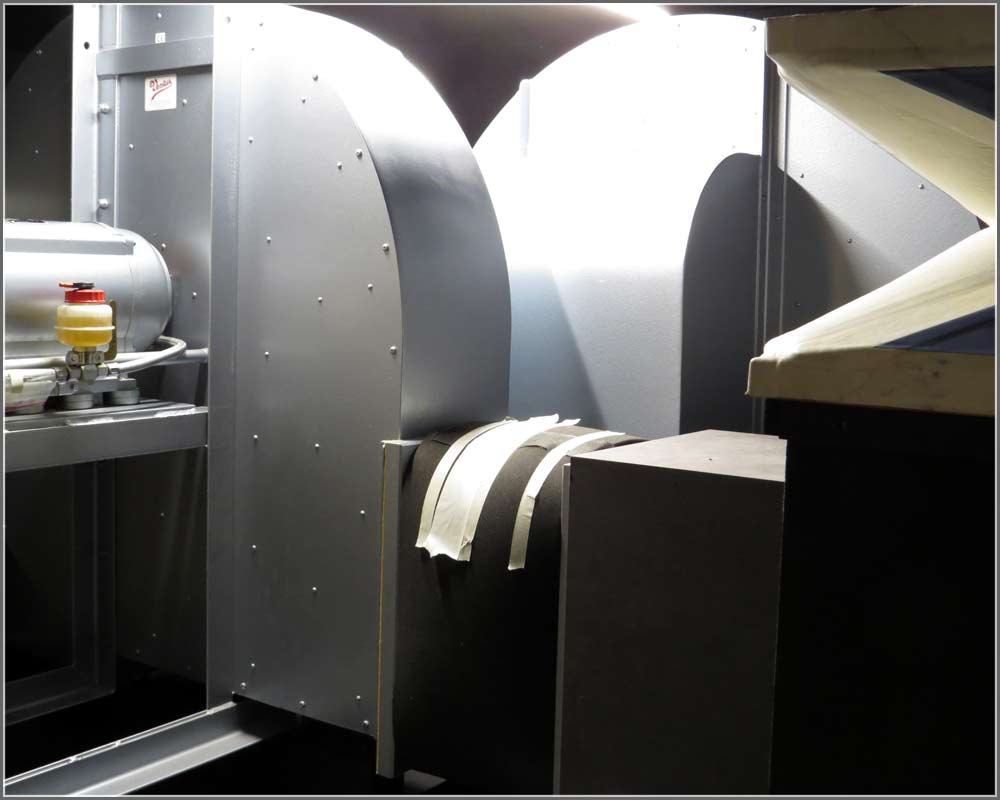
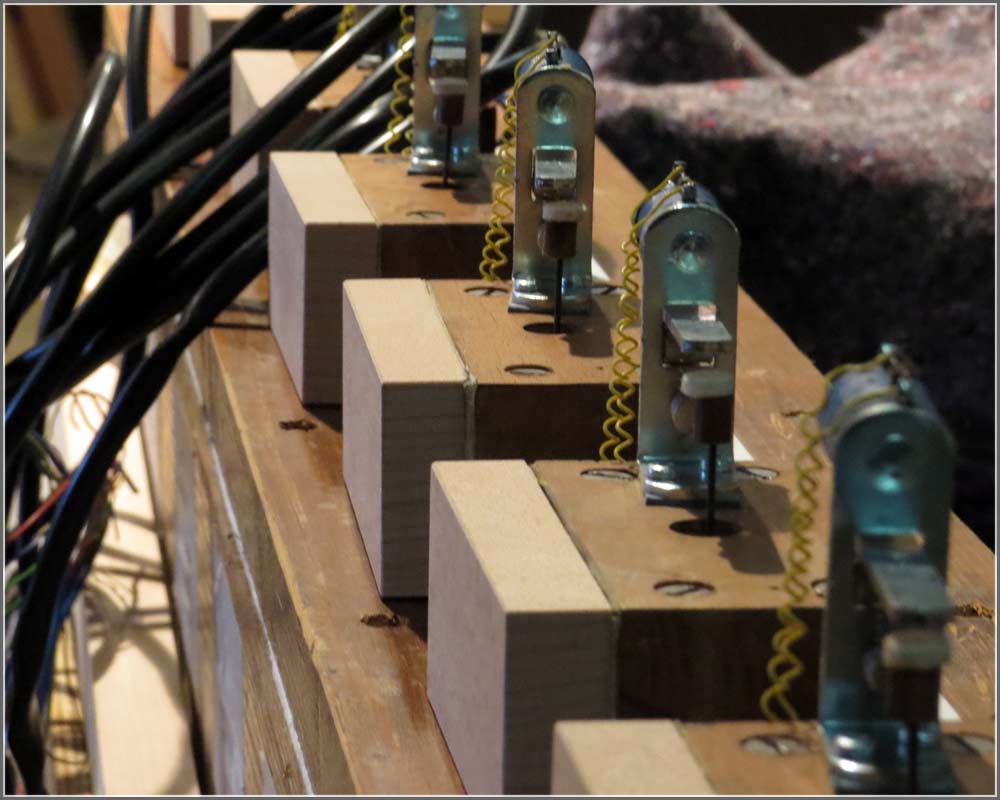
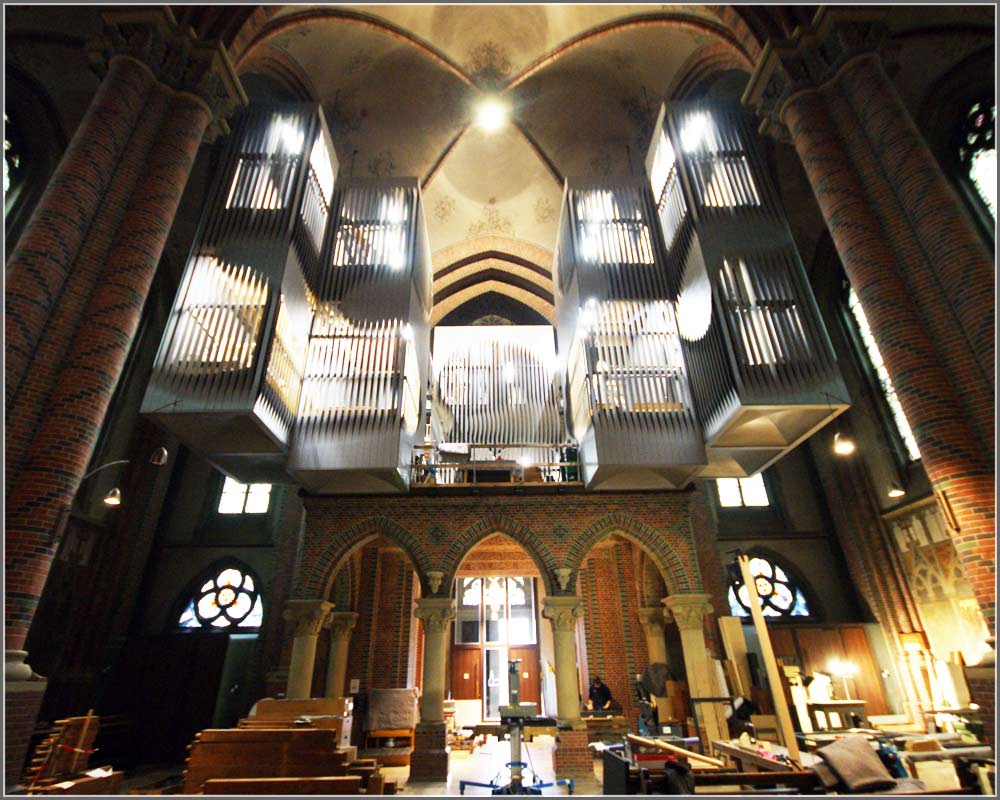
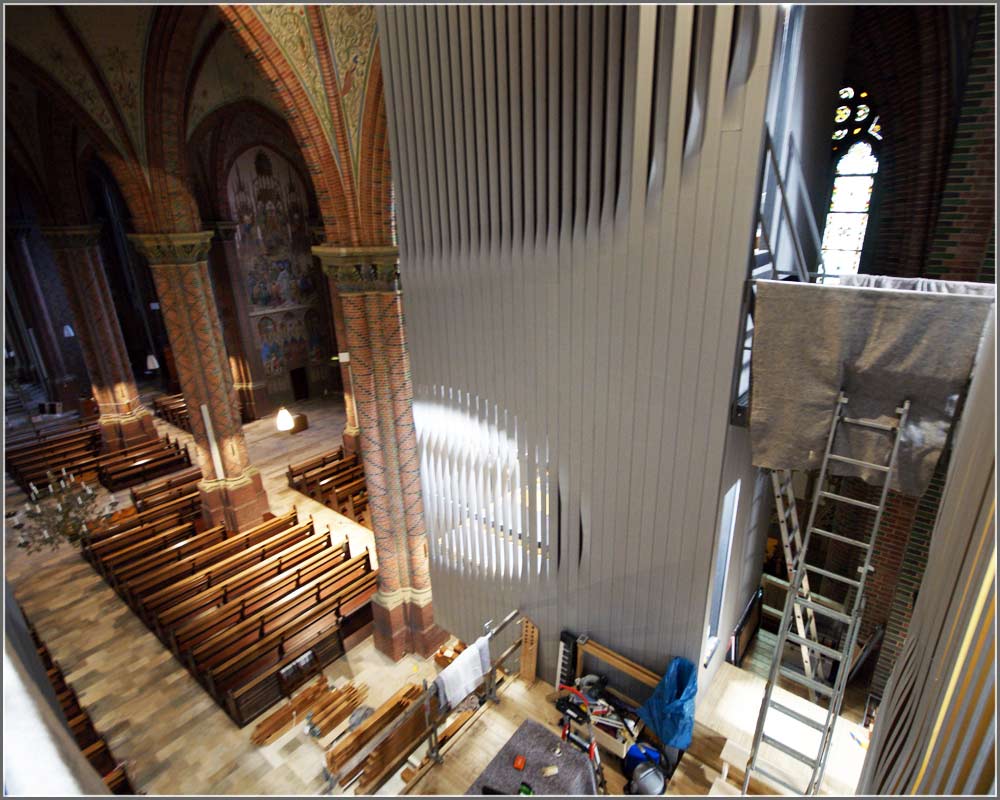
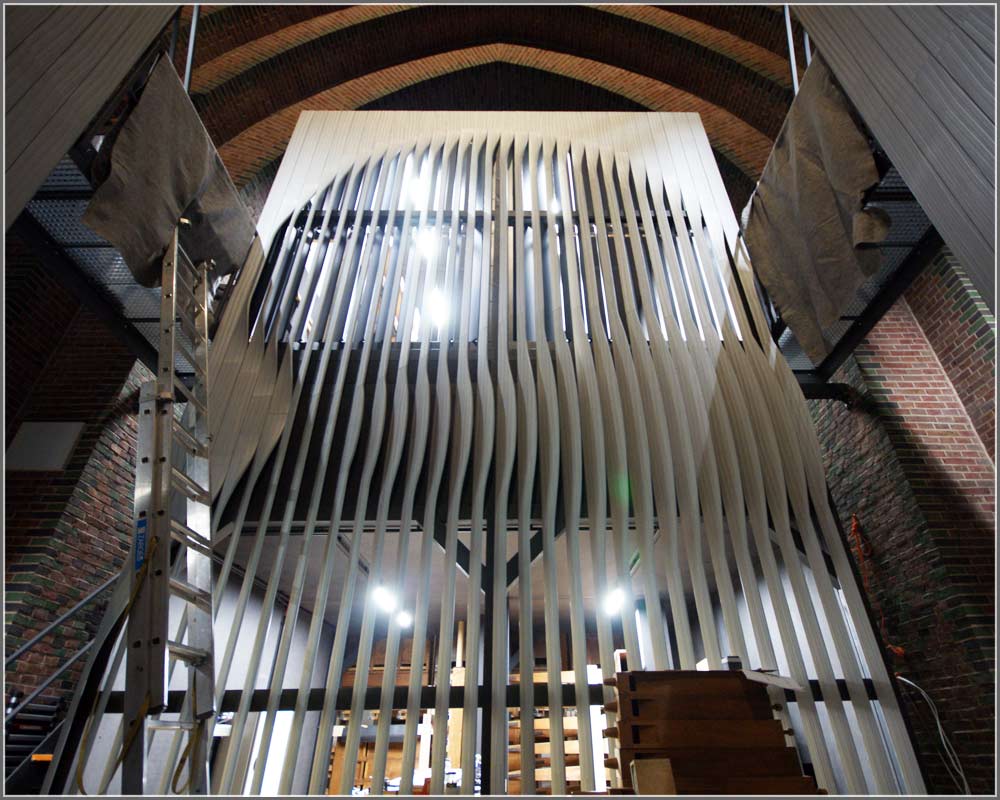
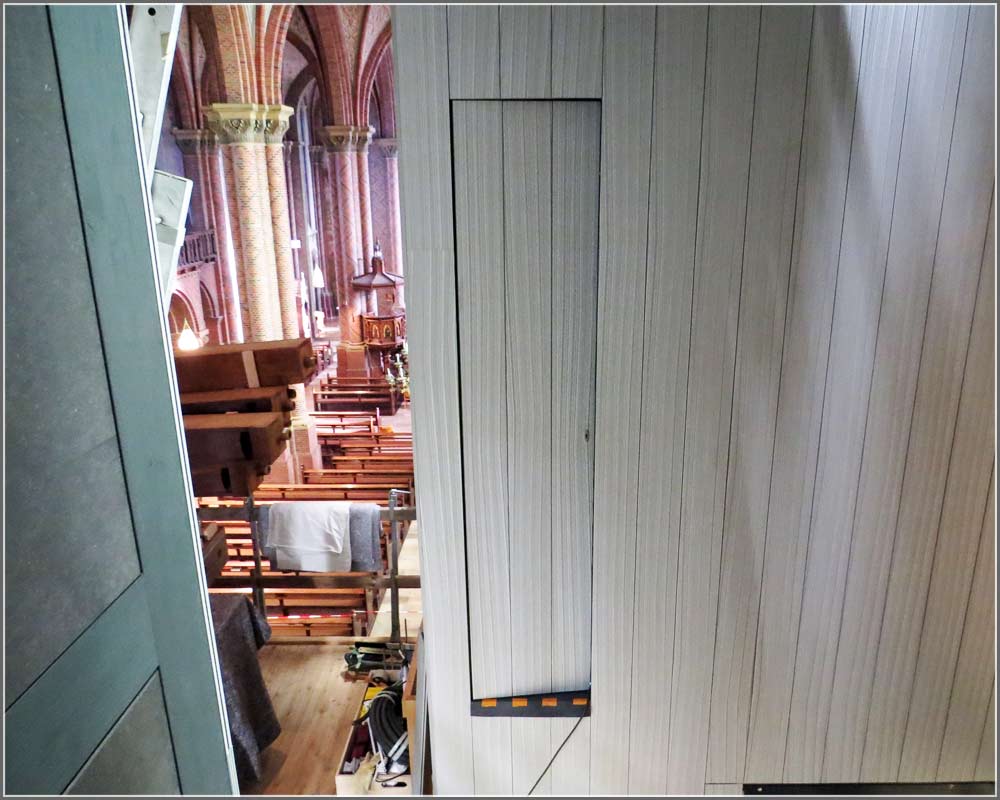
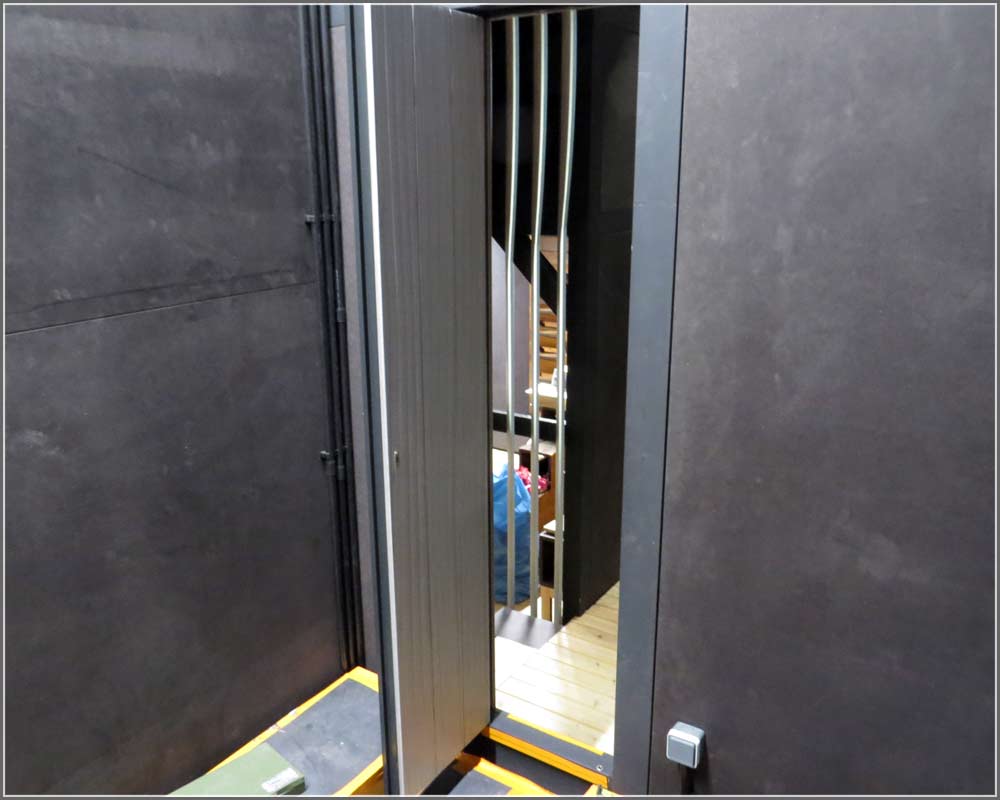

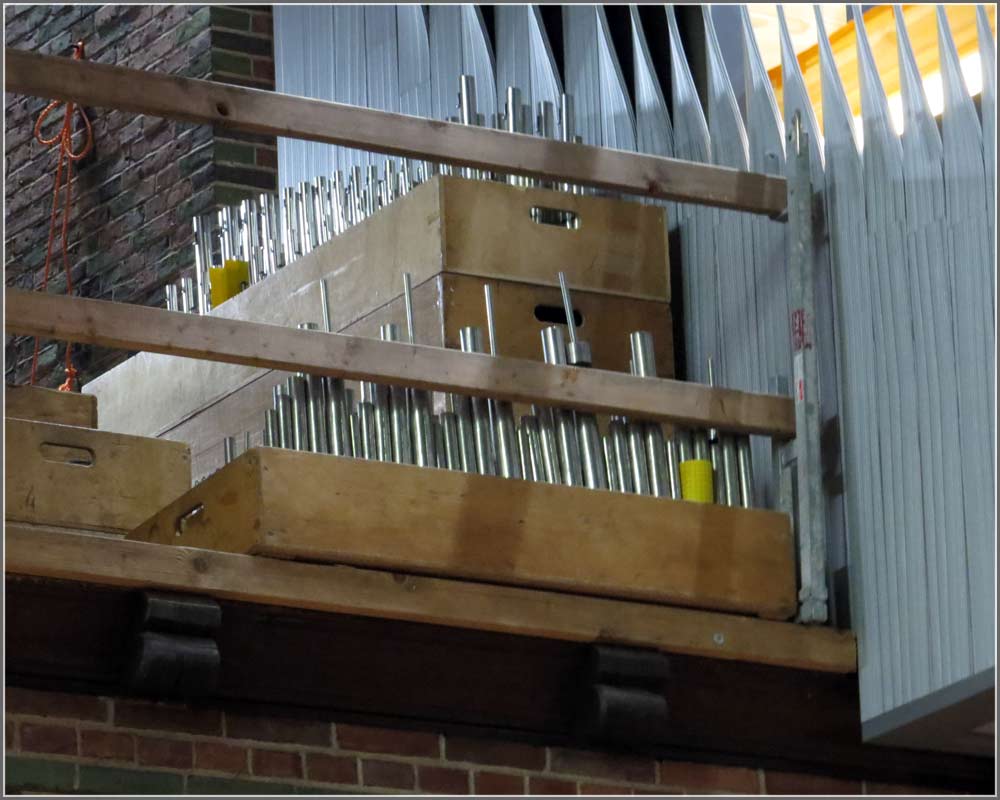
The open area of the organ loft is filled with pipes of all kinds.
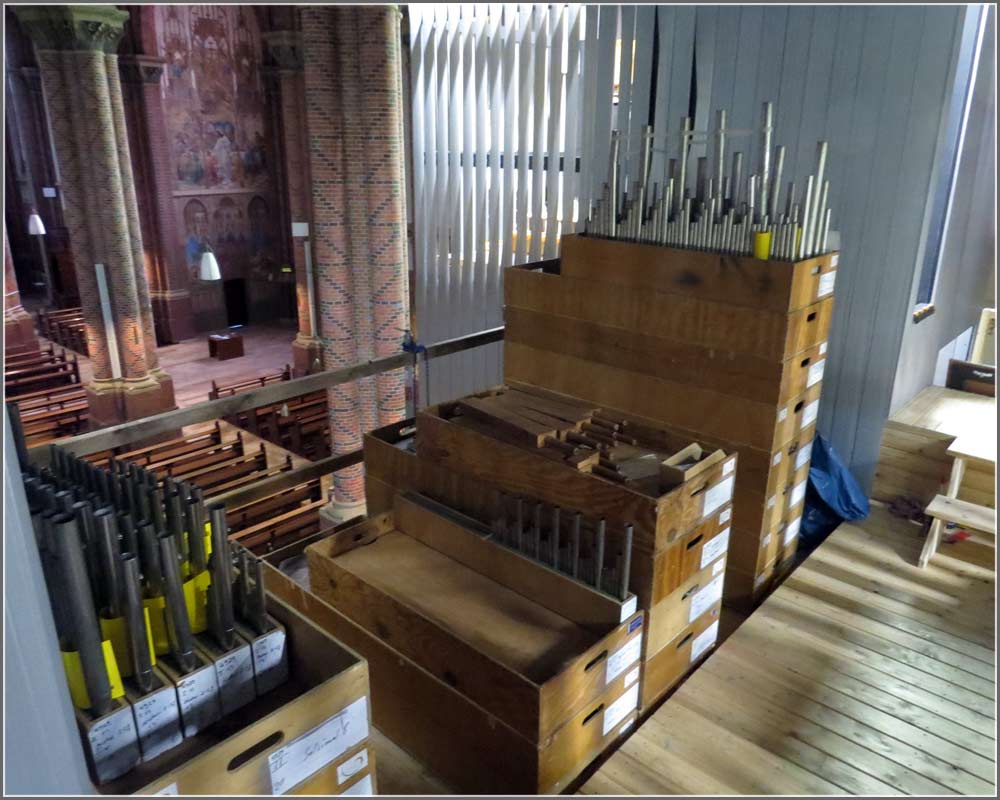
The church has been closed on weekdays for the past three weeks to give the organ tuners the quiet they need to tune the organ (Feb. 10–21).
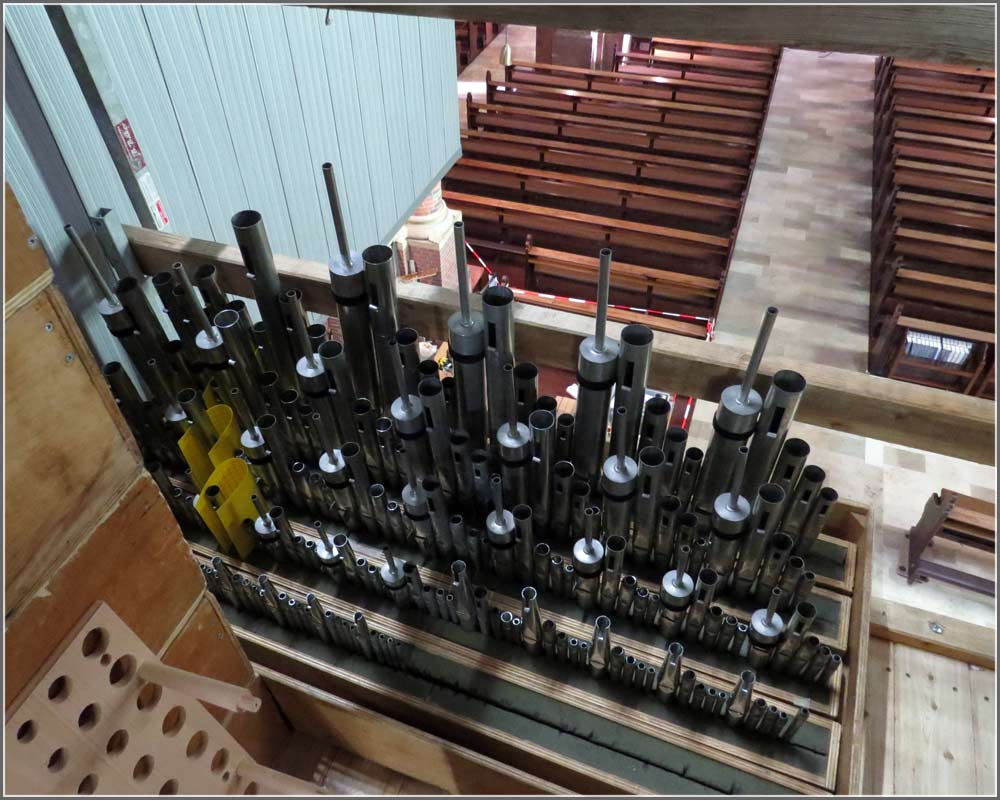
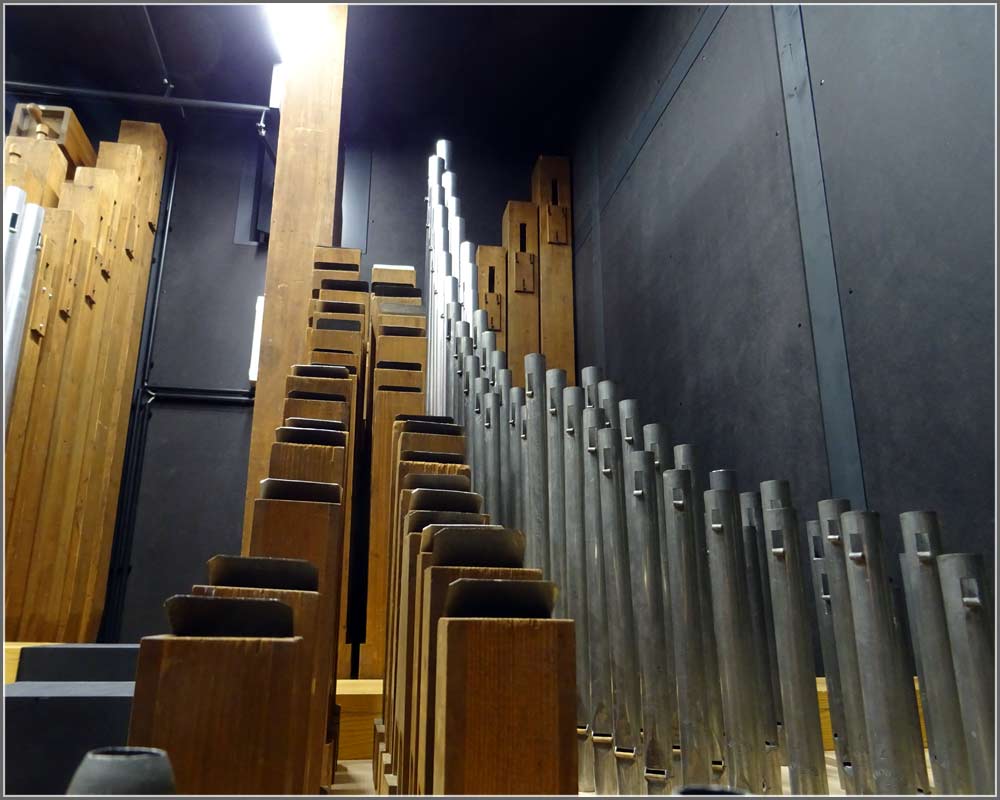
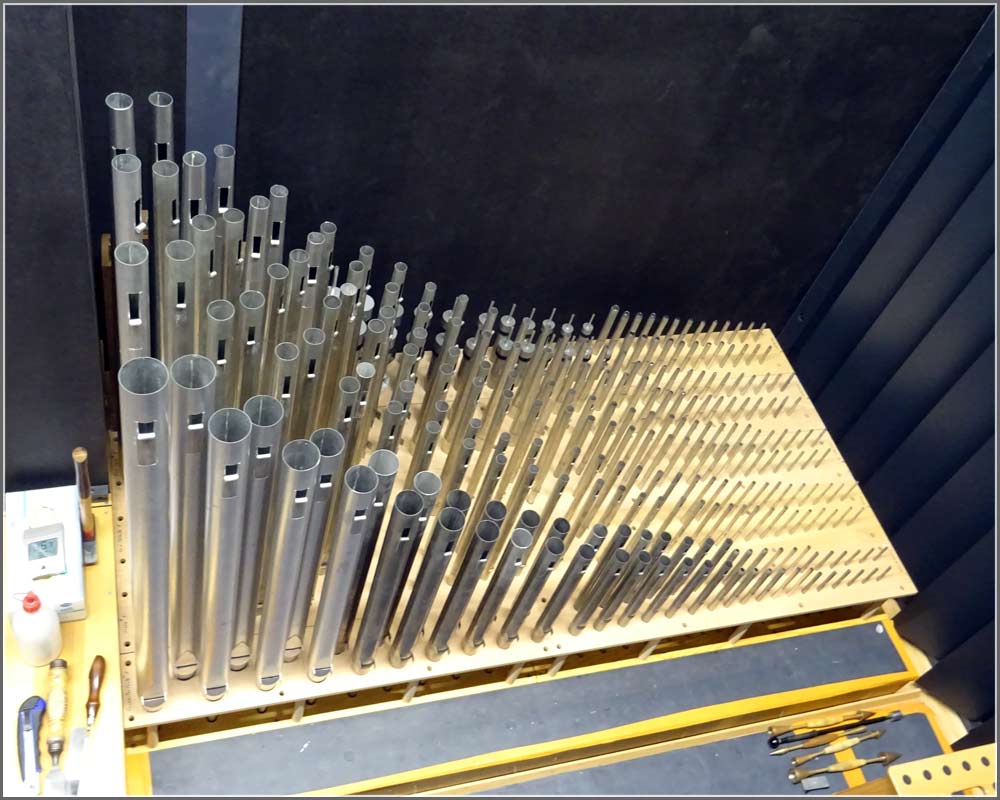
It's hard to convey to outsiders just what a Sisyphean task this is. Register by register, pipe by pipe, some must be played hundreds of times until the sound is just right.
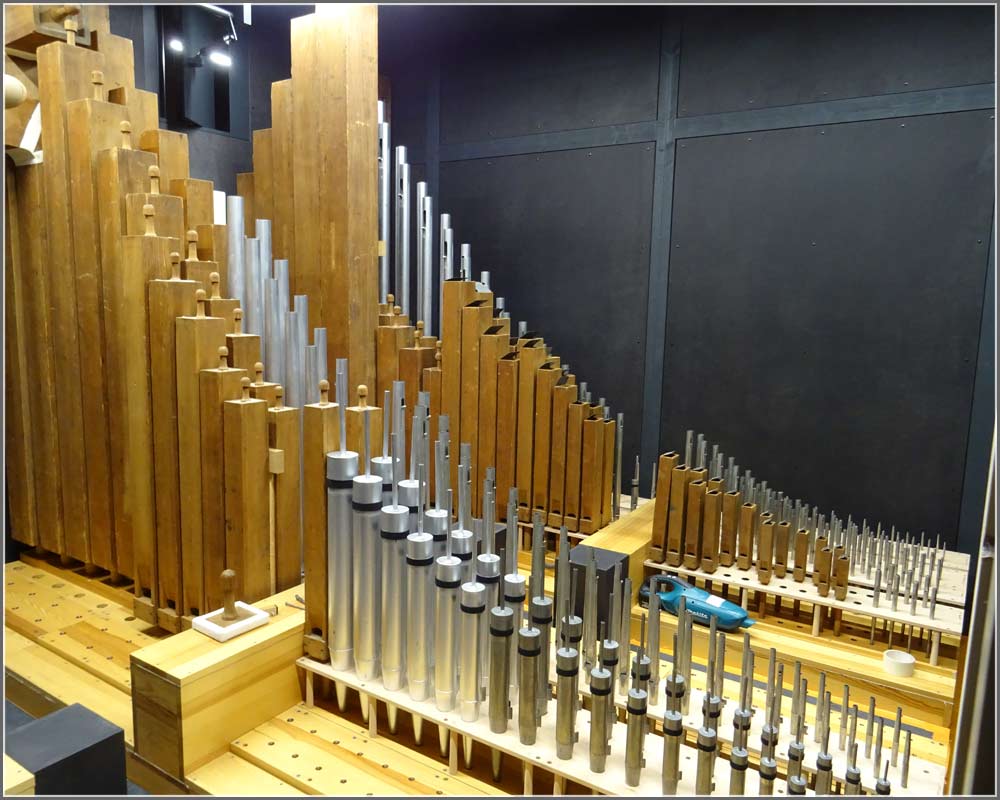
It’s also important to keep in mind that everything will sound different again in a church filled with people.
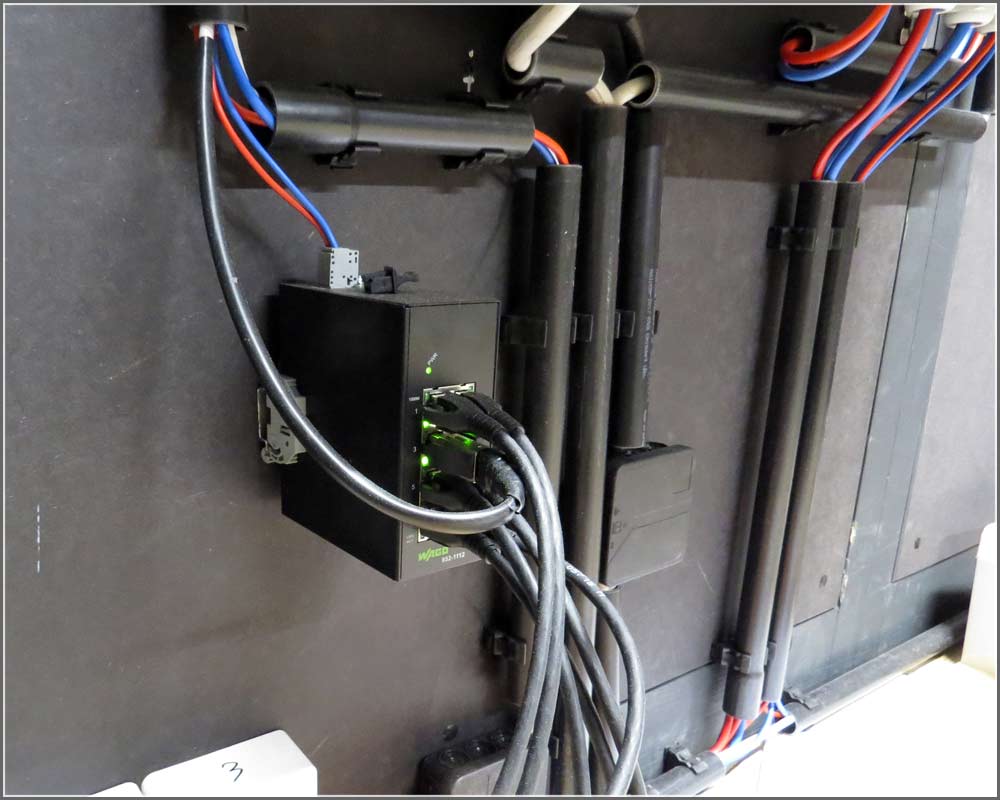
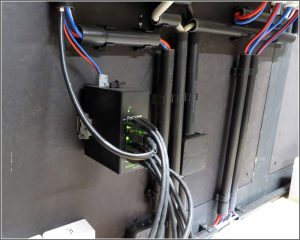
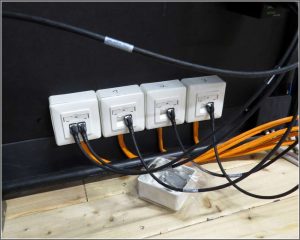
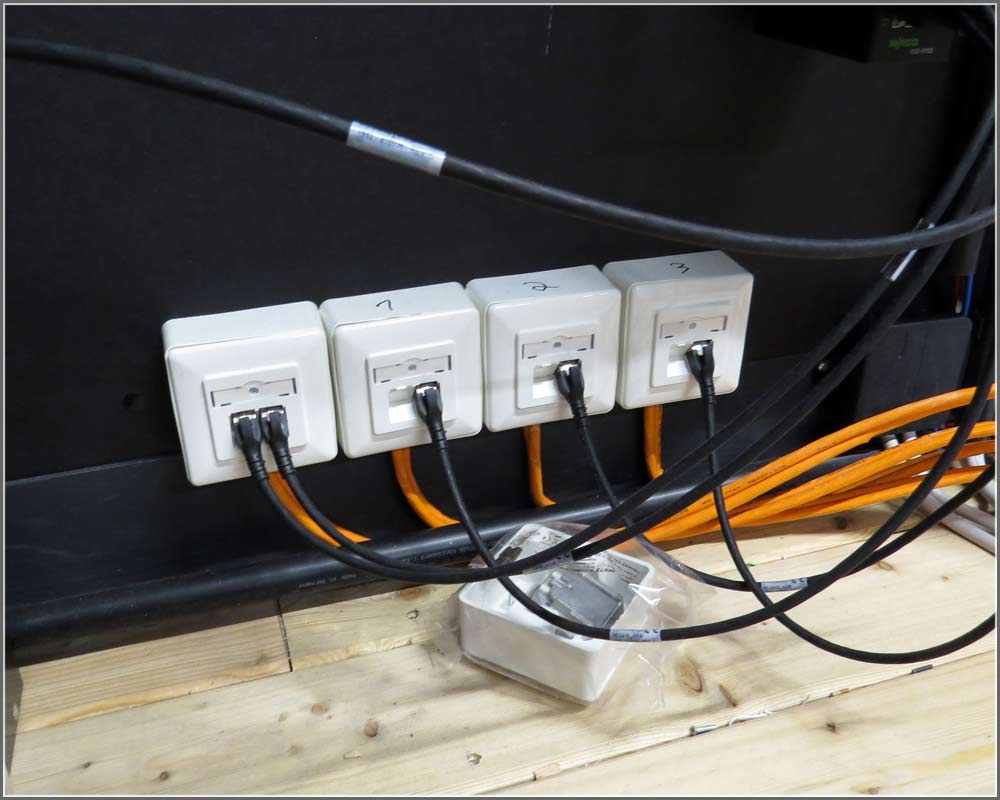
Modern network technology in a traditional instrument.

Windchests newly fitted with pipes (Feb. 24–Mar. 6).
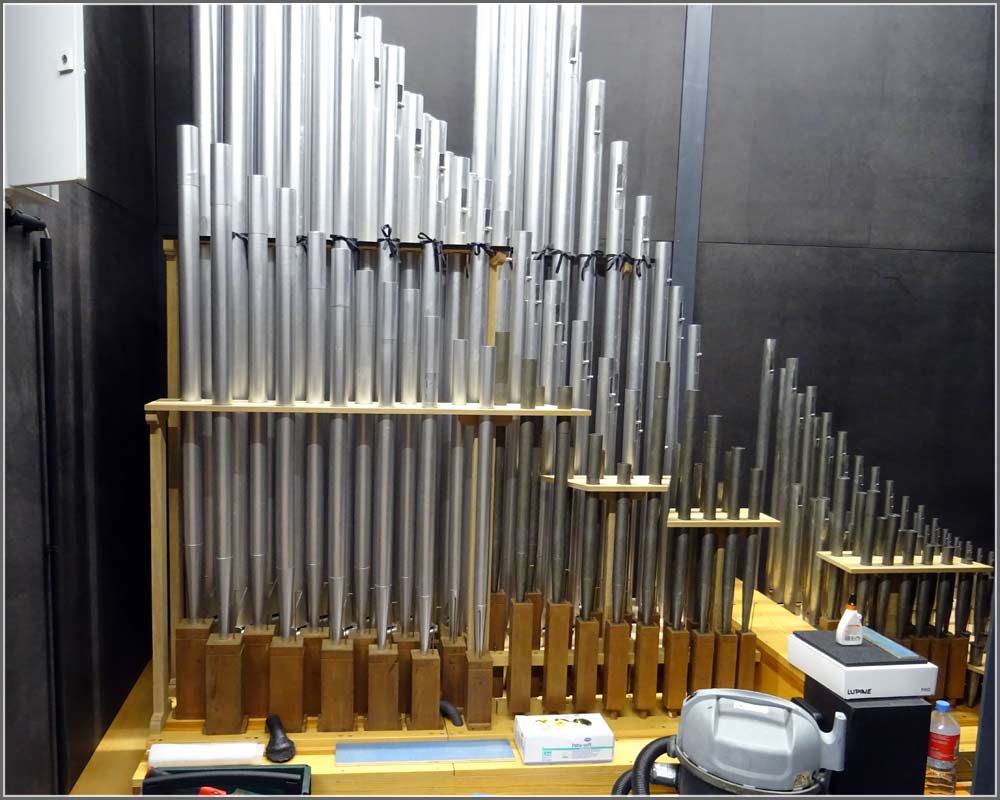
Reed register.
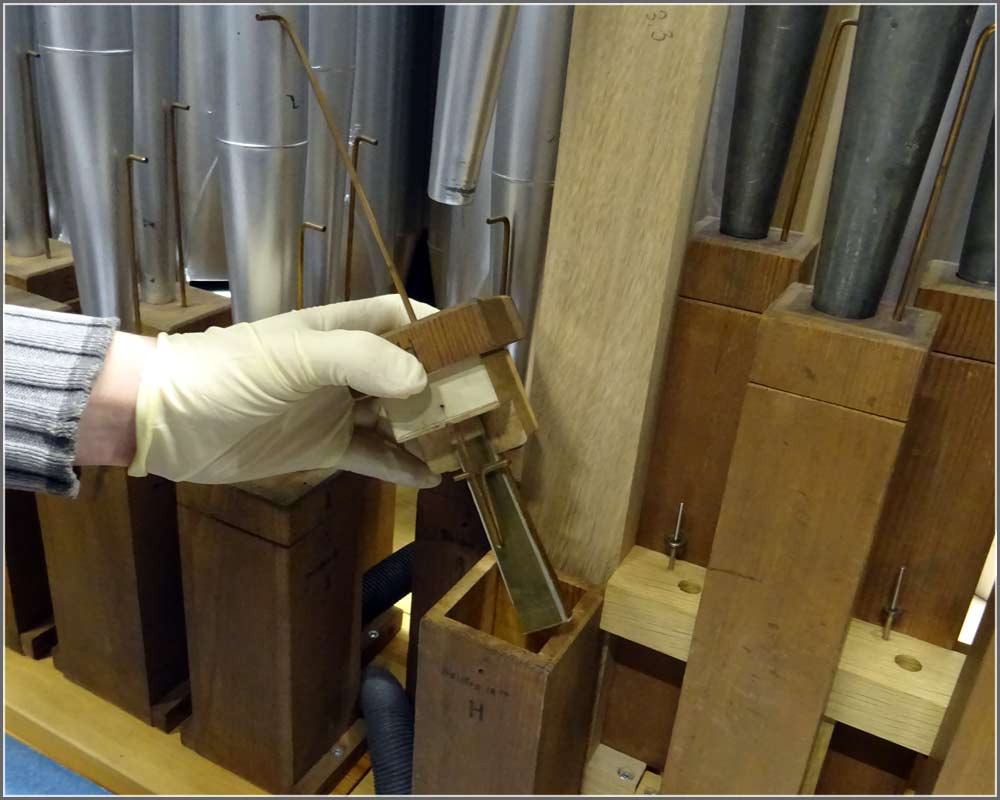
Reed stop: Dulcian 16.
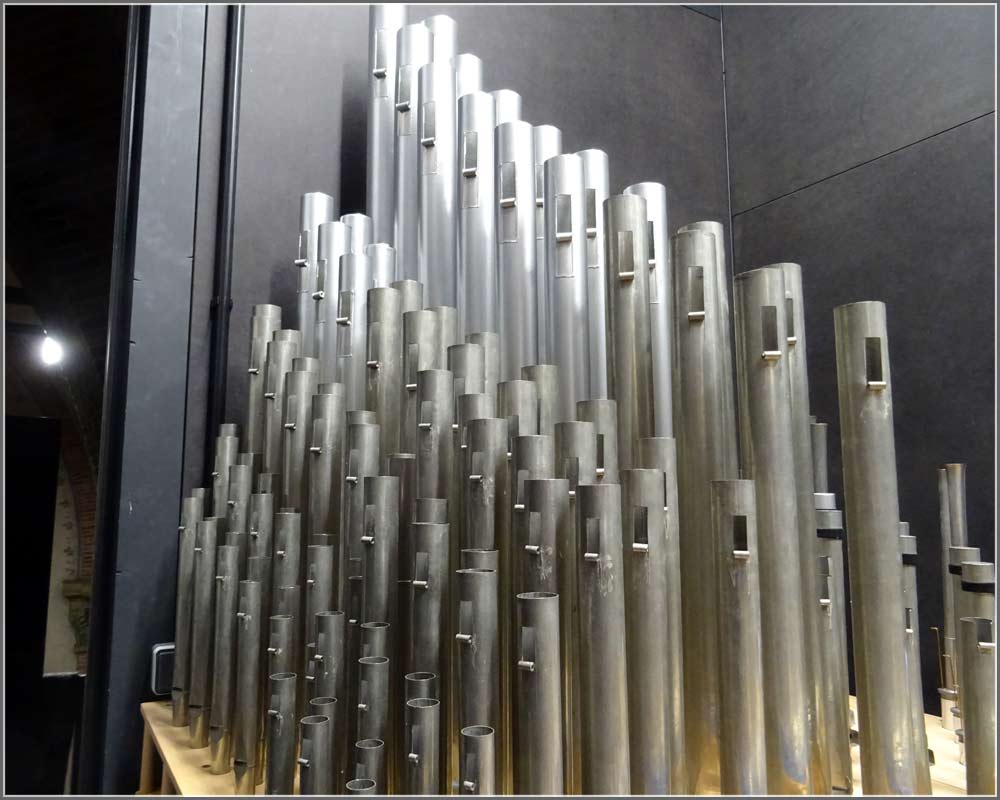
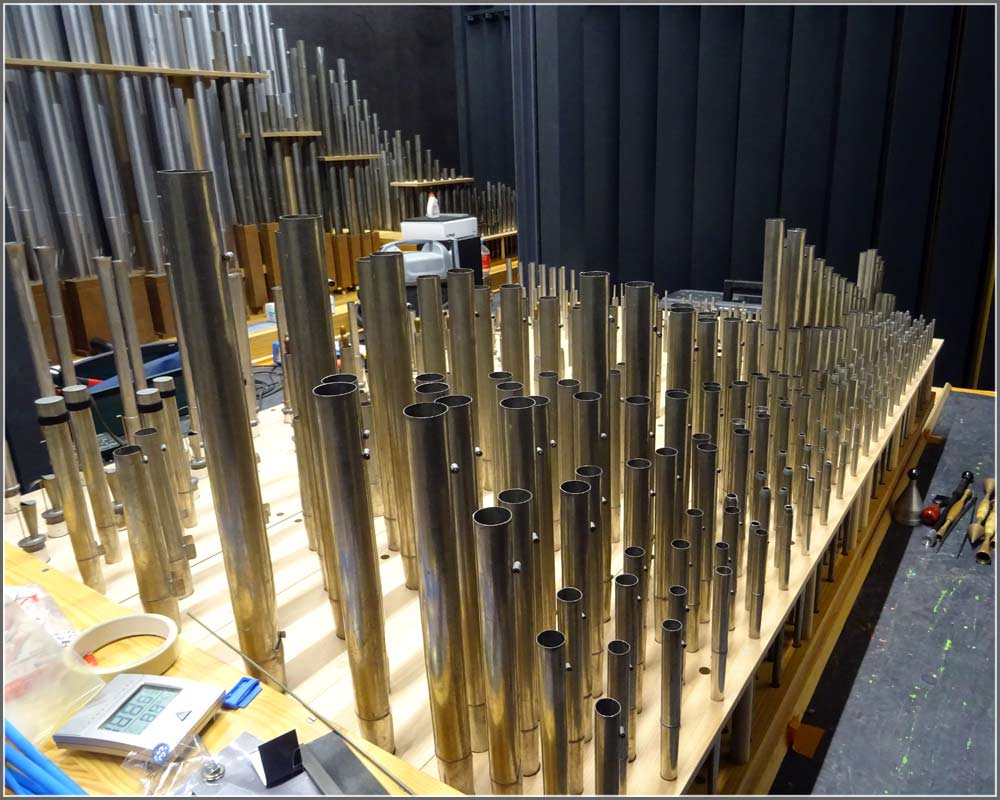
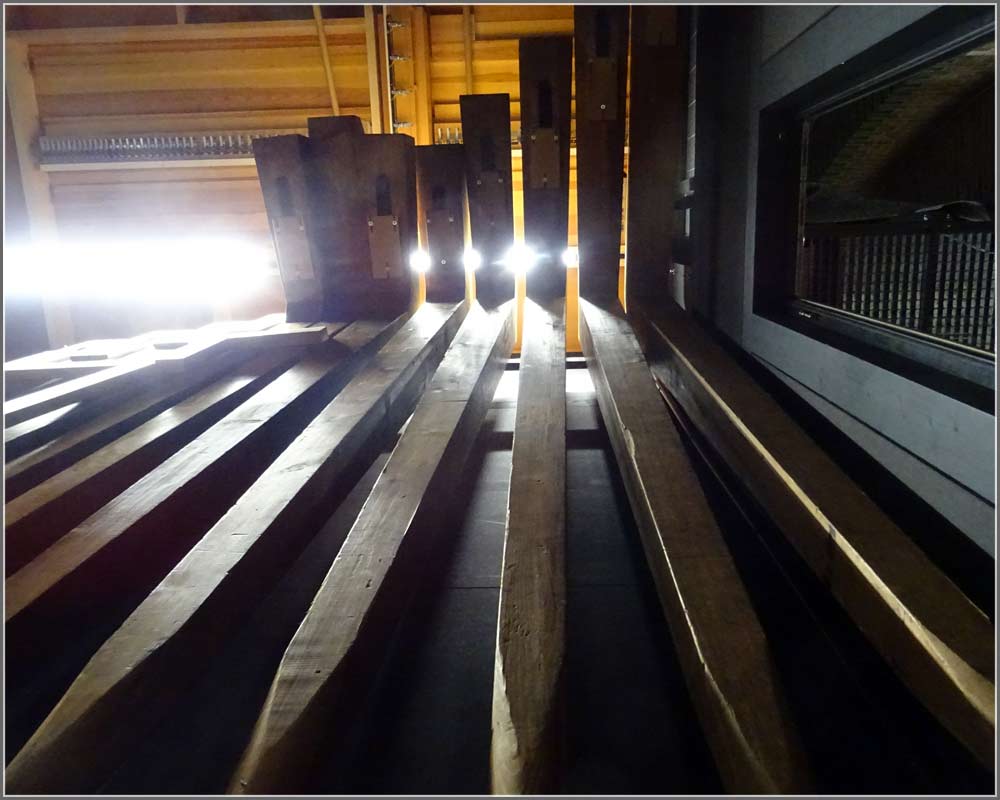
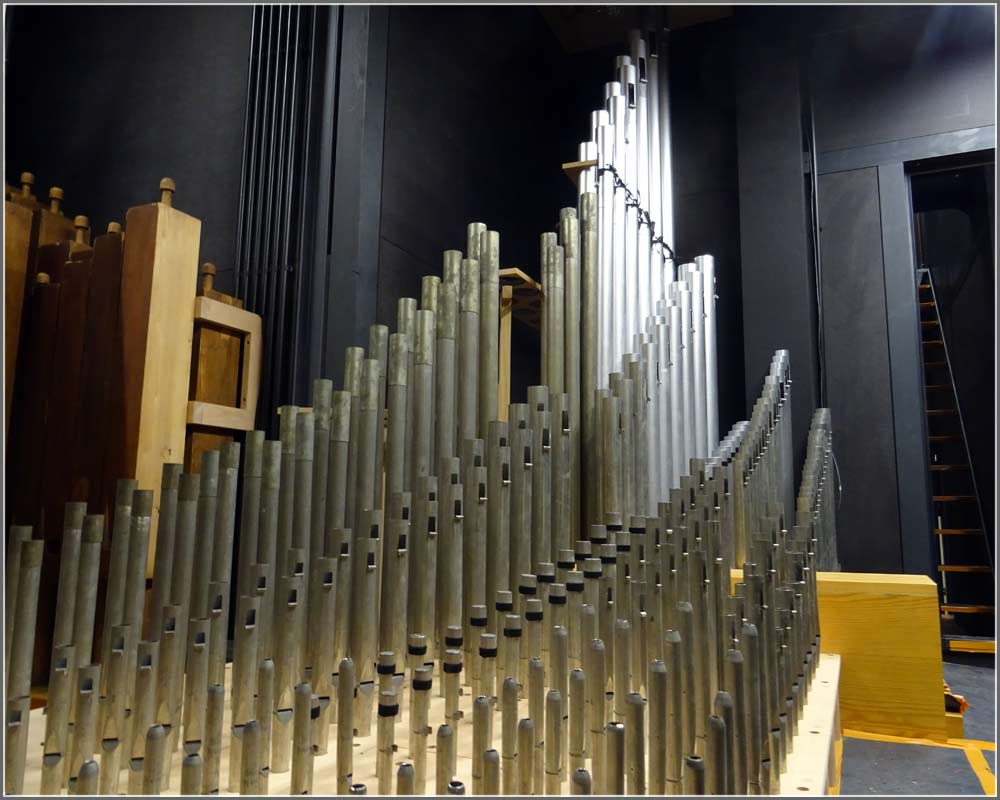
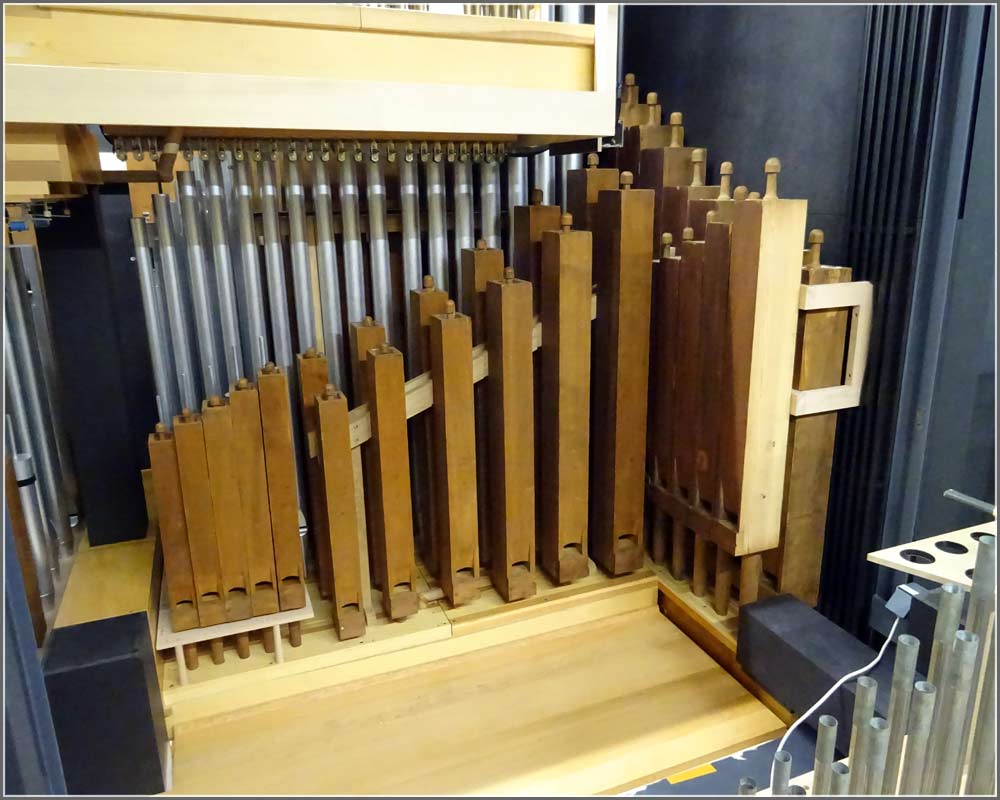

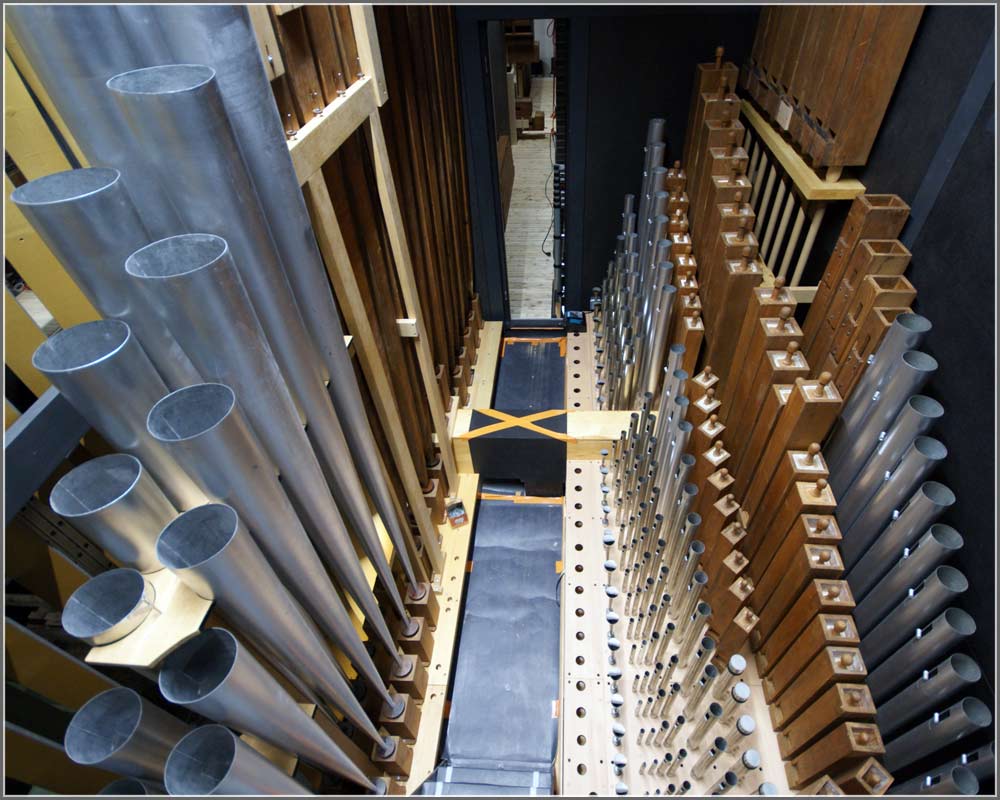
Space is getting tighter and tighter in the organ towers (March 17).
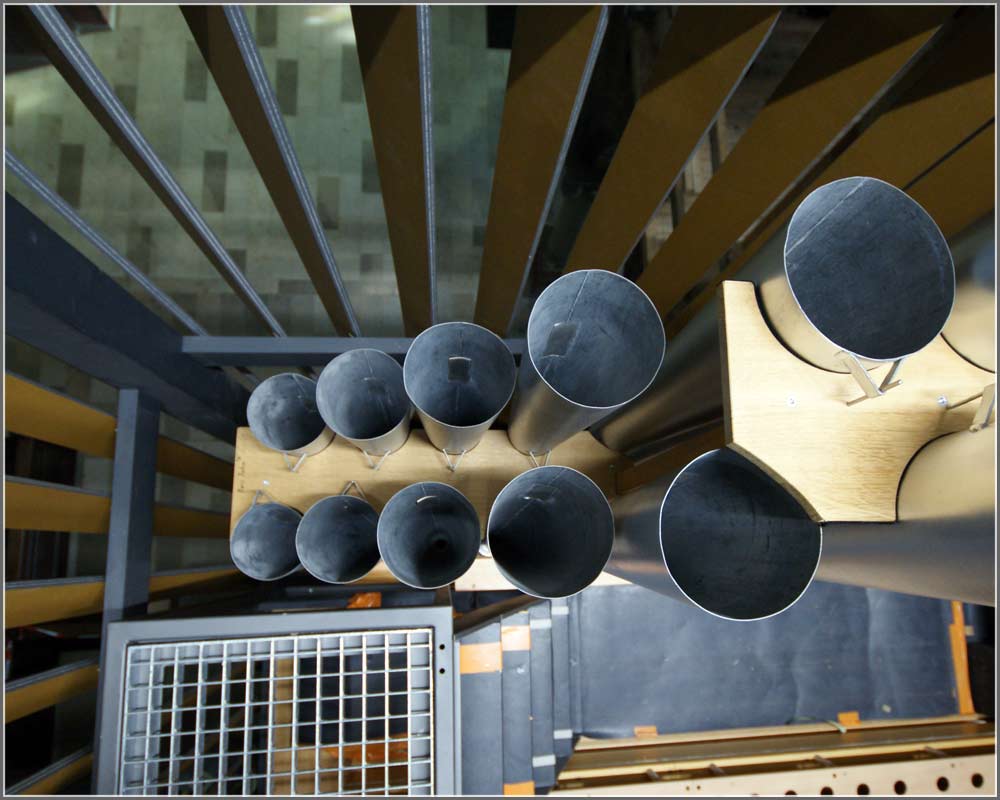
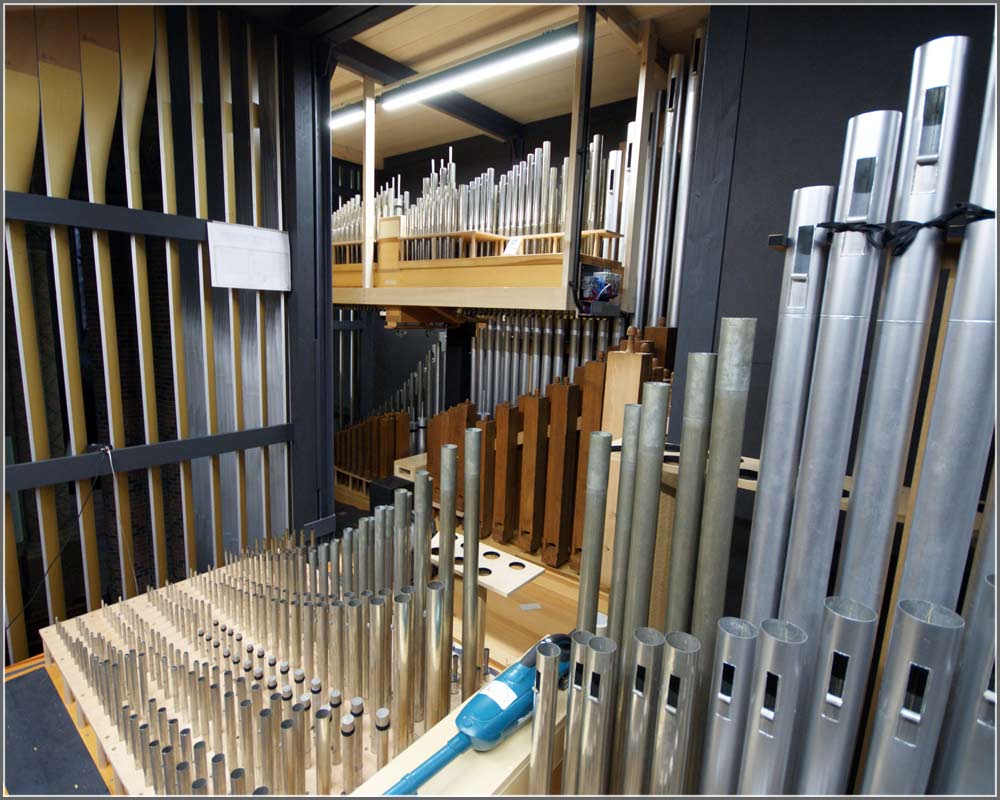
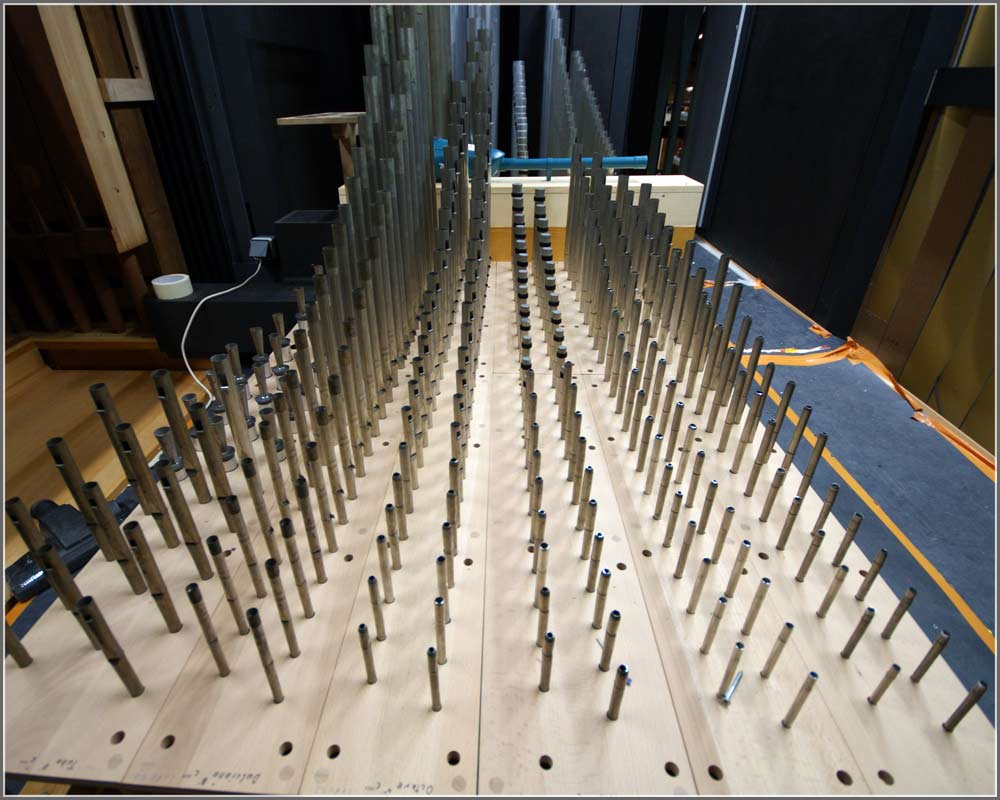
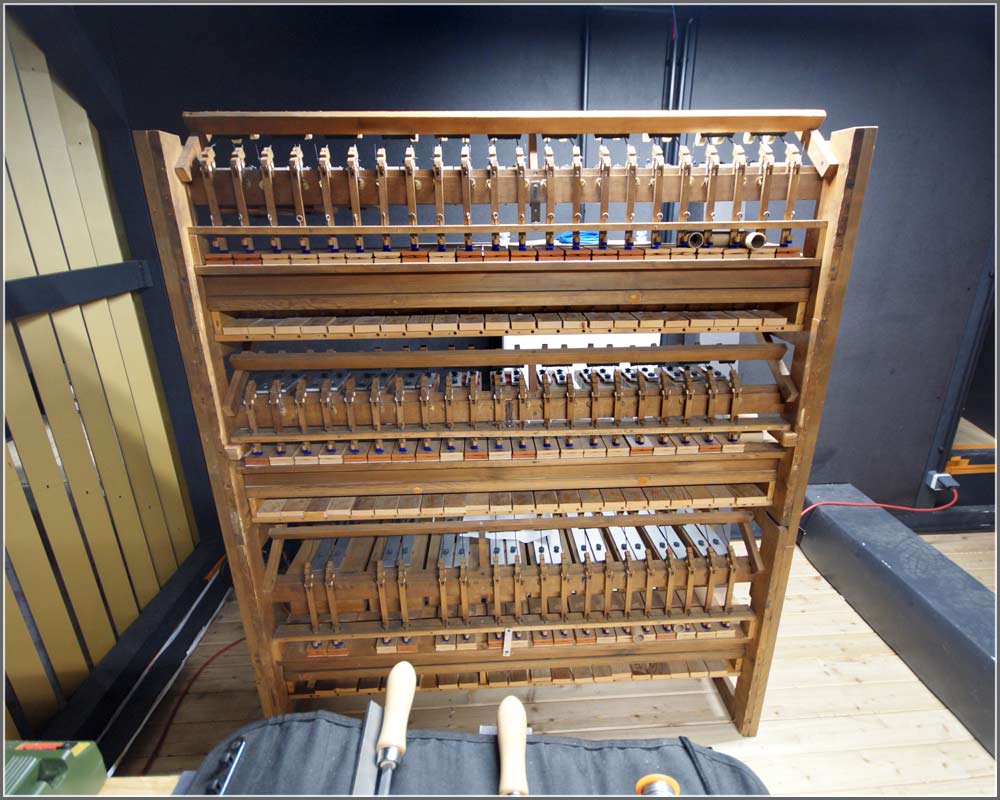
The celesta, the 99th register.
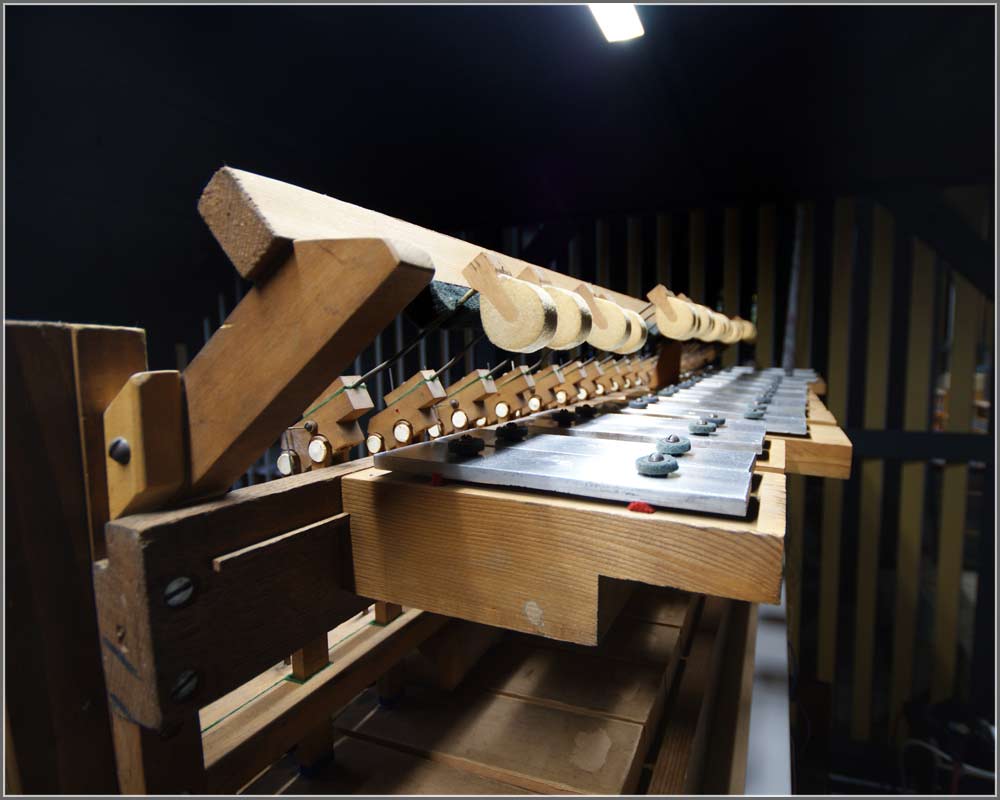
The celesta is a glockenspiel, and it will surely bring us a lot of joy.
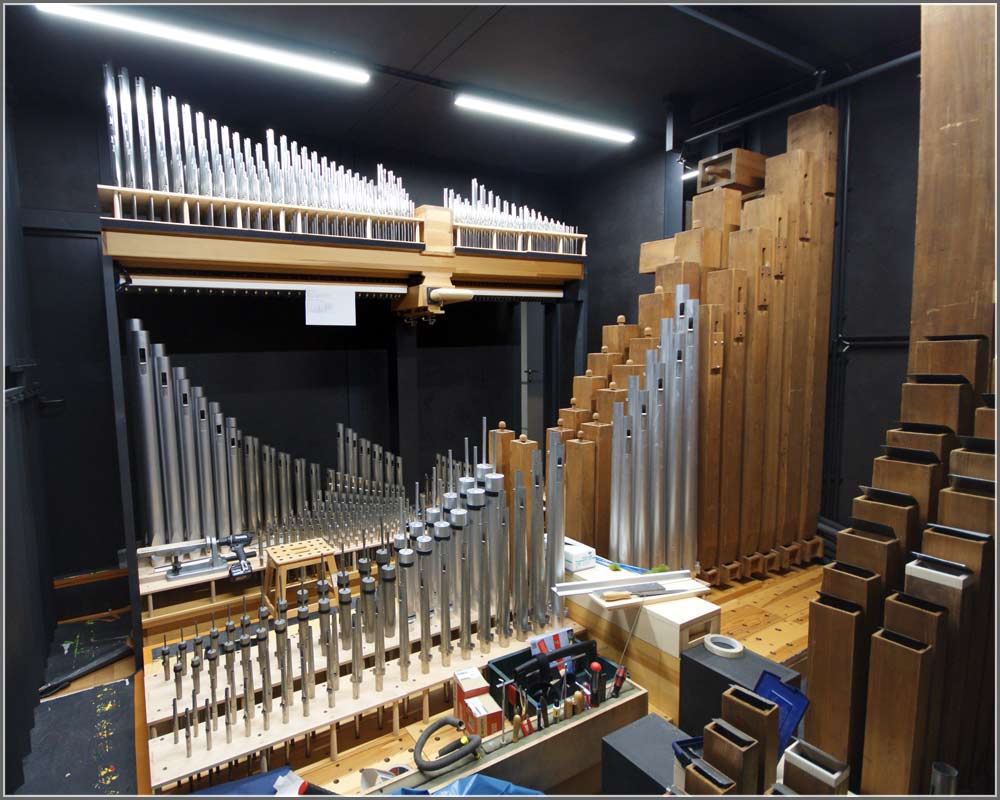
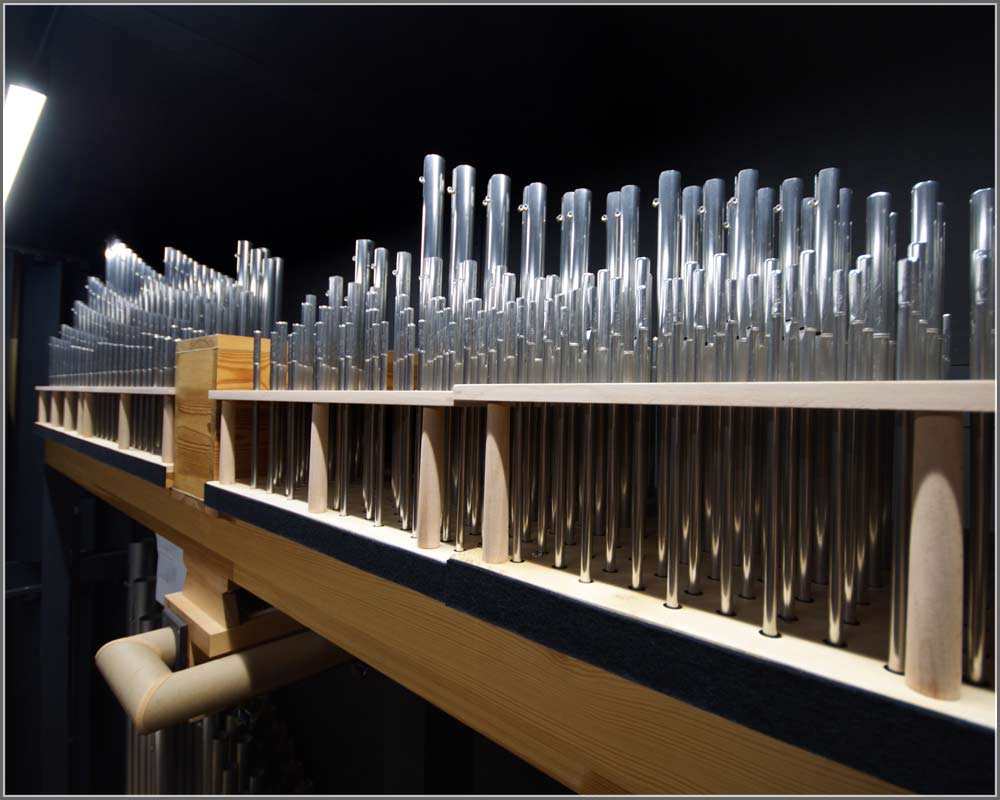
This mixture is one of the new stops that were not yet available at the organ's former location in Gelsenkirchen.
Assembly of the Organ, Part 3 (Dec. 2–20, 2019)

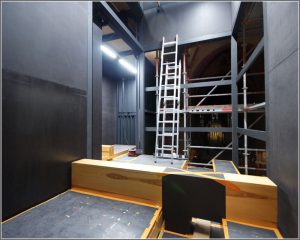
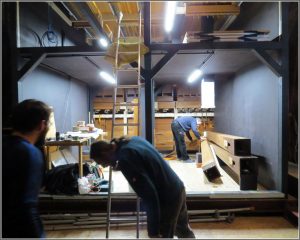
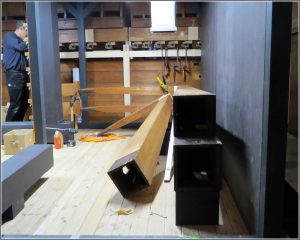
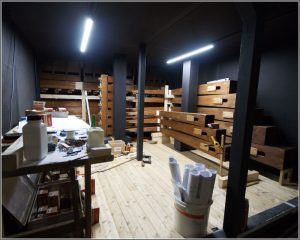
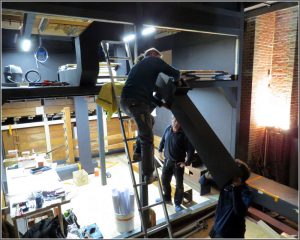
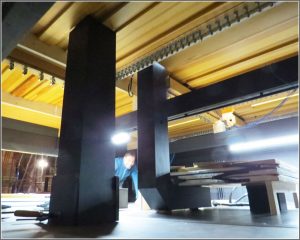
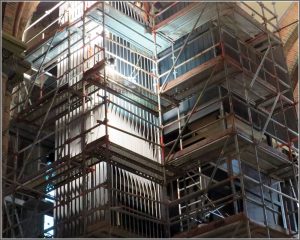
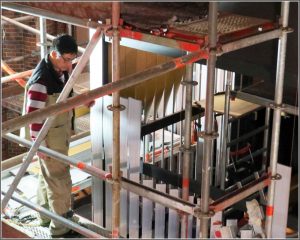
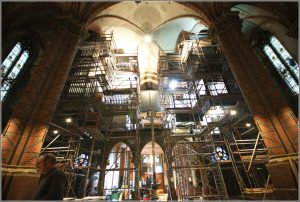
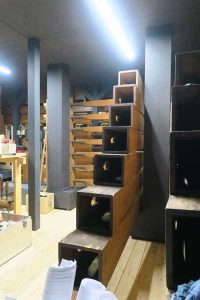

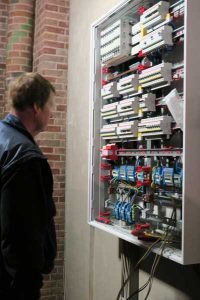

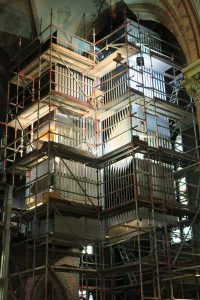
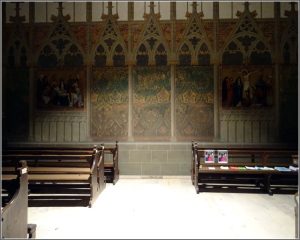

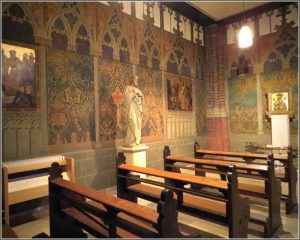
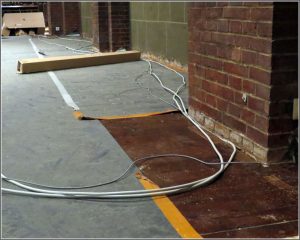
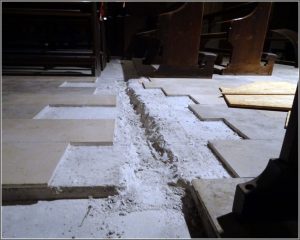
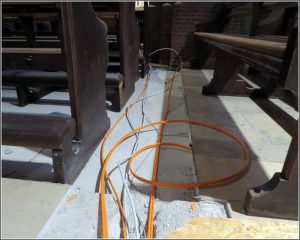
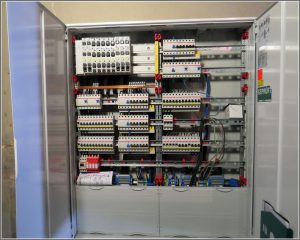
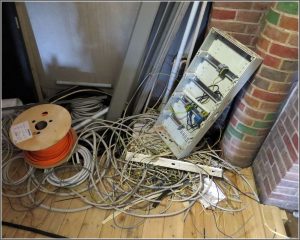
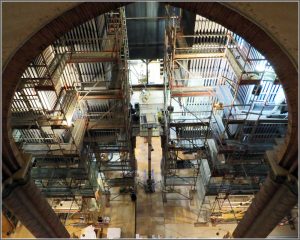
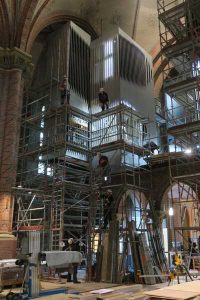
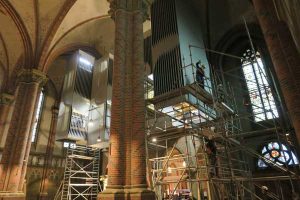
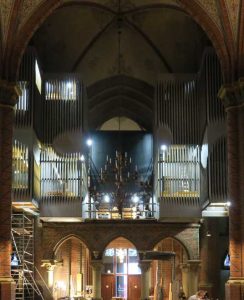

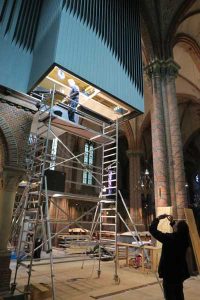
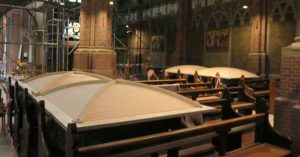
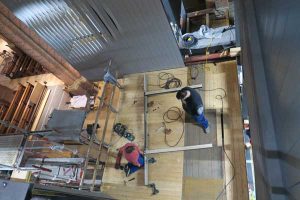
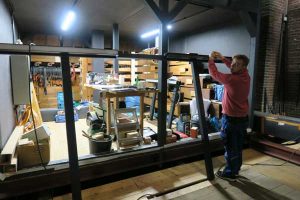

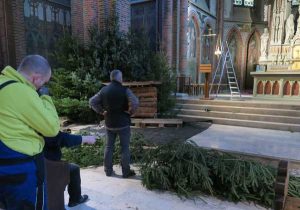
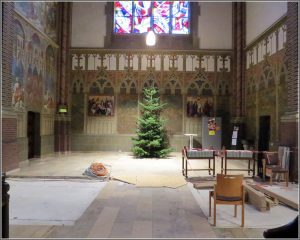

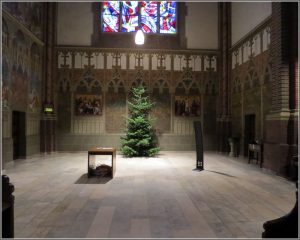

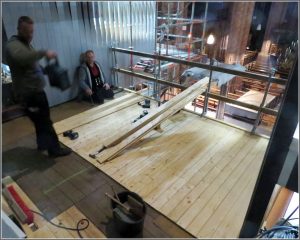

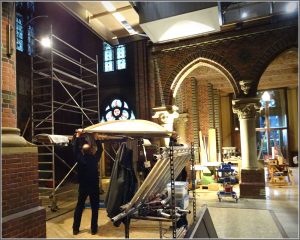
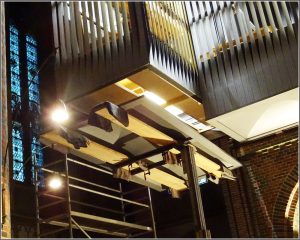
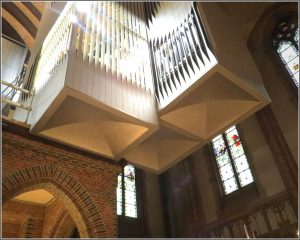
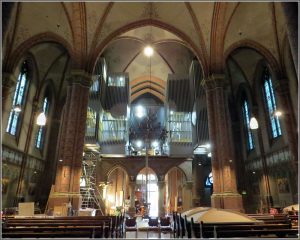
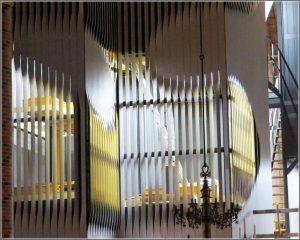
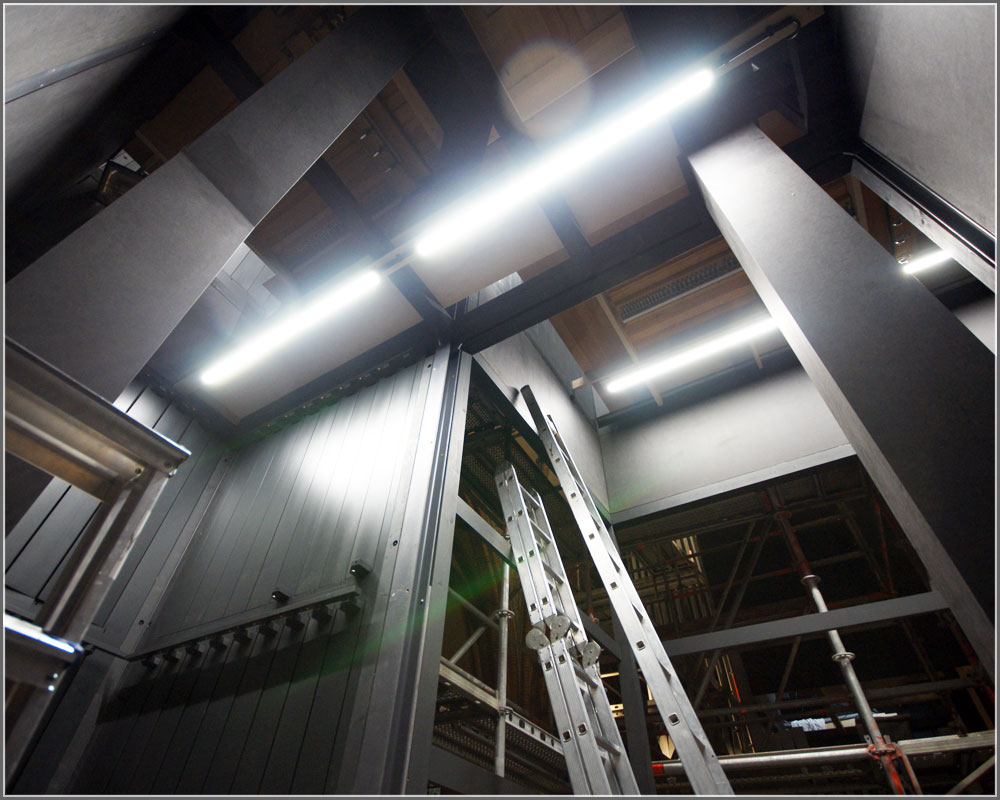
As of this week, the interiors of three of the four organ towers are illuminated (Dec. 2–5, 2019).
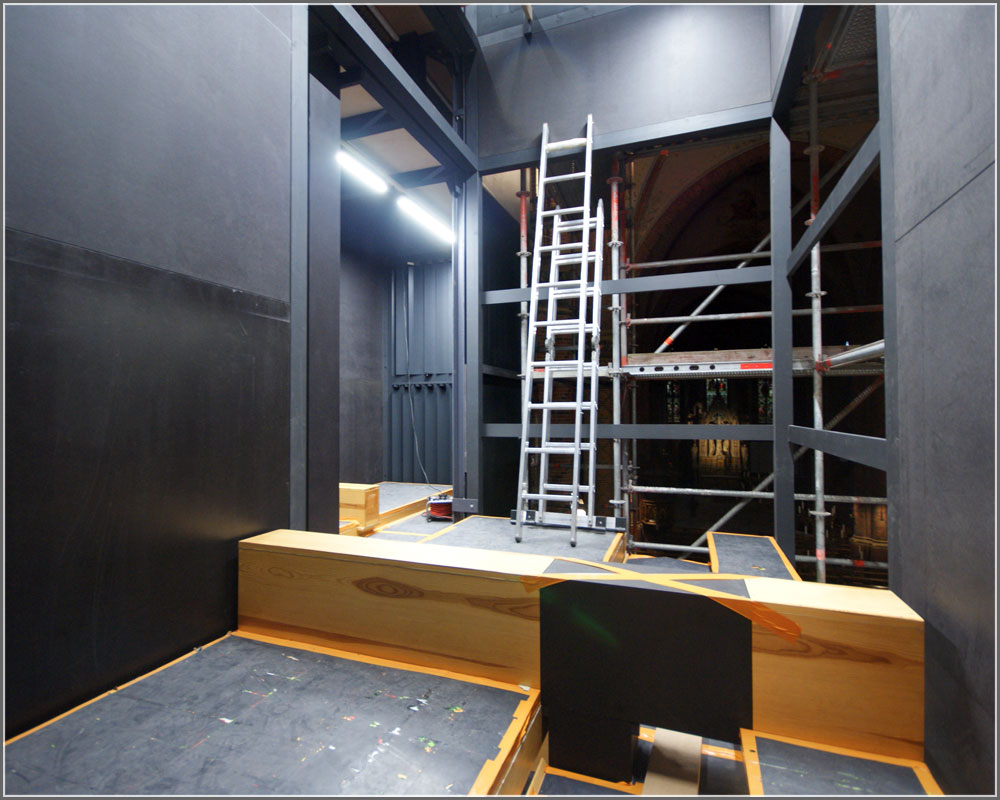
In the light, the organ's dimensions are even more clearly visible.
The lower level of the middle tower.
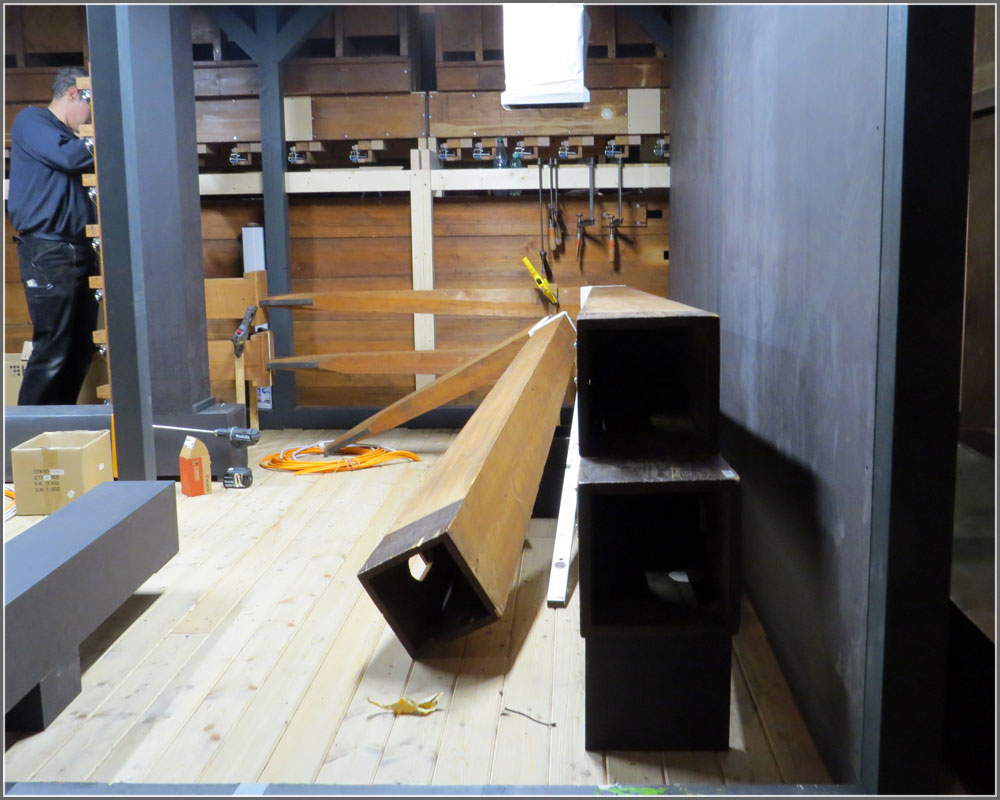
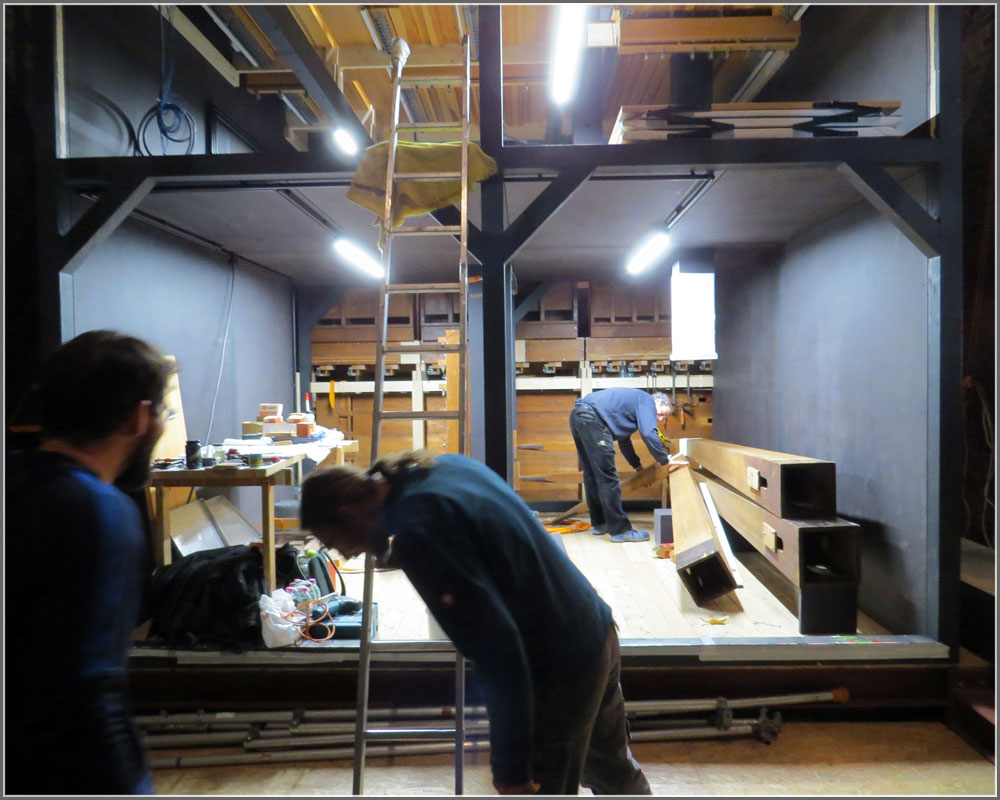
Additional wooden pipes were installed here on December 3.
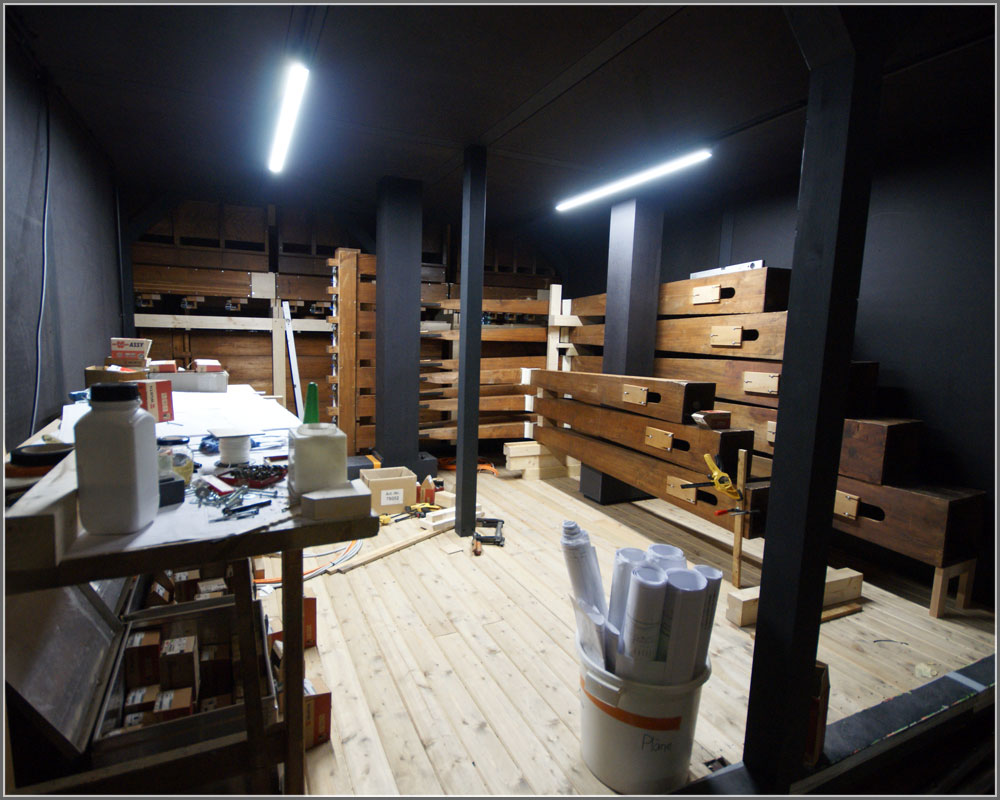
The remaining space provides room for future expansions of the organ, if desired.
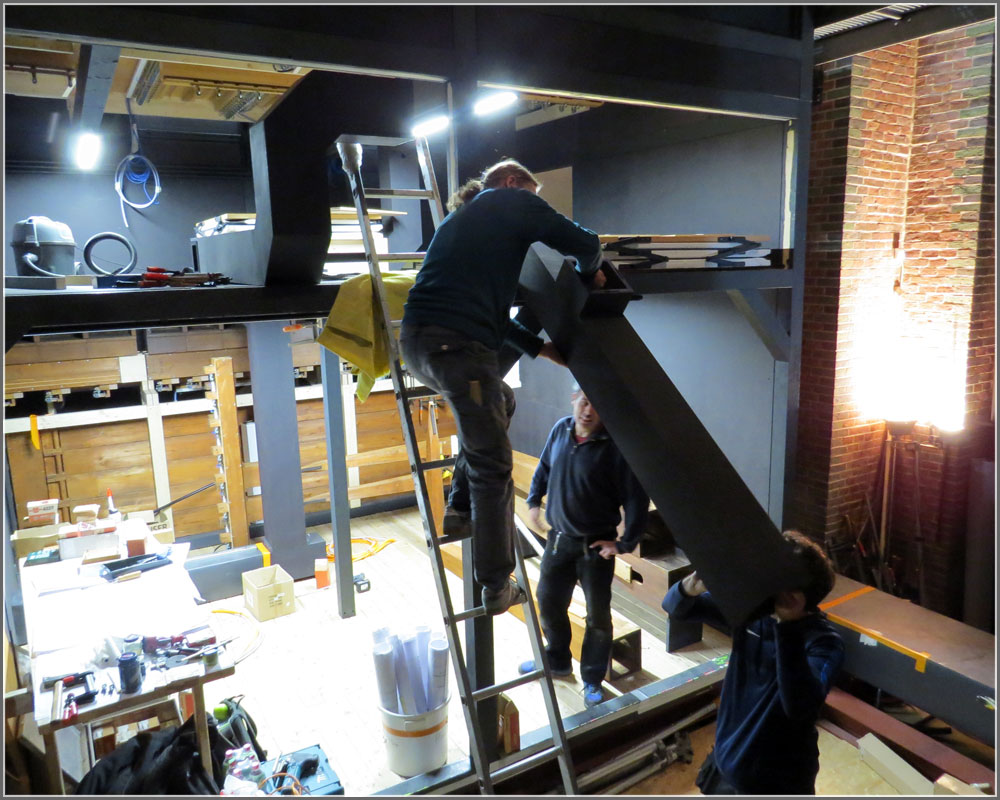
The organ builders' main task these days is to assemble the many windchannels.
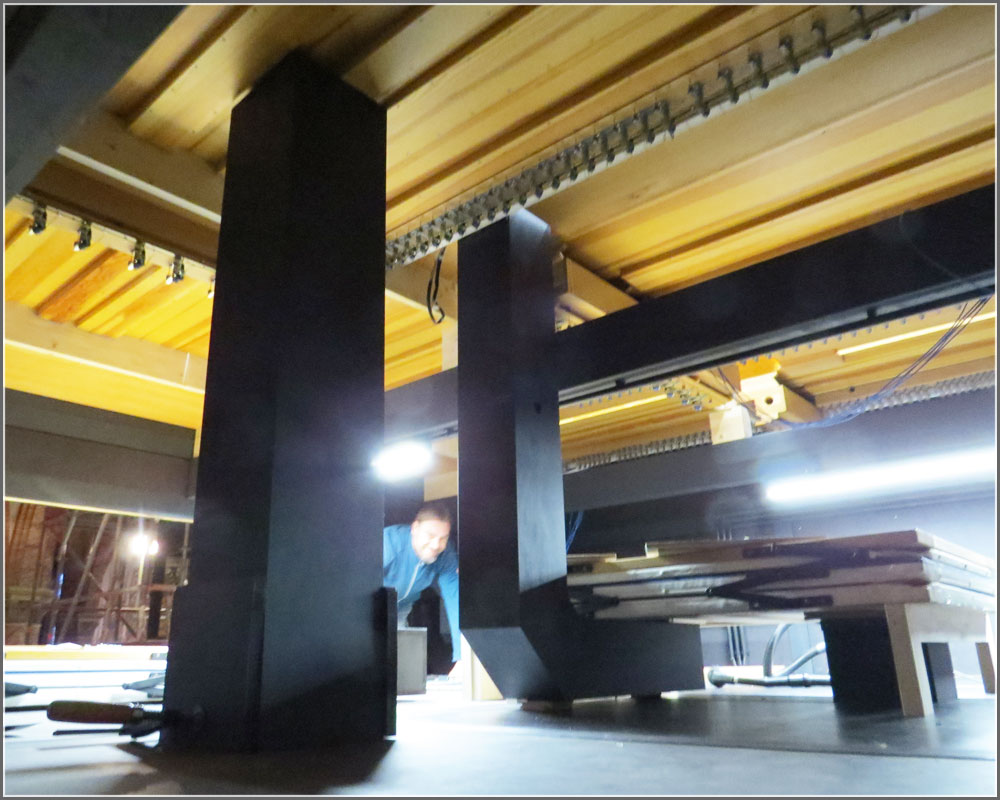
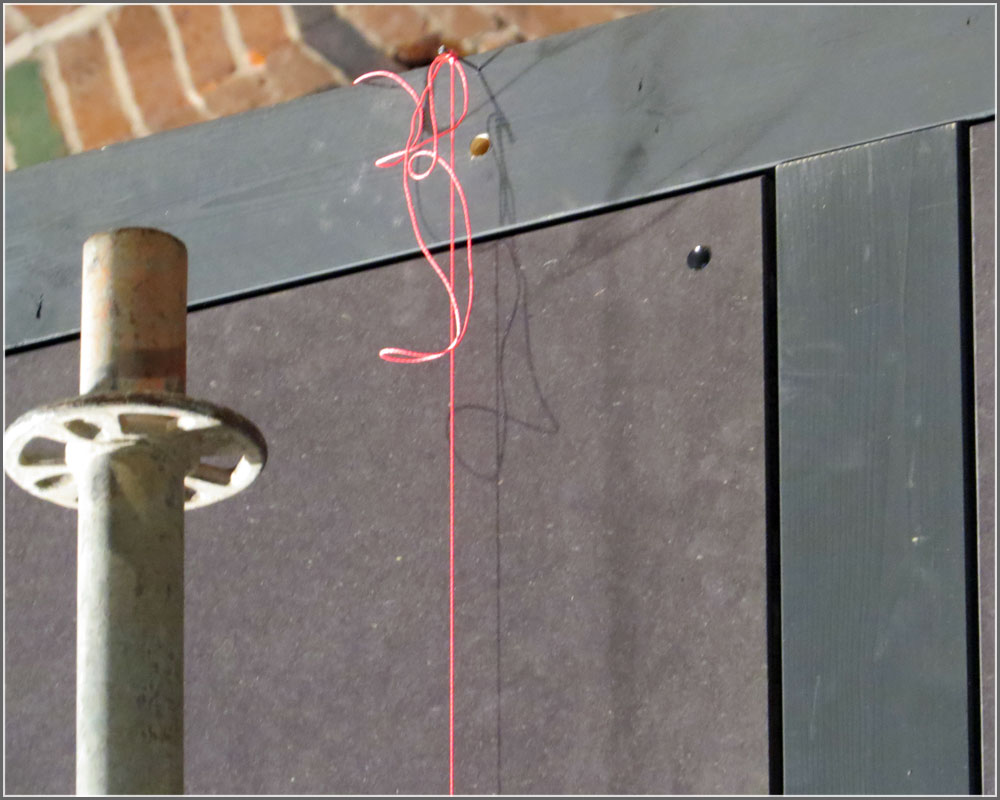
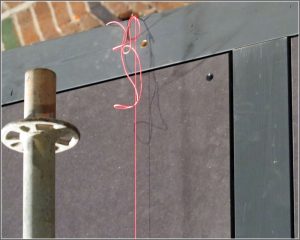
The red thread: It is important for aligning the panels on the organ case.
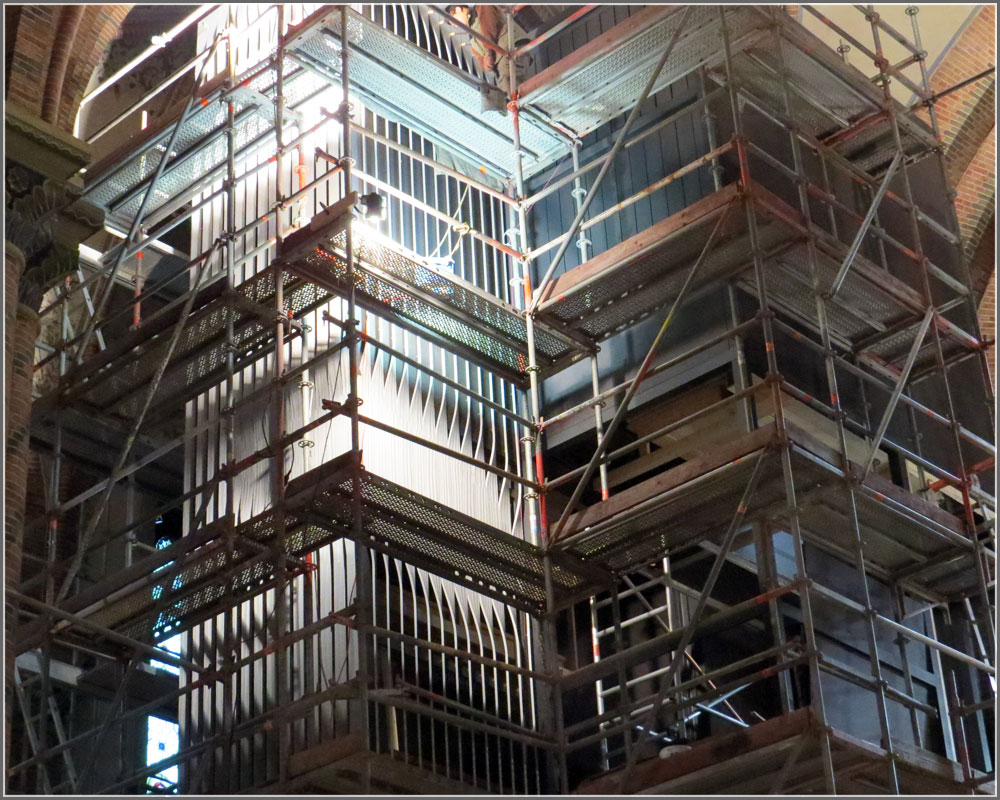

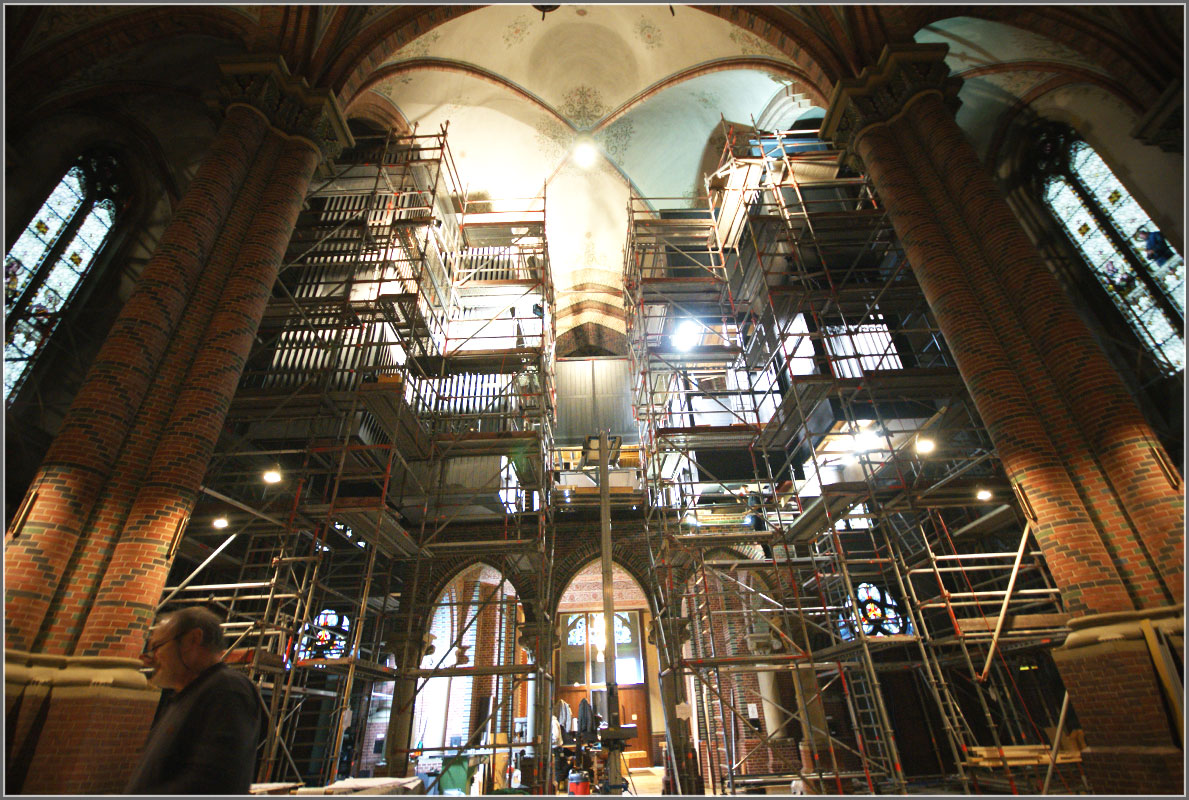
The organ construction site during the first week of Advent.
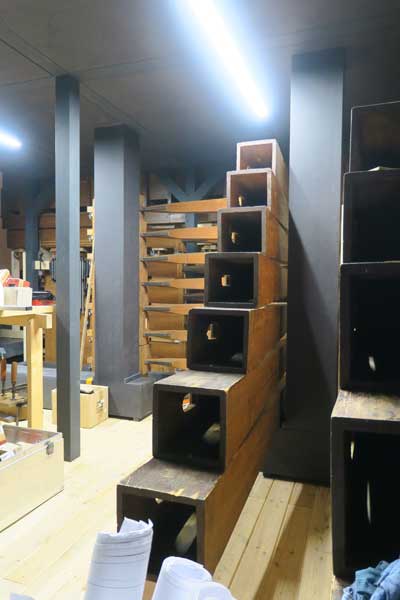
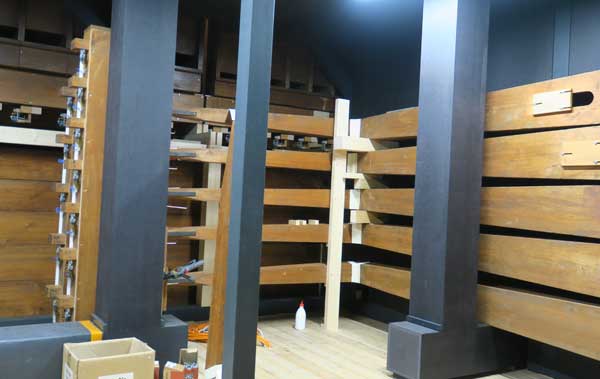
The large wooden organ pipes (Dec. 10–11).
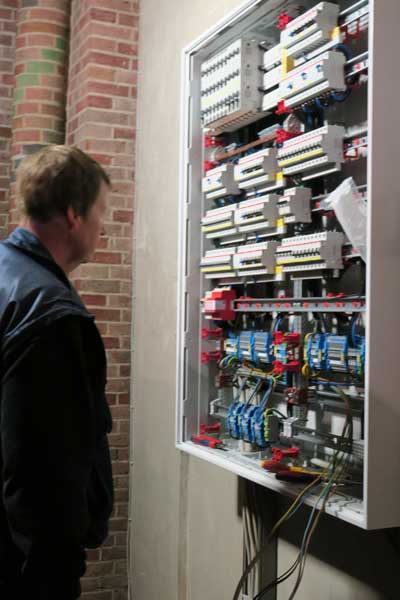
The organ's electrical system requires its own control panel.
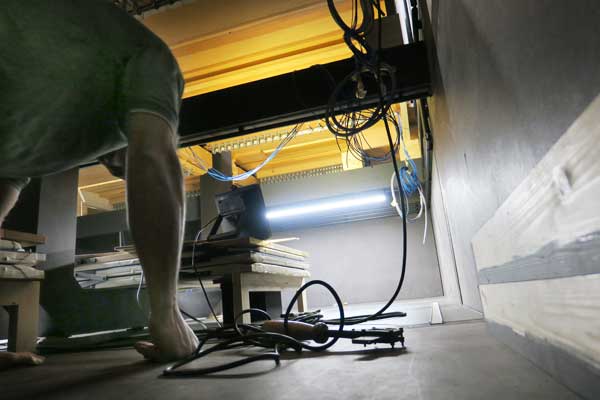
Many parts of the organ case can now only be reached by crawling.
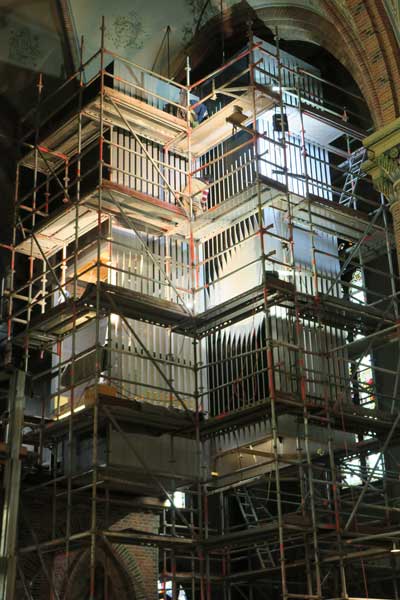
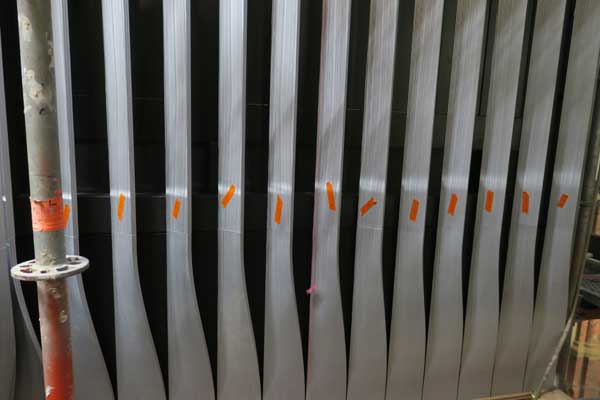
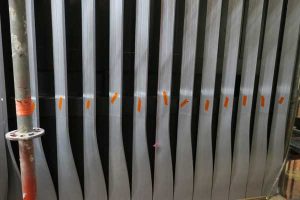
Each element is numbered.
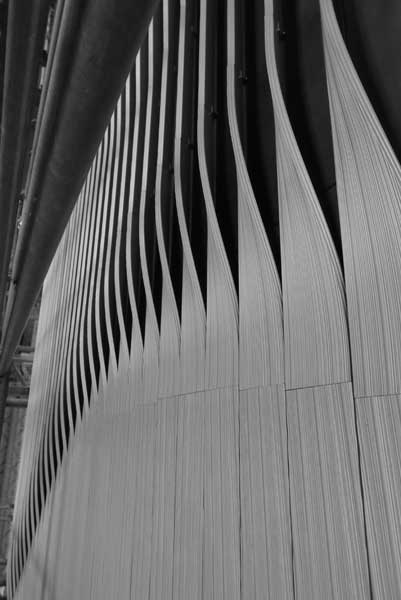
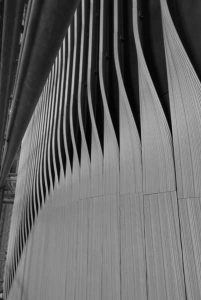
The slats from the other side.

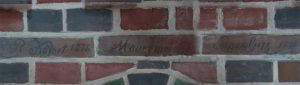
In 1876, master mason R. Kofoet left an engraving on the masonry next to the organ loft to commemorate his work.
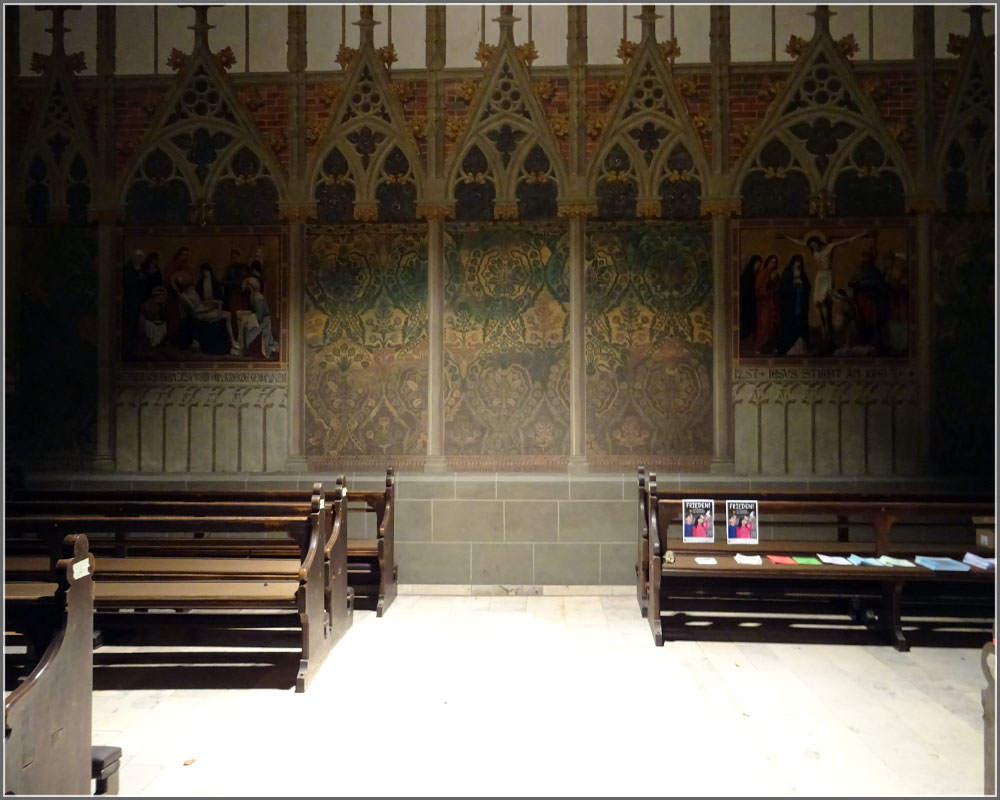
Oh no, Jesus is gone! On December 11, the Sacred Heart statue was moved. Its previous location is needed for the organ's remote control system.
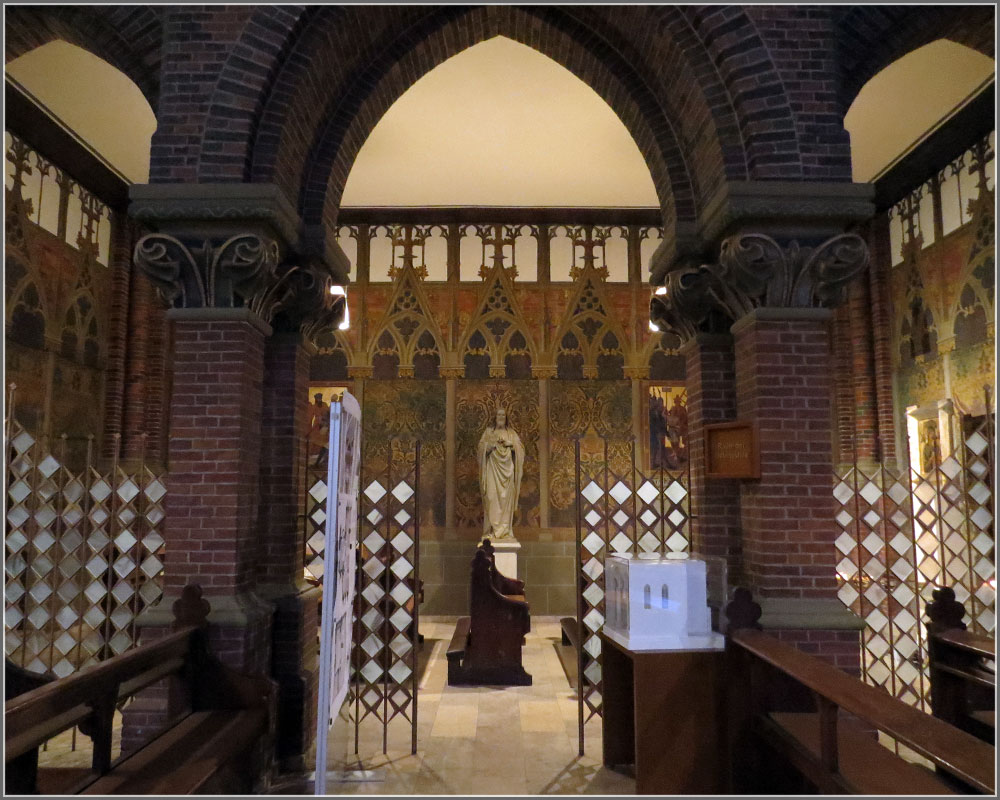
The statue of the Sacred Heart has found its new home in the Room of Silence.

This marks the third time in ten years that it has changed locations.
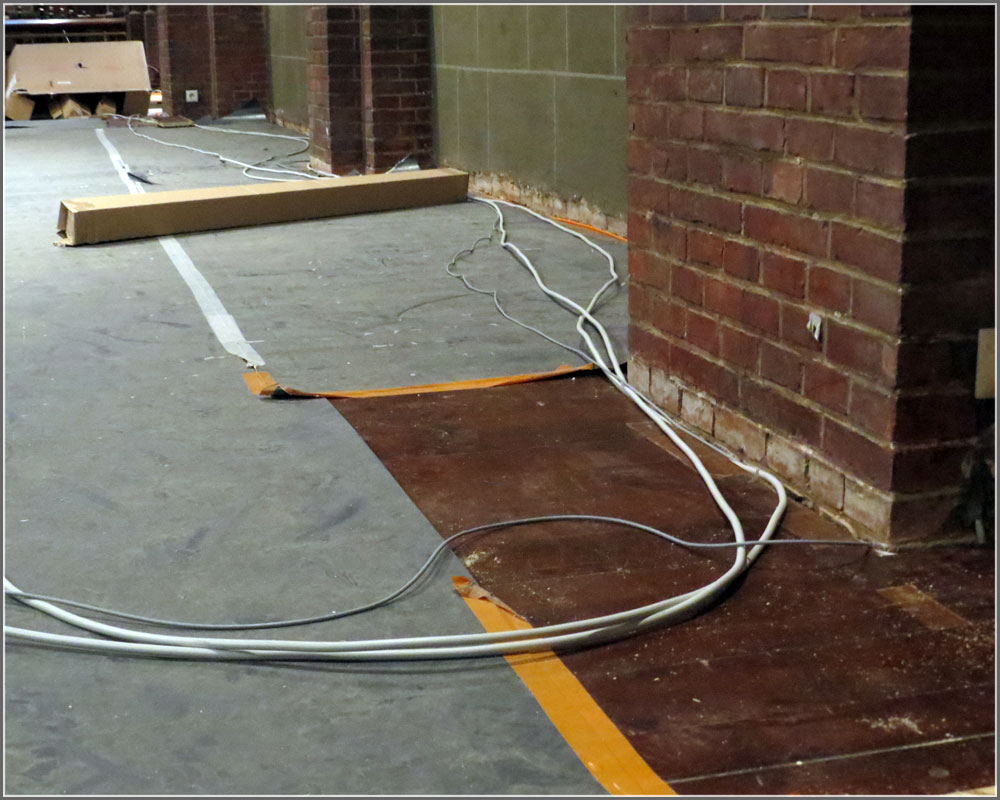
The electricians have laid countless meters of wiring again this week.
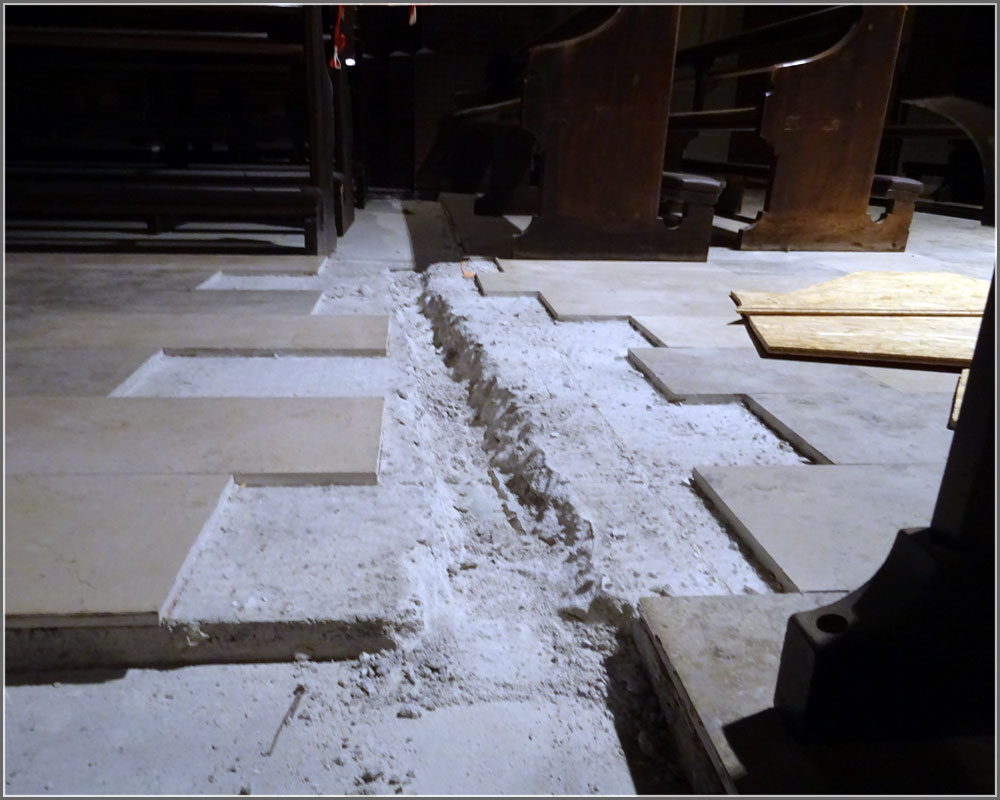
To do this, a few floor panels and benches had to be moved.
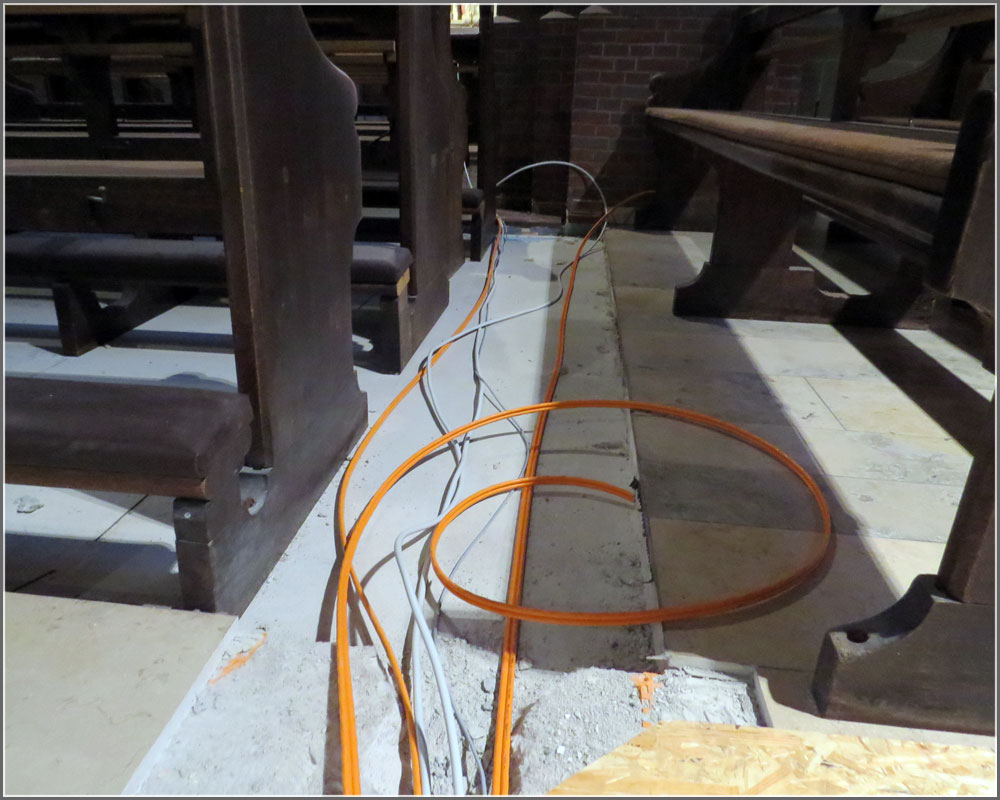
Power and control cables.
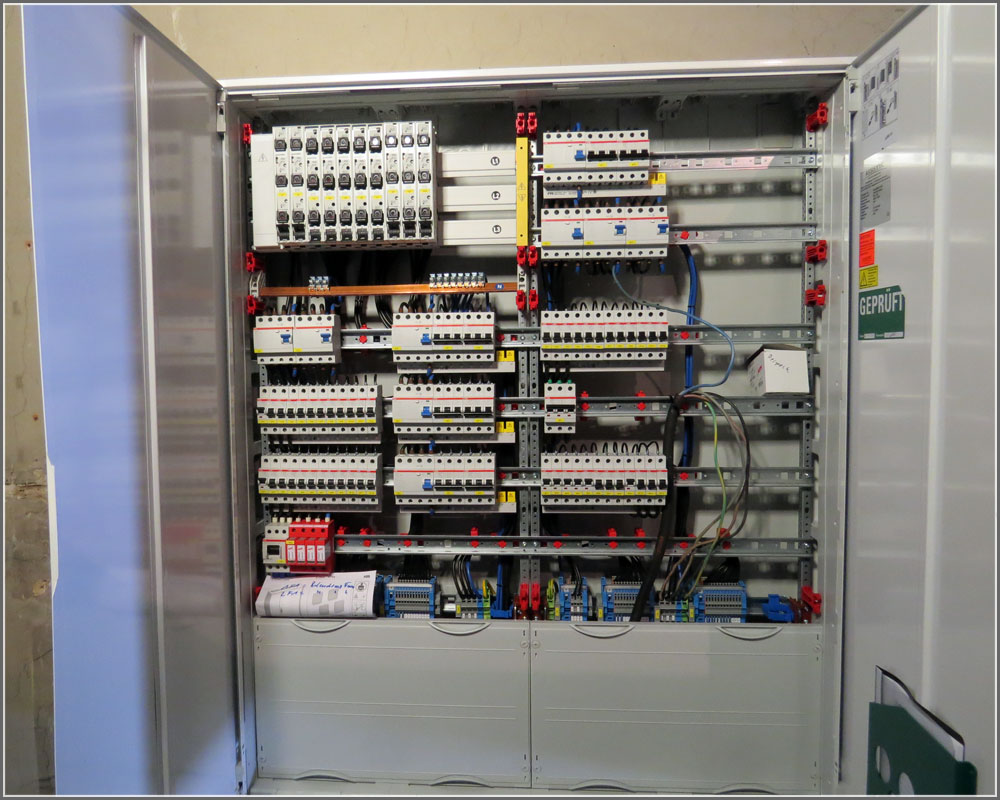
The organ's new control cabinet is finished (Dec. 12).
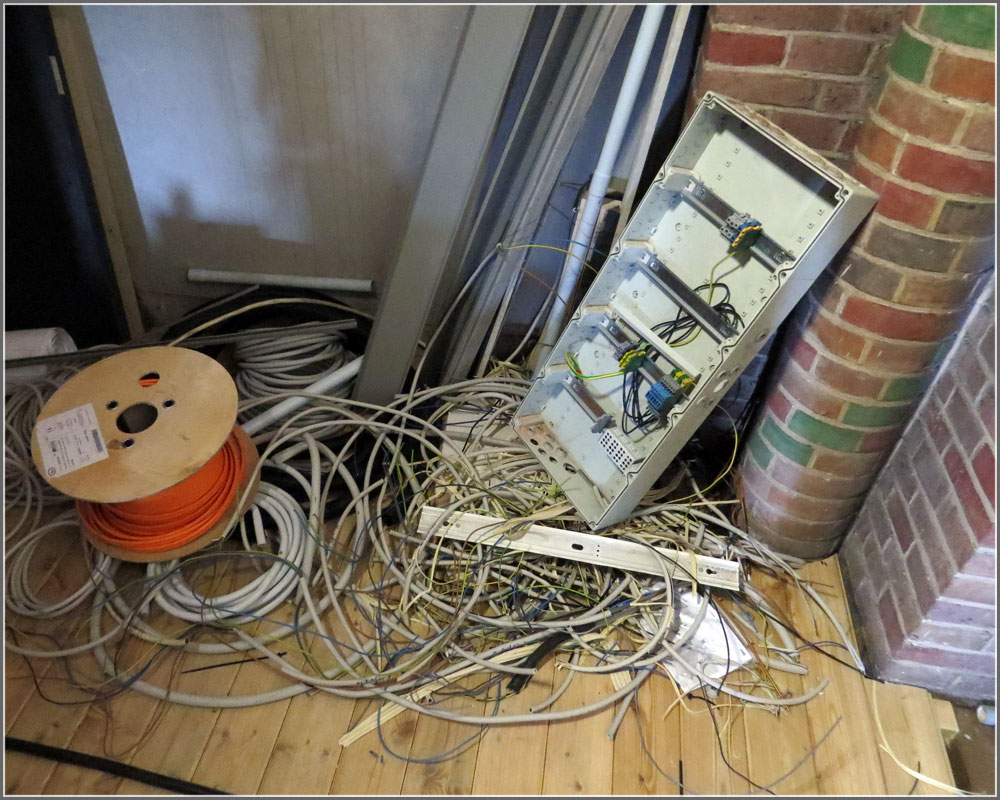
The remains of the old electrical box.
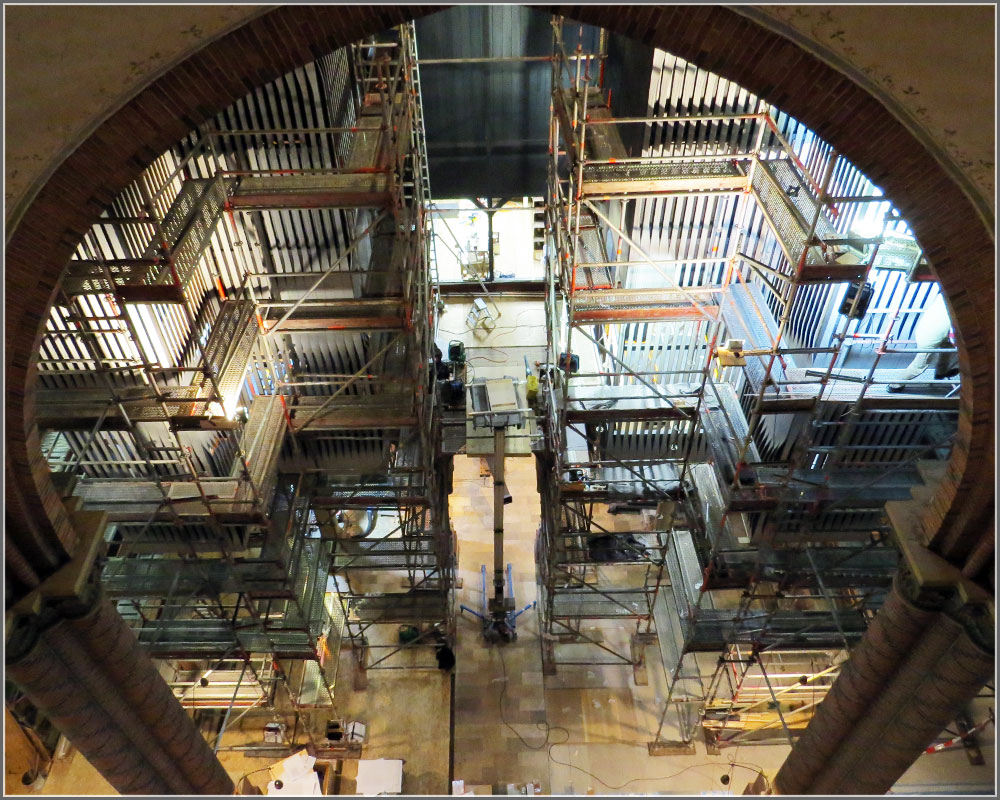
The scaffolding will be taken down next week.
Large turnout on December 16
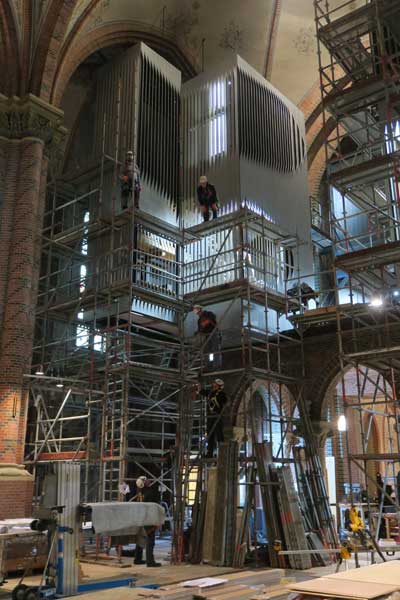
In the blink of an eye, the scaffolding around the large organ case disappears, revealing the organ facade.

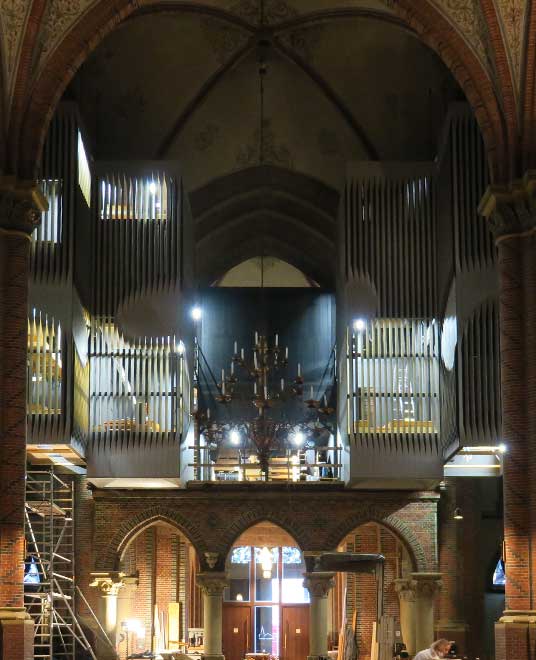
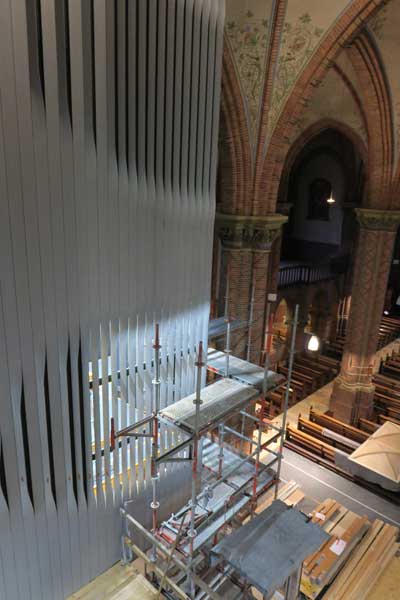
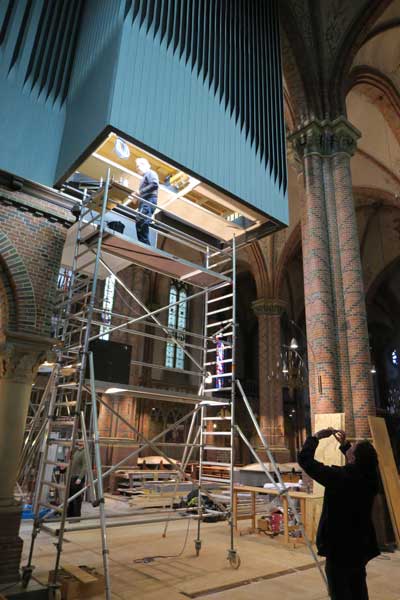
The perceived color changes depending on the angle of the light and the type of light (artificial, neon, natural light from a window).

Here are the large wooden panels used to close off the organ from below.
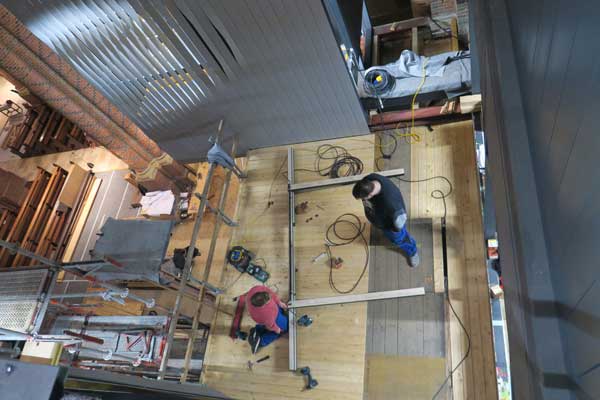
Electricians at work.
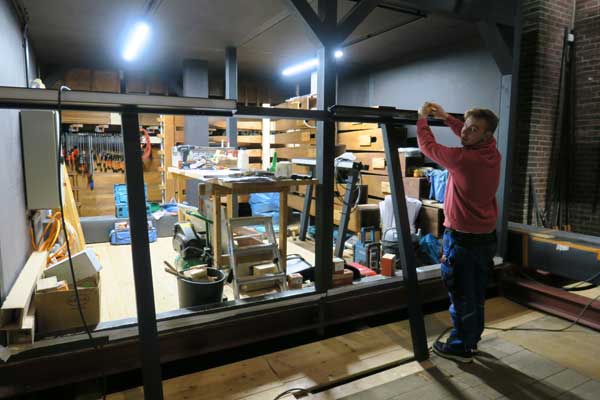
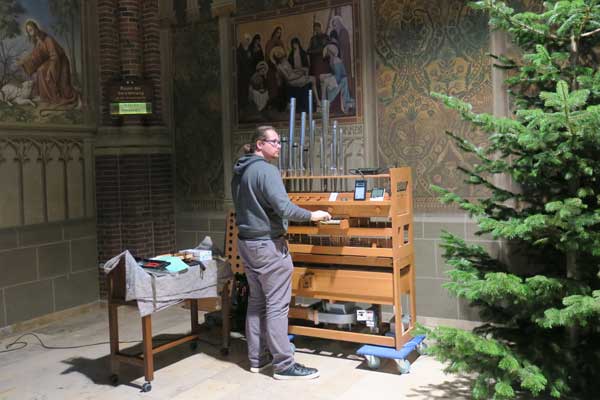
Here, an expert is conducting initial tests to determine the intonation of the pipes for St. Antonius.
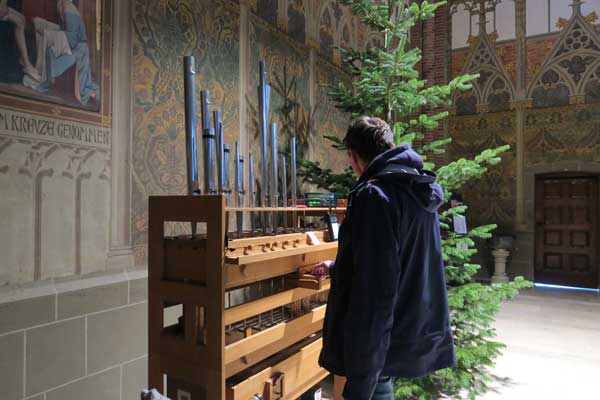
Our organist, Ralf Stiewe, is happy to assist him with this.
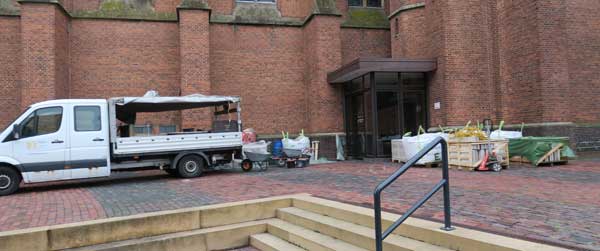
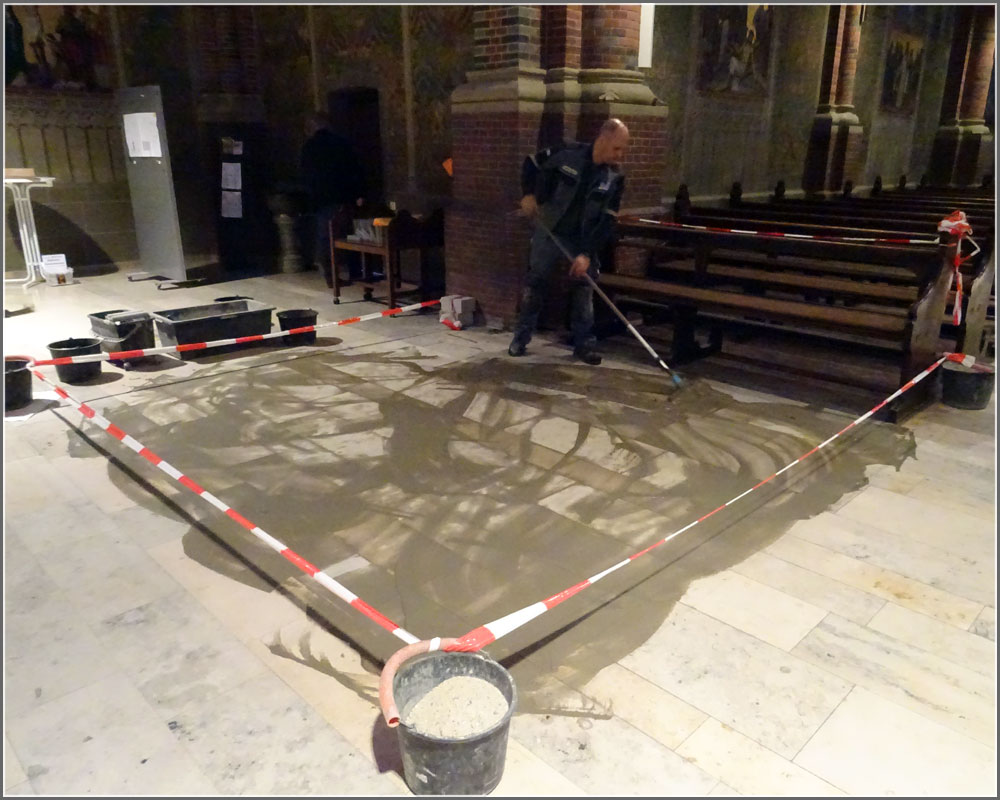
The tile installers are here!
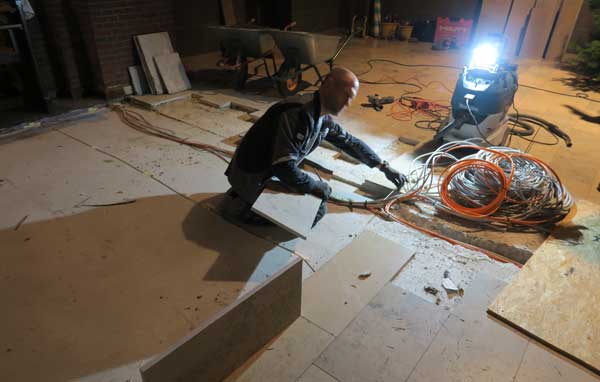
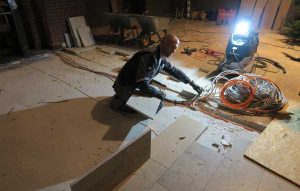
There's still quite a bit of wiring to run under the tiles.
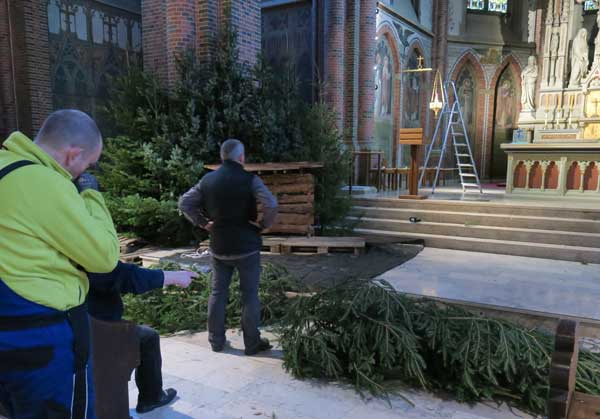
Amid all the hustle and bustle, it's also time to start setting up the nativity scene for Christmas.
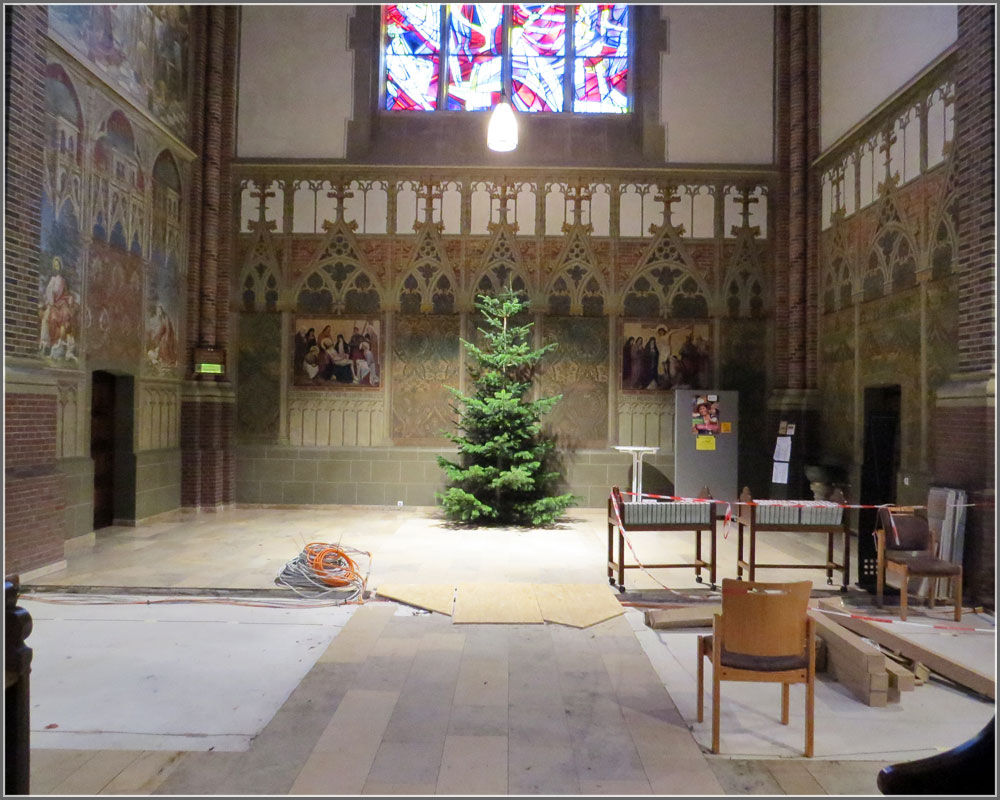
On December 16, this section of the southern transept still looked like this.
Three months ago, more benches were removed from this area because this space is needed for the control center and the choir stand.
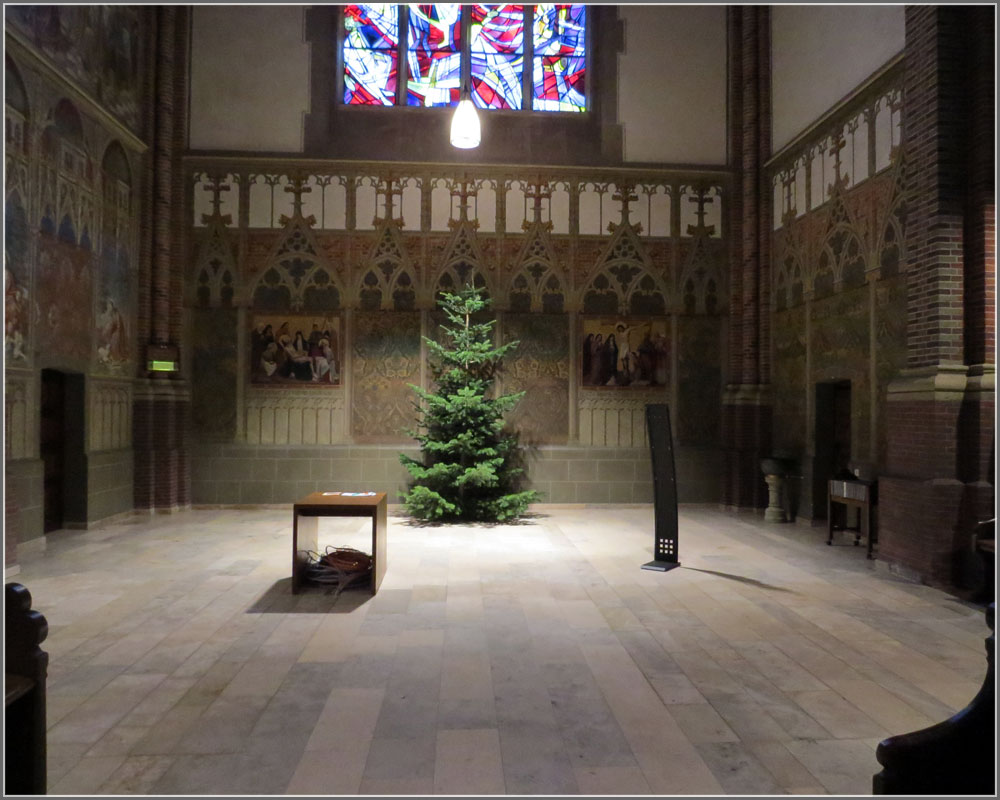
This area has now been tiled. This week (Dec. 16–20), the church will be prepared so that it is ready for a festive Christmas celebration. The scaffolding will be taken down, the pews will be put back in place, tiles will be laid, and the tower hall will be cleared so that the main entrance is once again accessible to churchgoers.

The wiring for the remote control system is already in place under the table in the center. This is also one of the three possible locations for the organ console.
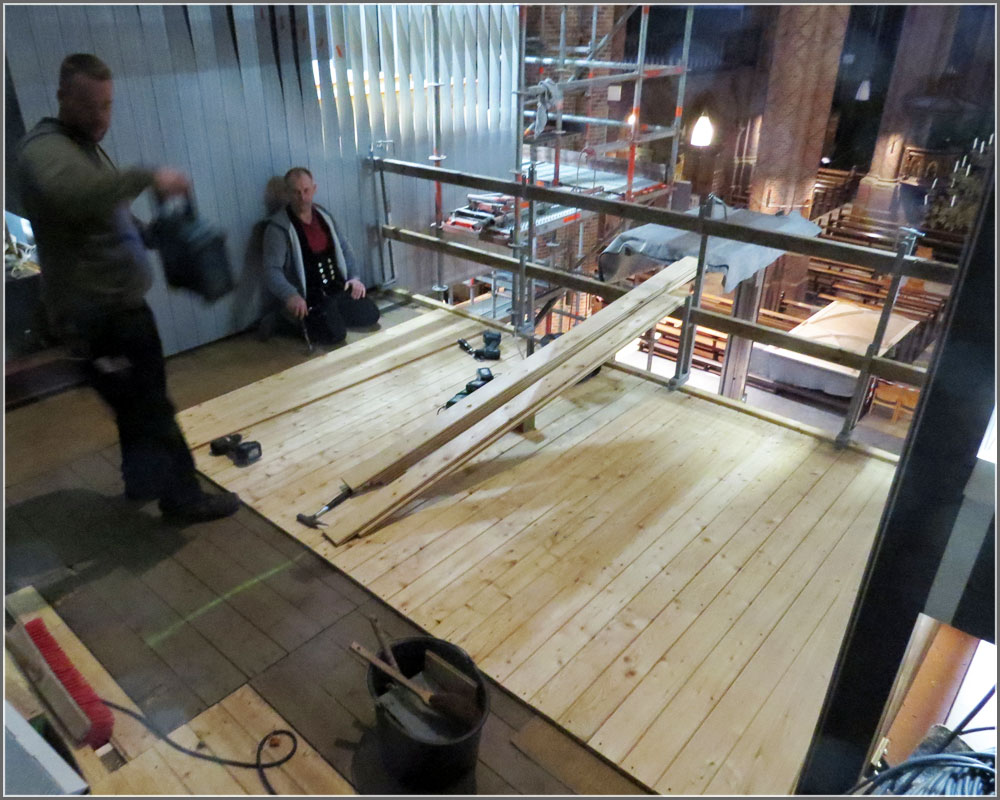
Carpenters have once again set to work on the organ loft.
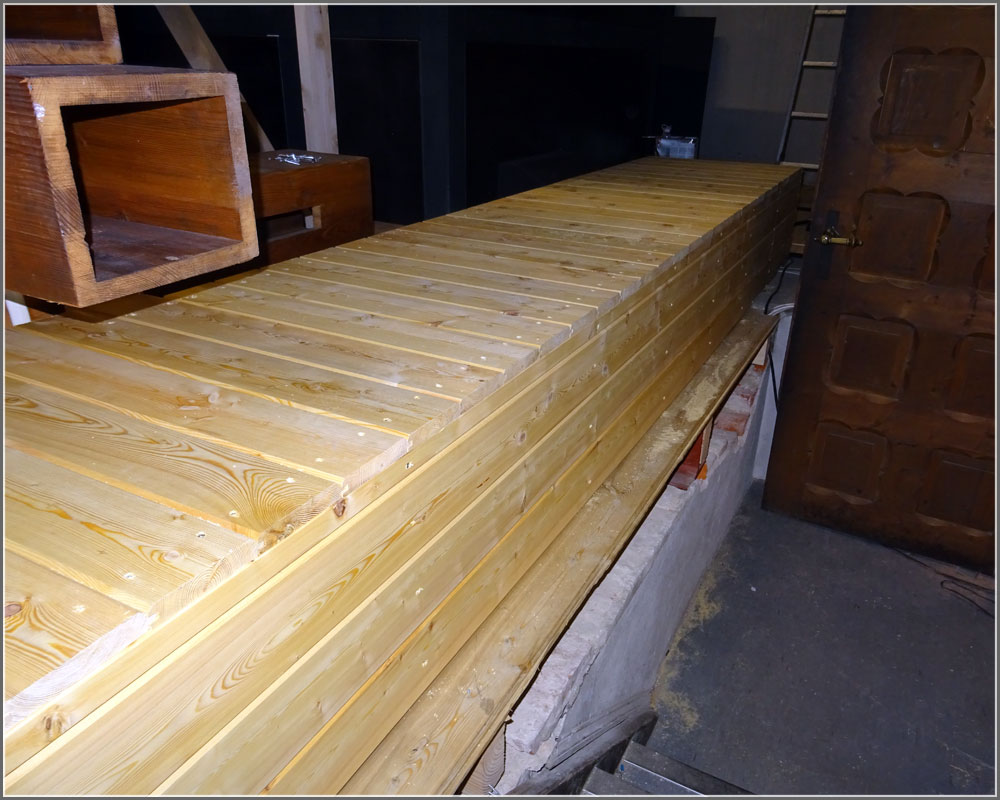
Even the large wind tunnels were "boarded up."
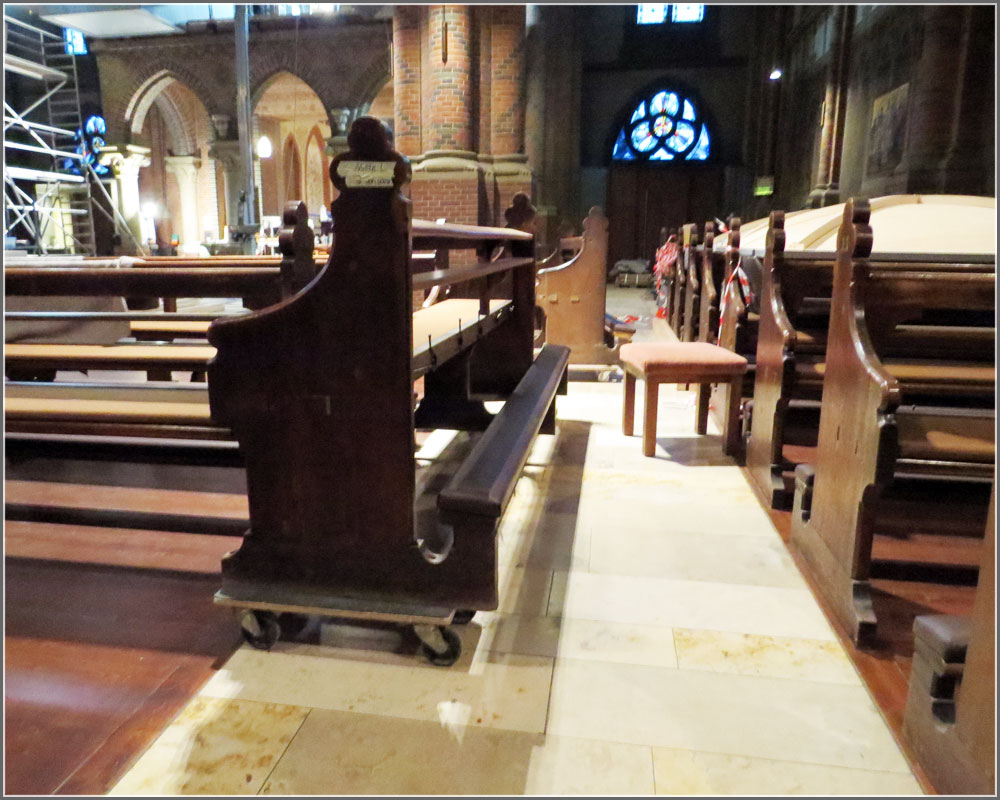
This week, it was time for another round of bench presses.
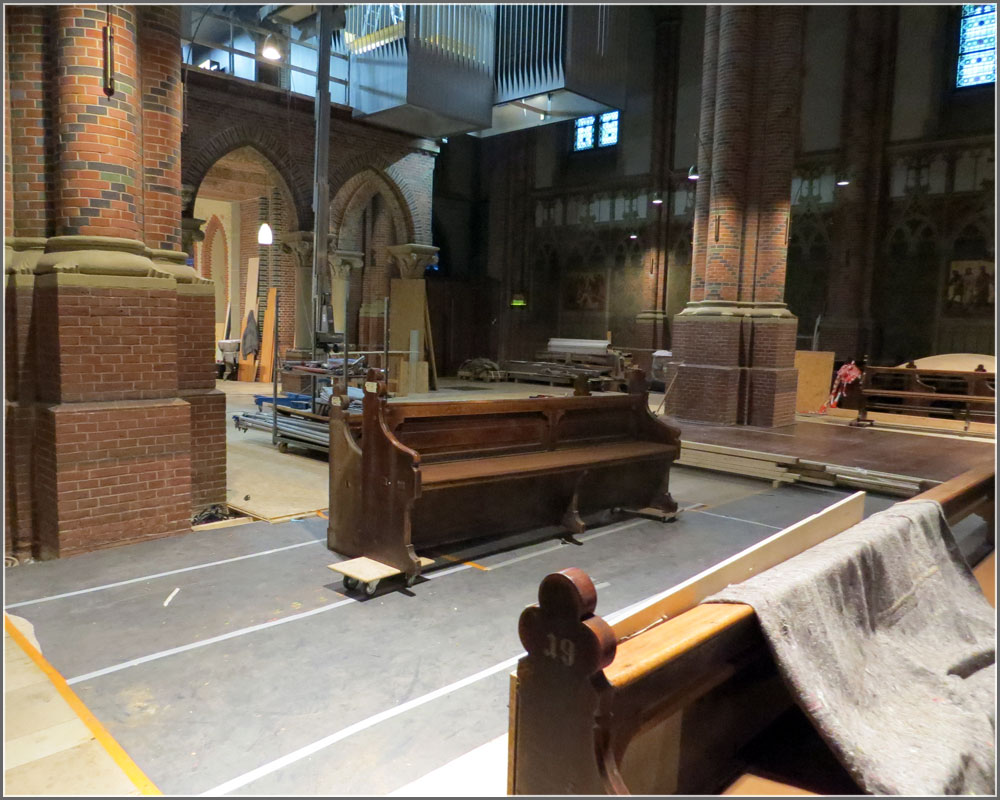
To make room for the many organ parts, many pews have been removed and temporarily stored throughout the church.

The last large sections of the organ case are being assembled
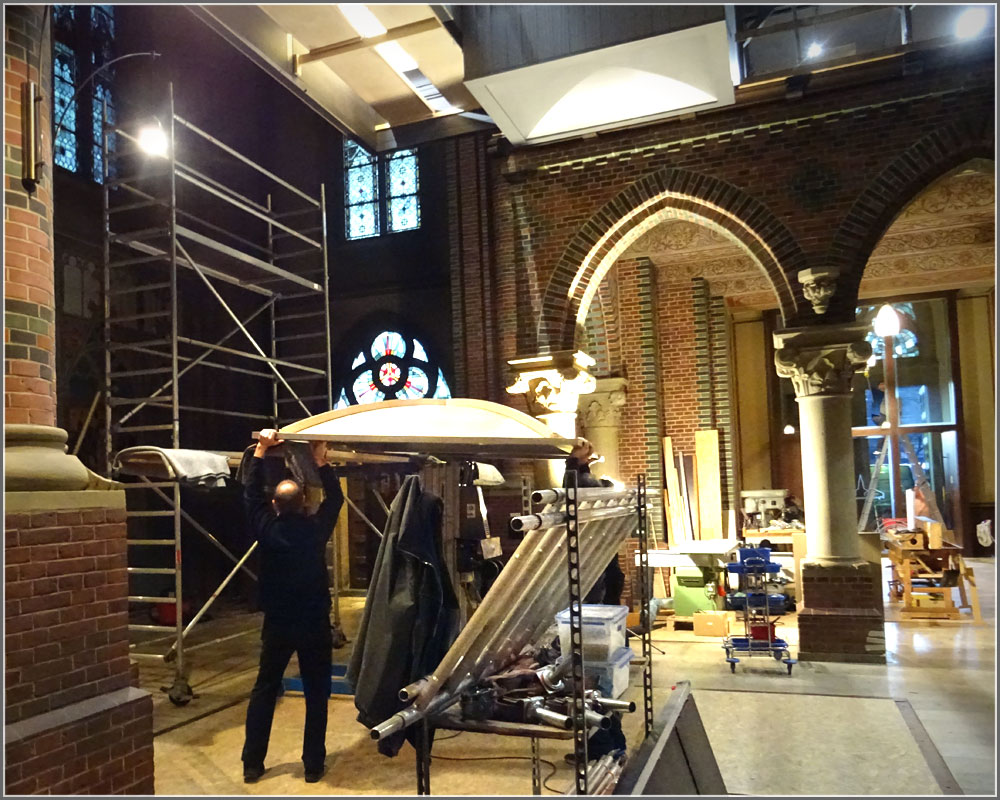
Although the lower panels of the outer organ towers aren't that heavy, they are very bulky.
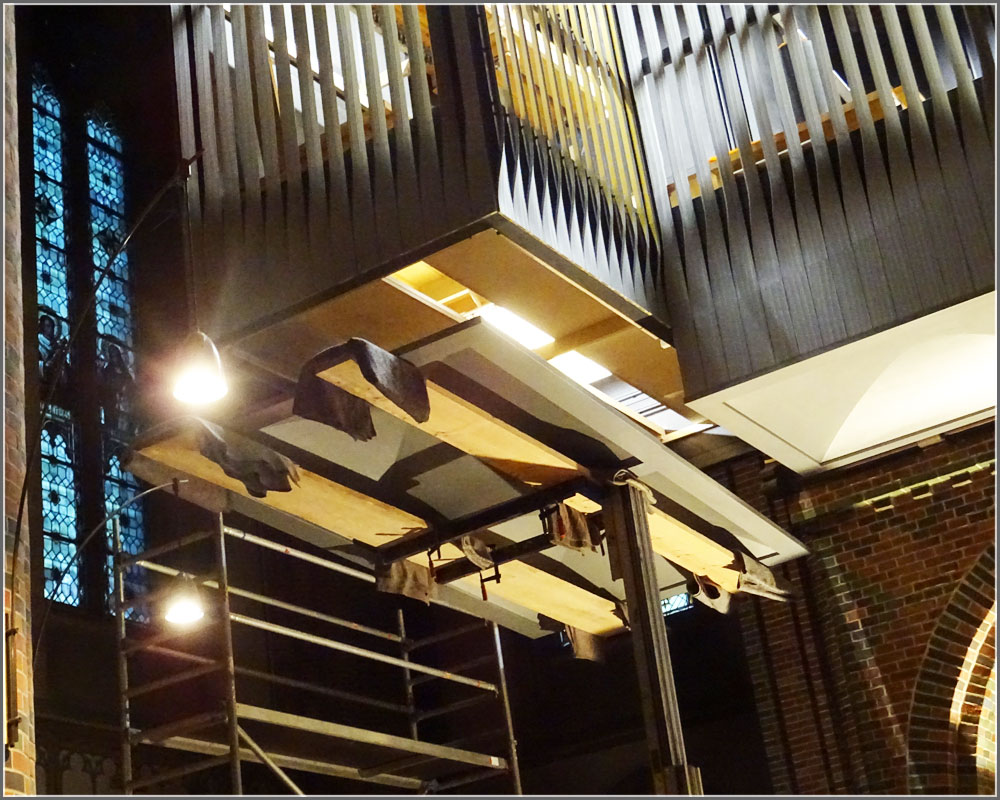
They were hoisted to the assembly position using a lift.
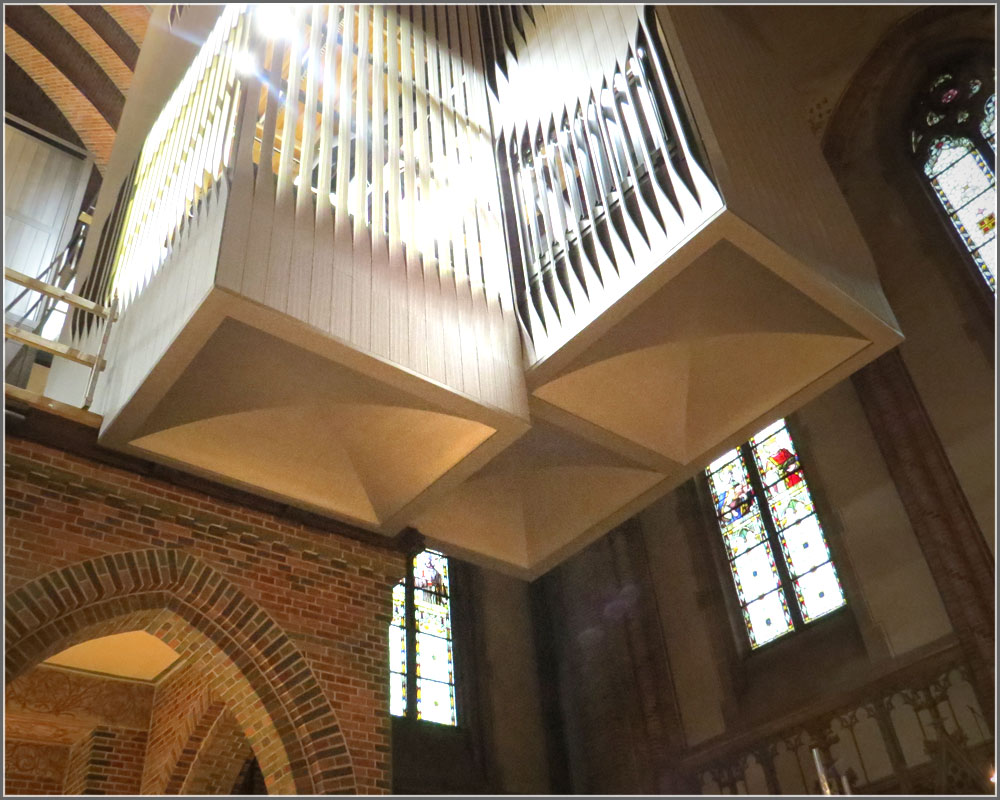
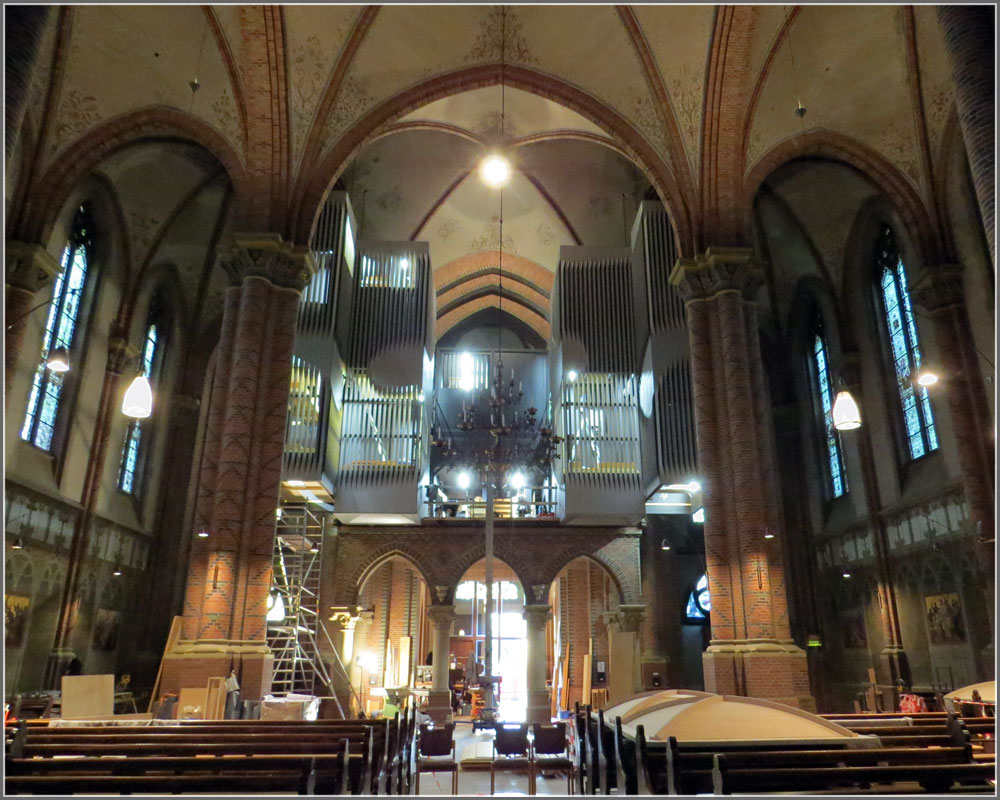
The brochure now looks presentable.
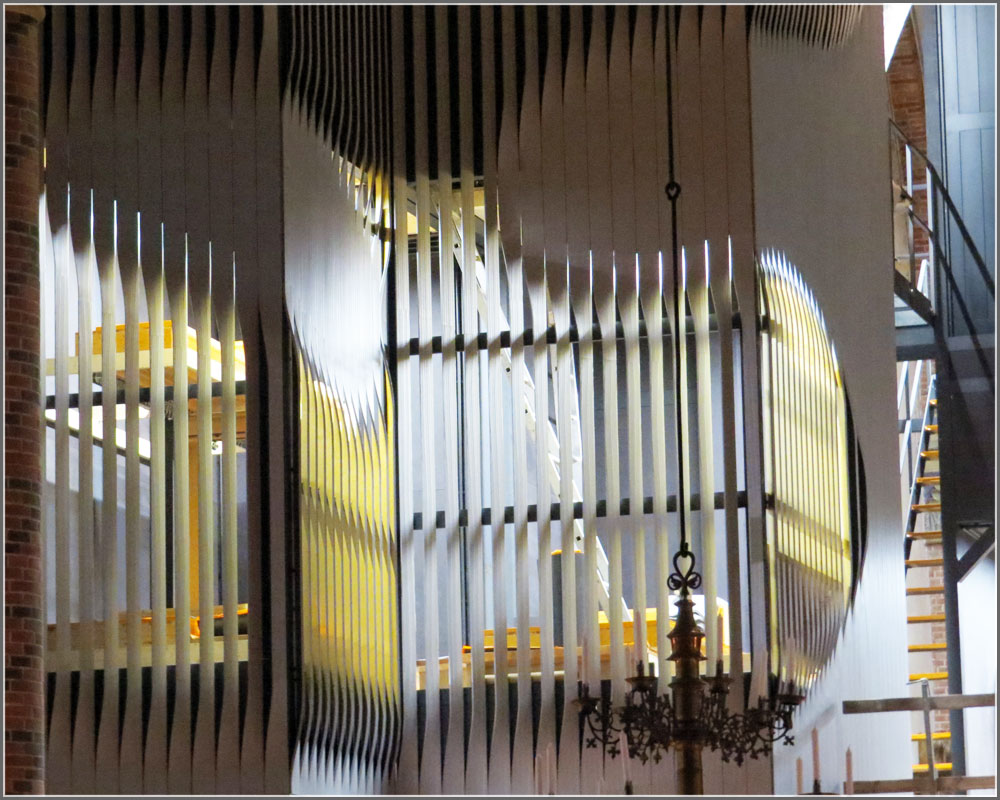
Installation of the Organ, Part 2 (October 18, 2019–March 6, 2020)
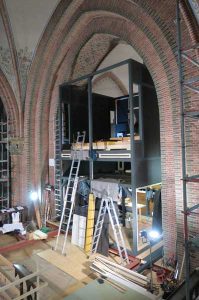
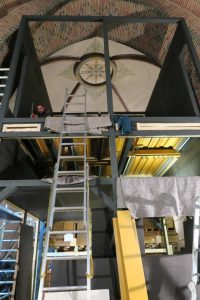

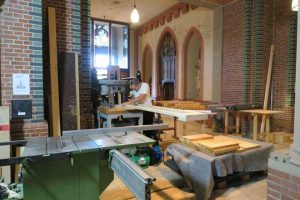
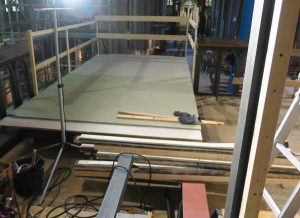
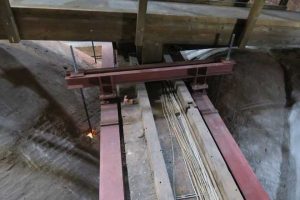


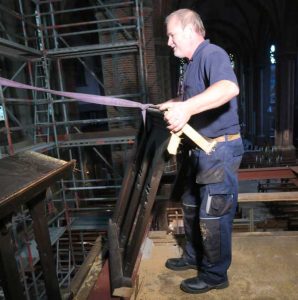


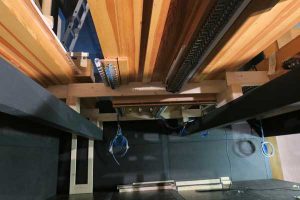
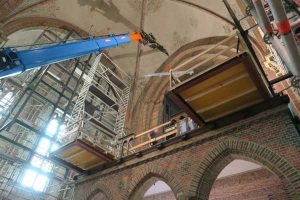
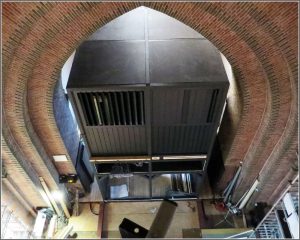
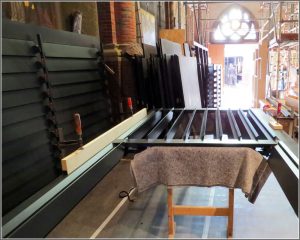
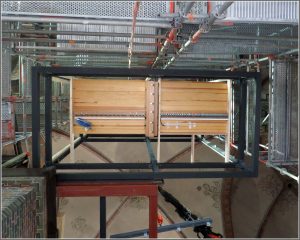
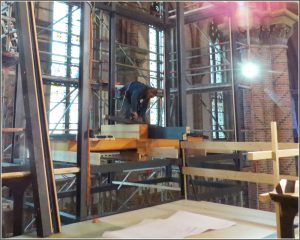
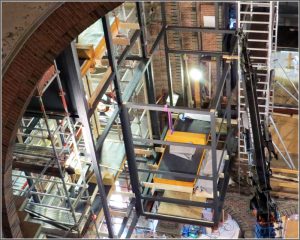

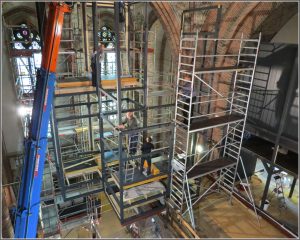
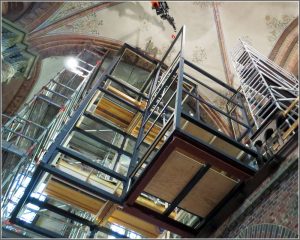
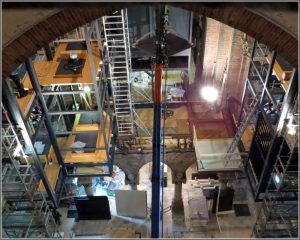


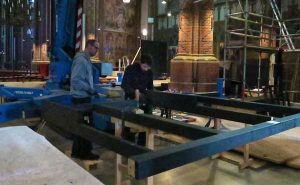
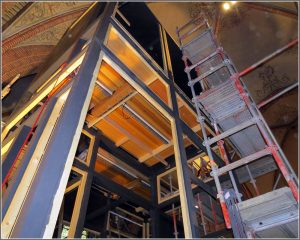
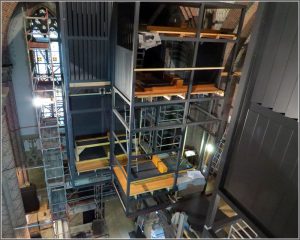

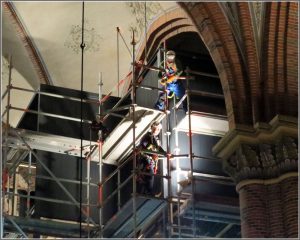
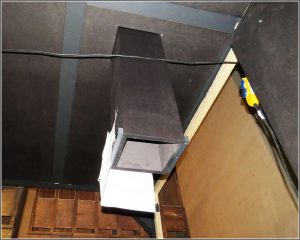
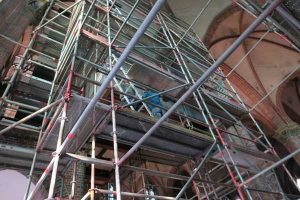
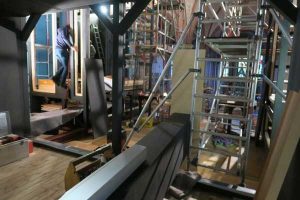
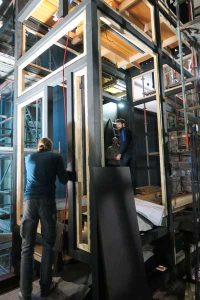
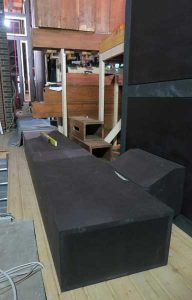


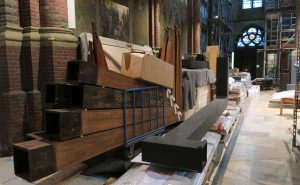
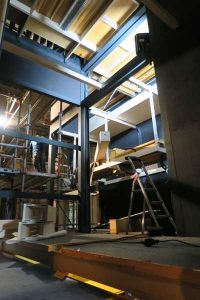
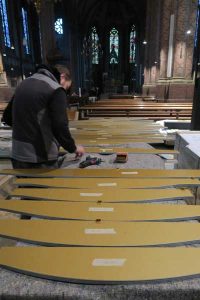


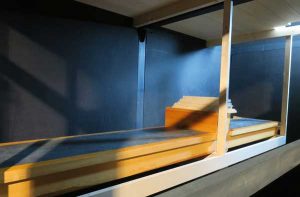
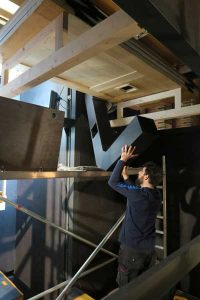

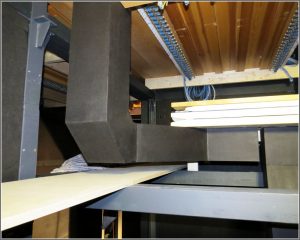


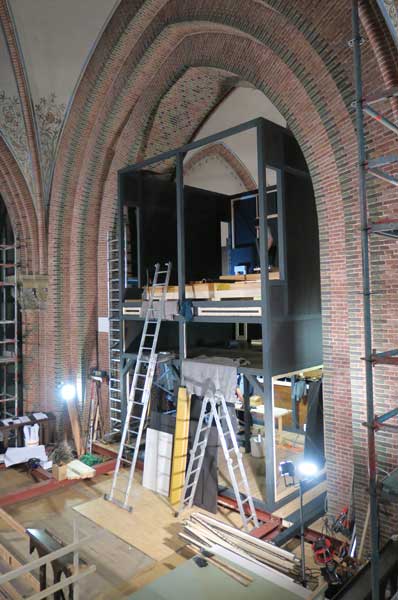
The second floor of the organ tower is being furnished (October 18, 2019).
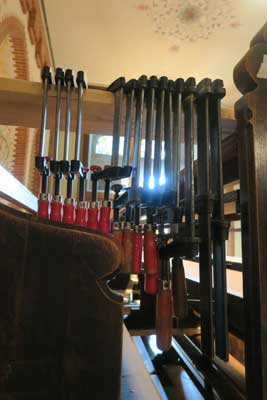
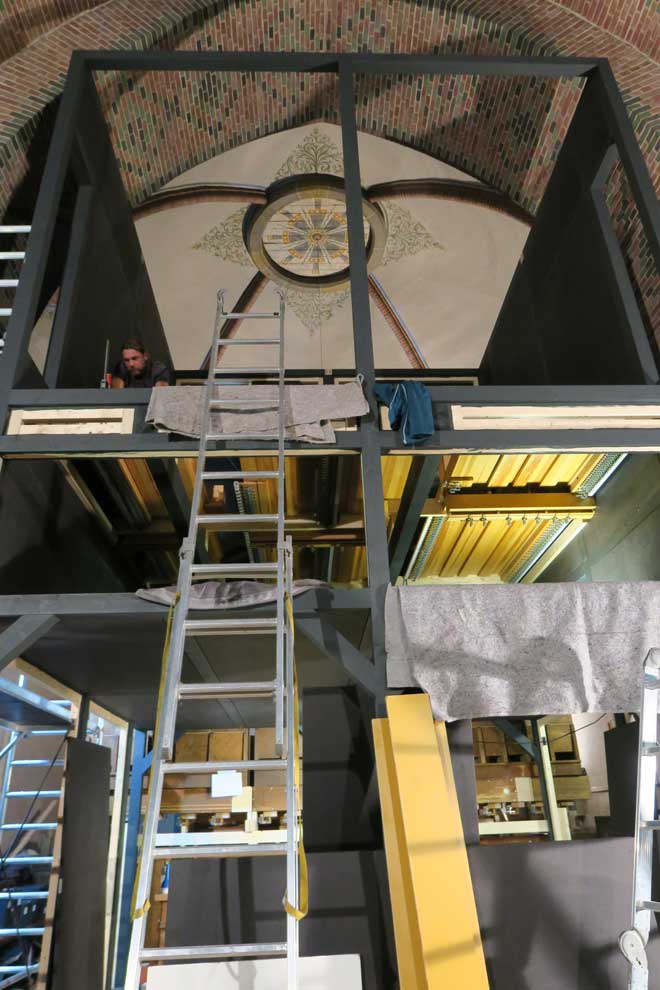
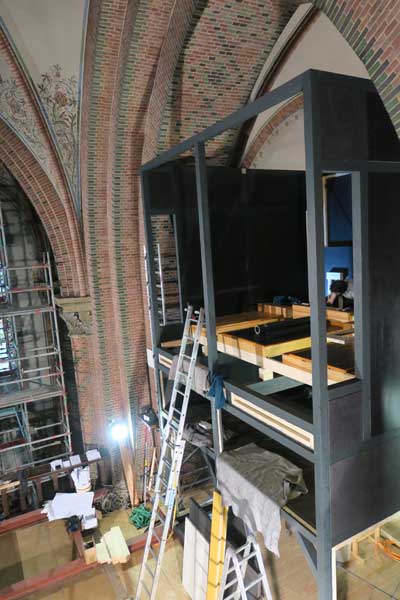
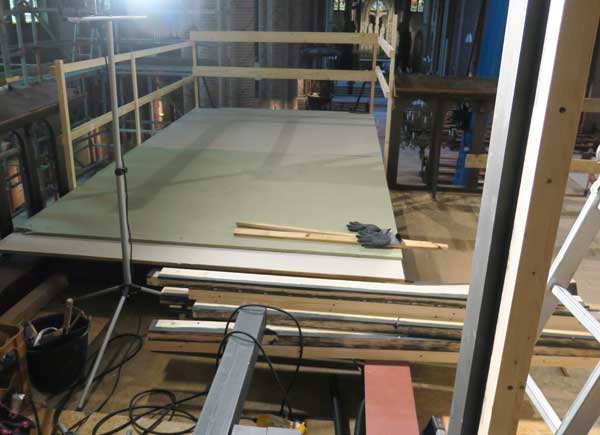
Space for organ pipes is being created to the right and left of the organ platform.
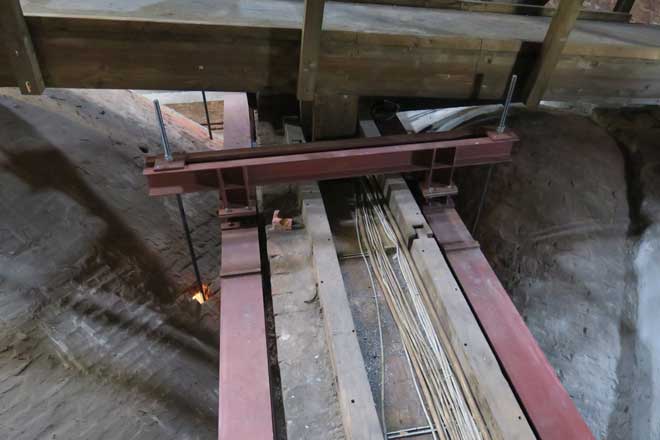
In the vault.
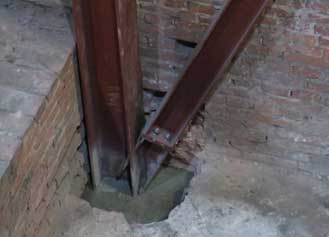
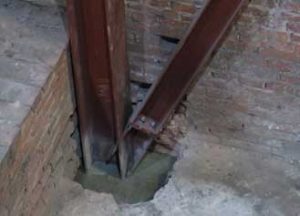
The steel beams are now encased in concrete.
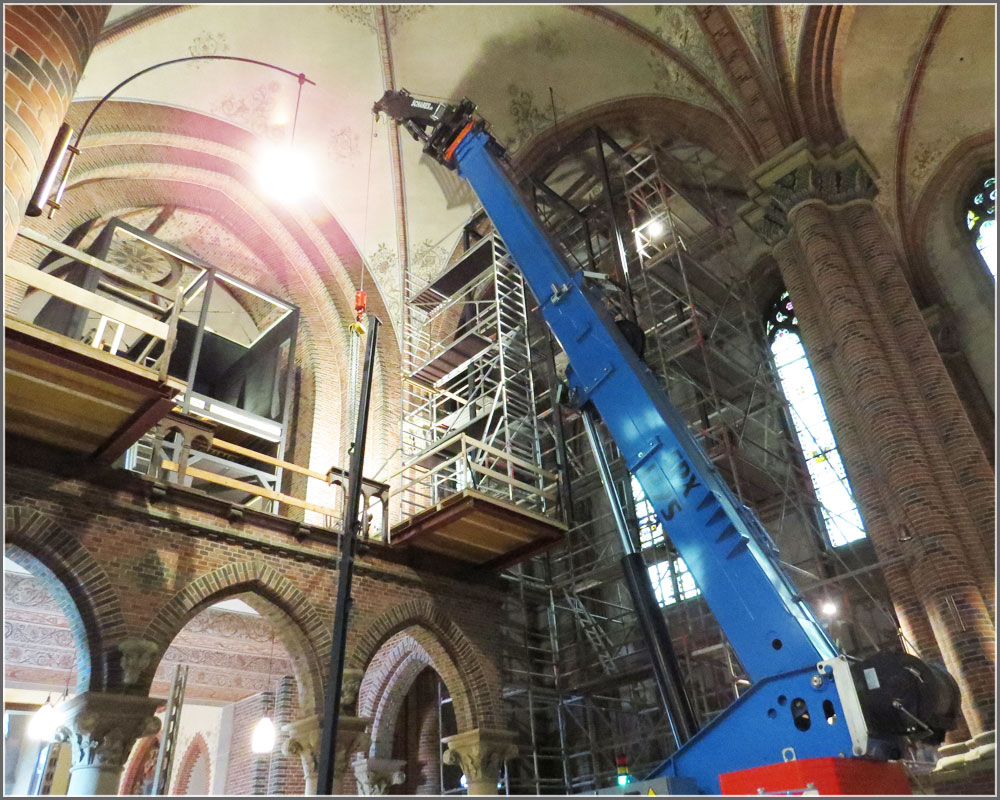
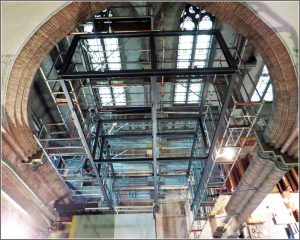
Assembly of the steel structure for the suspended organ towers has been underway since October 22.
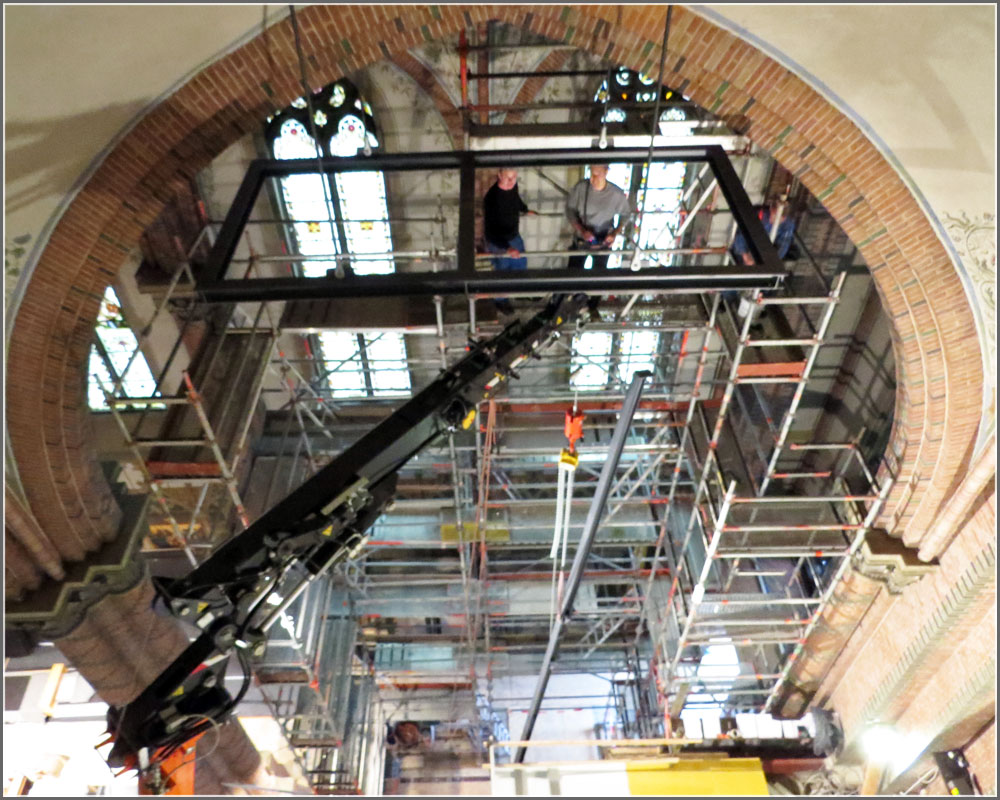
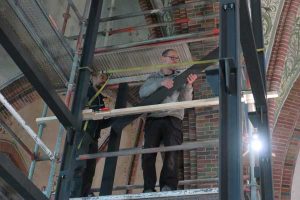
The steel components are bolted together from the scaffolding.
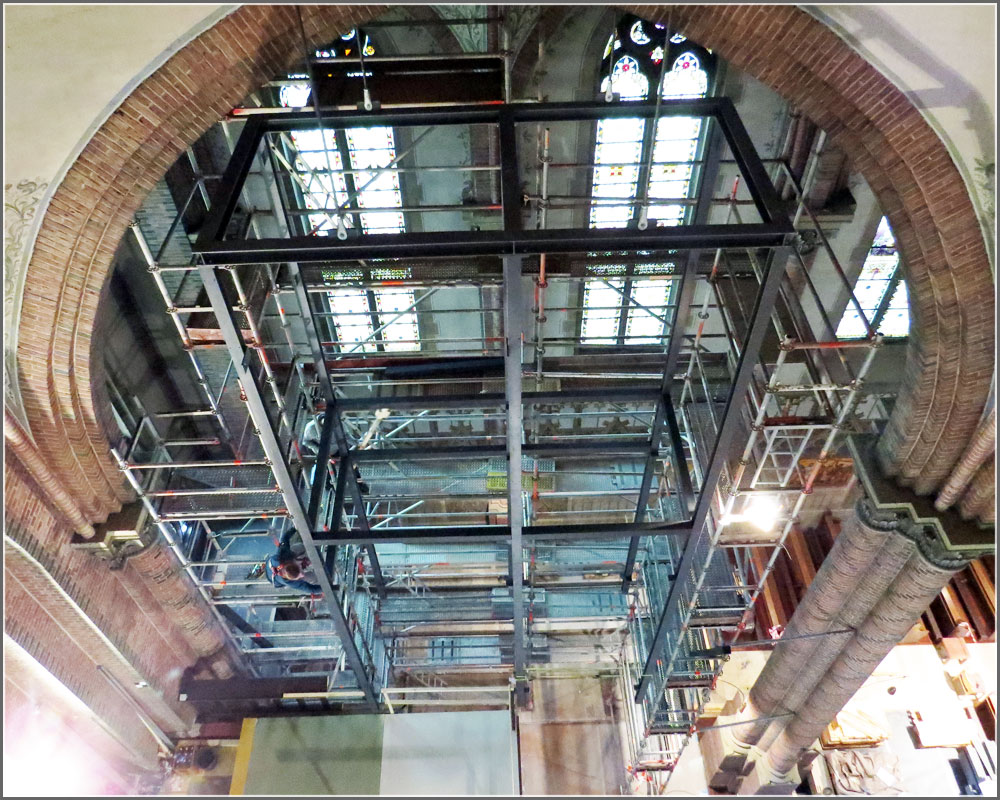
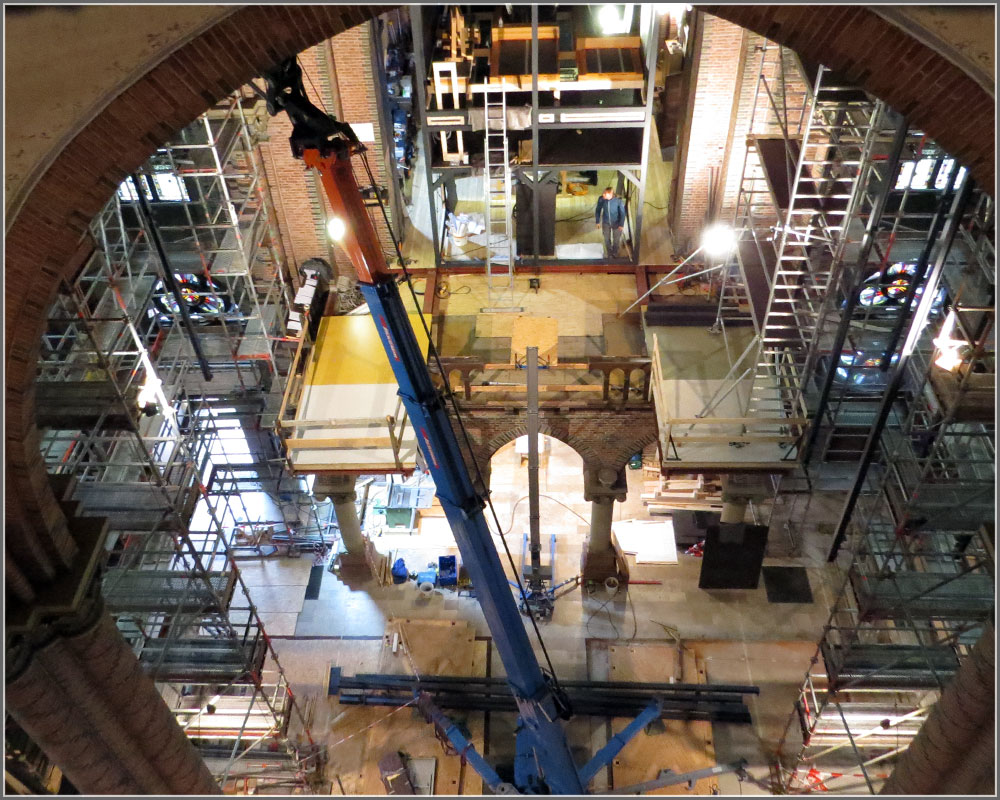
23.10.2019
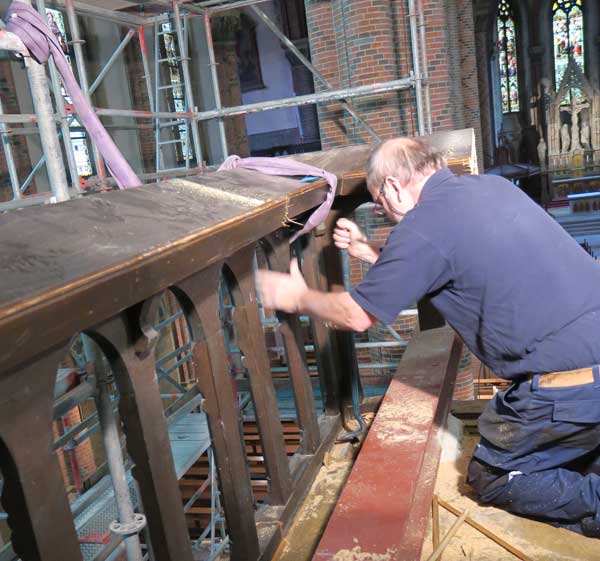
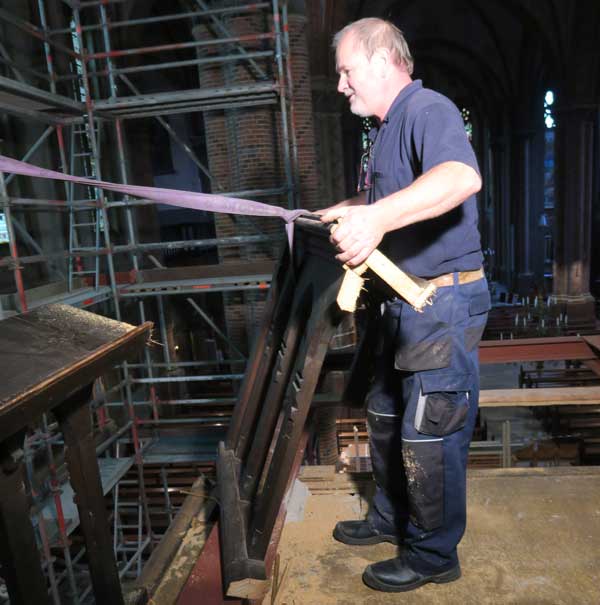
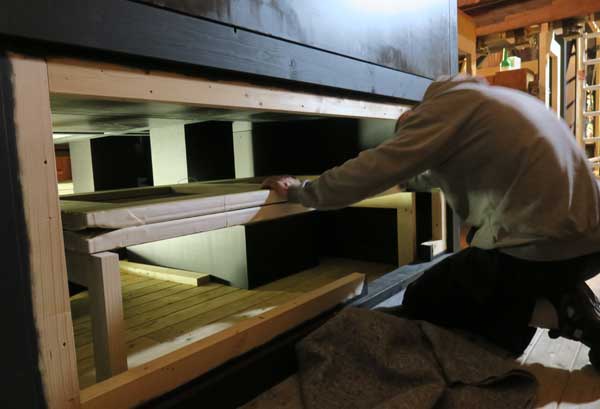
Installation of the large windchests.
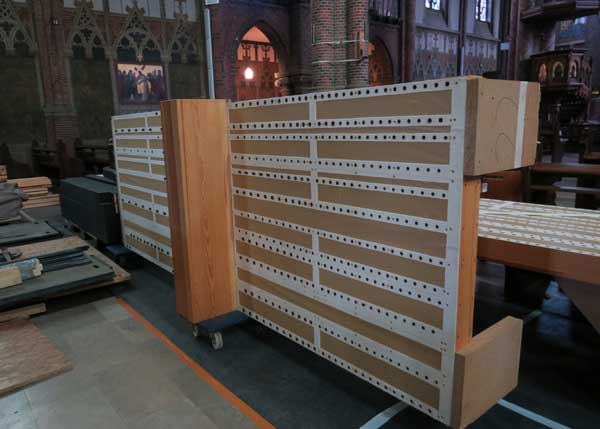
Soon, there will be an organ pipe in each of these holes.
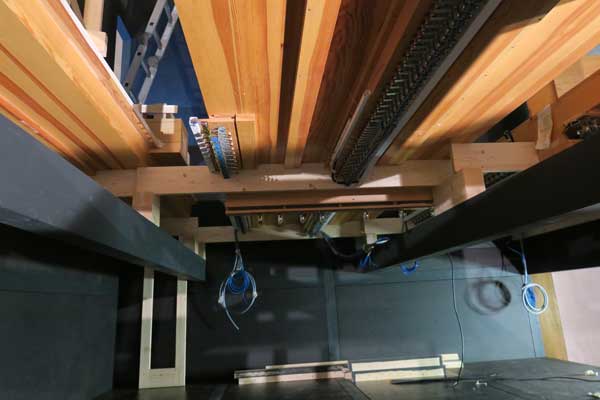
Inside the housing.
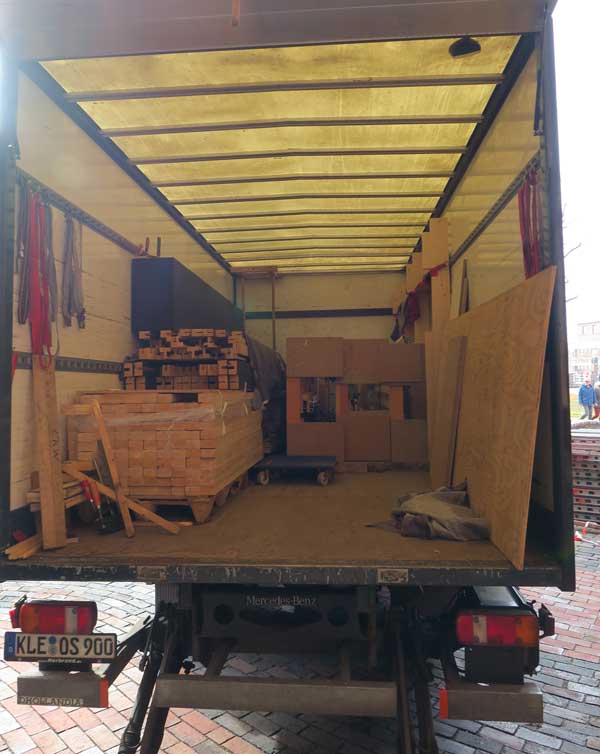
Many truckloads of individual parts are arriving in Papenburg.
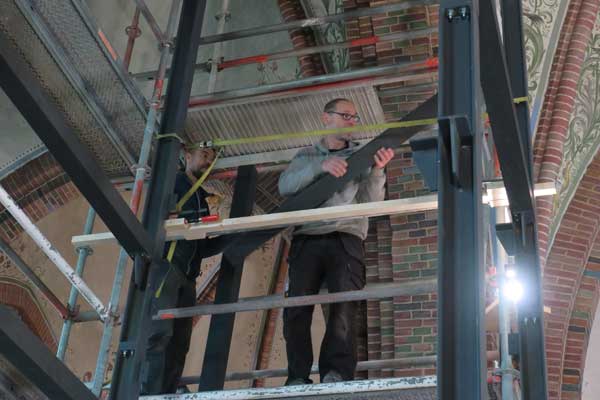
Work on the towers.
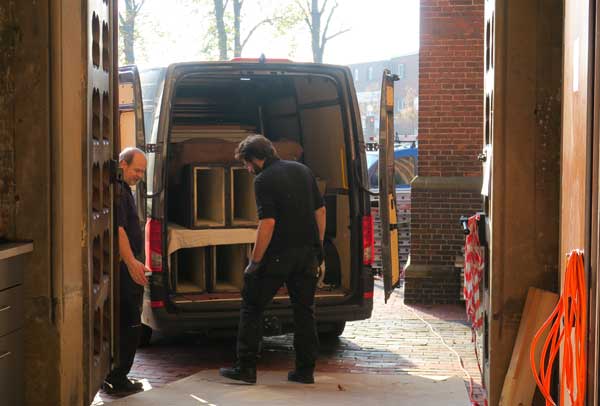
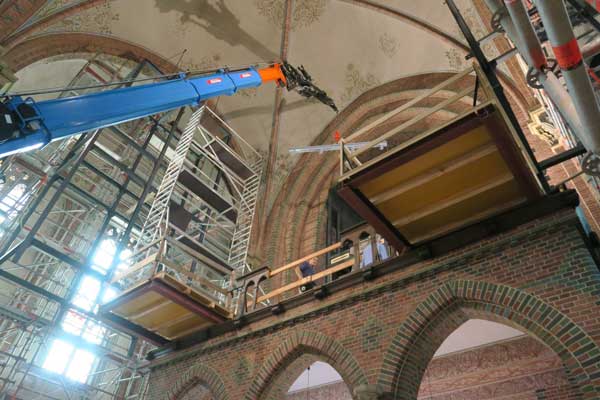
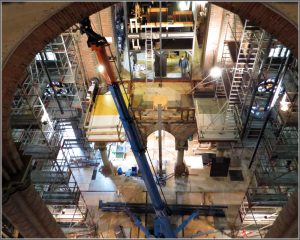
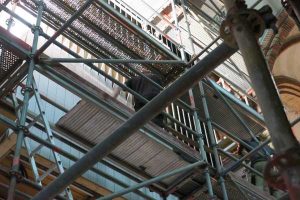
There's a lot of scaffolding in the church.
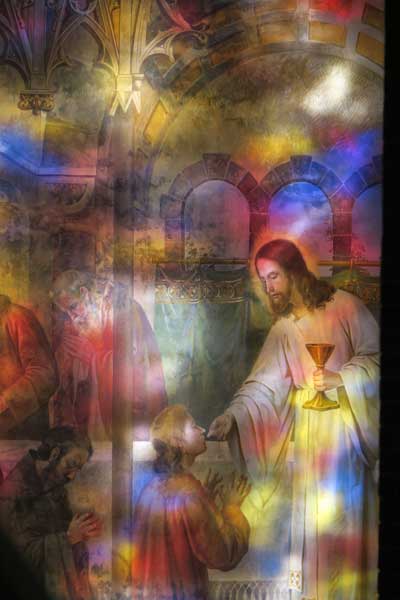
A distant view with streaks of light from the autumn sun.
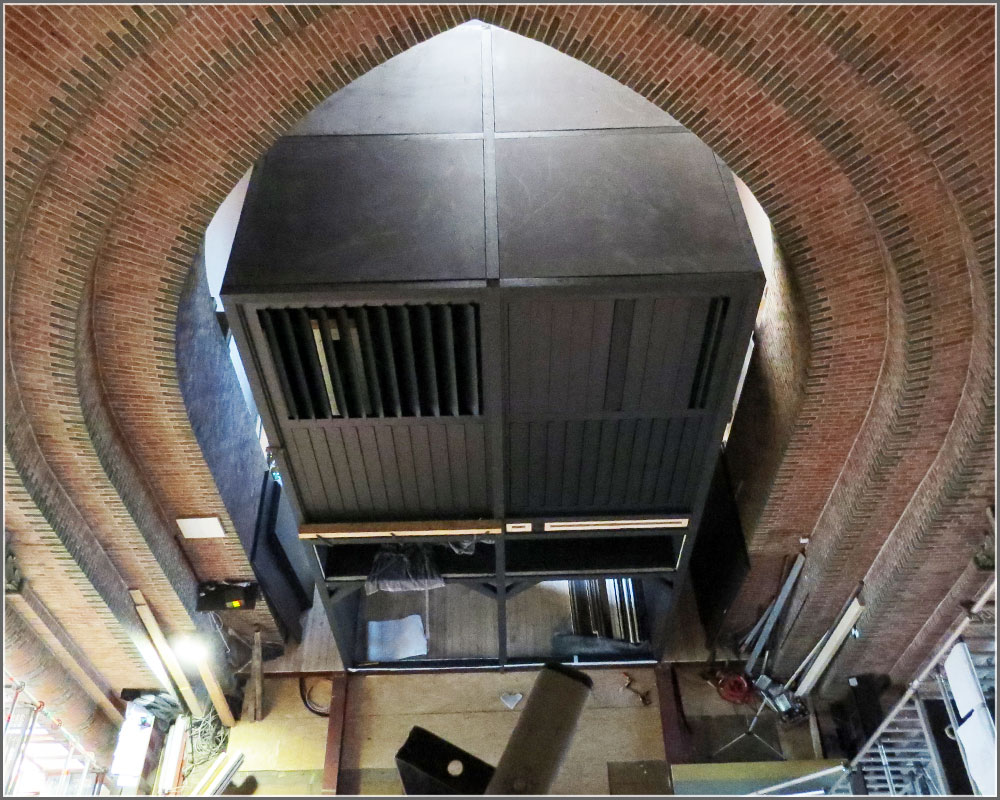
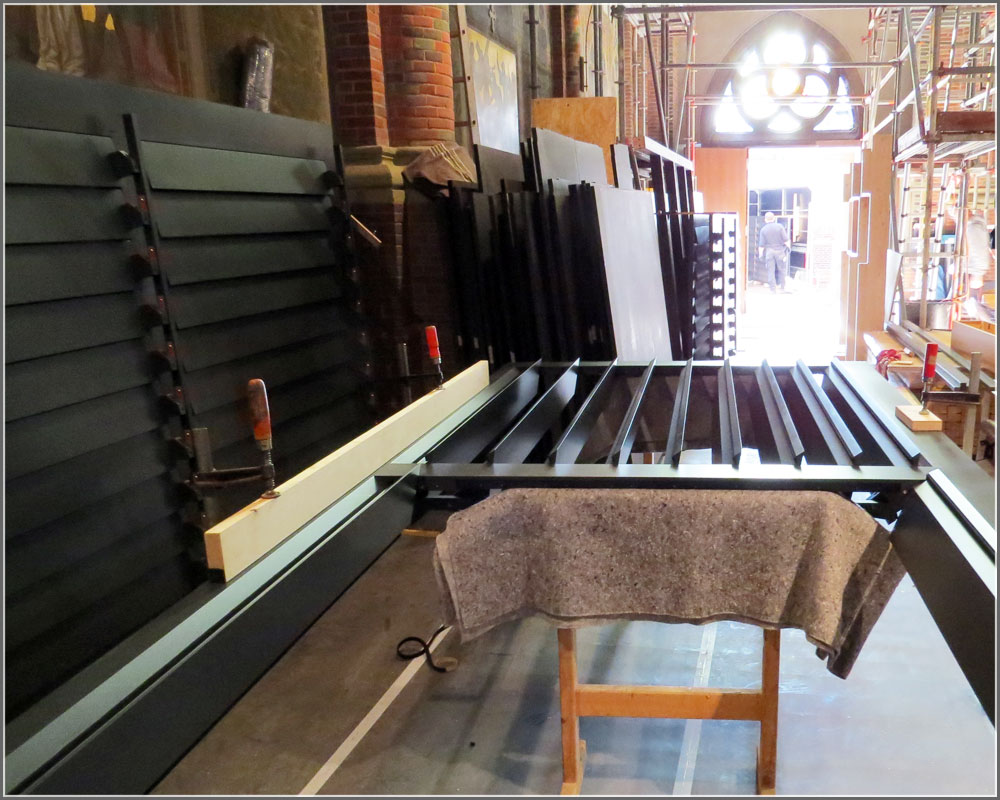
The adjustable sound hatches are clearly visible from above (Oct. 28–31).
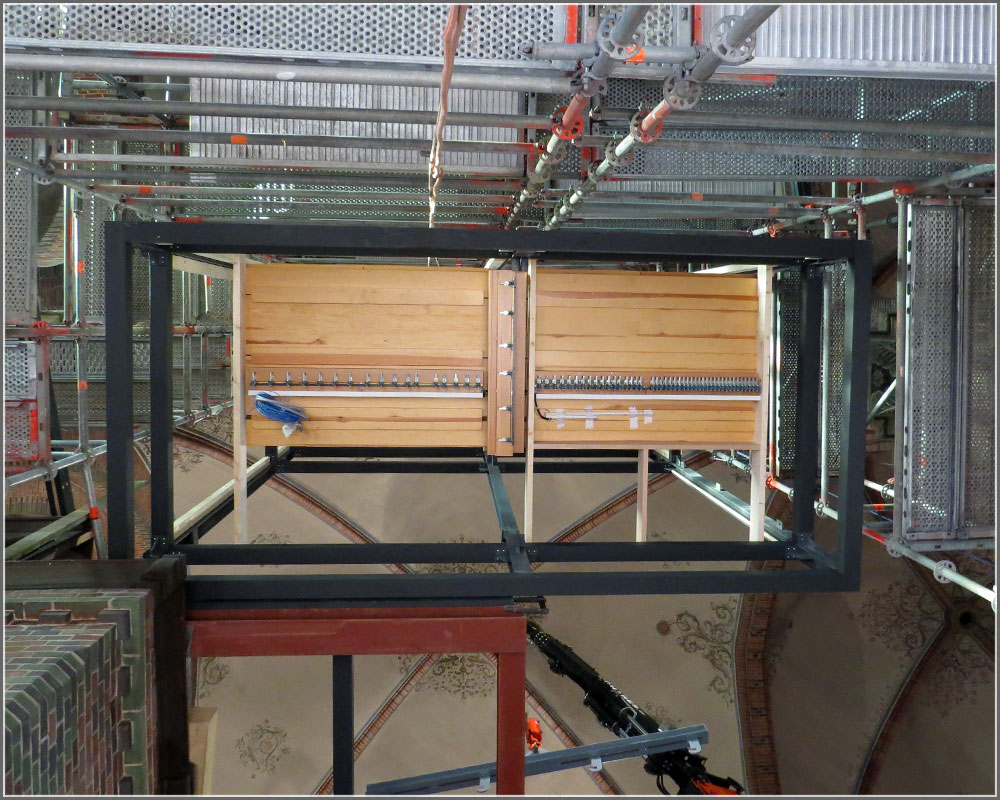
A view from below into one of the towers. One of the windchests is already visible.
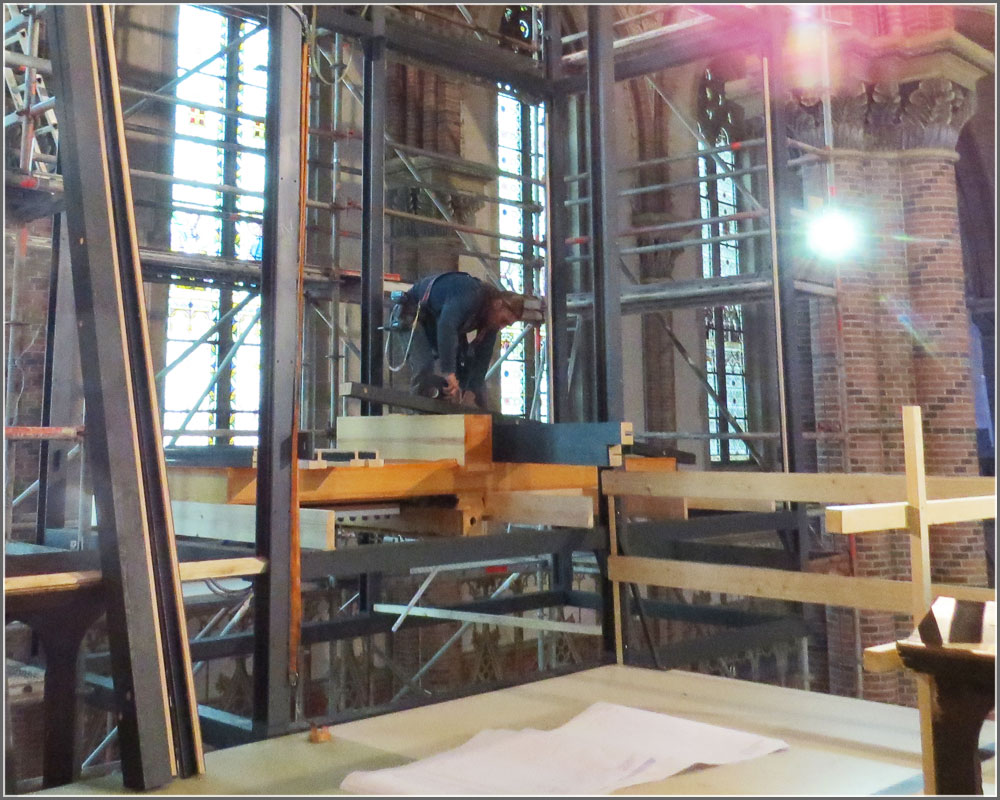
Assembly of a wind chest.
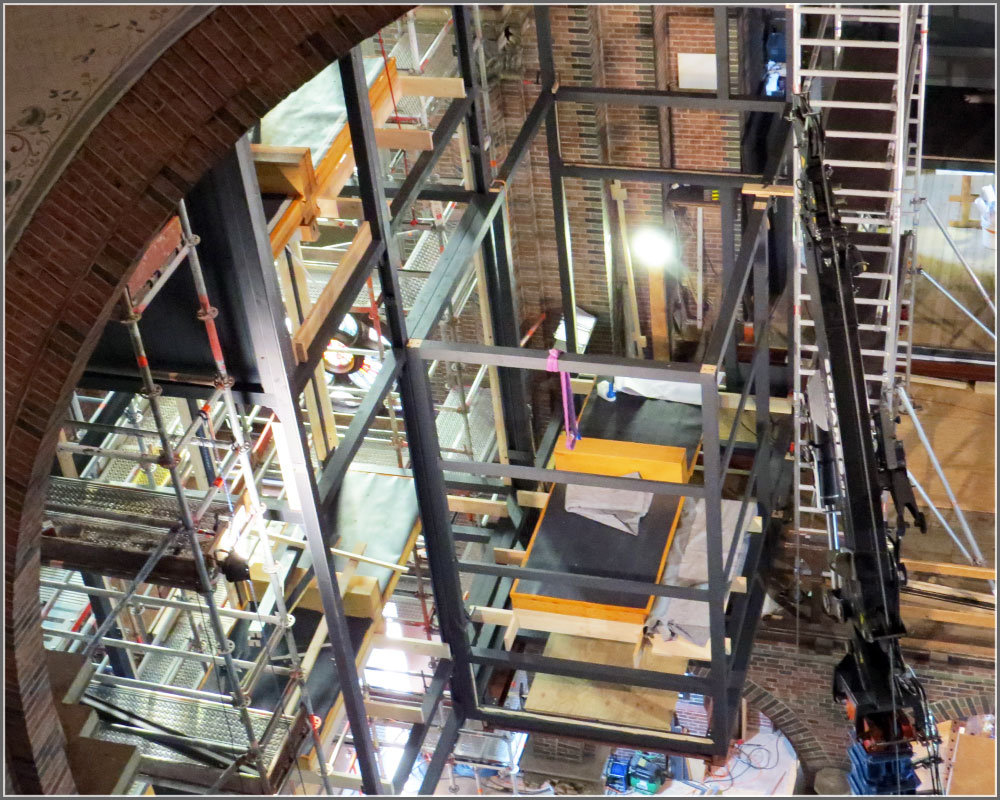
Unlike the outer towers, the inner towers are constructed entirely of wood
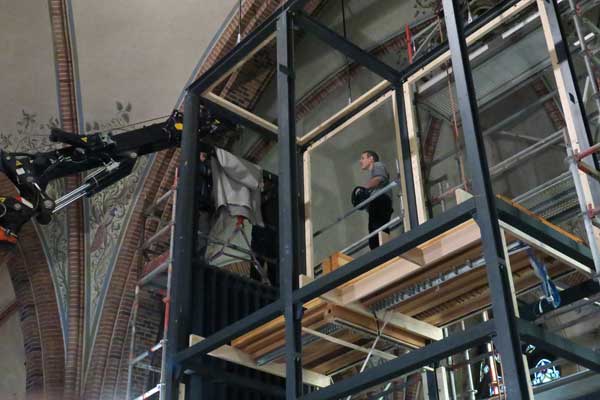
Wooden frames are being attached to the steel frames of the outer organ towers; the cladding will later be secured to these frames.
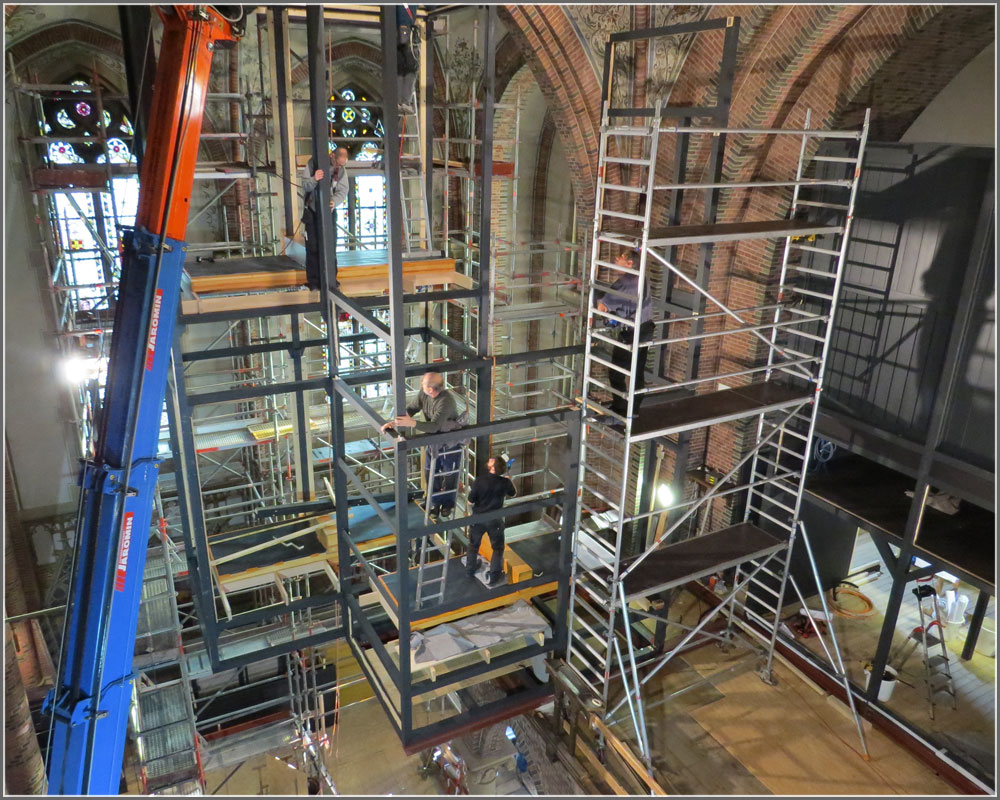
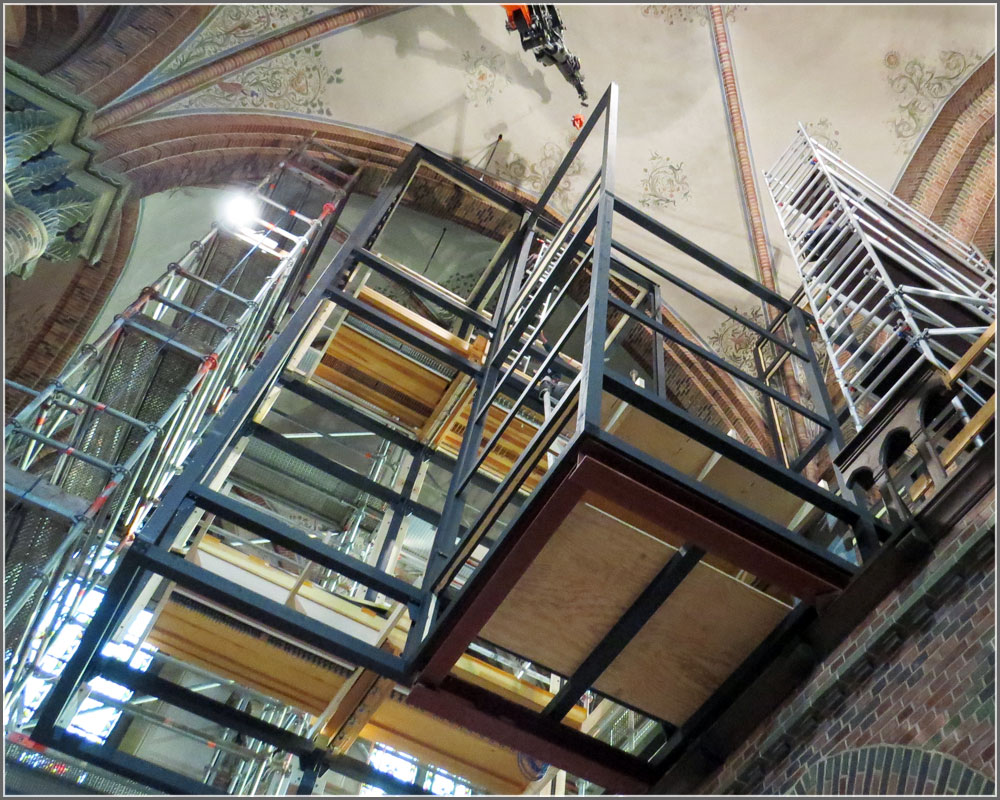
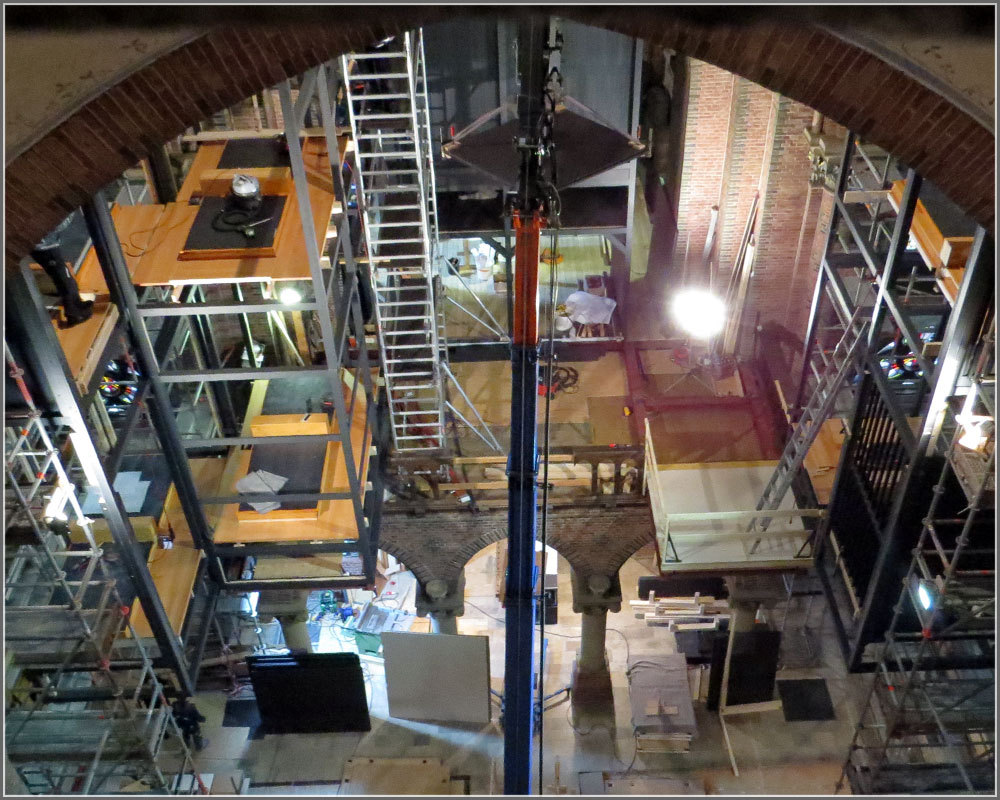
This is what the construction site looked like at the beginning of the week (Nov. 4–8).

Here, the space is being prepared for the installation of the pipes.
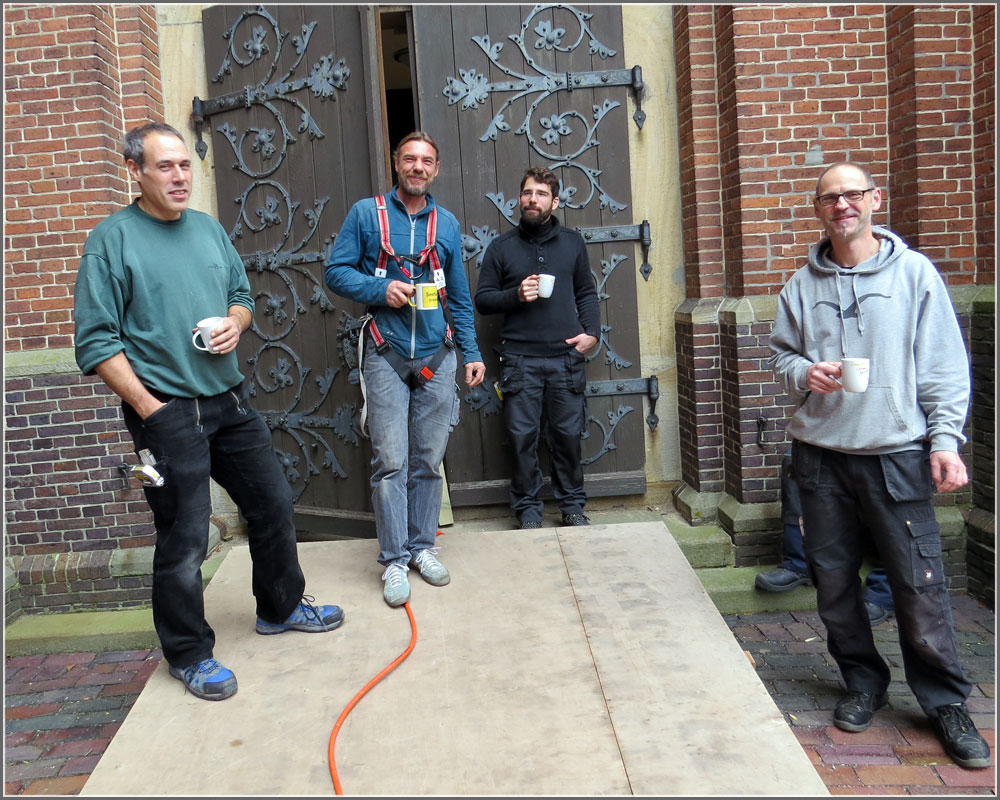
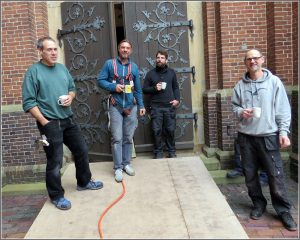
A well-deserved coffee break.
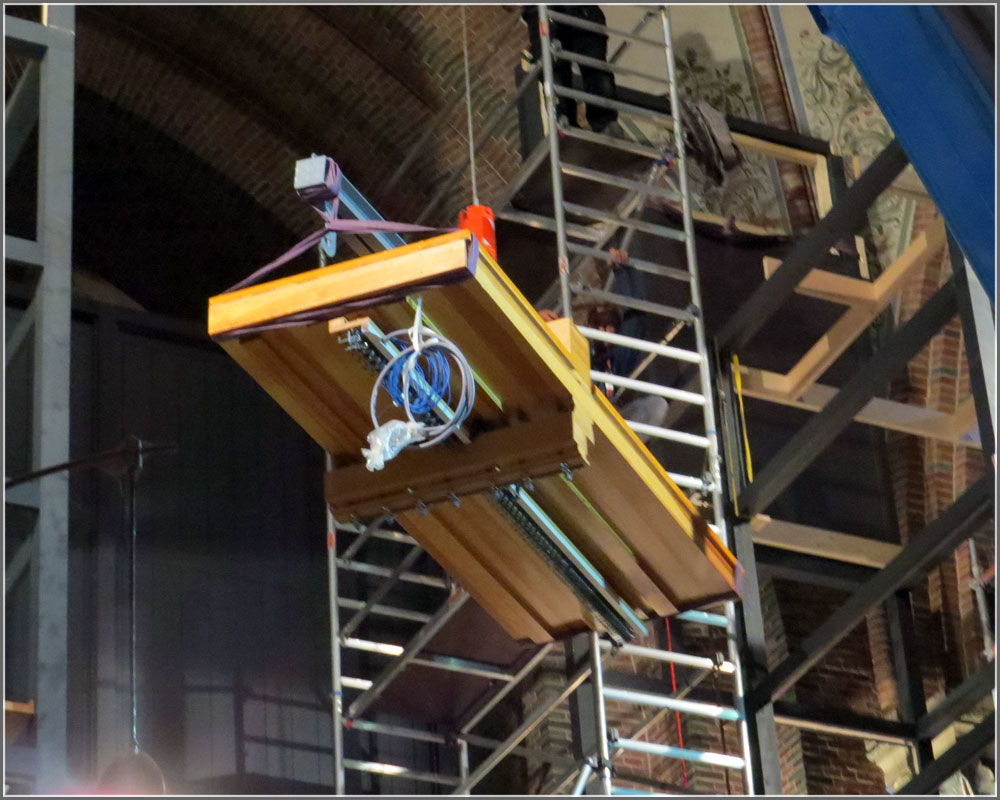
One wind chest after another is being installed.
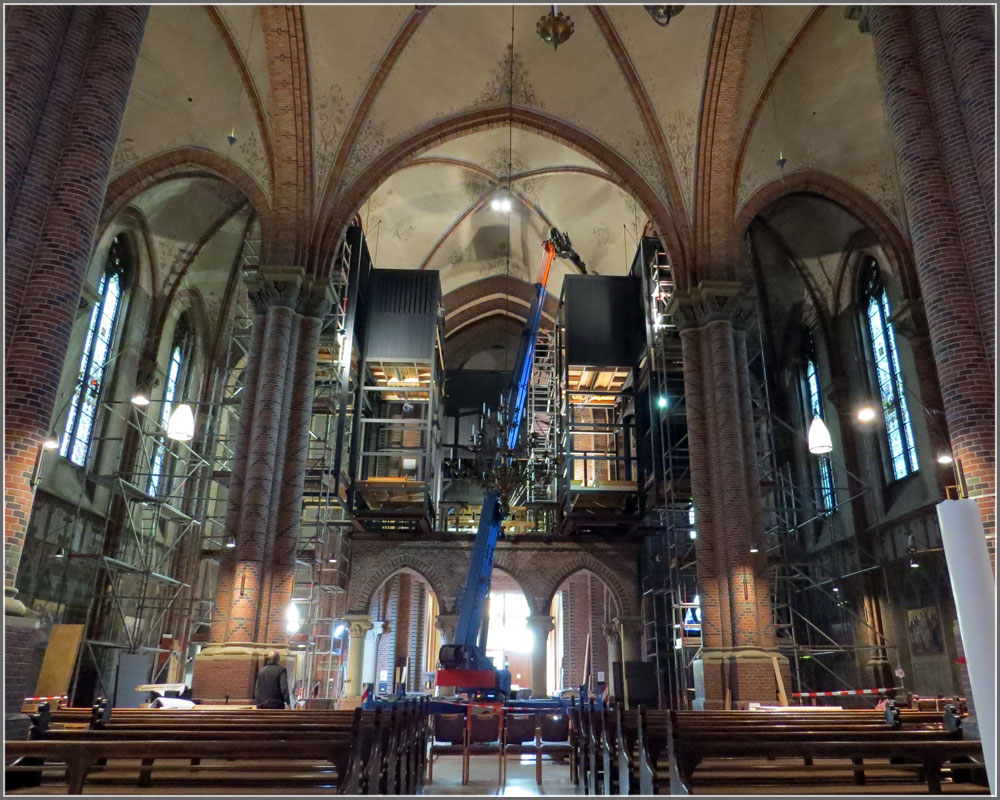
By the end of the week, the last tower in the middle will also be completed.
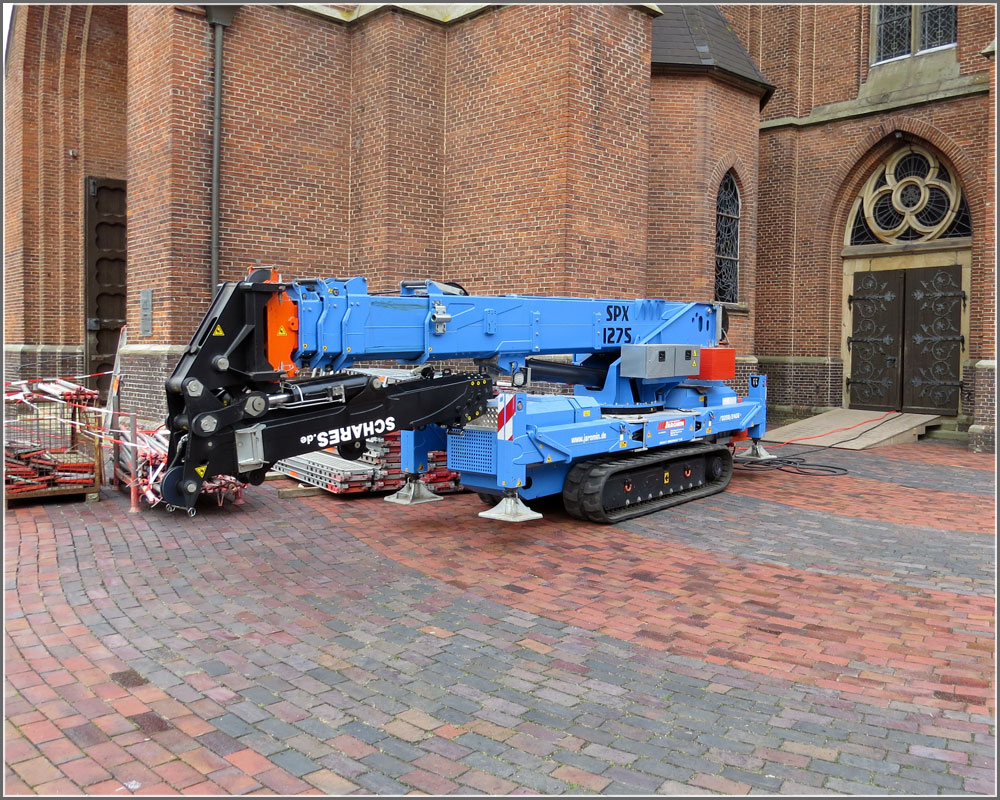
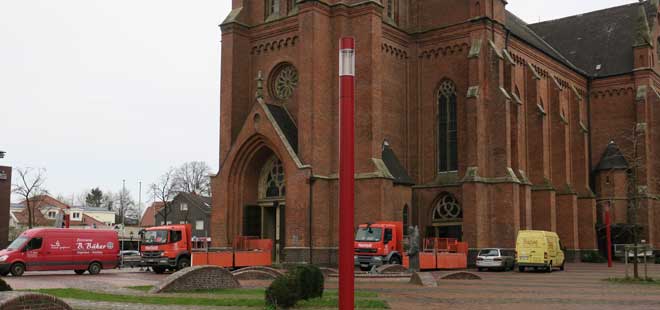
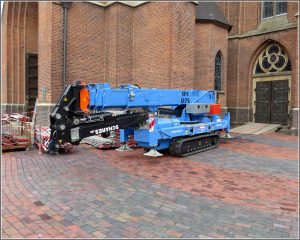
On Monday (Nov. 11), the crane—an important tool during the past few weeks of installation—was standing in front of the church, ready to be hauled away.
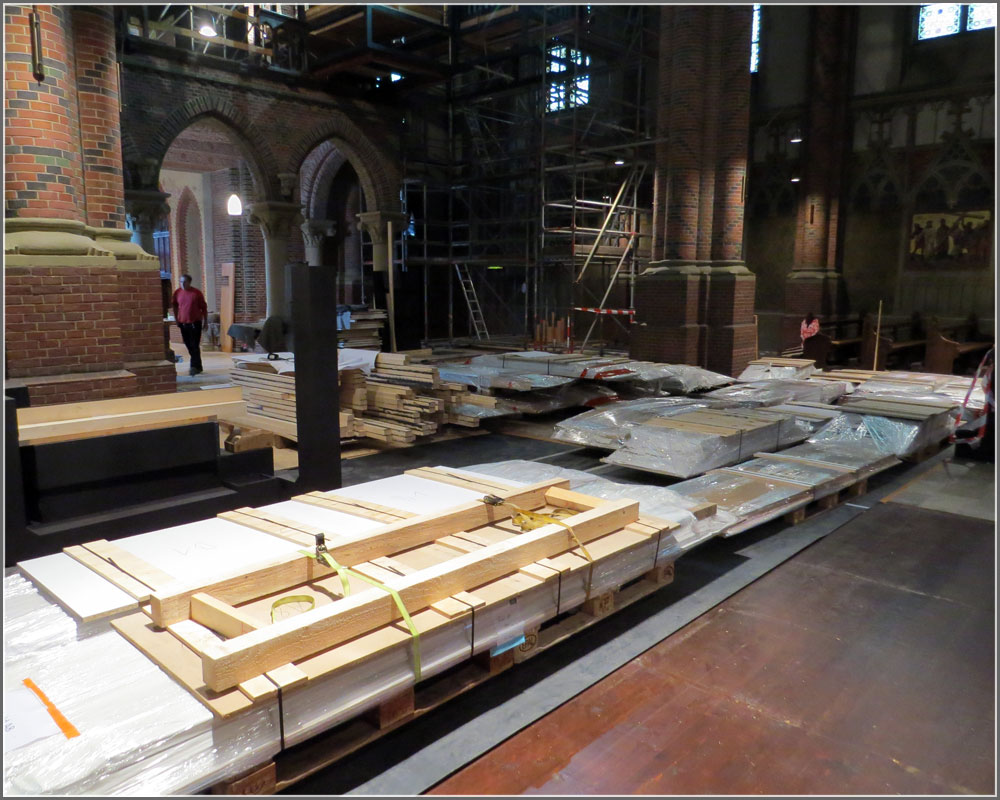
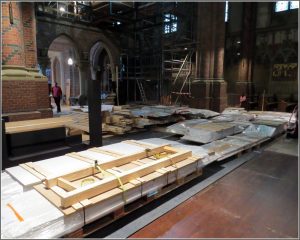
The space that had become vacant in the church was immediately filled with new material.

There is a lot of detailed work on and inside the towers that is not visible from a distance.
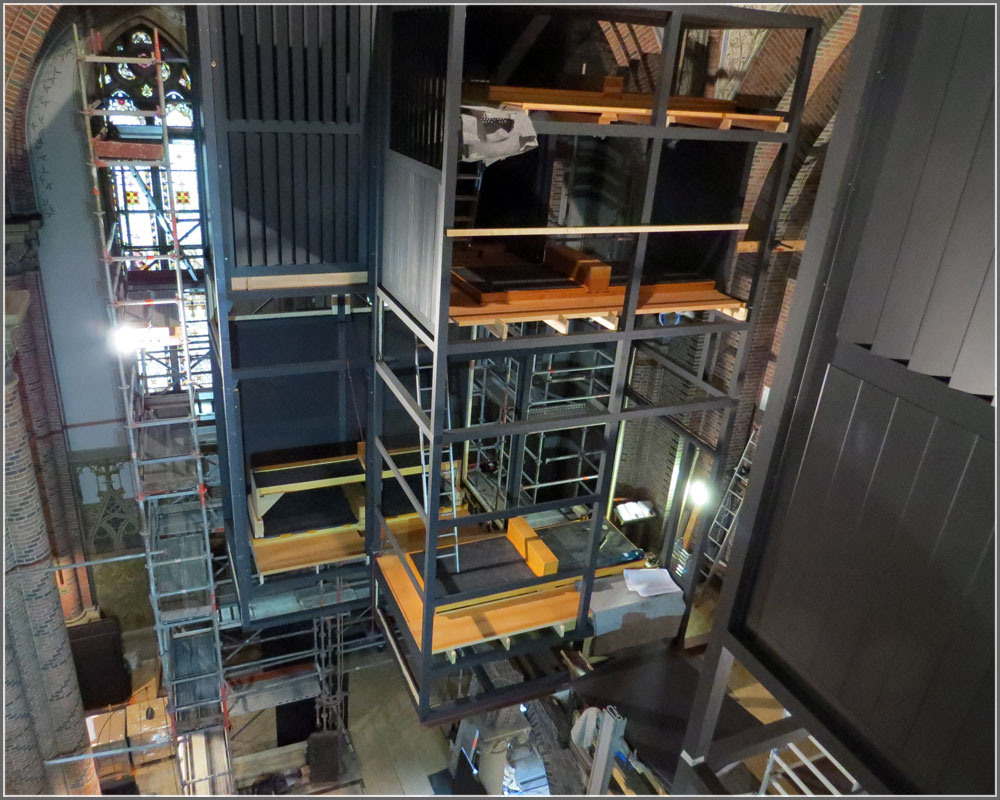
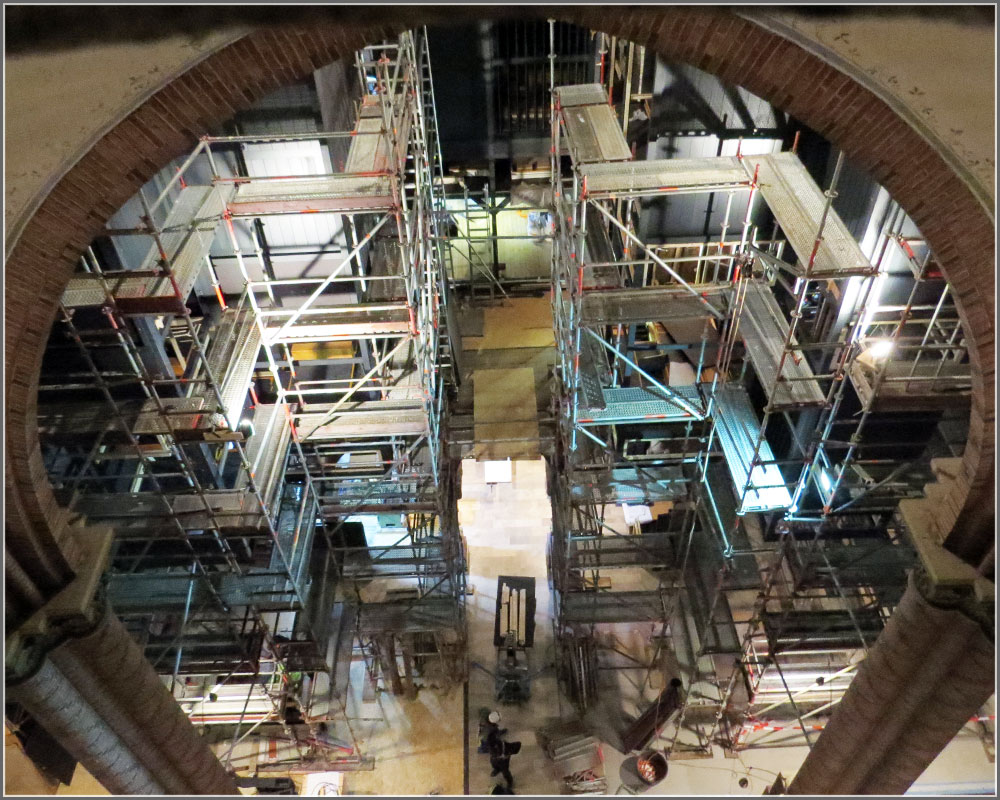
Now the front sections of the organ are also covered in scaffolding.

Scaffolding assembly.
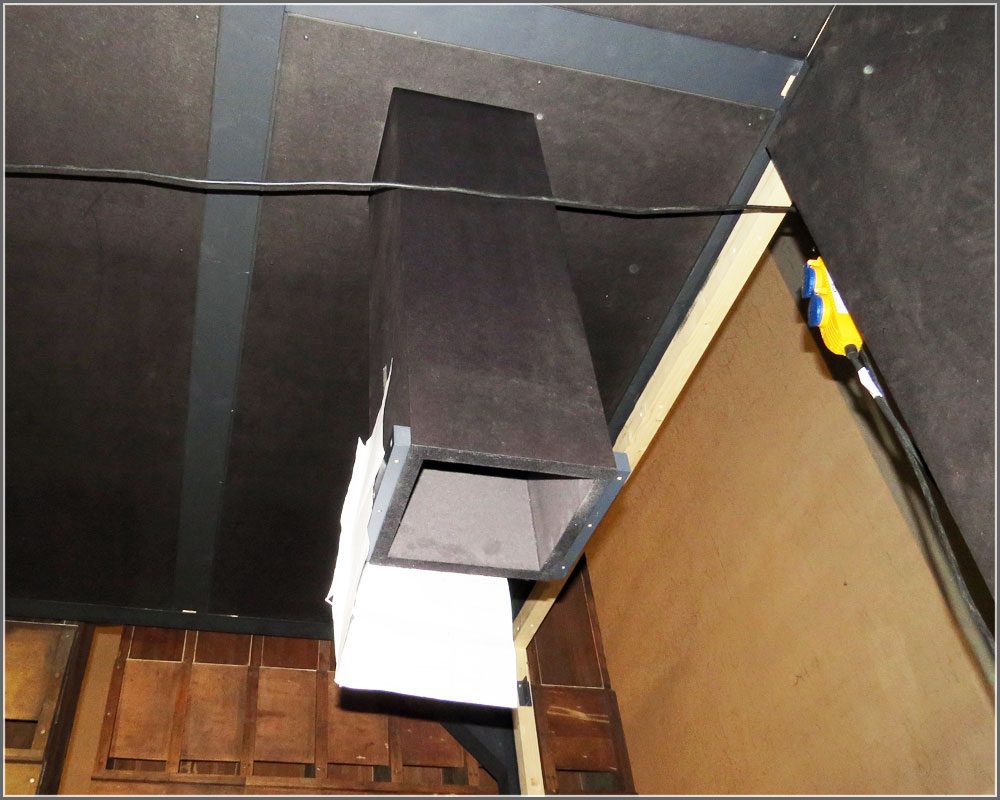
The air ducts, known as "wind channels," are currently being installed (Nov. 15).
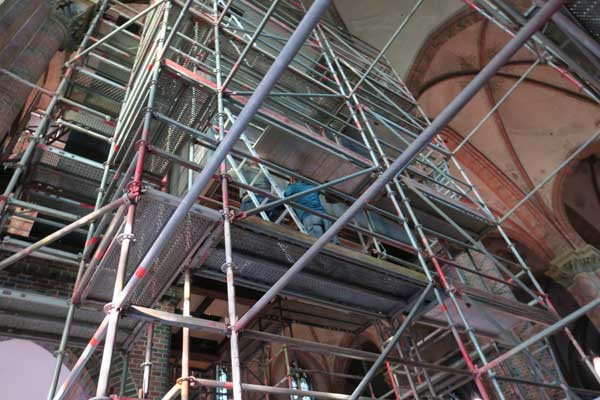
The organ towers are now completely covered in scaffolding because the cladding needs to be installed all over them (Nov. 18–22).
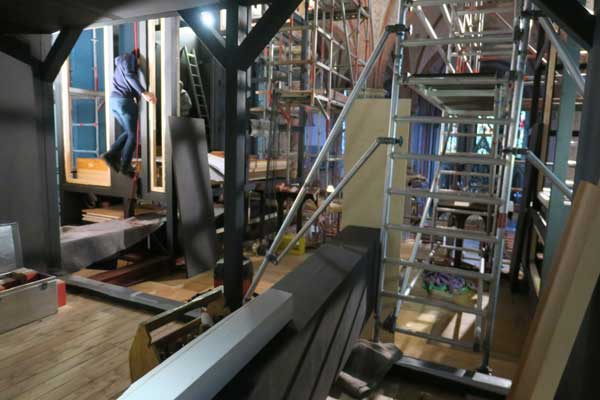
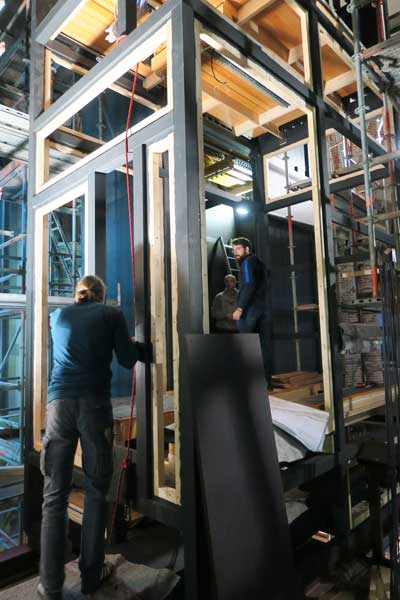
It's starting to get a little crowded in here.
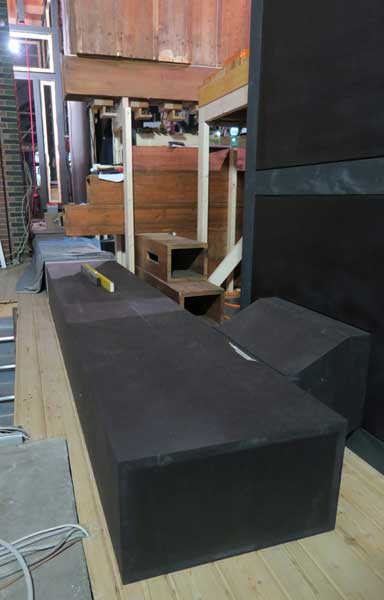
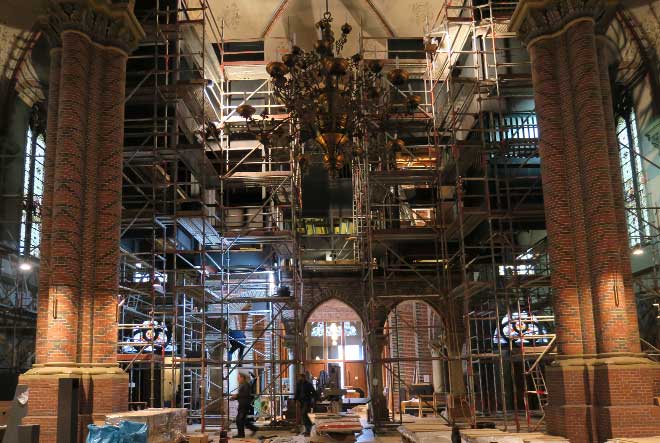
Here, you can already get a sense of the organ case taking shape, which will soon house the many organ pipes.
Another air duct is to be routed upward …
…but how do we get through there? There’s so much material here for covering the organ case.
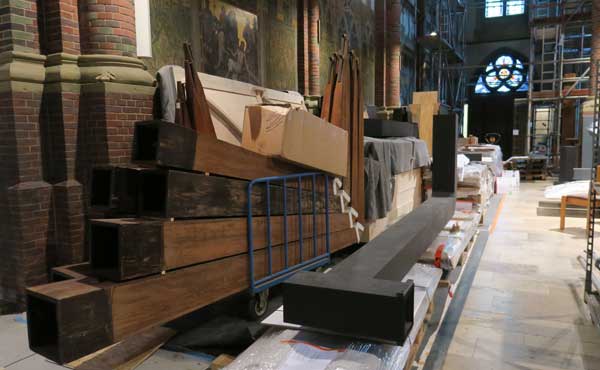
Left: Large, crooked bass pipes are waiting to be played.
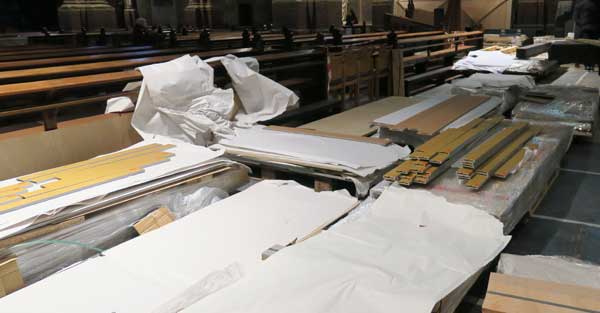
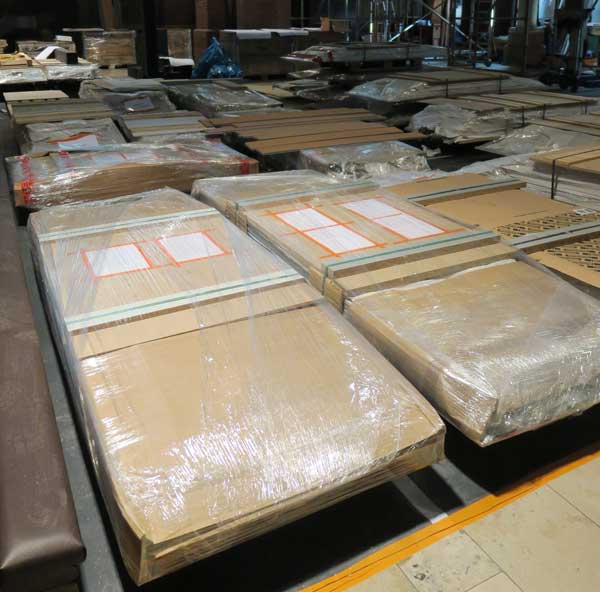
The many large packages in the church are now being unwrapped (Nov. 26–28).
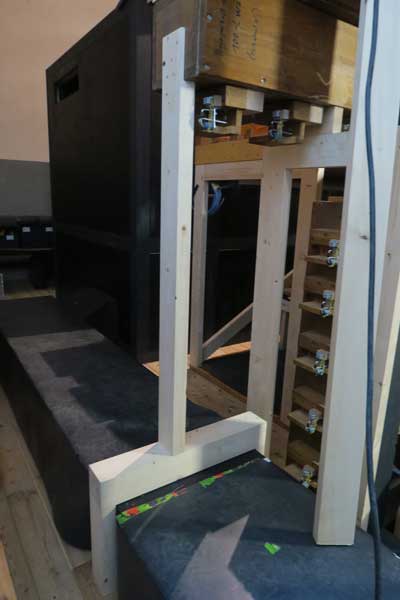
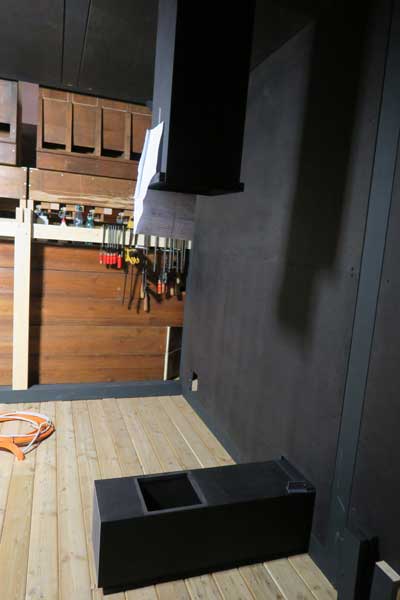
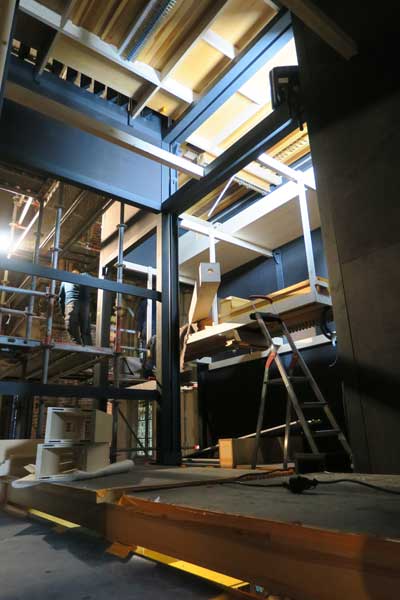
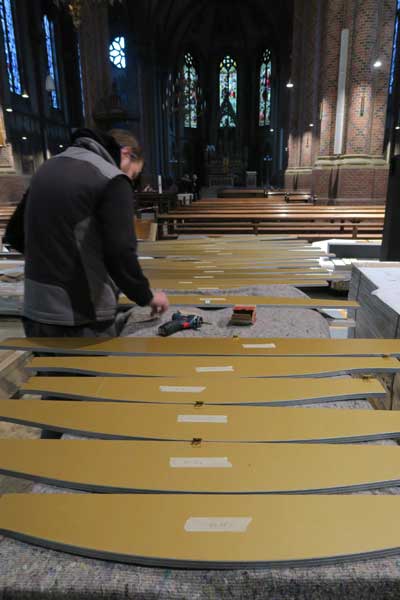
Each individual piece of the white trim is numbered.
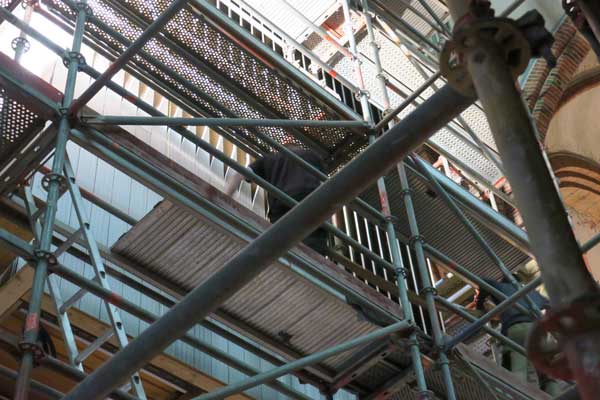
Here, light shimmers through the scaffolding on the side.

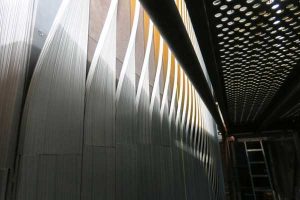
Silver panels used as cladding for the organ case.
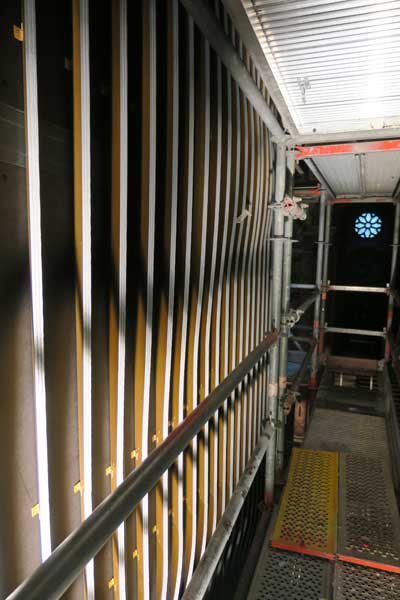
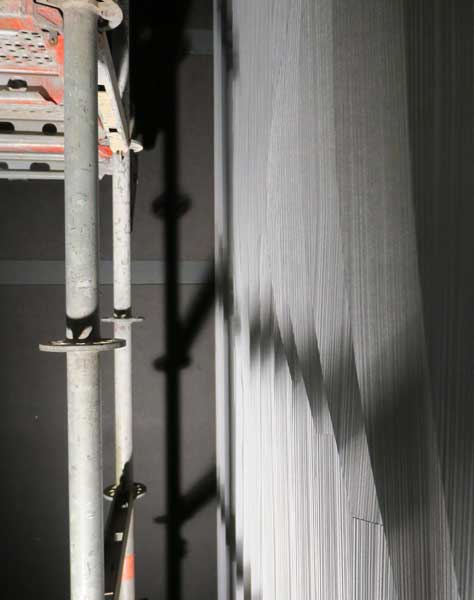
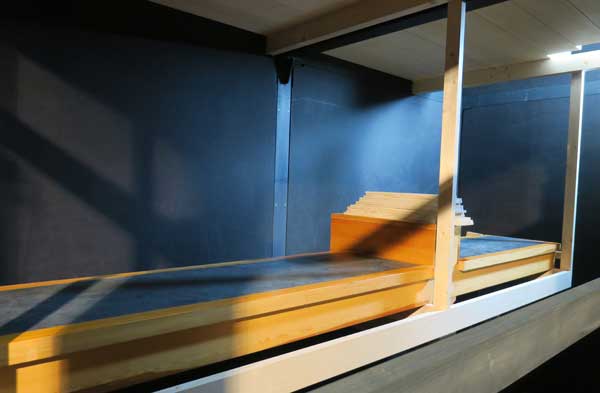
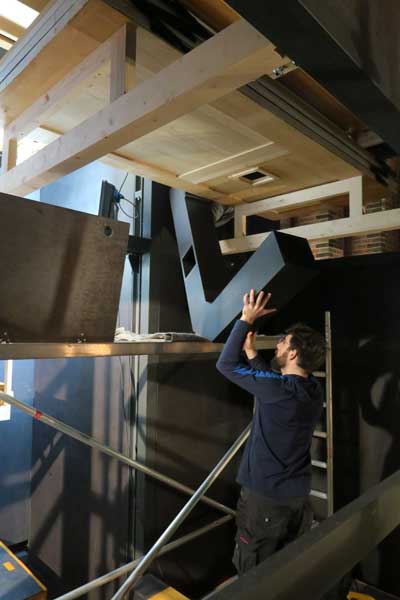
Another wind tunnel is being positioned.
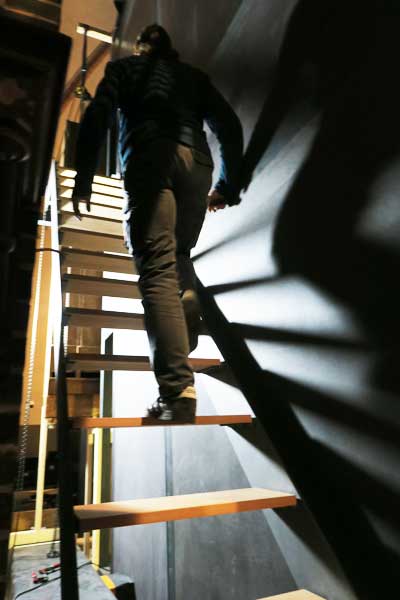
There is now a sturdy staircase on the outside of the organ case that leads to the upper floors. It is needed not only for installing the pipes, but also for the future maintenance of this magnificent instrument.
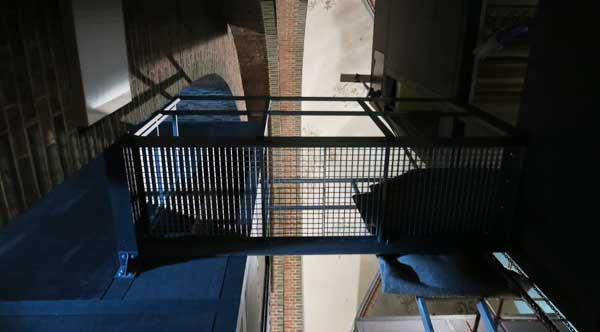
And to go with that, a safety walkway leading to the side organ tower.
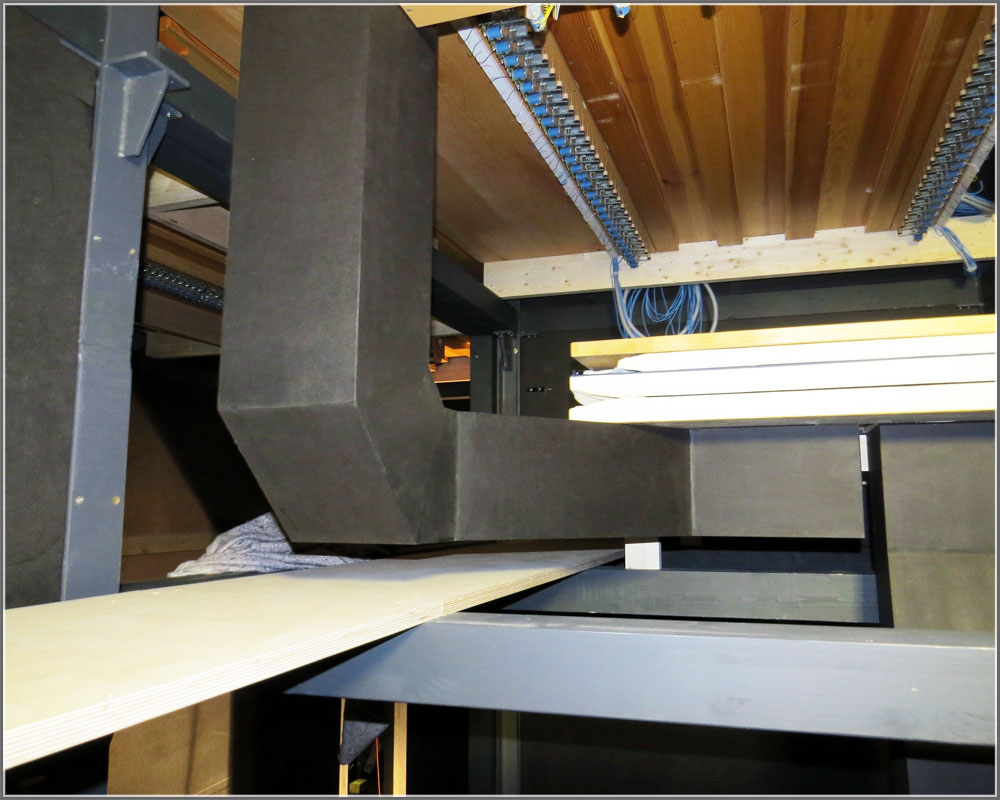
Wind tunnels.
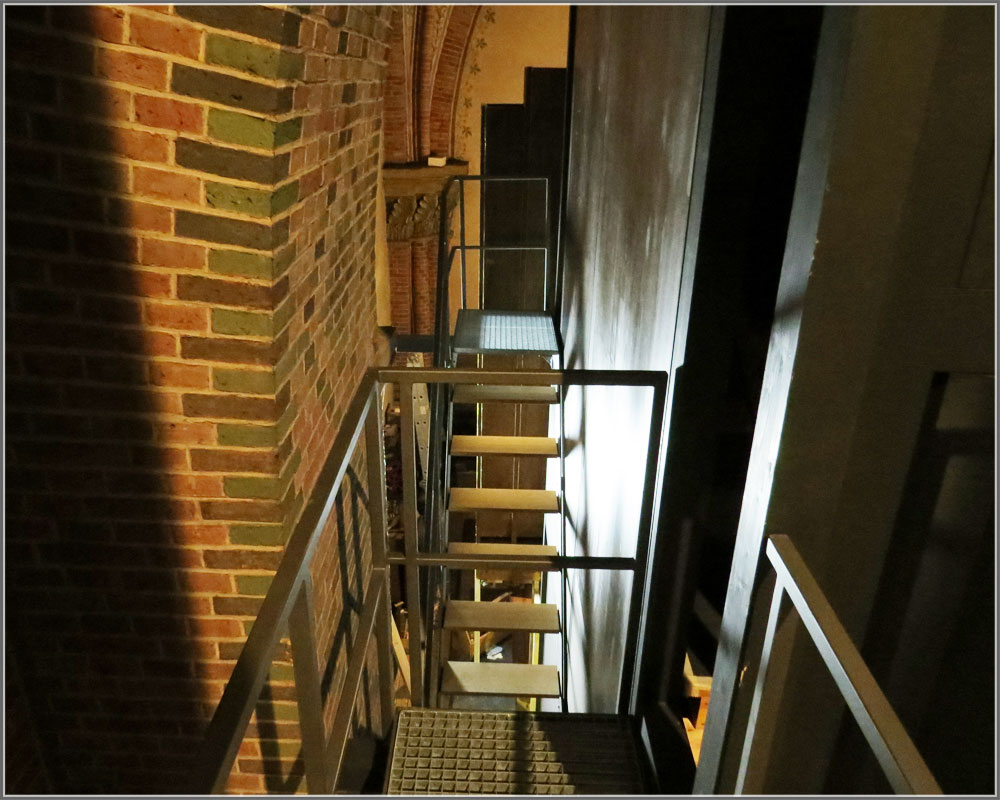
Path Maze.
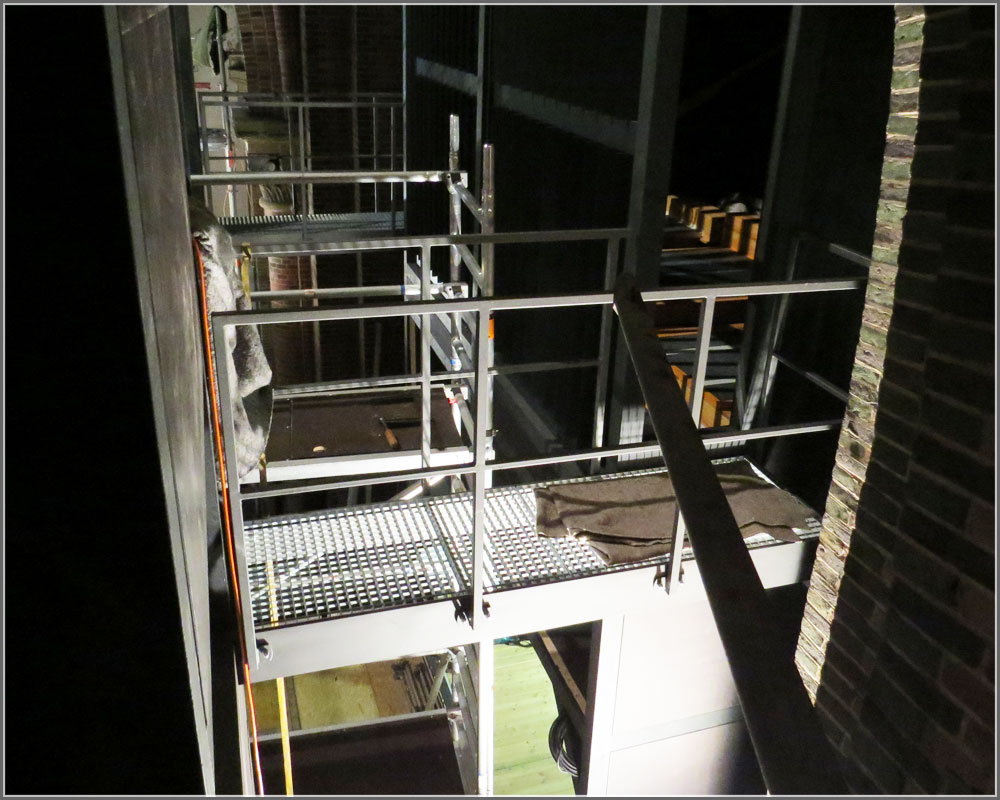
This perspective remains hidden from the average churchgoer.
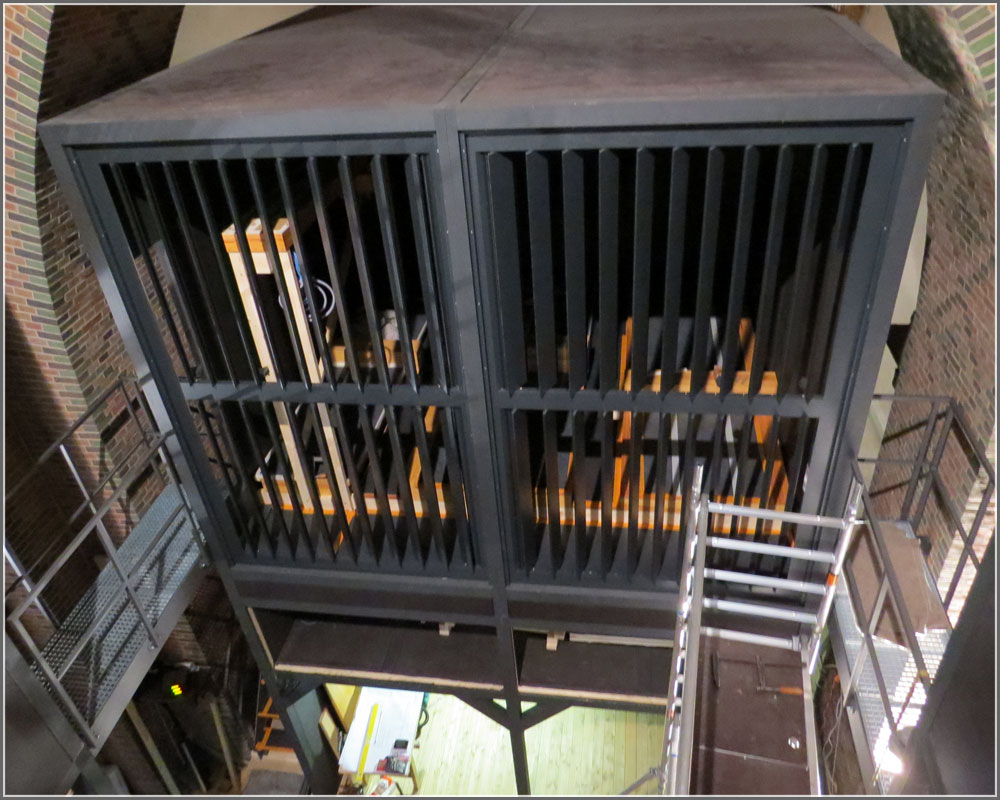
View of the central tower. The windchests are clearly visible.
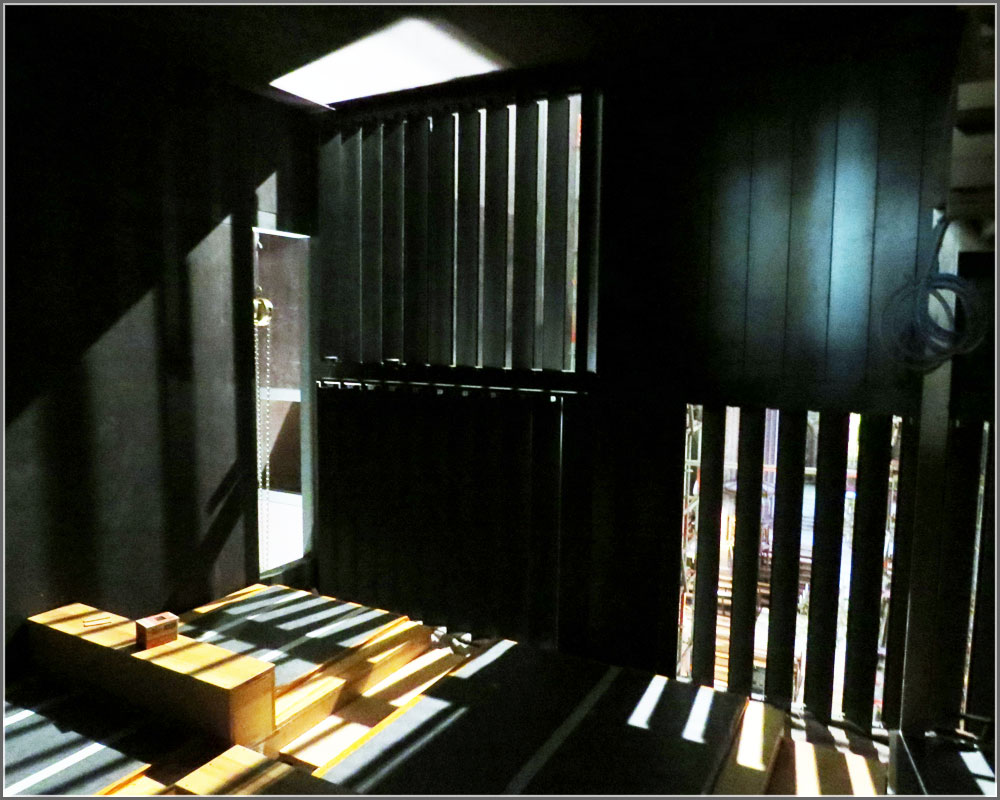
The middle tower, seen from the inside.
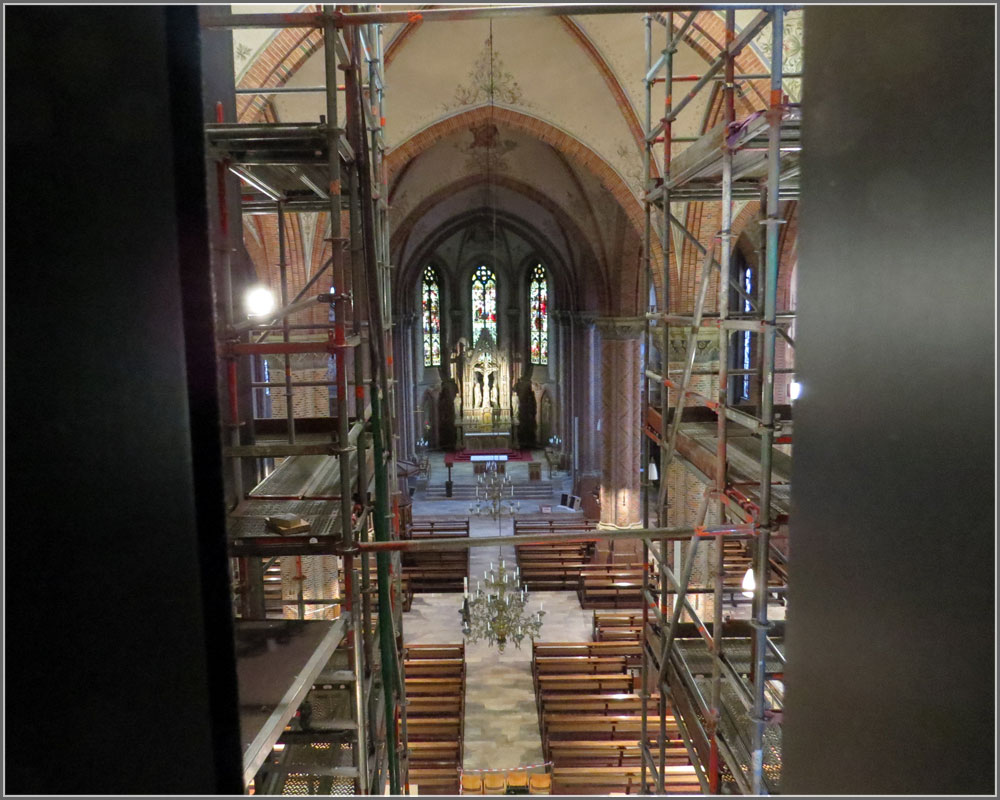
A view from there into the church.
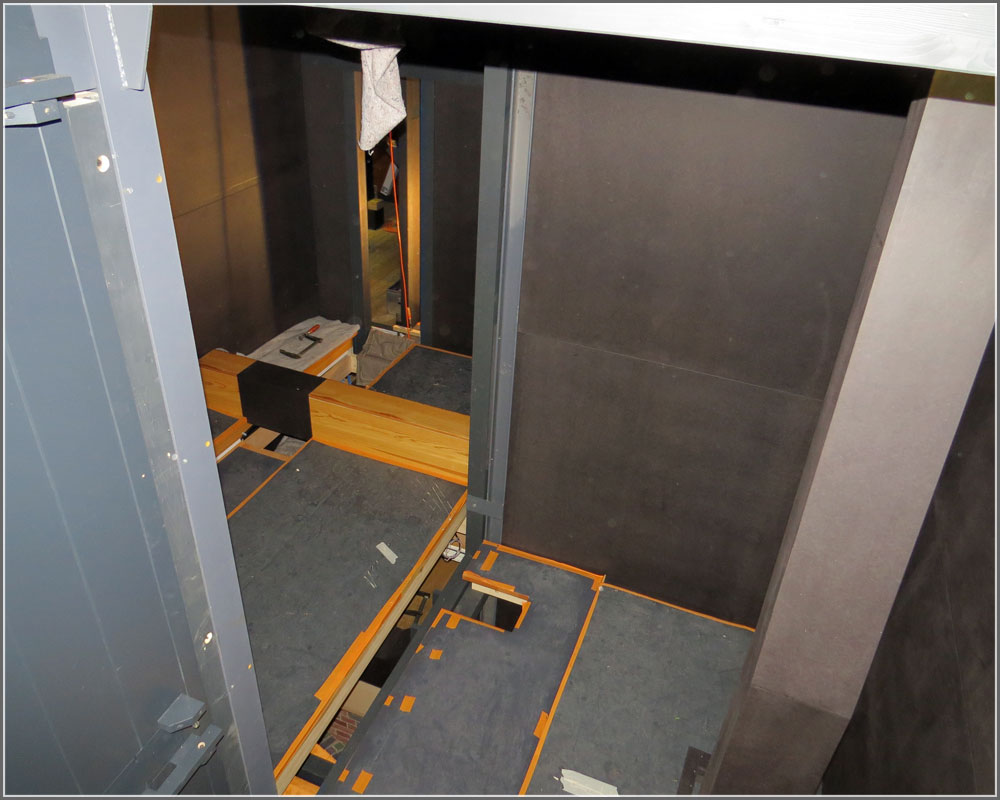
There's still plenty of room in the towers. Once the pipes arrive, that will change.
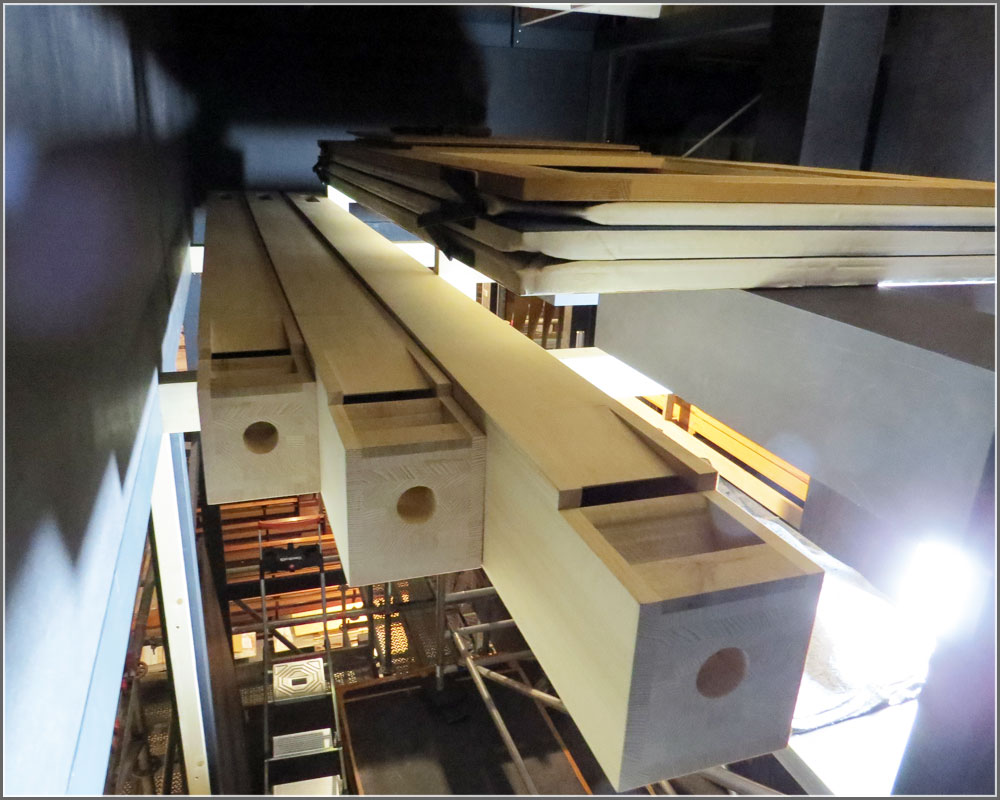
"A 'staircase wind chest,'" one of the installers joked.
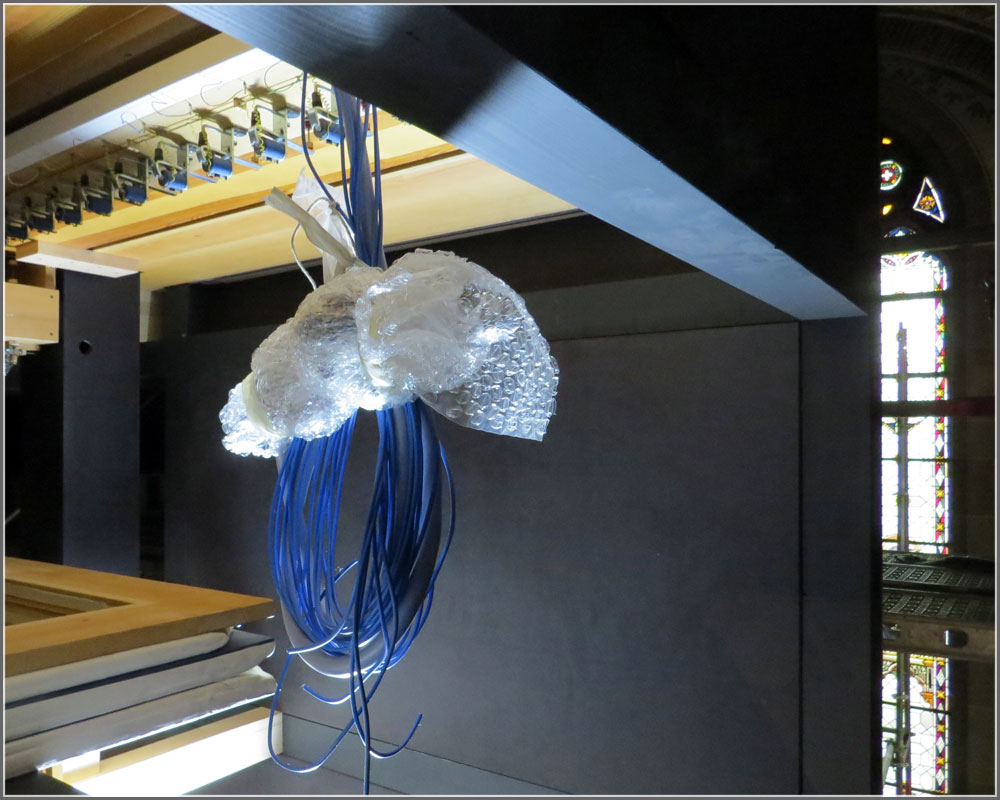
Wires ready for connection.
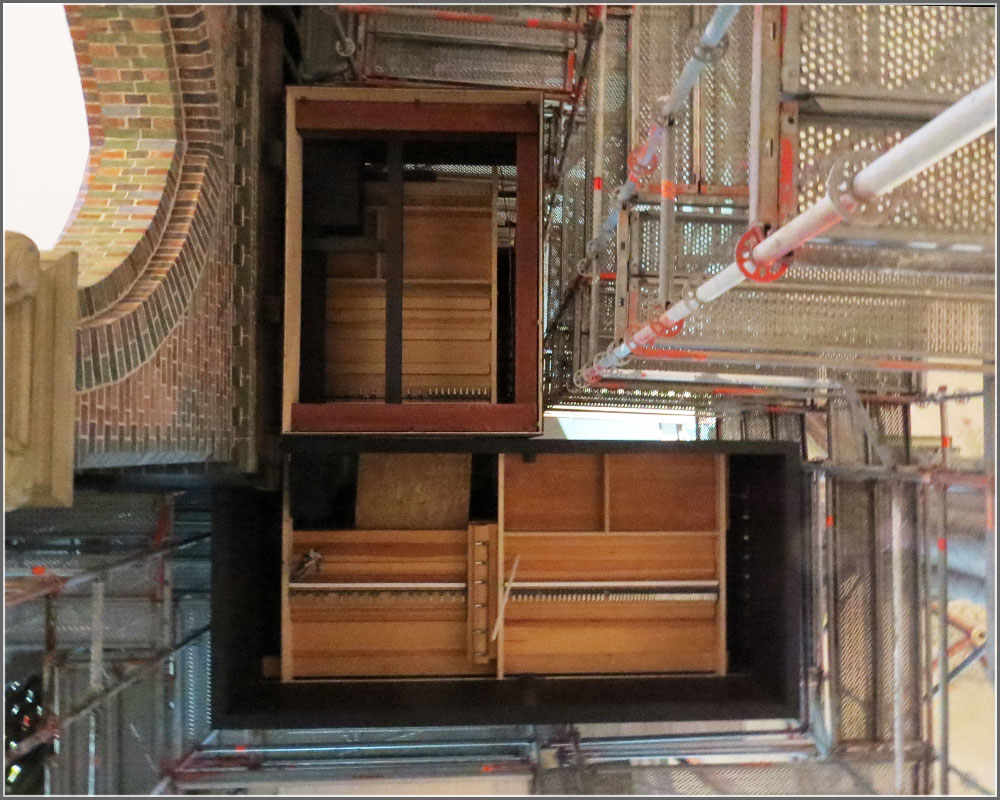
These towers are still open at the bottom, offering a view of the windchests.
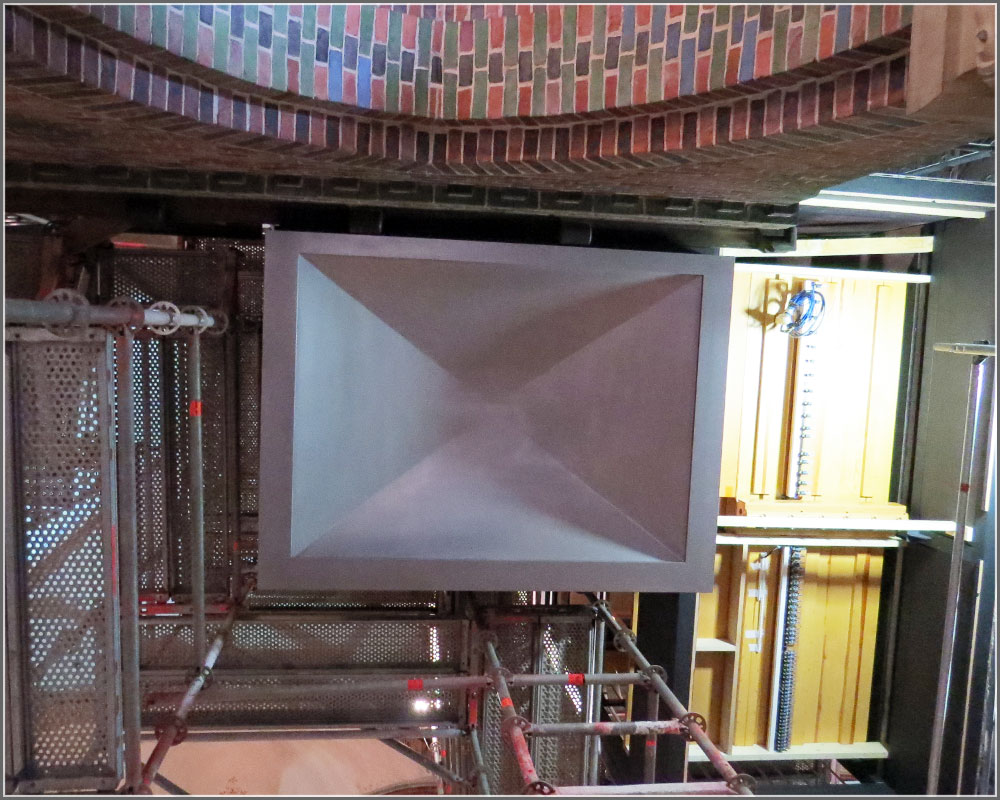
On the other hand, the first silver cover at the bottom is already installed.
Installation of the Organ, Part 1 (October 1–17, 2019)
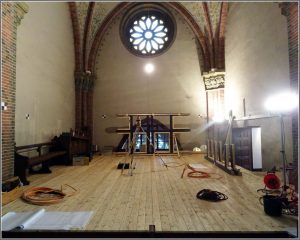



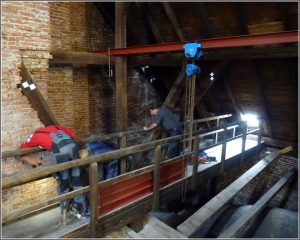

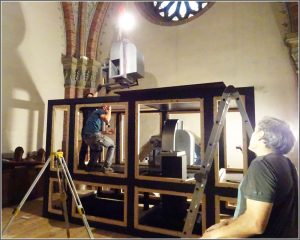

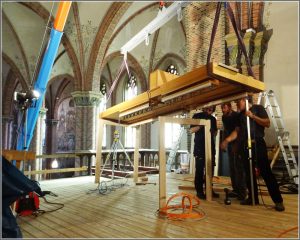
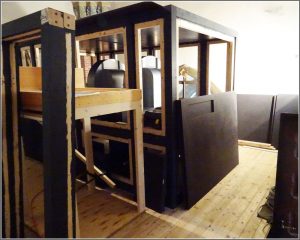



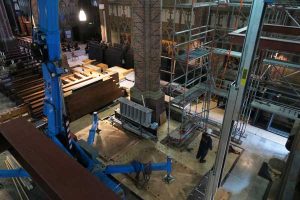


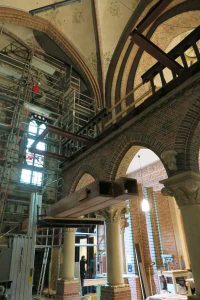
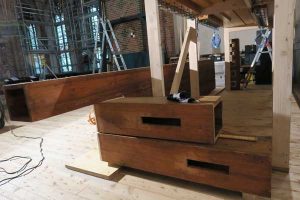
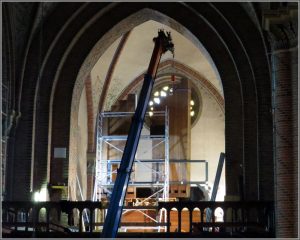
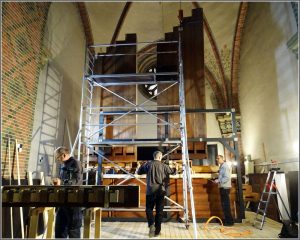
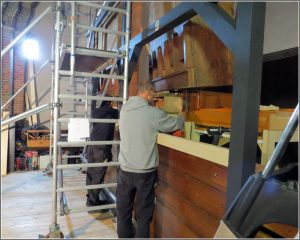
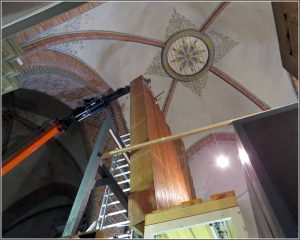
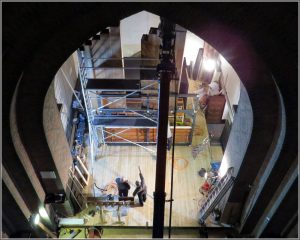
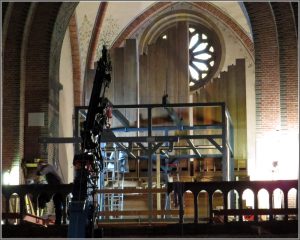
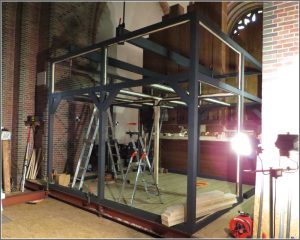
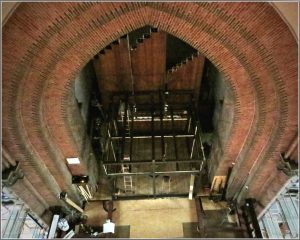
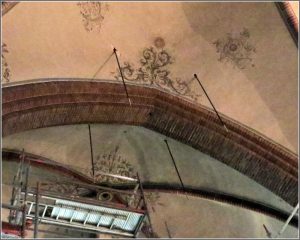
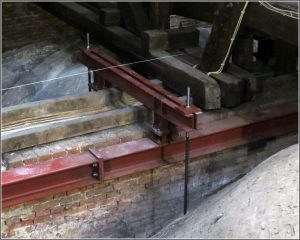
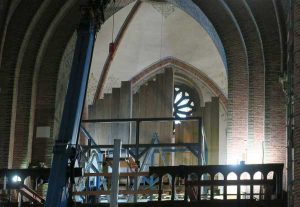
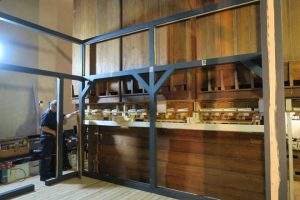
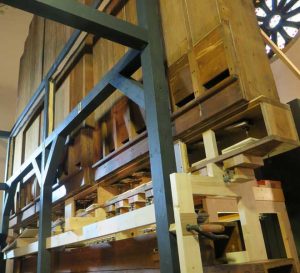


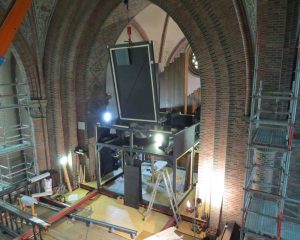
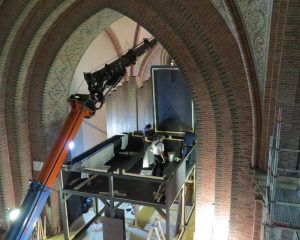
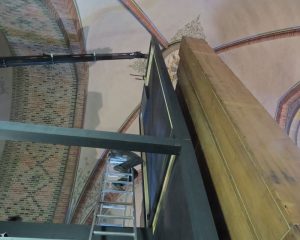
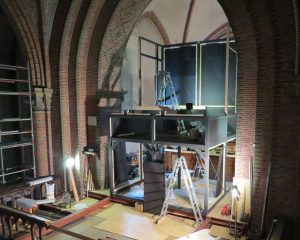
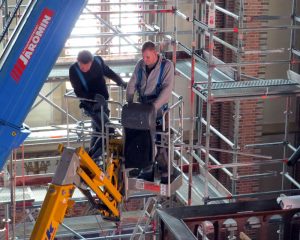
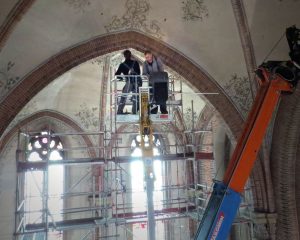

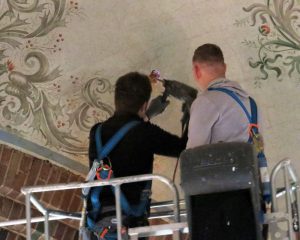
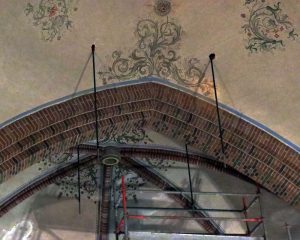

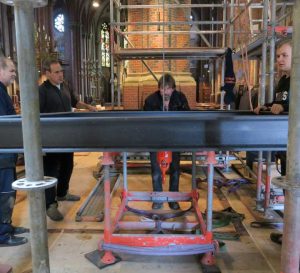
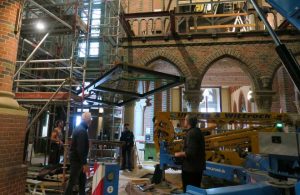
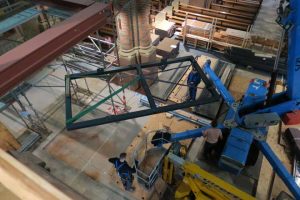
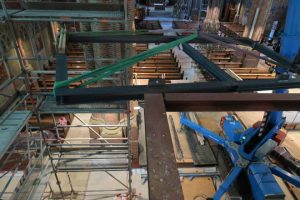
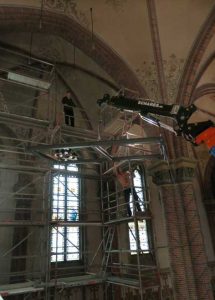
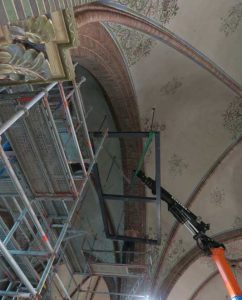

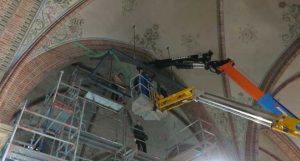
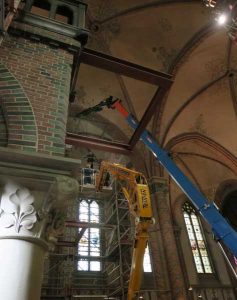
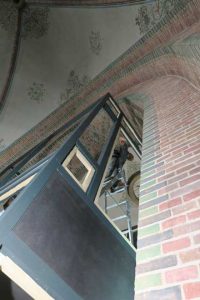
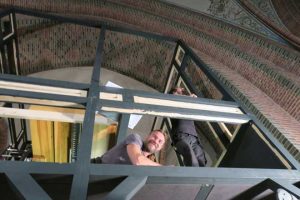
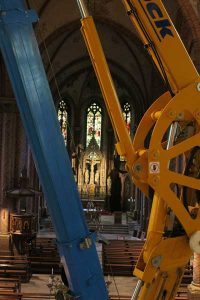
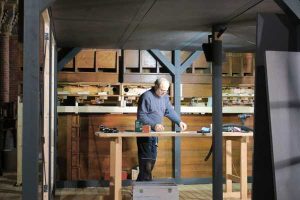
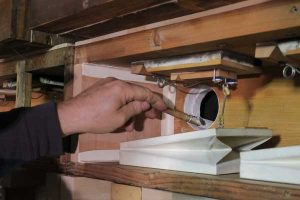
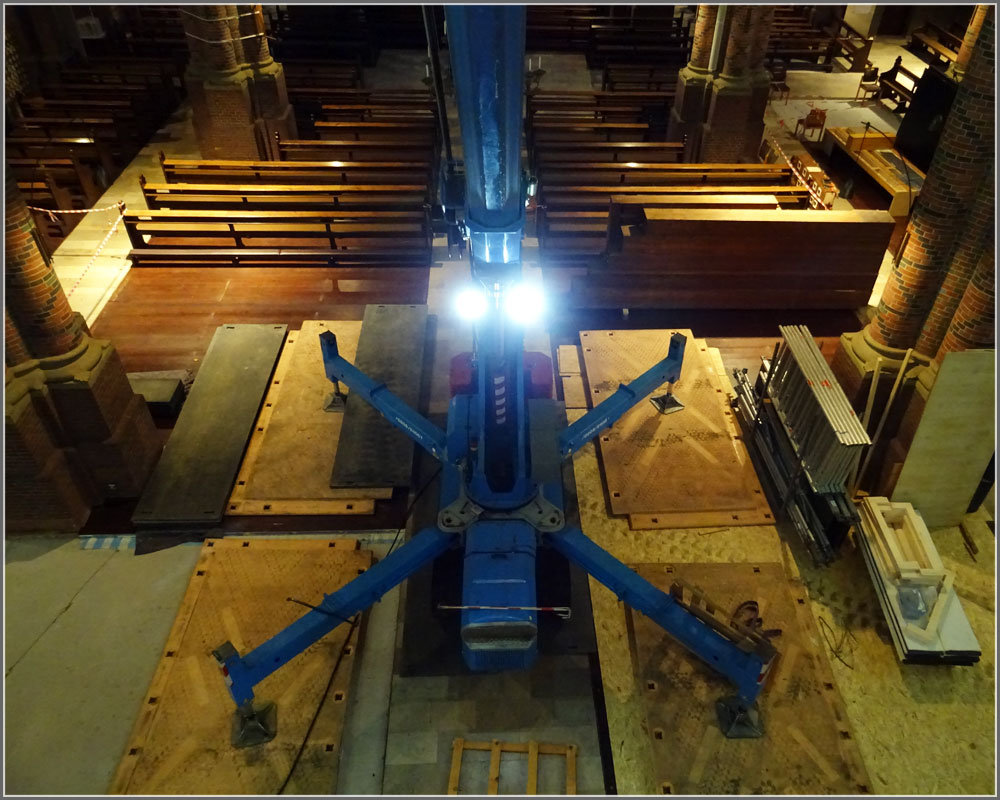
After the Seifert organ installers arrived in Papenburg yesterday and unpacked everything, they were able to begin assembling the organ today (October 1, 2019).
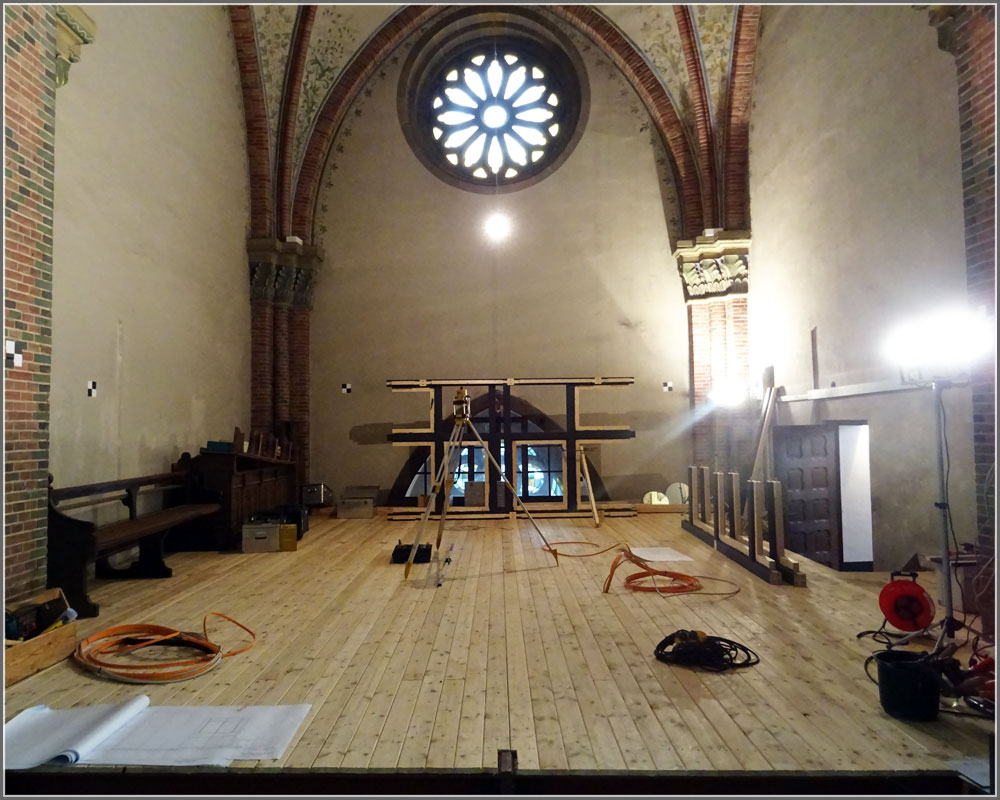
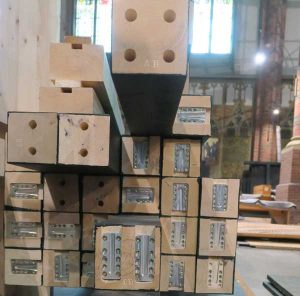
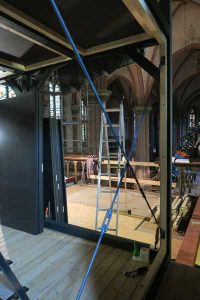
Construction site this morning: The first wooden components for the organ blower housing have been brought up to the organ loft.
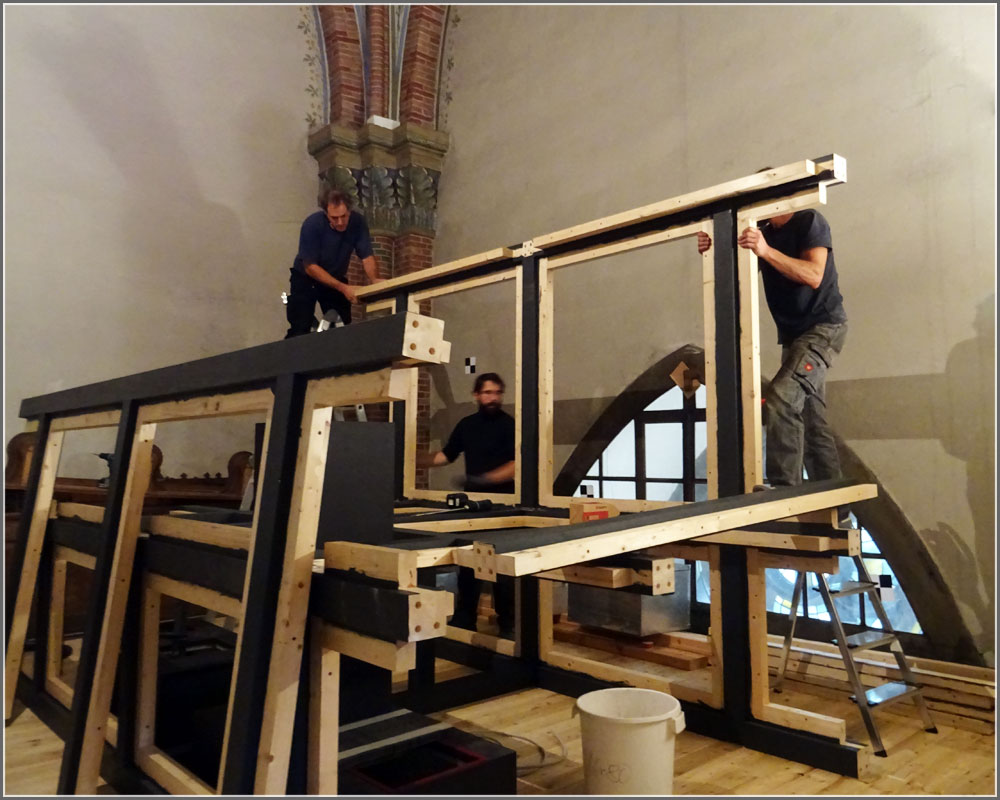
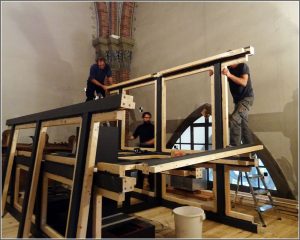
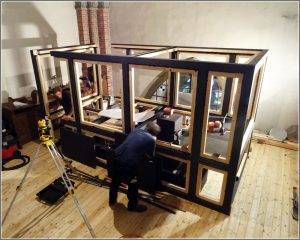
Three assemblers put the individual housing components together.
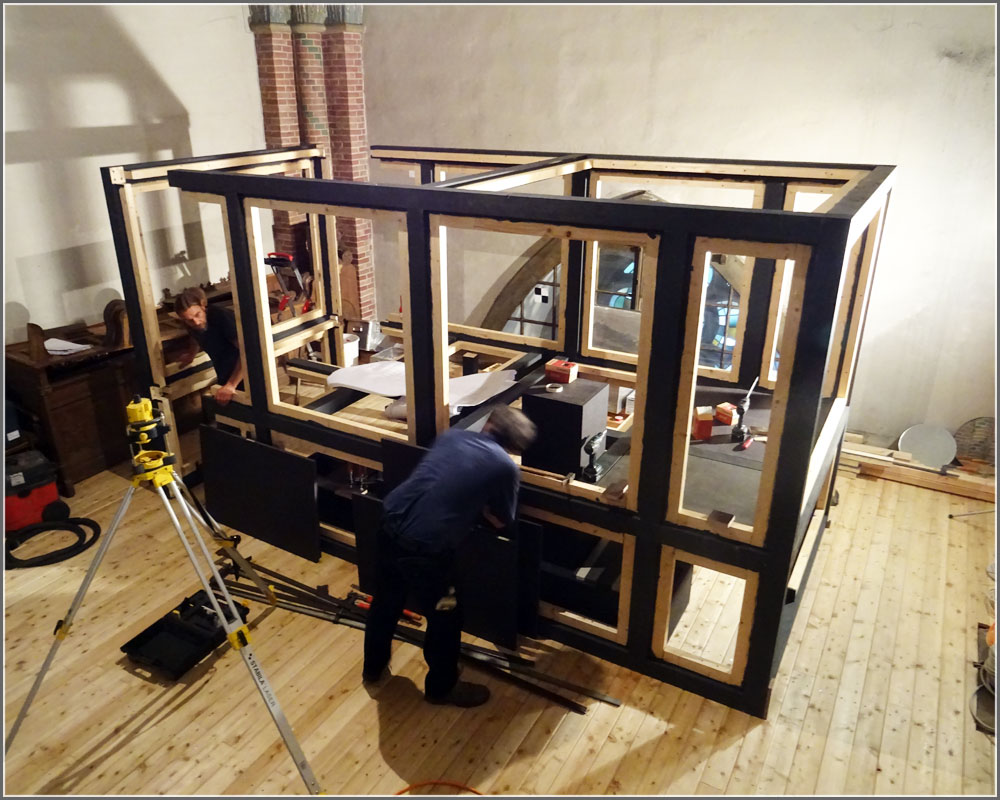
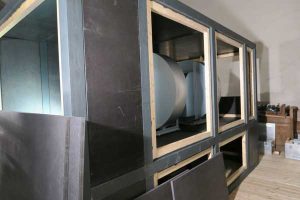
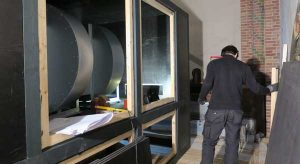
This enclosure will house the organ's two blowers and block the noise from these units from reaching the outside.

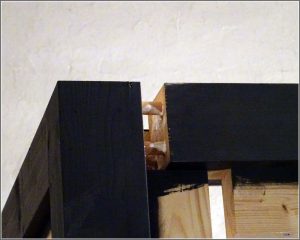
The wooden parts are glued together rather than screwed together.
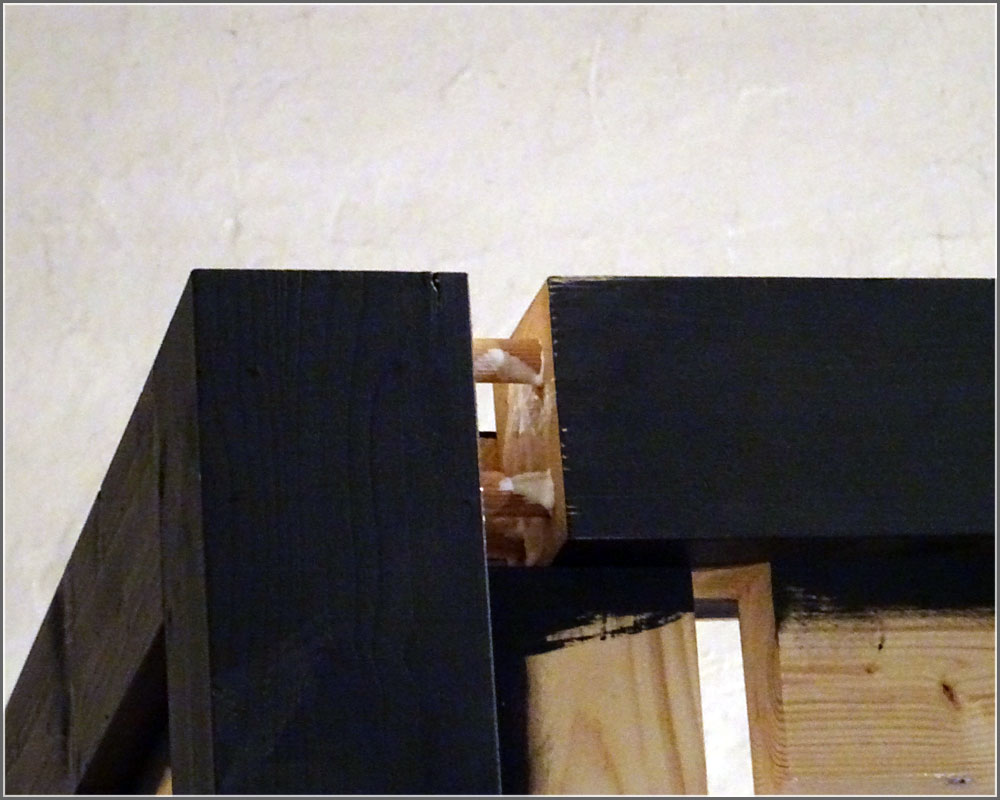
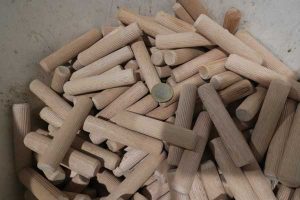
Held together with glue and wooden dowels—or perhaps we should say “wooden pins” here, since we are, after all, in a house of God.
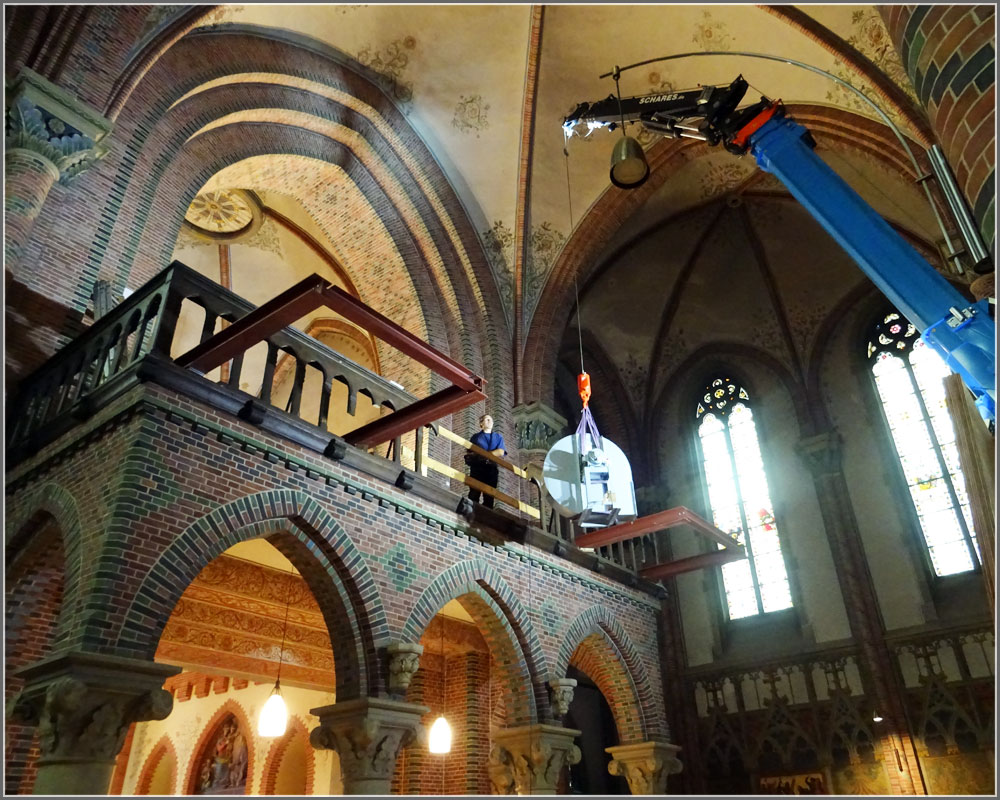
The first fan is on its way up with the crane.
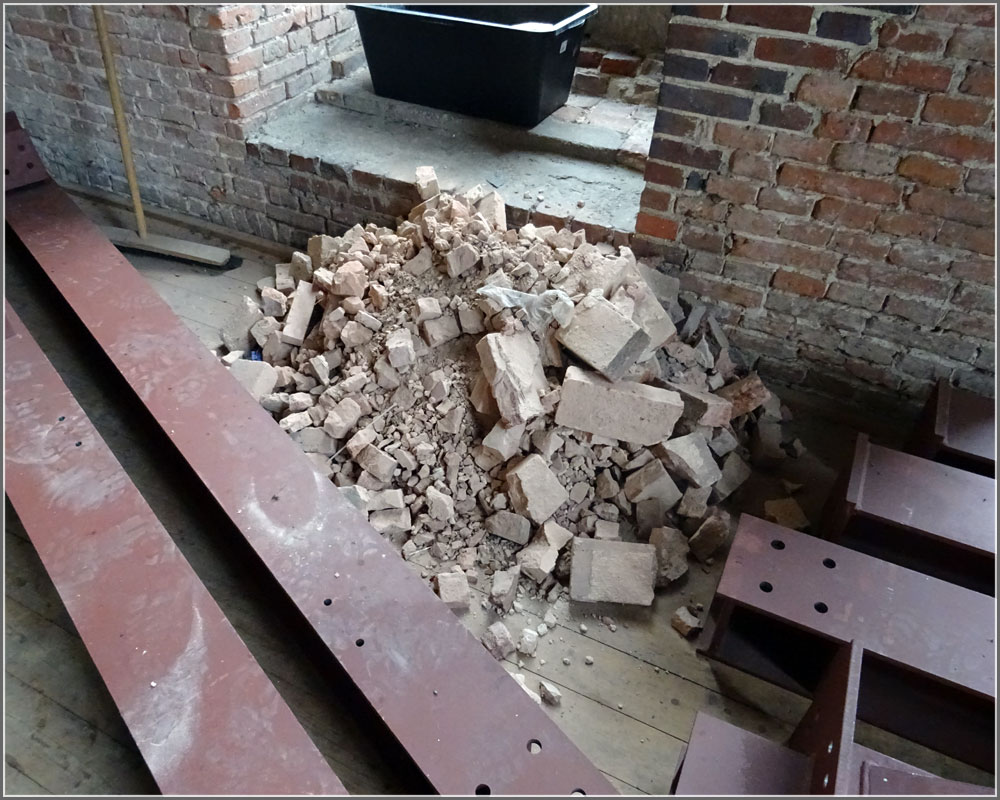
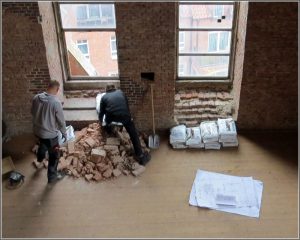
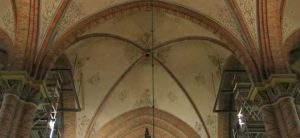
Work also began today on the vault. But first, the debris from yesterday was swept up.
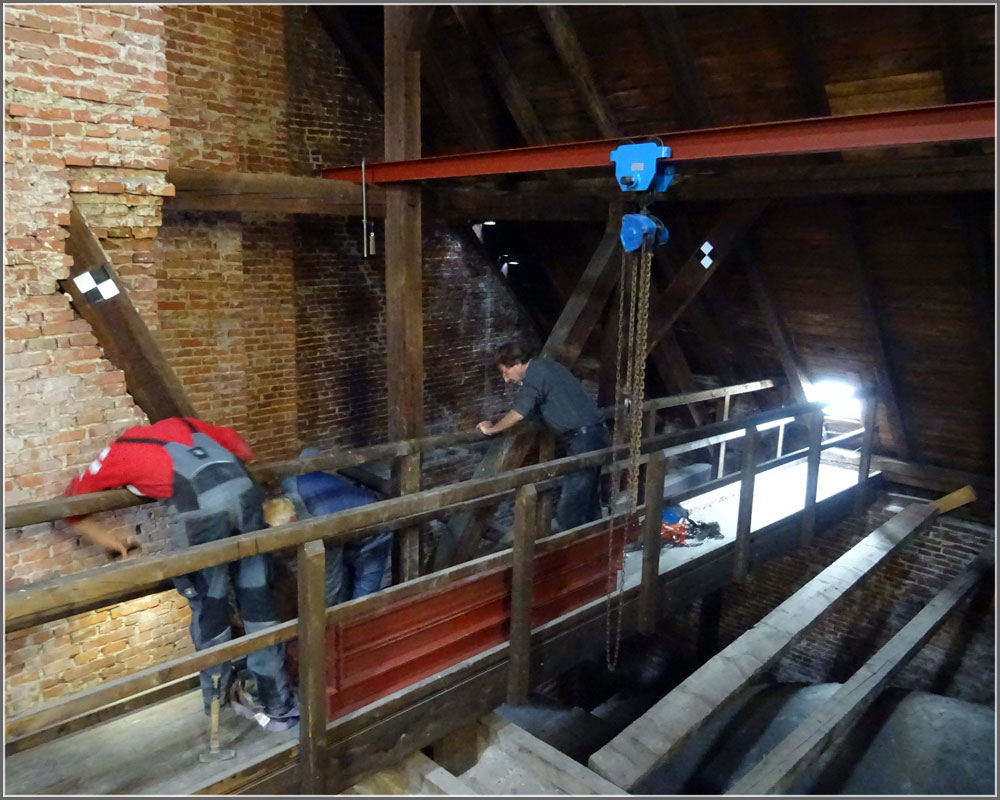
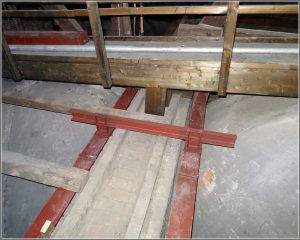
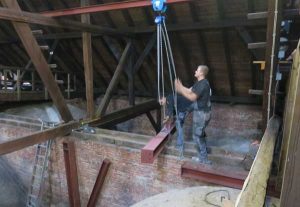
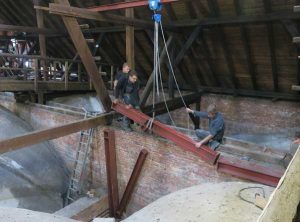
To handle the steel beams, some of which weigh over 180 kg, a lifting system with a chain hoist was installed.
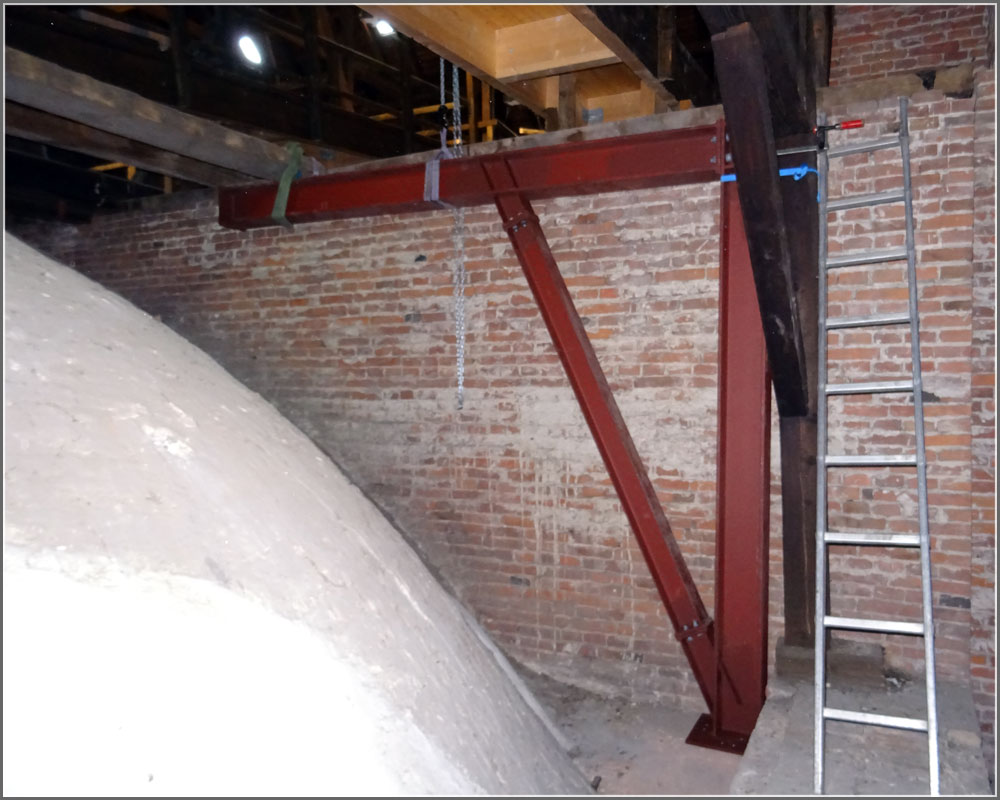
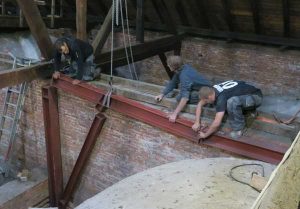
By evening, the first steel components had been joined together.
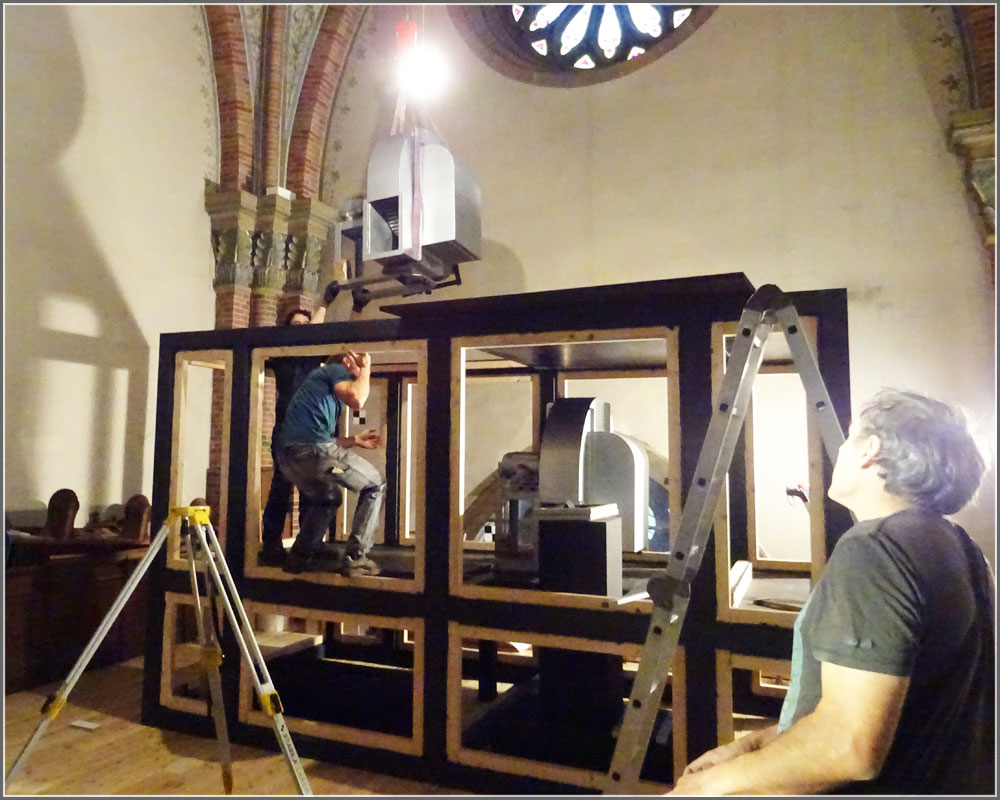
On the morning of October 2, the second fan was hoisted into its new home.
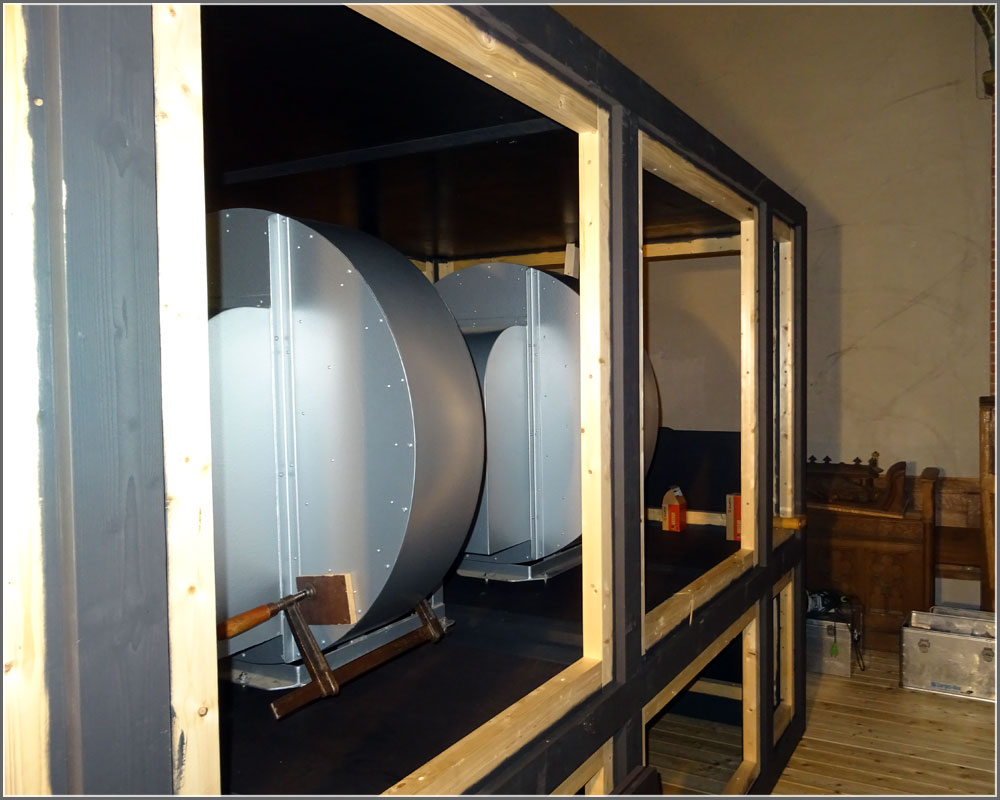
These two blowers will "breathe life" into the organ in the future.
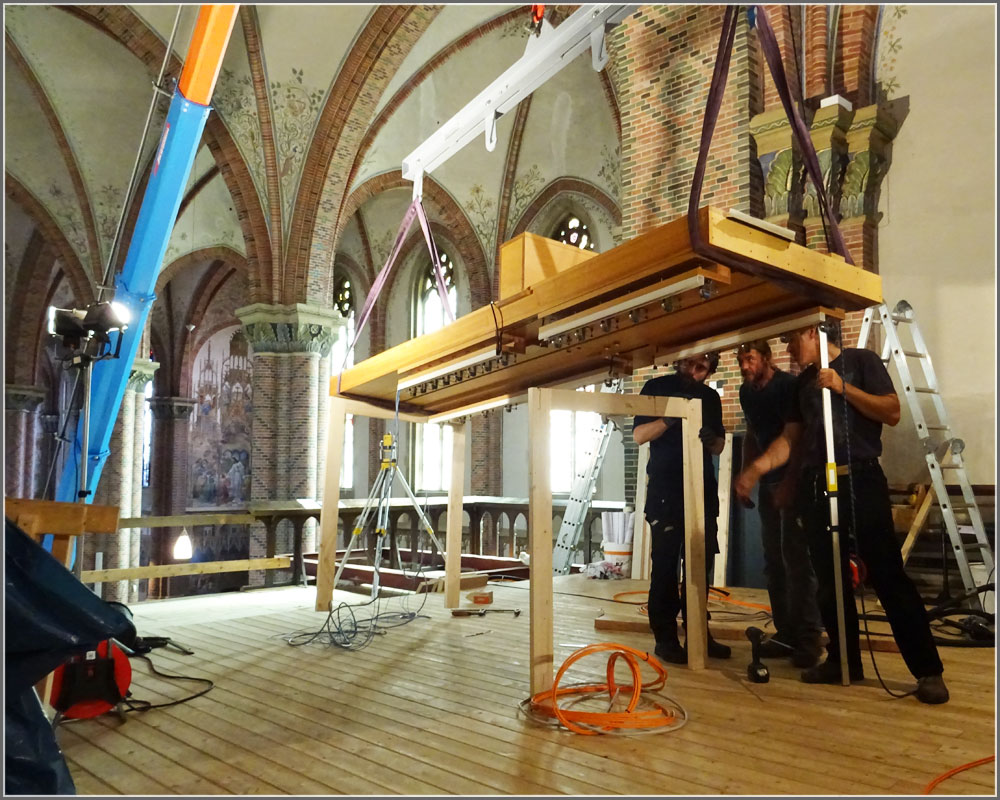
Additional organ components during assembly.
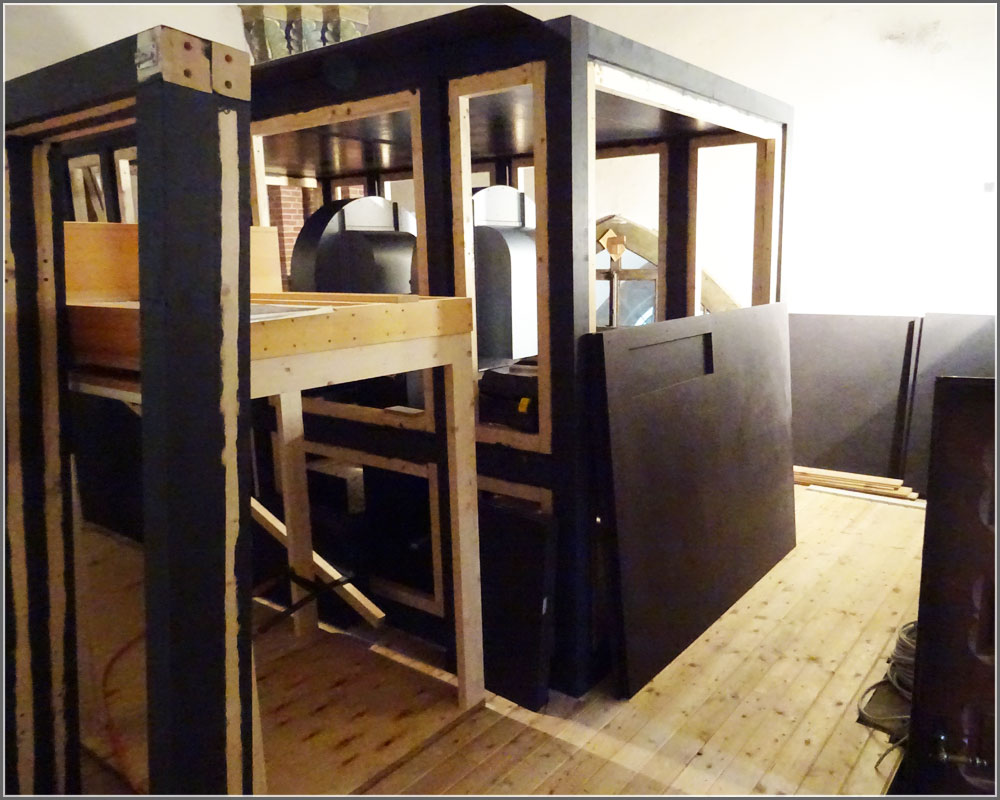
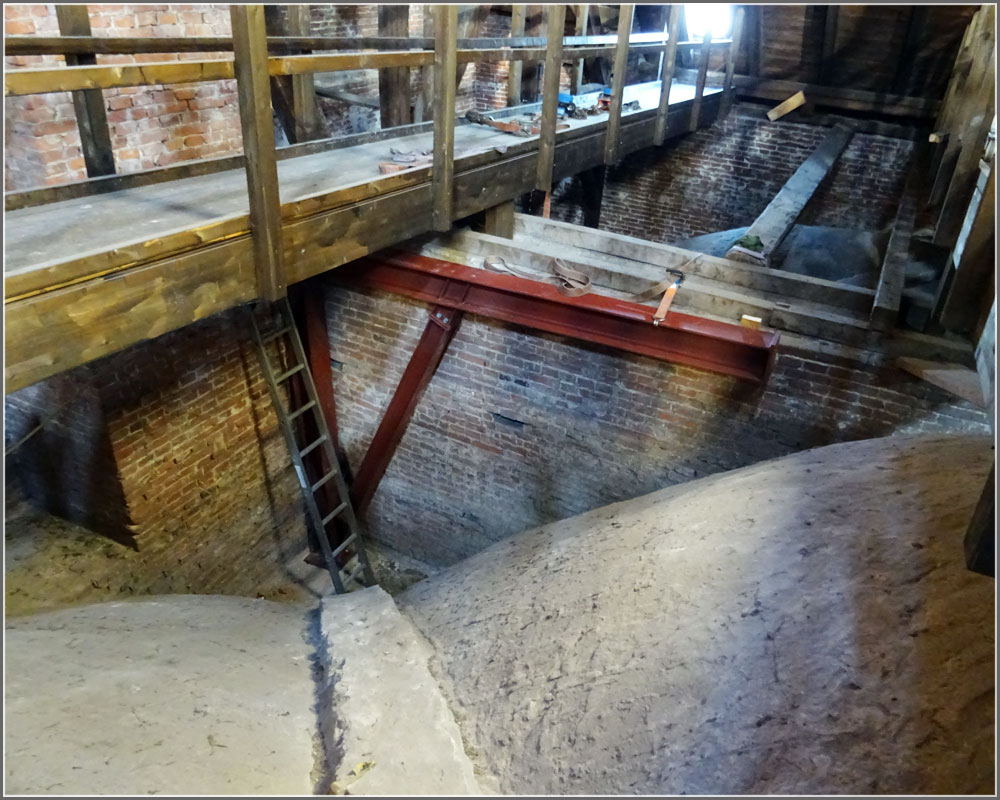
Significant progress was also made today on the steel structure on the vaulted floor.
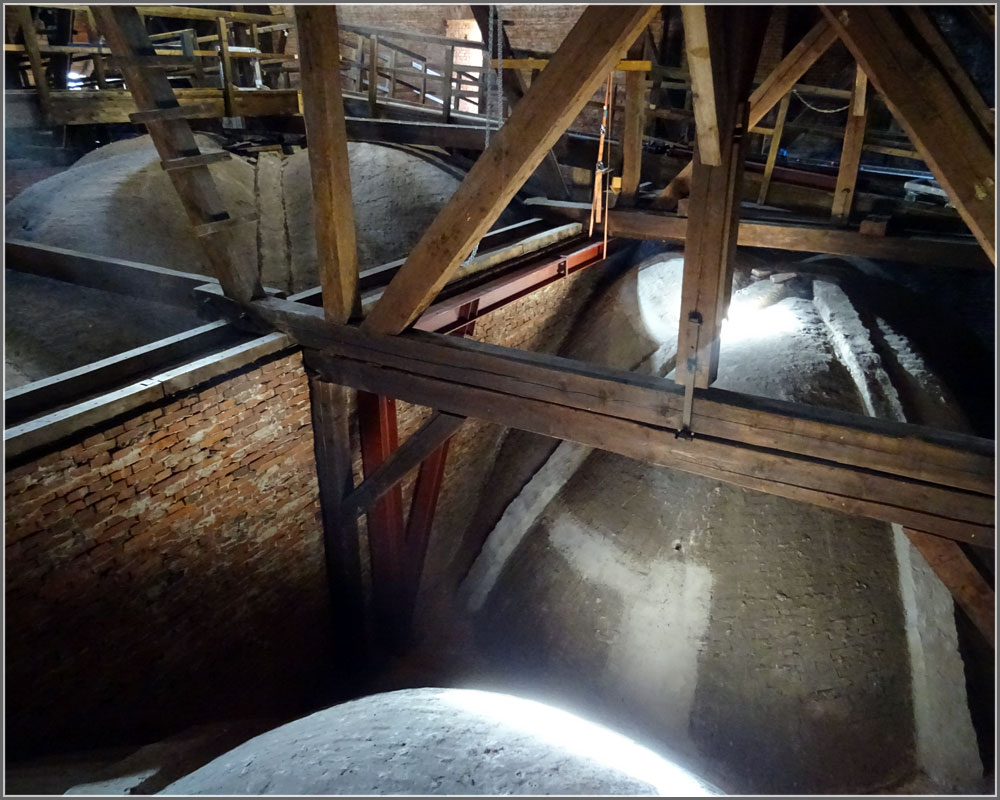
With two additional workers, the steel elements were installed on the left side.

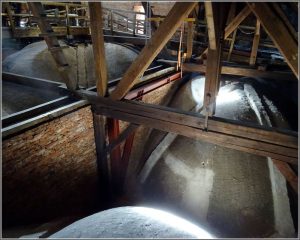
Here you can see one of the supports from which the organ towers are suspended.
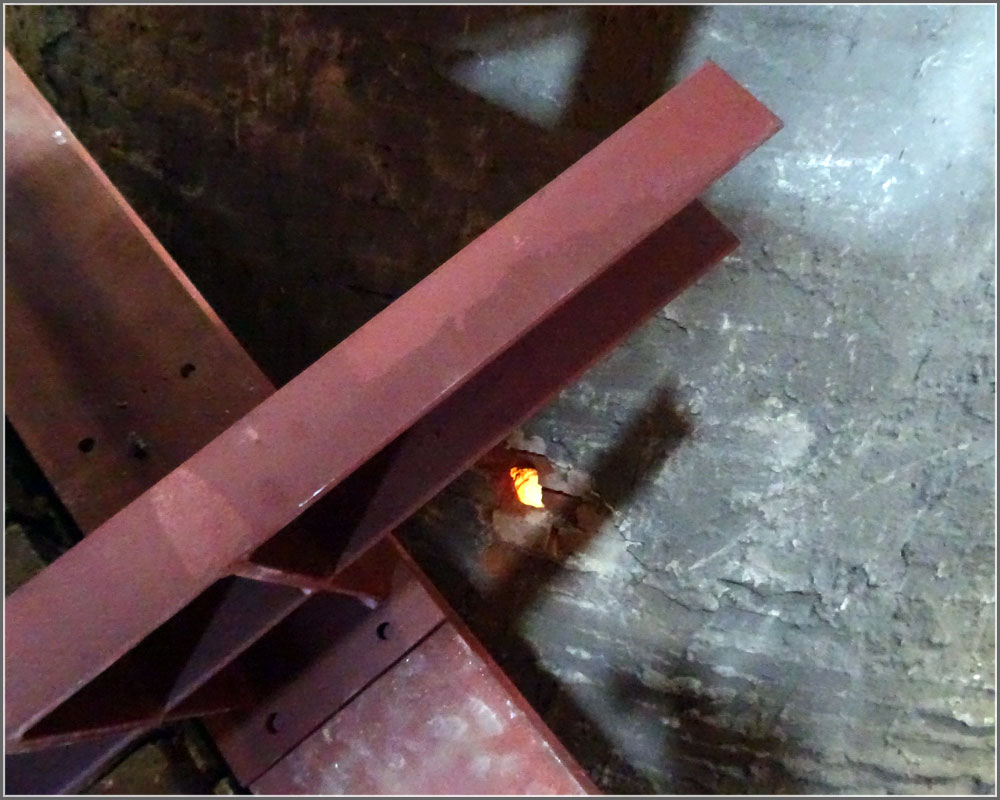
In the center: one of the holes in the vault through which a steel cable runs to the support.
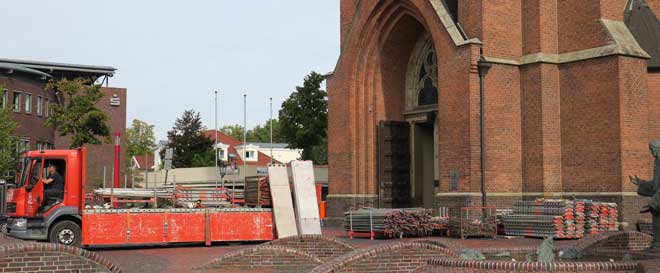
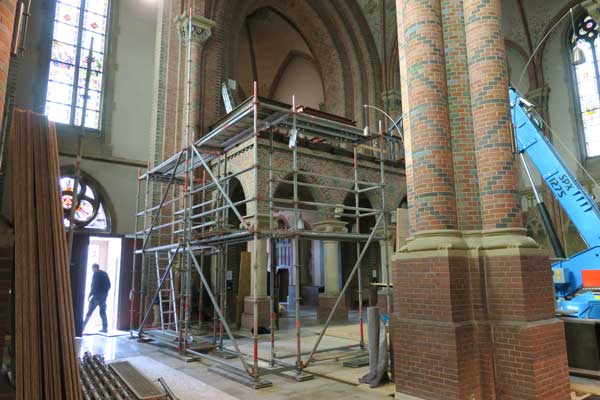
The scaffolding crews have arrived (Oct. 7).
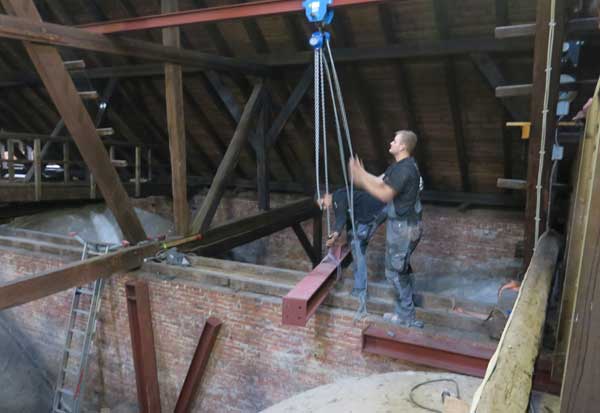
Meanwhile, work on the steel structures continues above the vault.
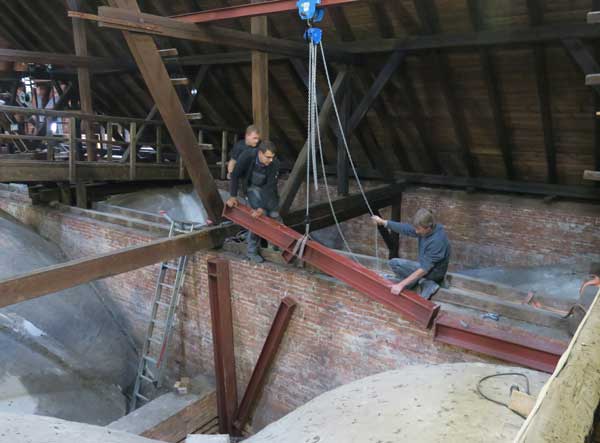
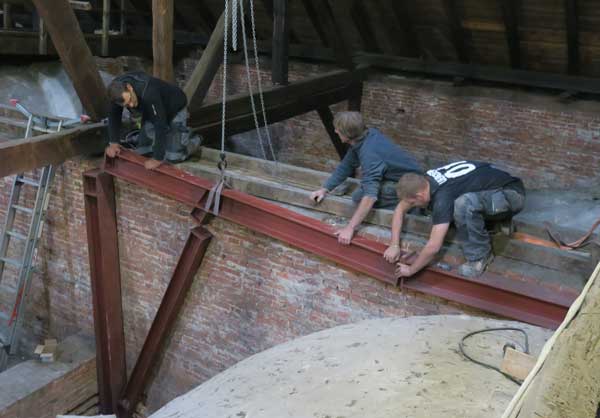
The individual parts are bolted together with thick bolts to ensure a precise fit.
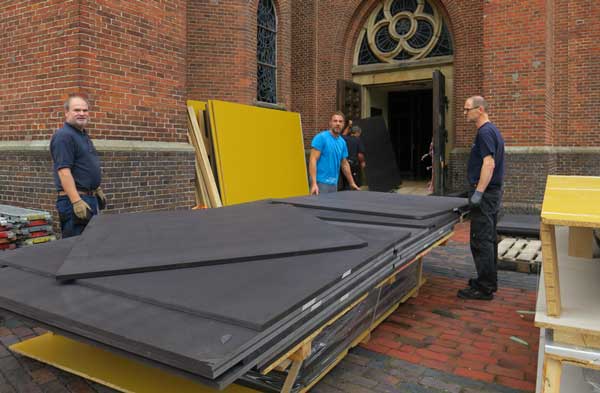
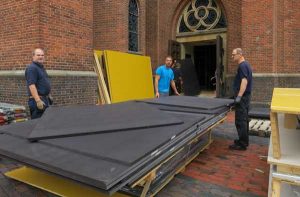
A total of 800 square meters of paneling must be carried into the church using only manual labor and physical strength. This amounts to a total weight of 11 metric tons (Oct. 8–9).
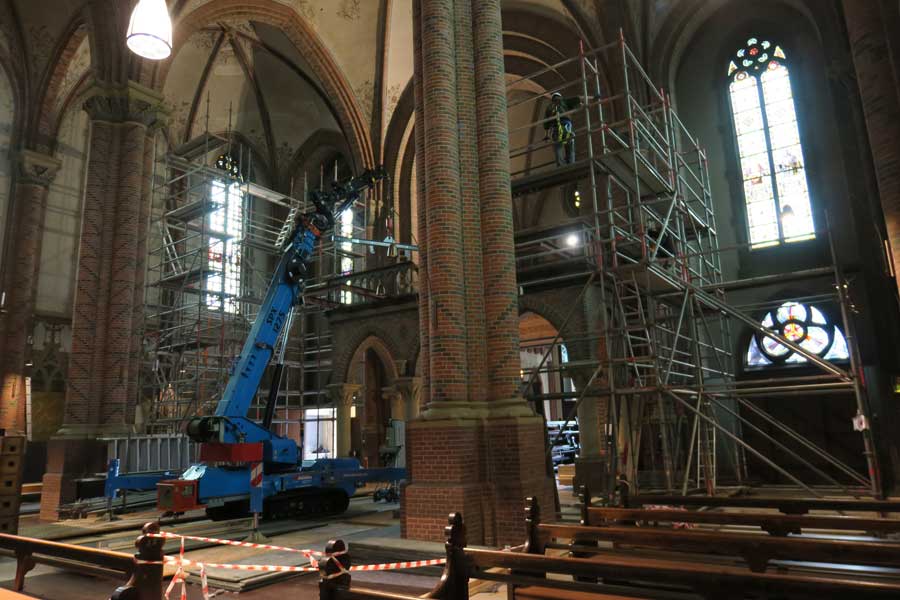
Inside the church, work continues on the scaffolding needed to erect the organ towers.
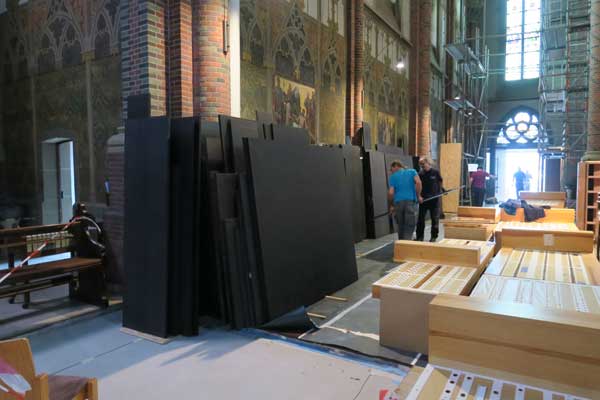
This is what the storage area in the side aisle looks like now
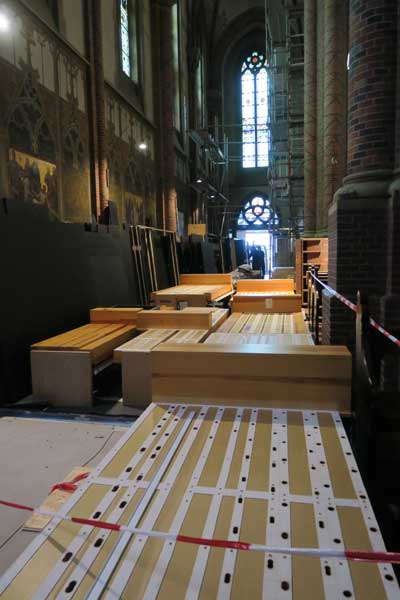
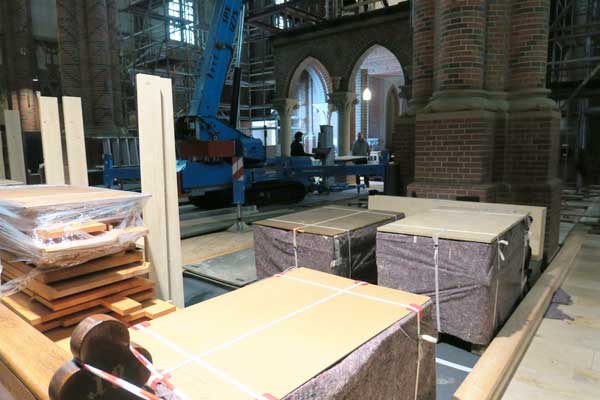
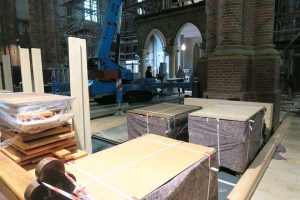
Pallets of building materials are also piled up on the other side of the church.
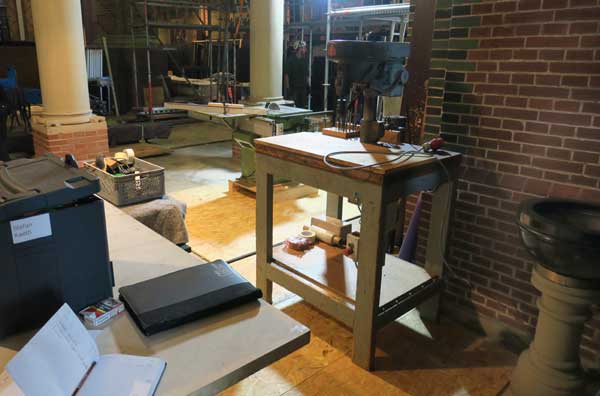
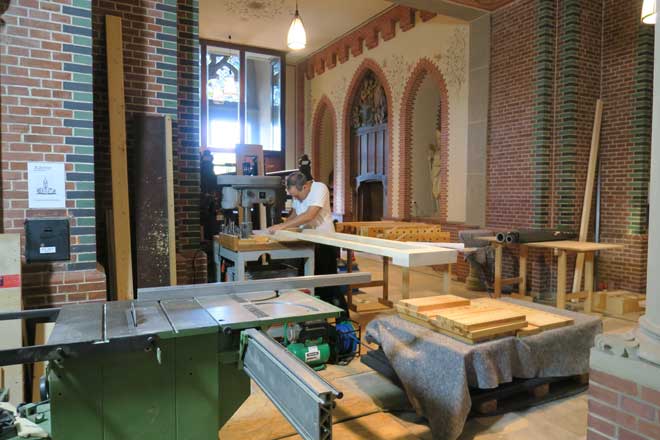
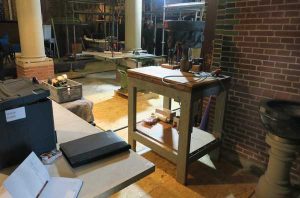
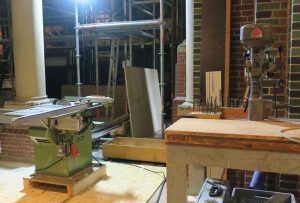
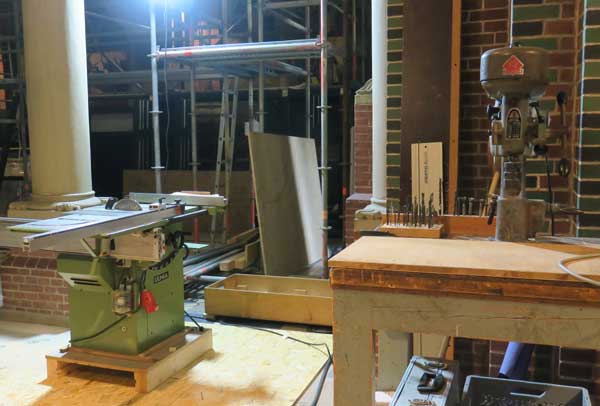
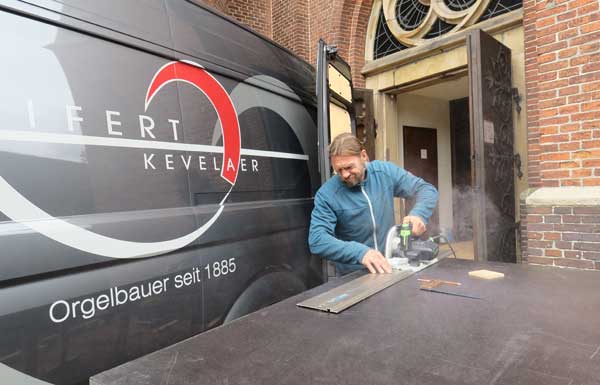
Next to the holy water font is a workbench with a drill press; in the background is a circular saw.
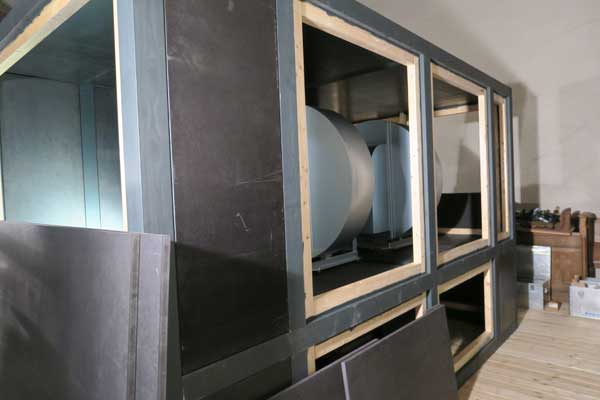
A look inside the wind turbine enclosure.

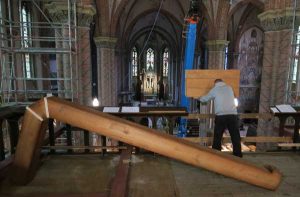
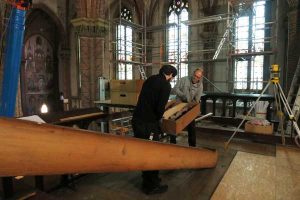
In the foreground is one of the giant pipes, which are so long that—as the technical term in organ terminology goes—they must be bent so that they can fit at all. This does not affect the pitch at which it is meant to sound.

One box of supplies after another is hoisted onto the organ platform.
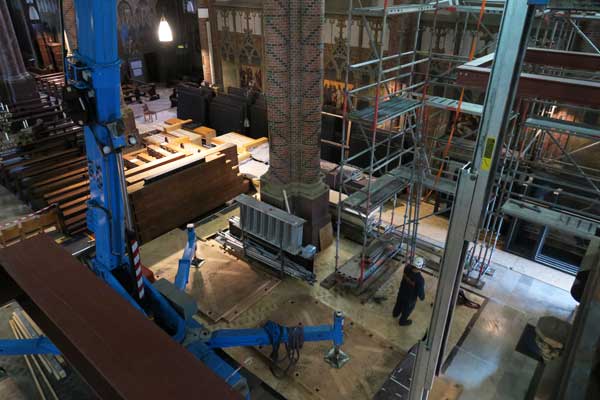
All the parts must fit perfectly into place. In the foreground, you can see the organ builders’ blueprints, always within easy reach.
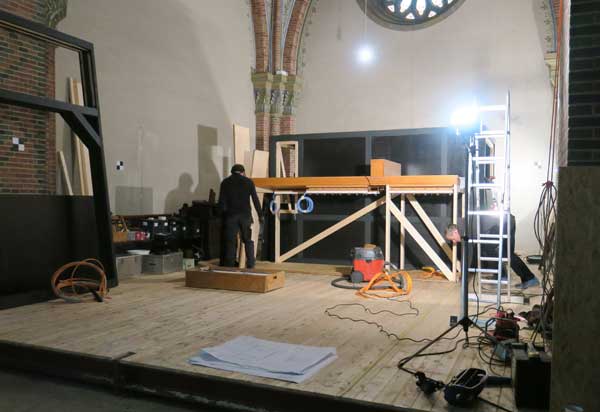
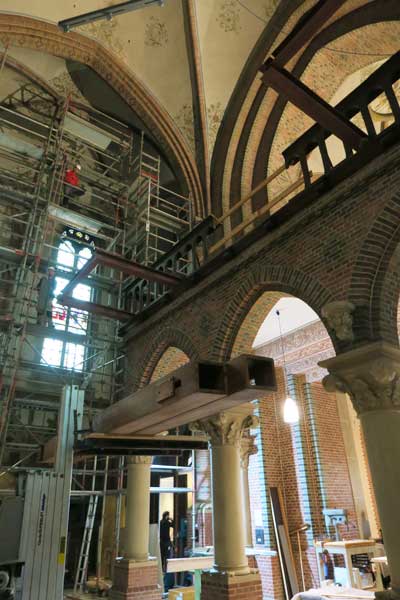
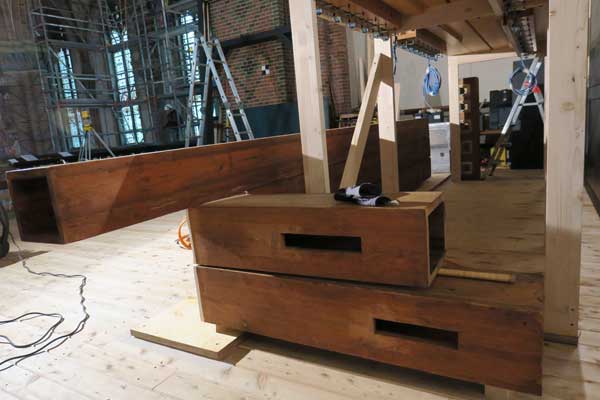
These large, long “wooden boxes” will all contribute their own sound to the music in the grand organ later on. Low notes require a lot of space.
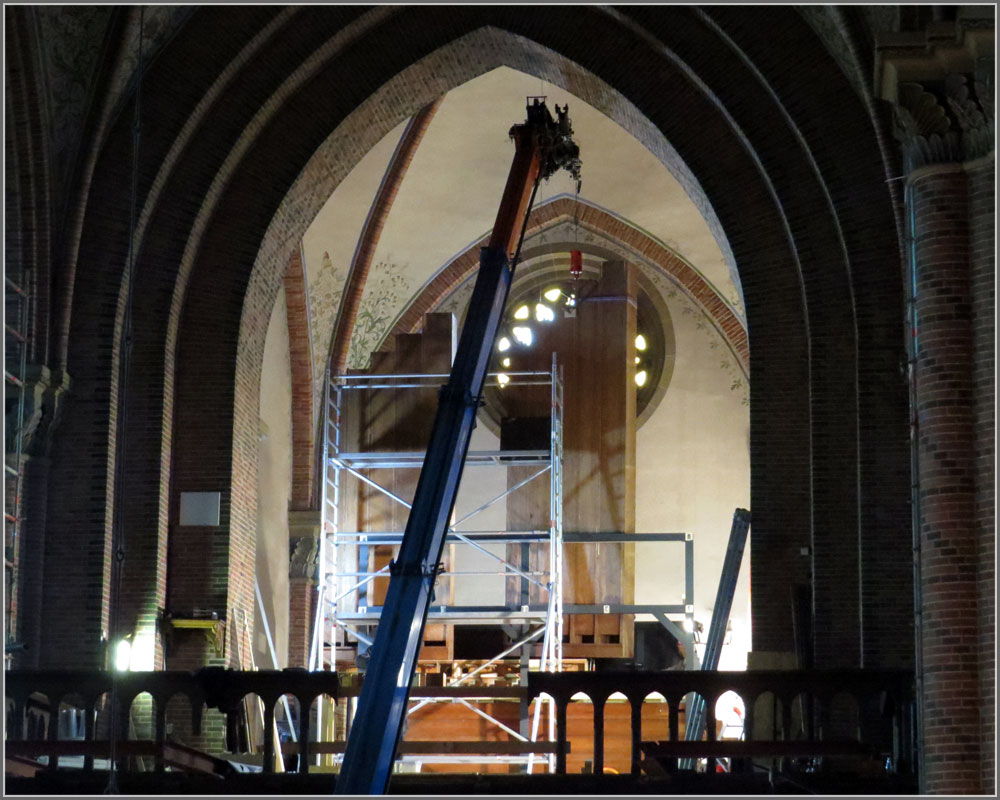
The first pipes of the organ have now been installed and are visible from inside the church (Oct. 10).
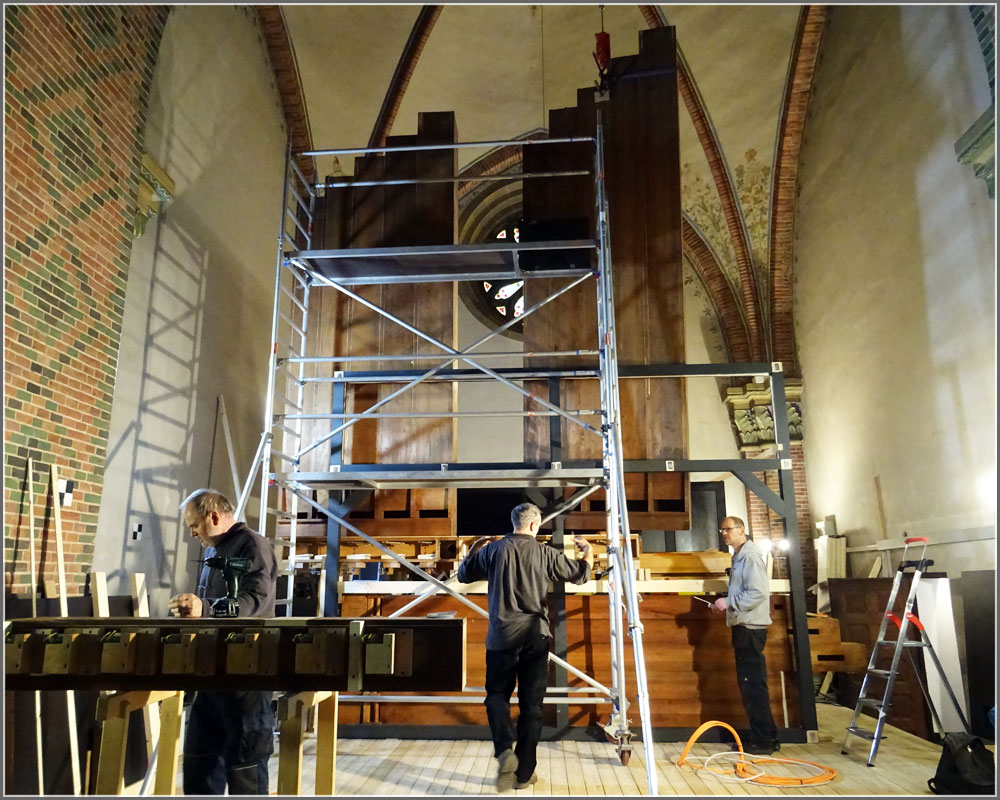
However, the large wooden pipes now block the view of the rose window, which has been visible since May.
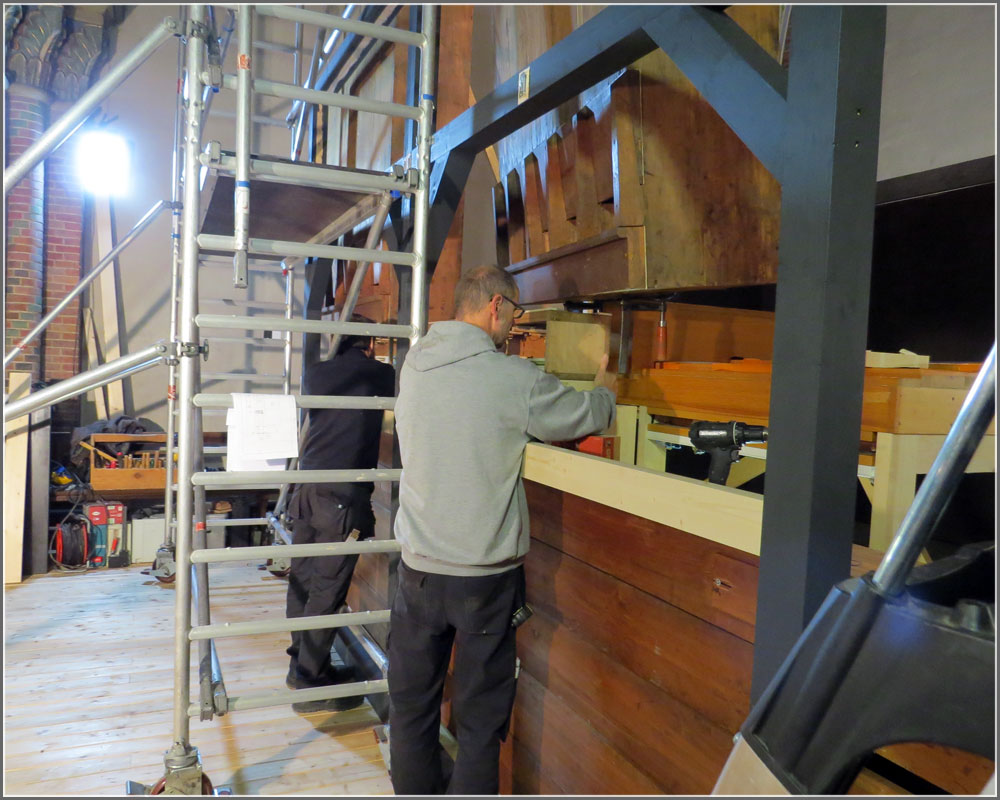
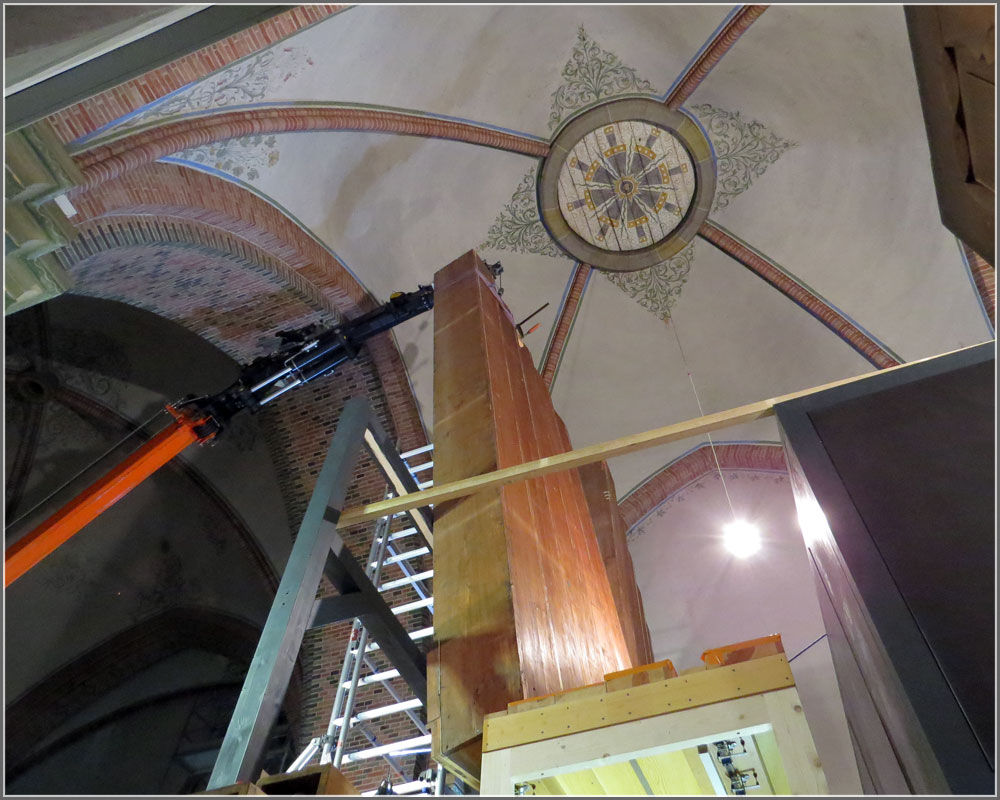
Everything is put into place with the help of the crane.

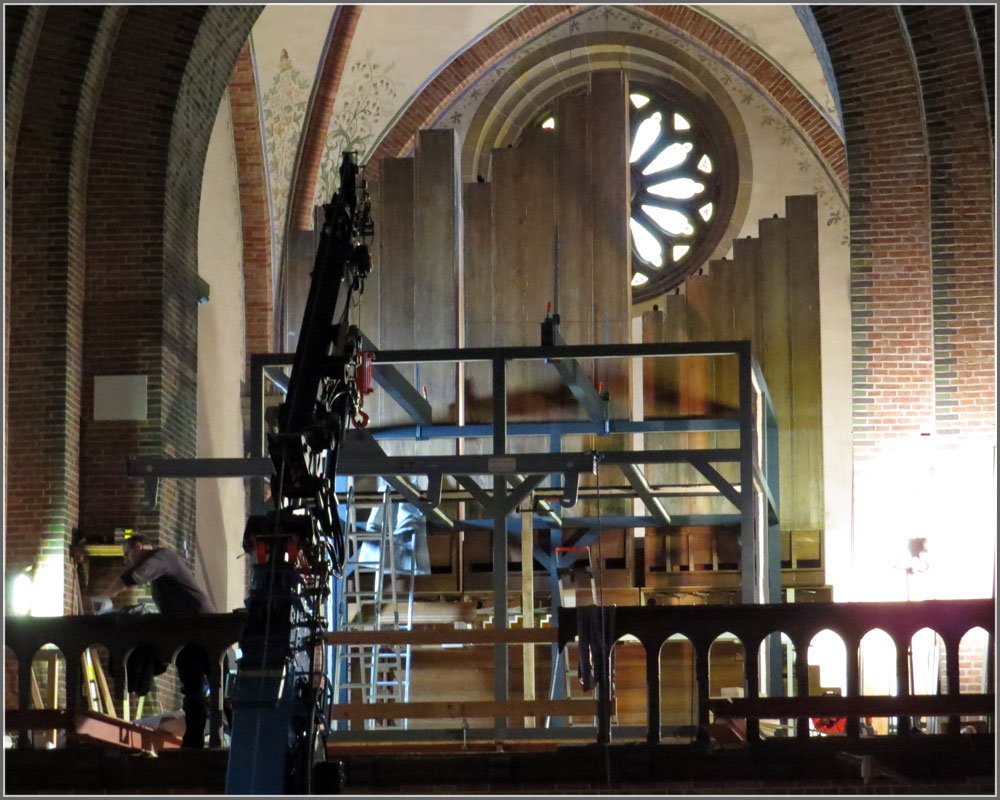
It is clearly evident that the Walcker organ in St. Anthony's Church is growing (Oct. 11).
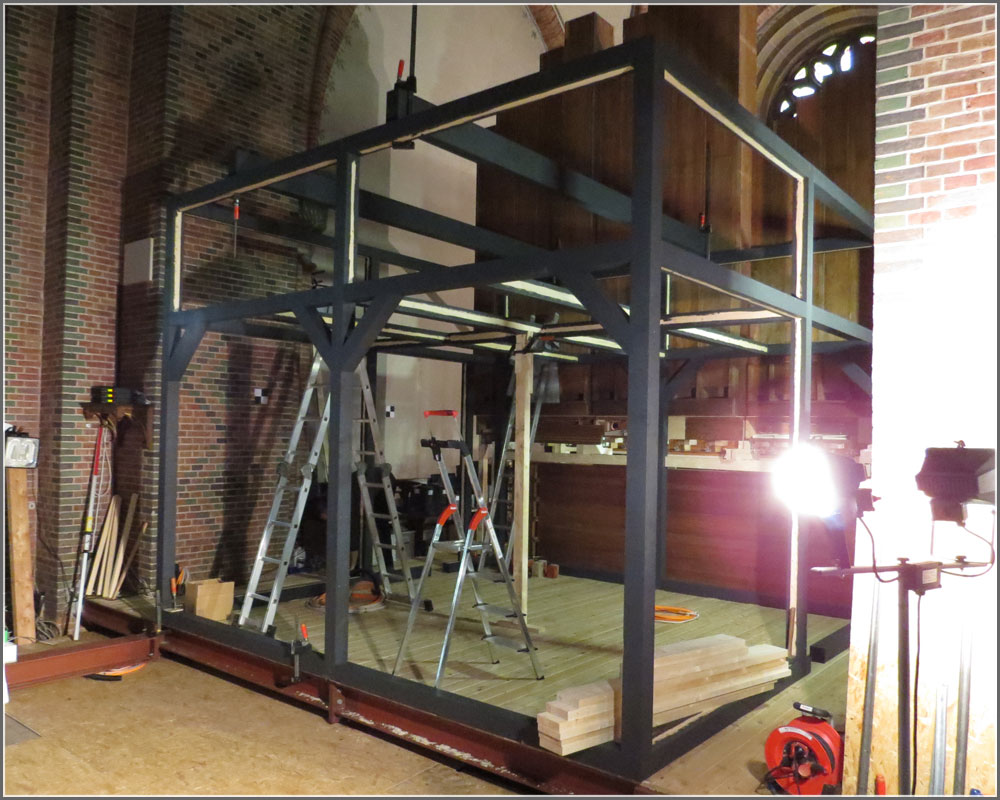
The technicians have begun setting up the rear tower of the organ. The first “level” can be seen here.
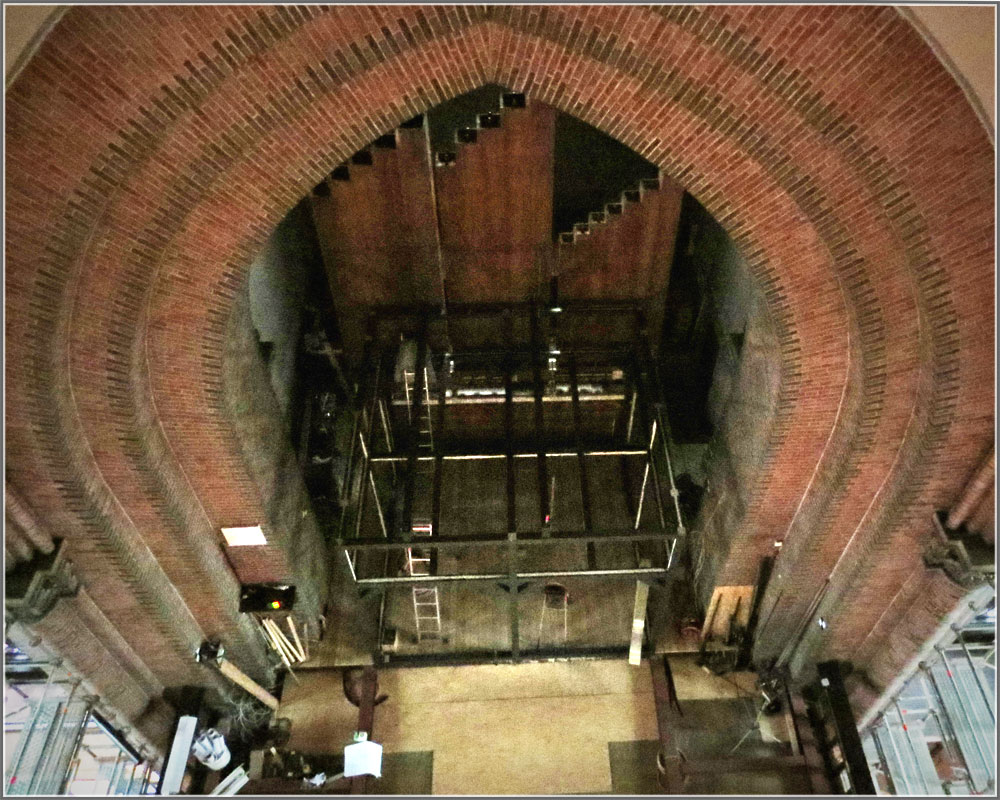
Another “floor” will be added next week.
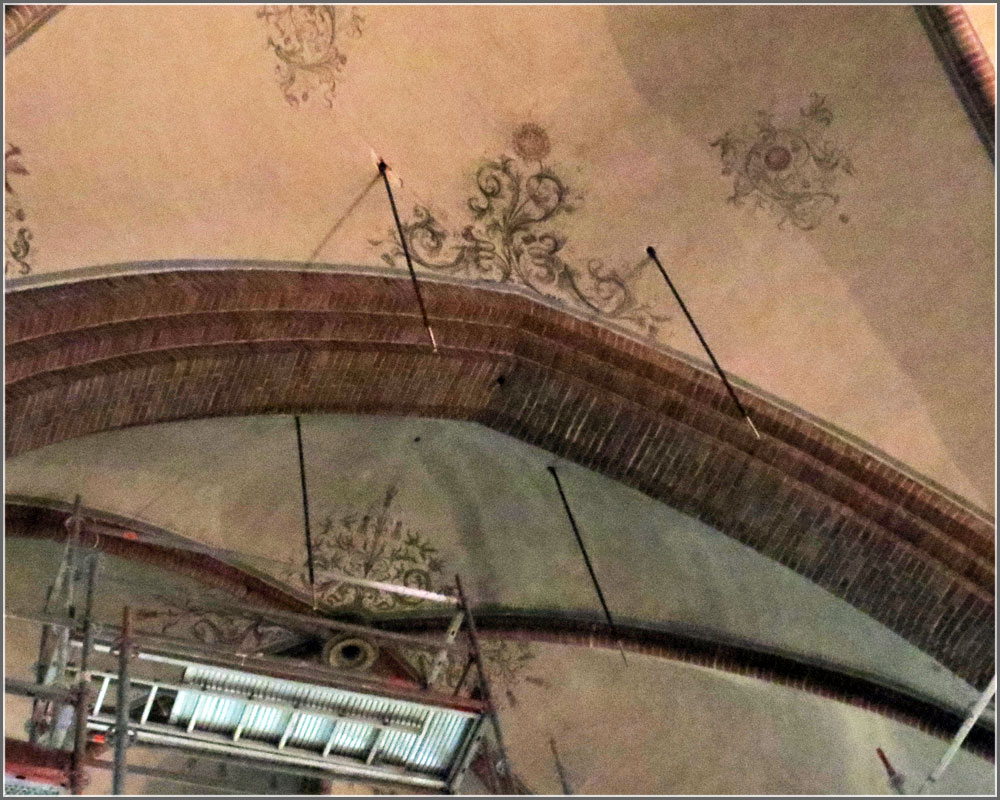
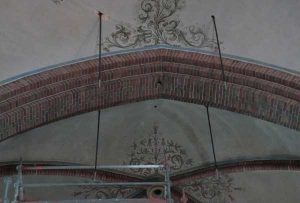
As of today, the rods from the vault—on which the outer organ towers will be suspended—are also in place.
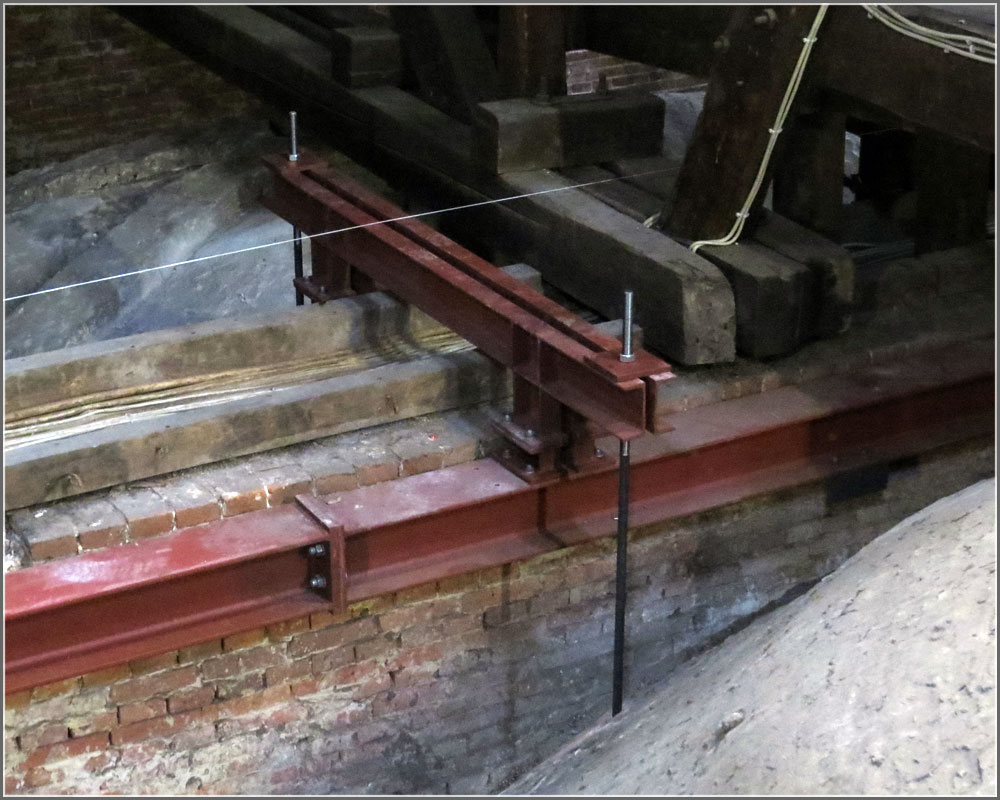
Above the arch: A threaded rod allows you to precisely adjust the height at which the towers should hang.
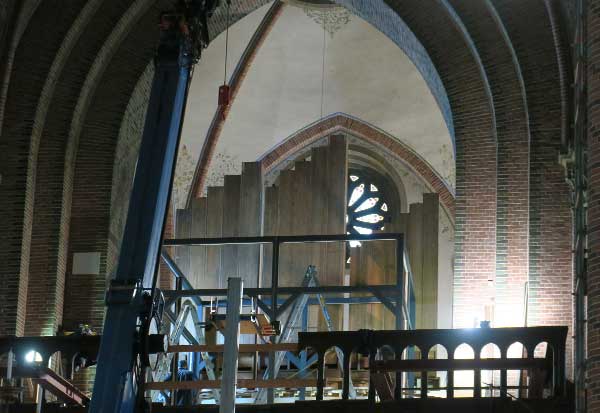
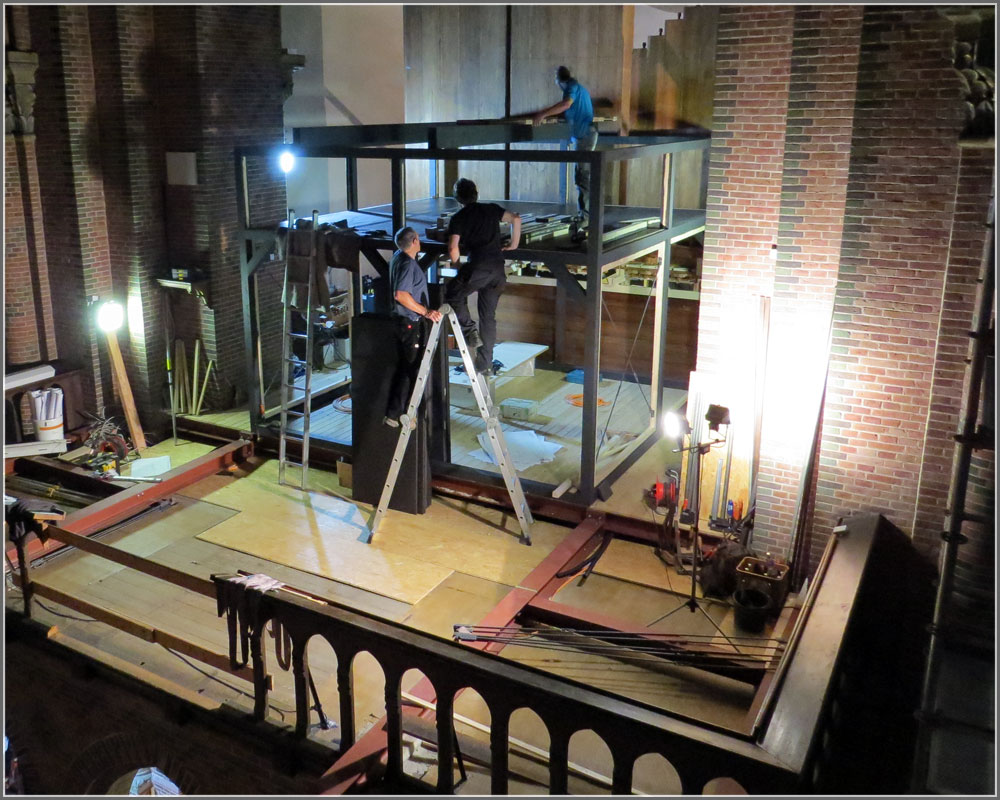
A large, sturdy wooden structure has been built on the organ platform to provide space for many more organ pipes (Oct. 11).
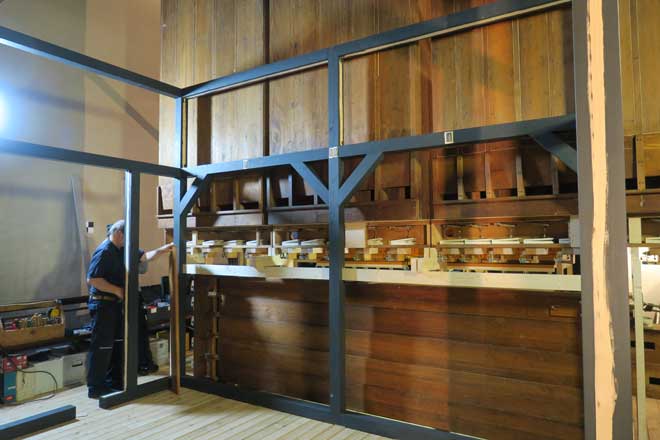
A look inside the wind chest for the large wooden pipes.
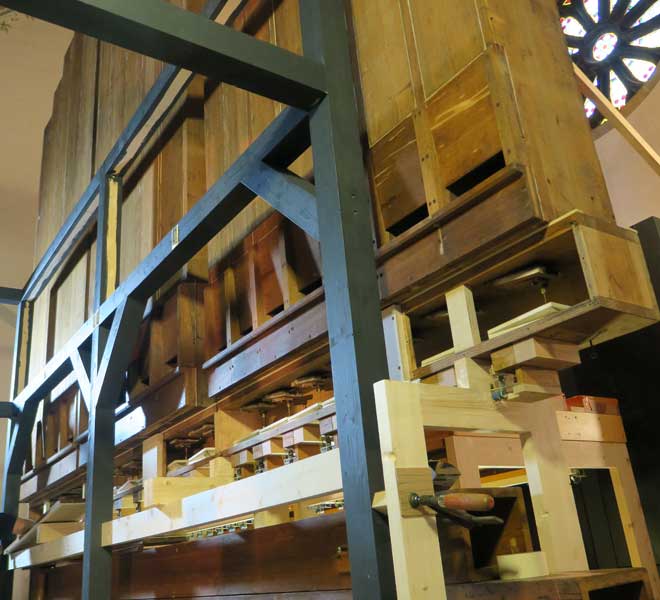
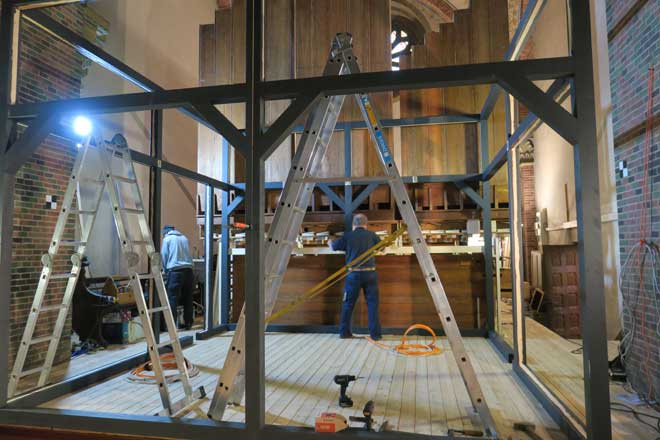
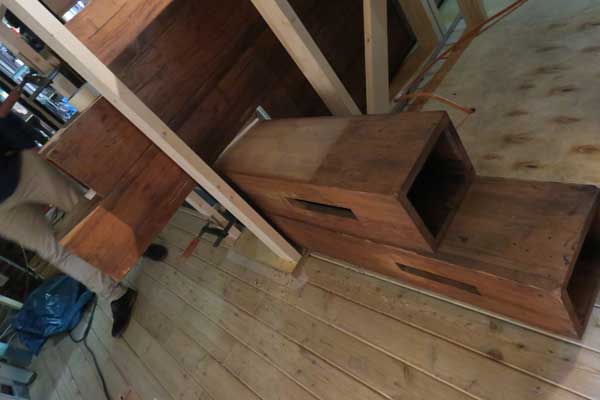
To make room for all the large pipes, some of them are even installed horizontally.
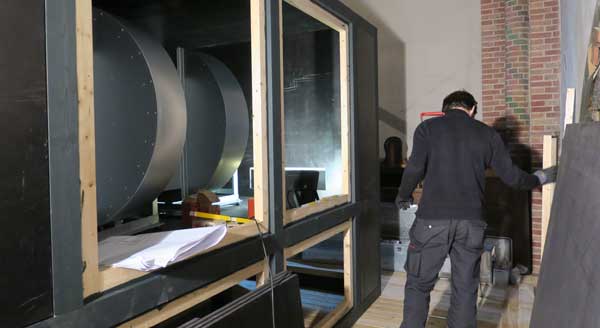
The wind machines will be fitted with soundproofing so that the engine noise does not interfere with the music.
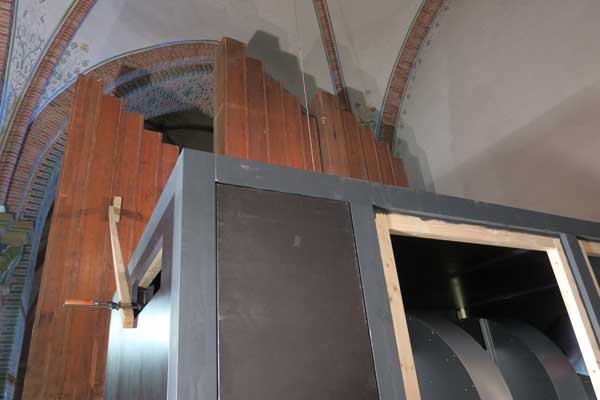
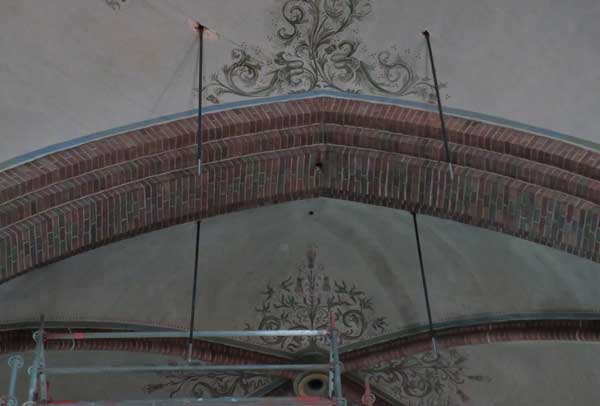
This week, the support rods for the two suspended organ towers were installed through the vaulted ceiling. The steel structure is scheduled to be attached there next week.

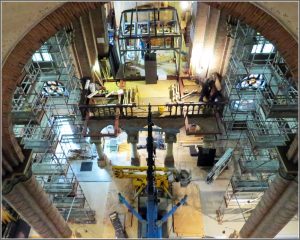
A view of the organ construction site from above at the beginning of the week (Oct. 14).
Seifert's organ installers have returned from the weekend and are continuing their work on the rear organ tower.
The wooden structure continues to rise.
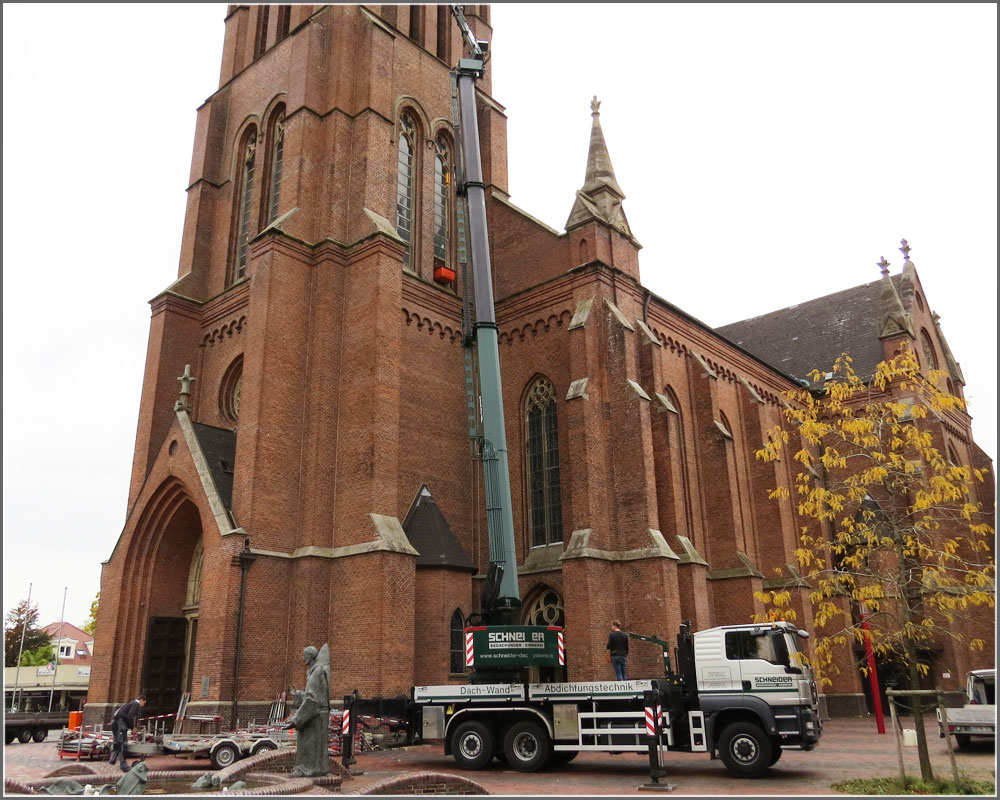
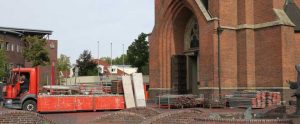
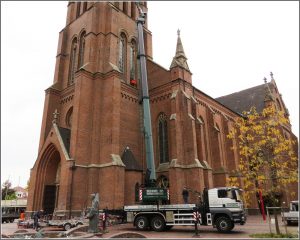
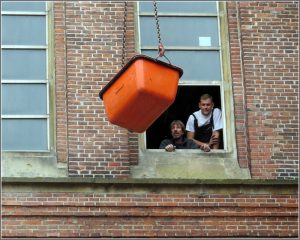
A crane was set up in front of the church this afternoon.
The debris that had accumulated in the vaulted ceiling had to be cleared out of the tower room.
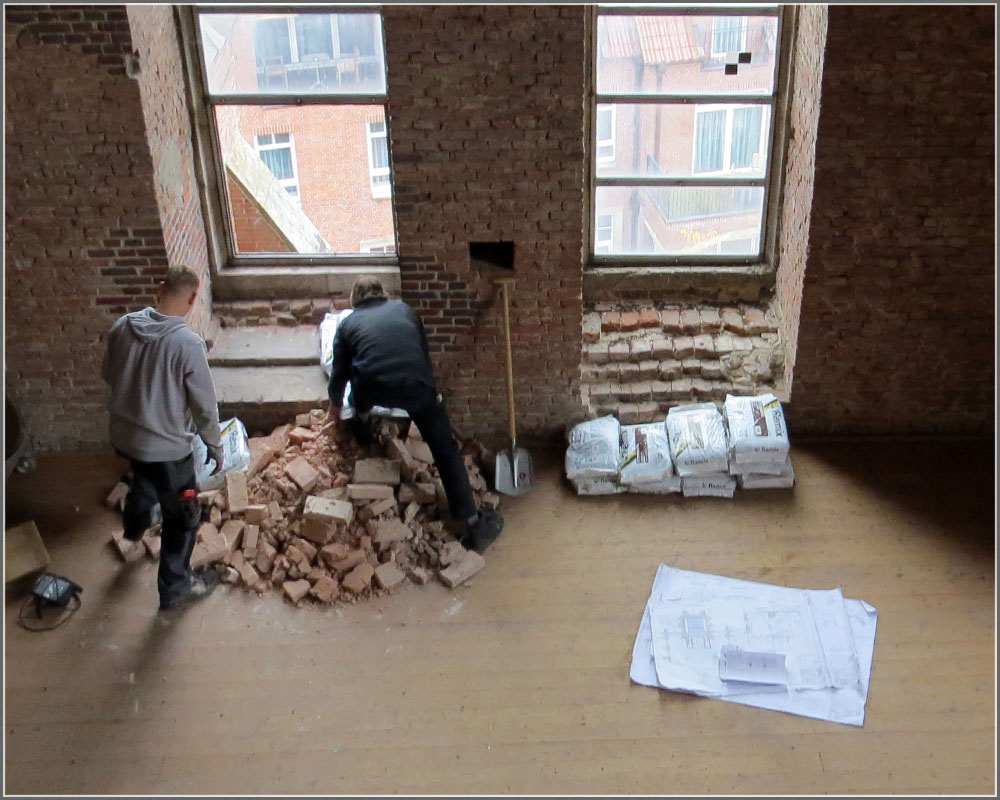
In addition, bags of concrete were brought upstairs.

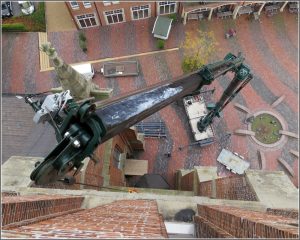
The construction debris hung from the hook, 20 meters below.
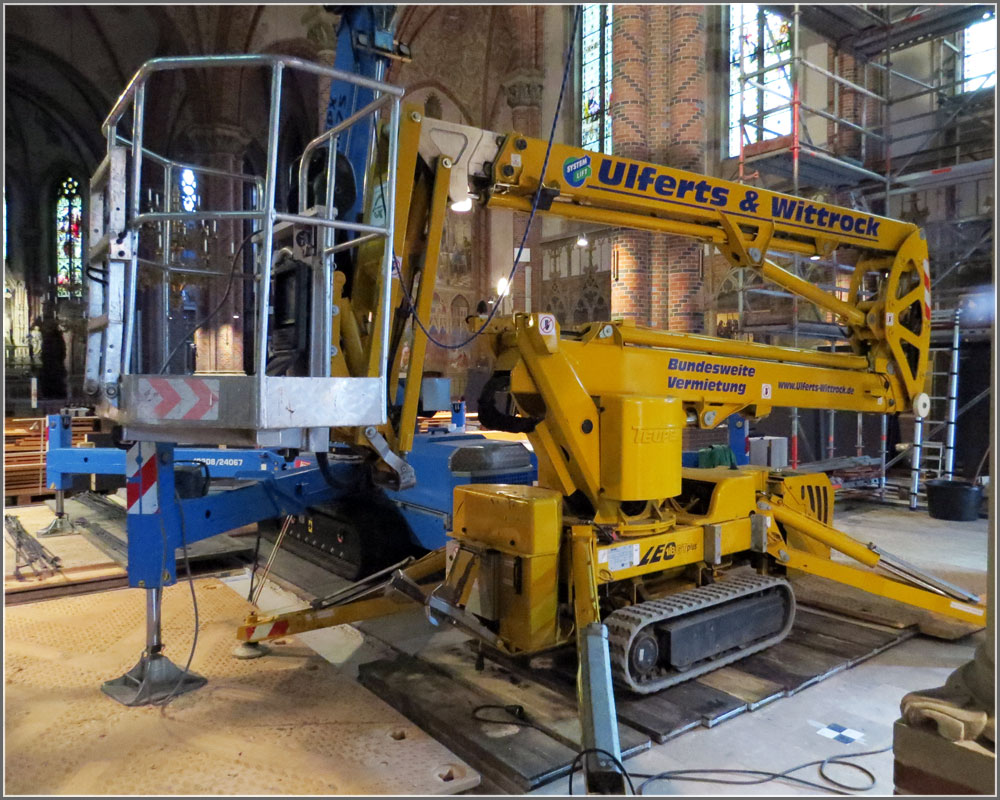
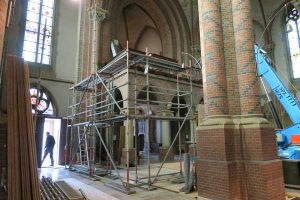
A scaffold was set up for the installation work in the church.
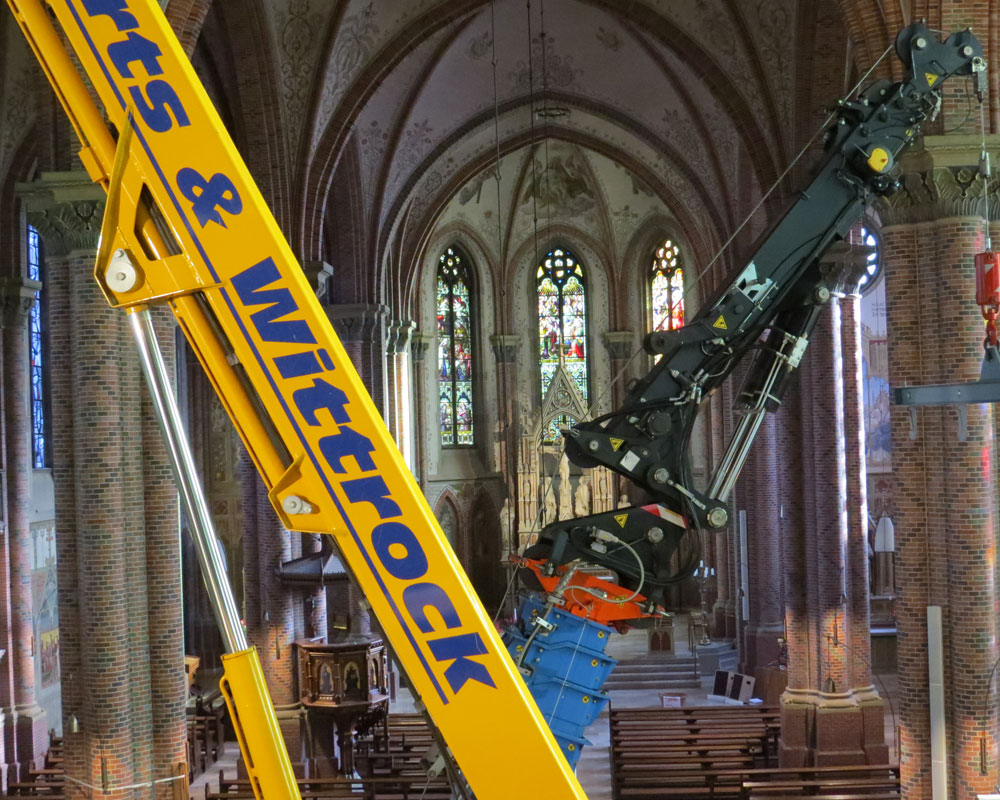
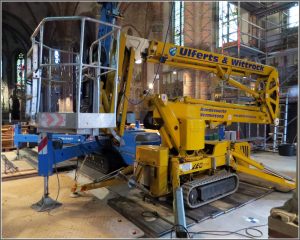
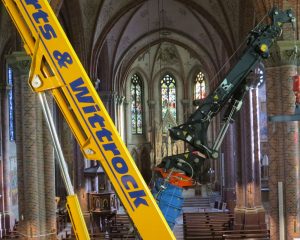
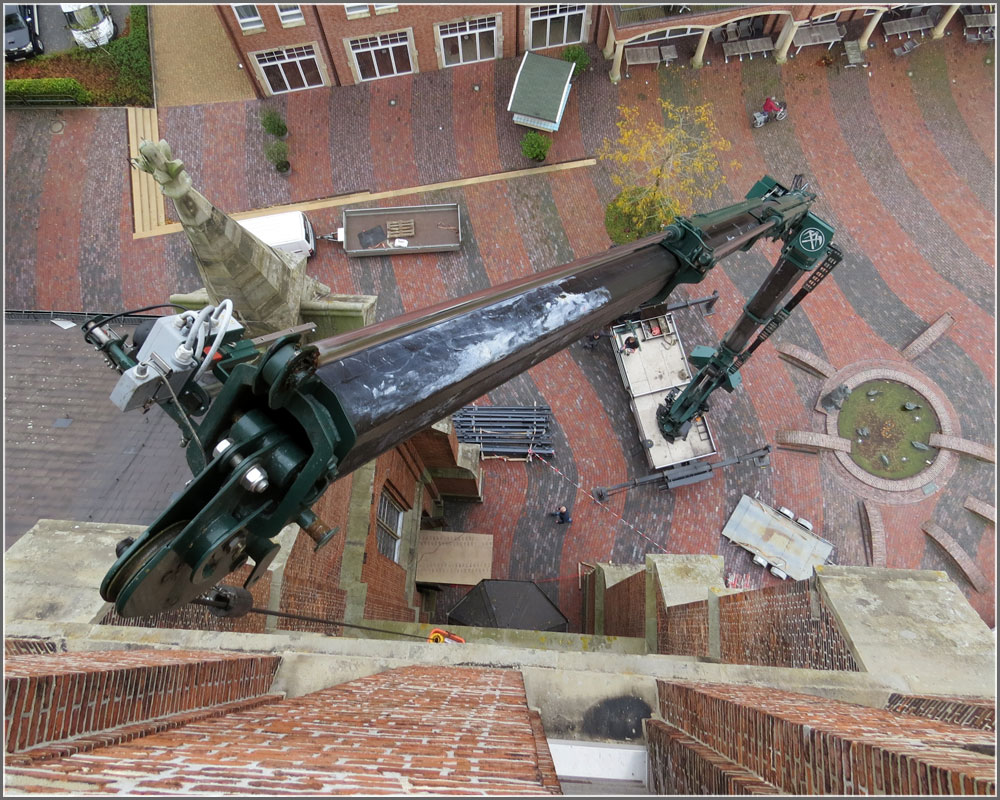
Crosswise: A crane and a cherry picker have to share the church's limited airspace (Oct. 15).
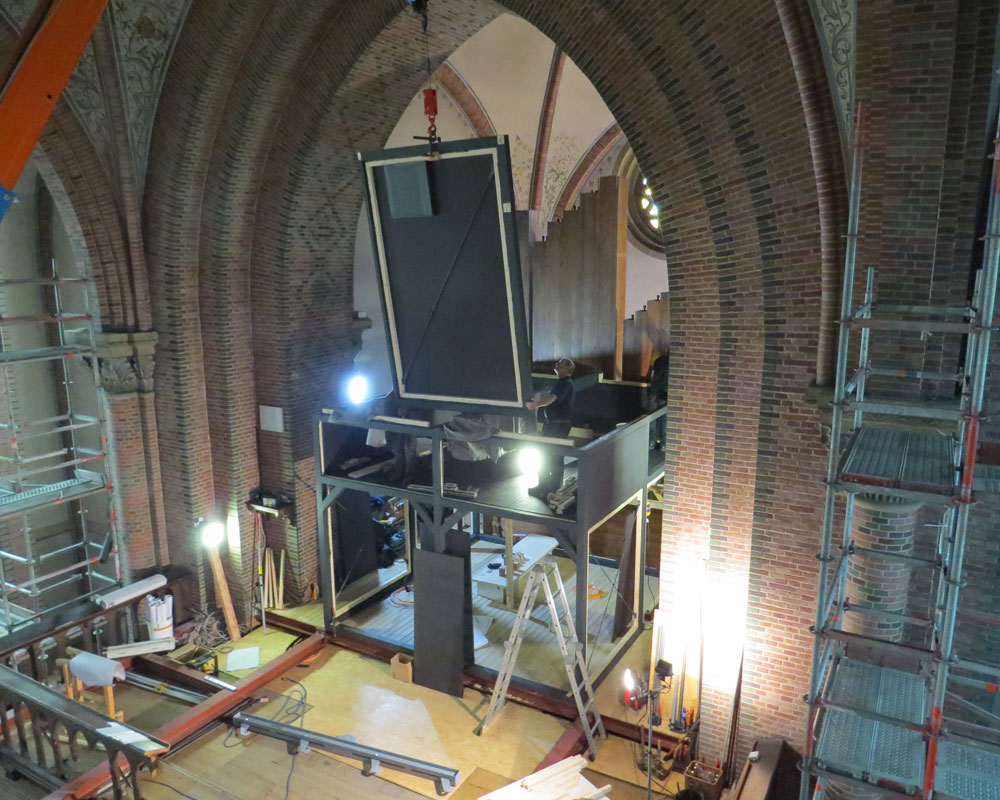
Here, the first section of the second “level” of the rear organ tower is currently being hoisted into place.

It takes a lot of patience and skill to position the piece on the cramped organ loft.
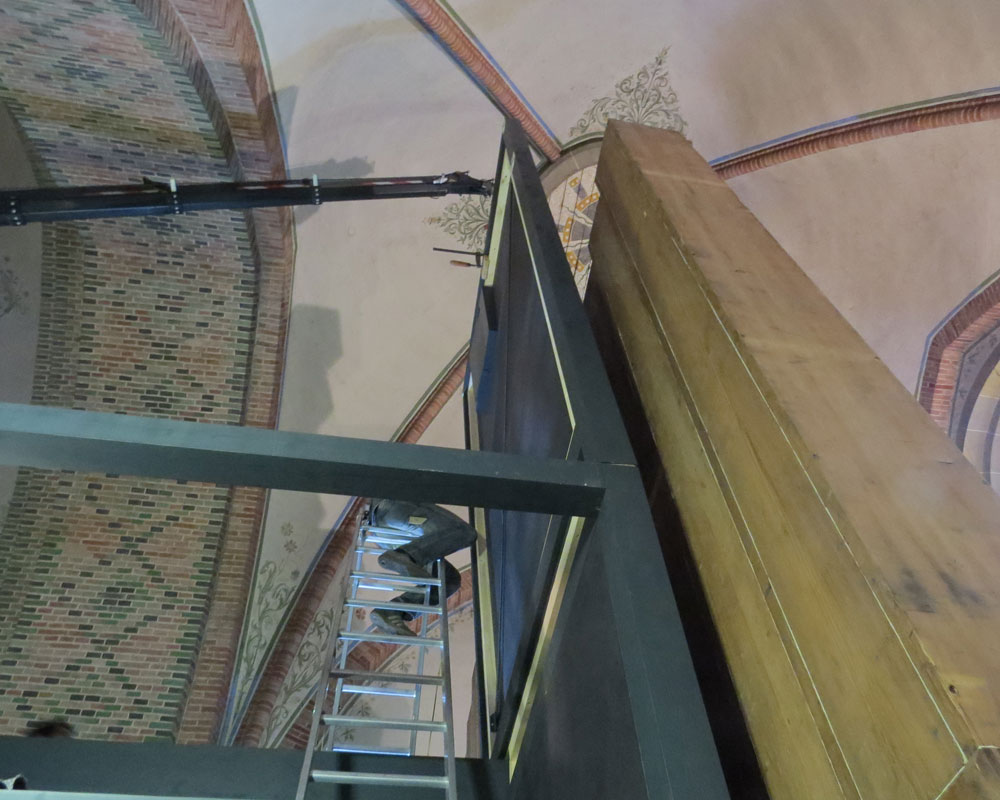
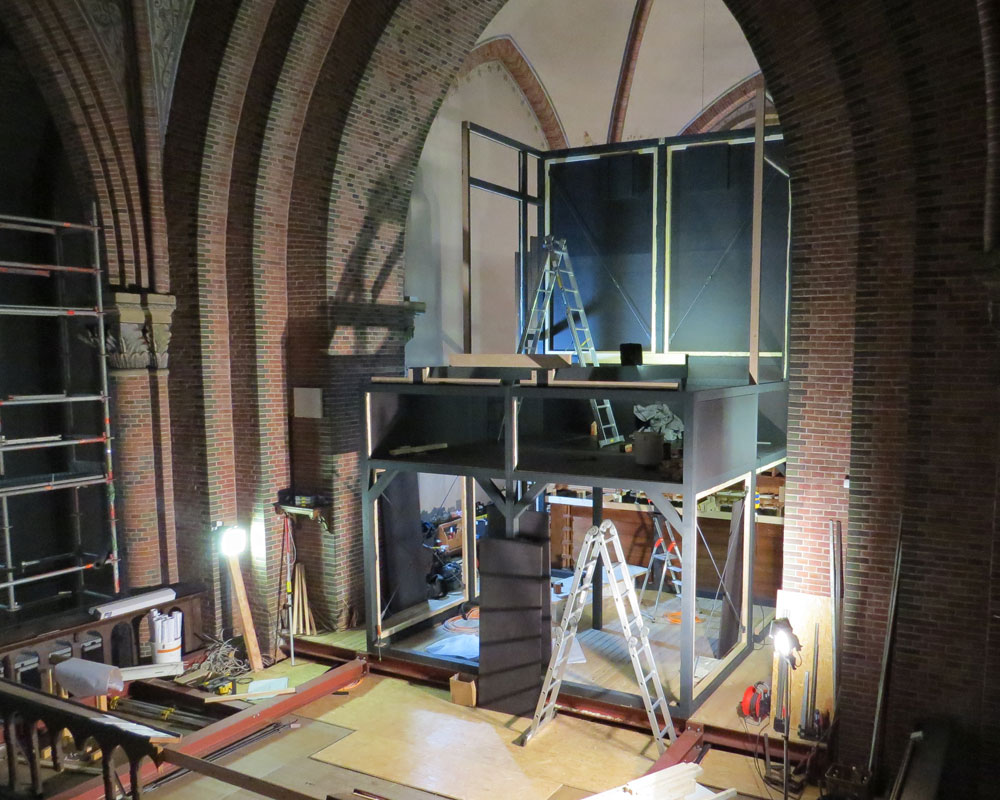
In the late afternoon.
The ladder is needed for the work in the vault.
To allow the suspension rods of the outer organ towers to hang freely without touching the vault, the existing holes had to be enlarged slightly.
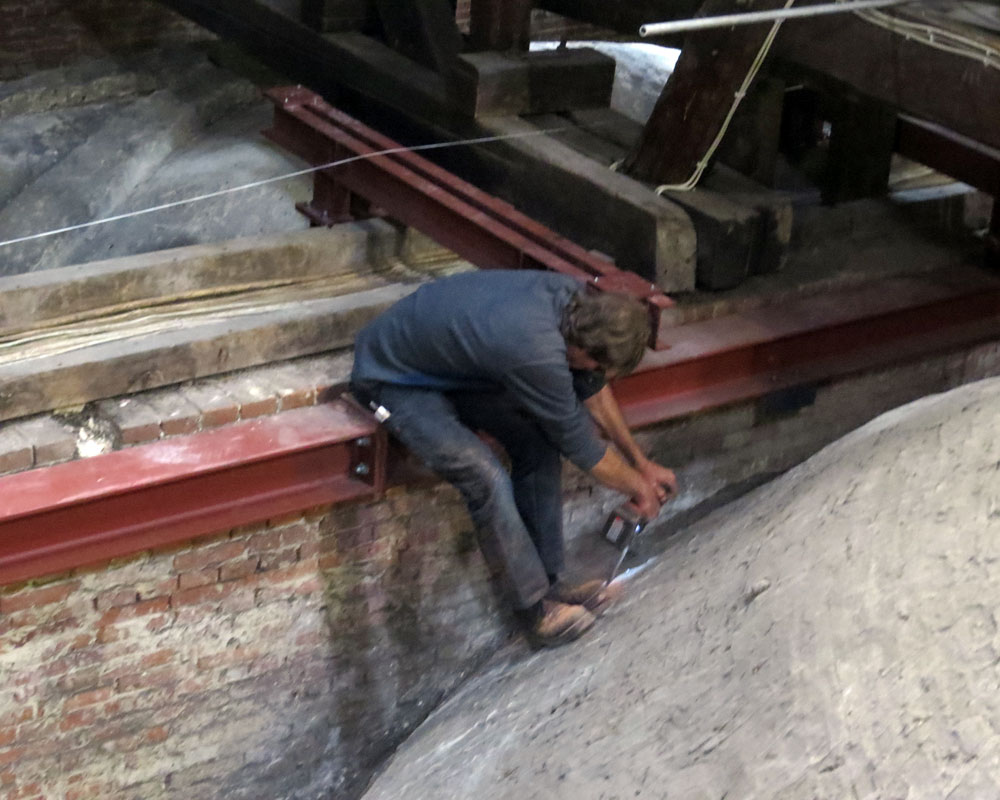
They're drilling above the vault …
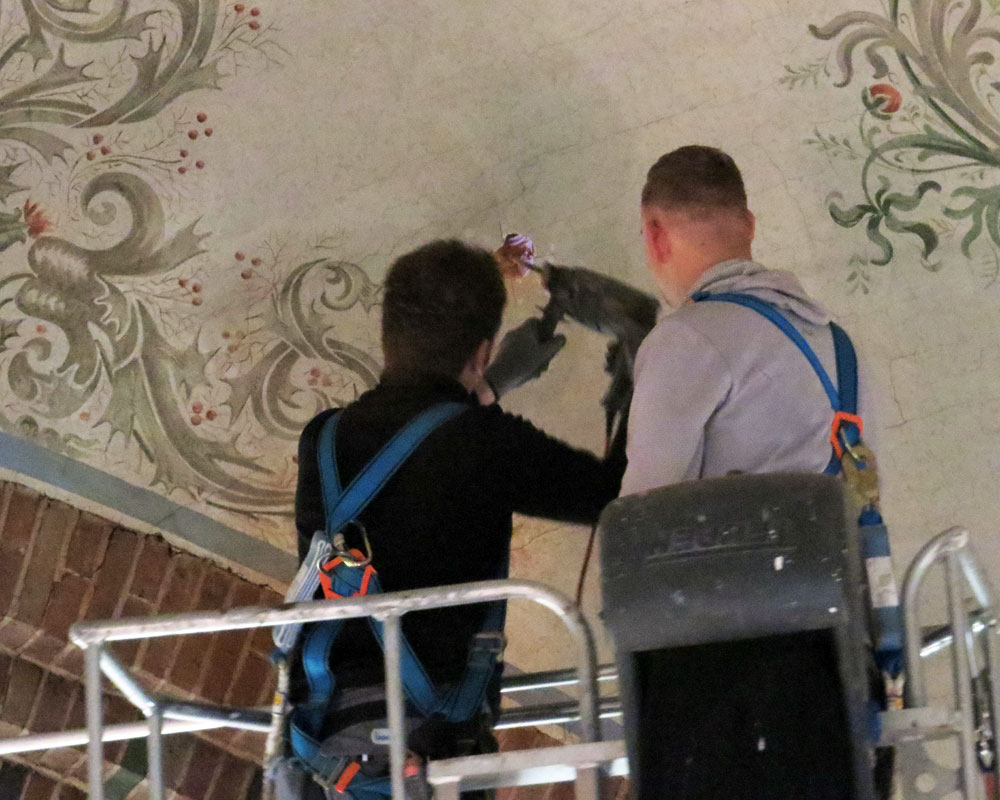
… and dust trickles down beneath the vault.
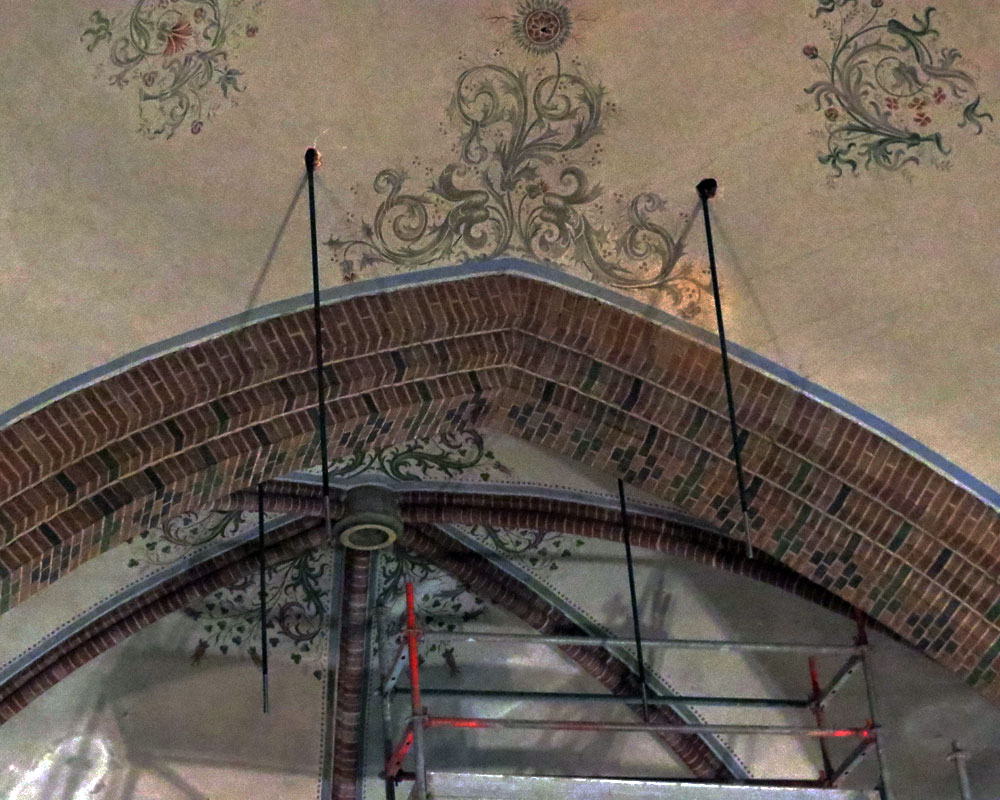
Now the poles fit.
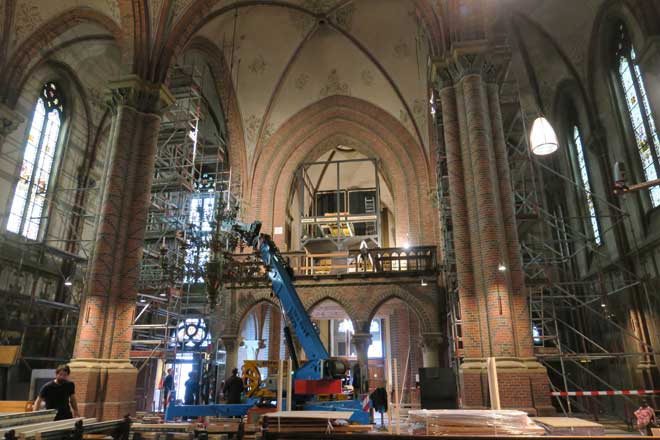
First impressions from the morning (Oct. 16).
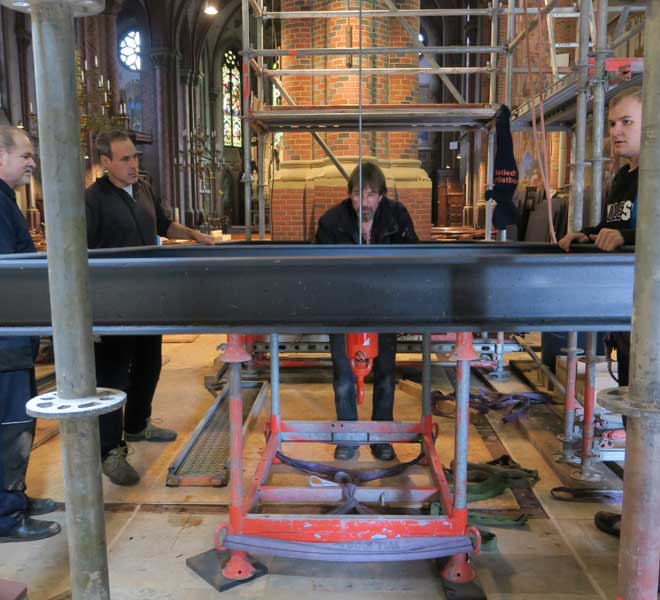
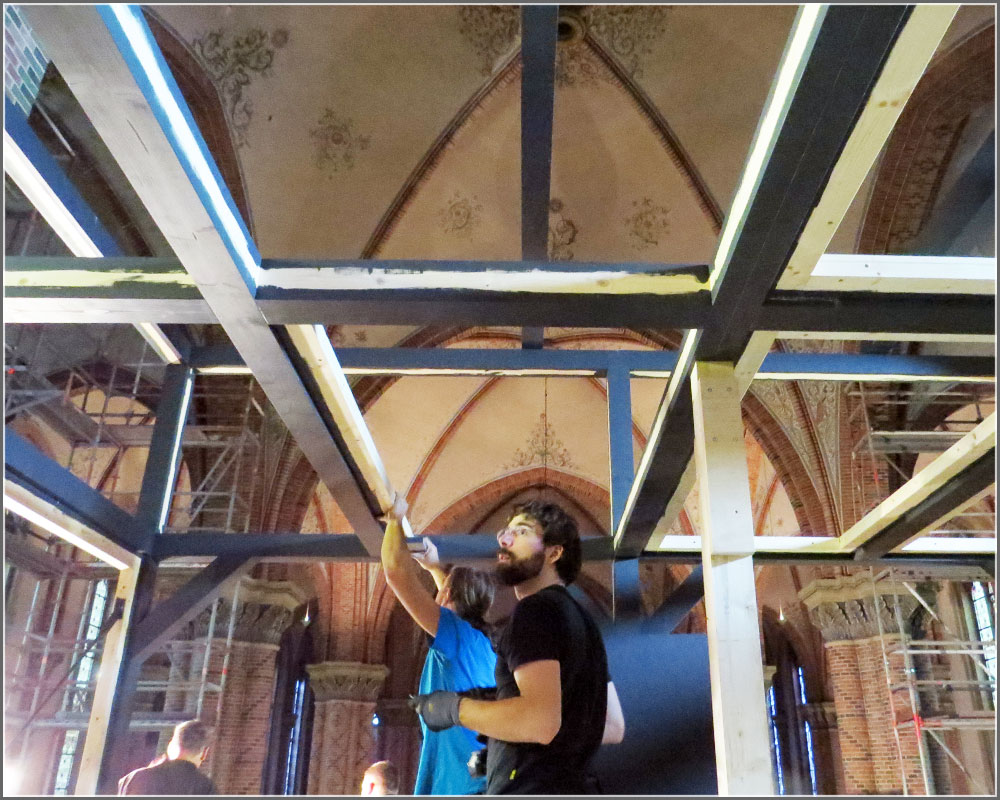
It took a lot of thought and experimentation before the steel colossus learned to float.
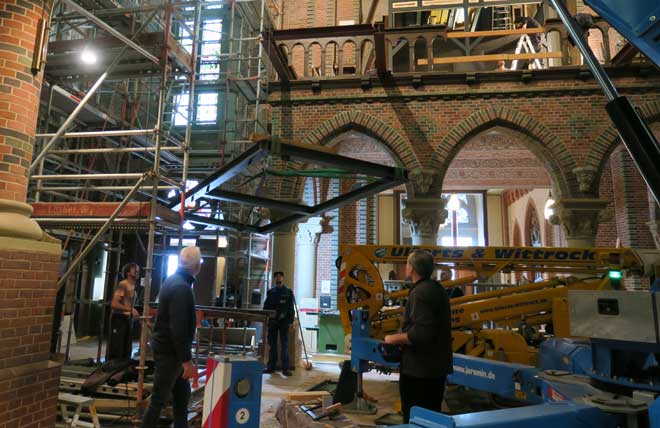
In that cramped space, it was especially important that the frame could be pulled upward horizontally while remaining well balanced.
Across the church, on his way to his destination …
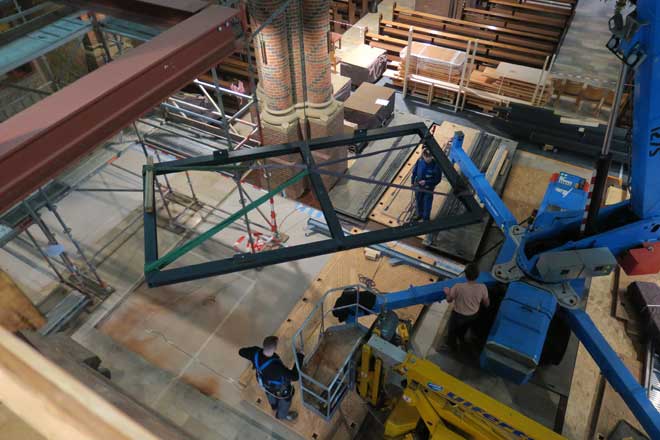
… past the steel boom from the organ loft
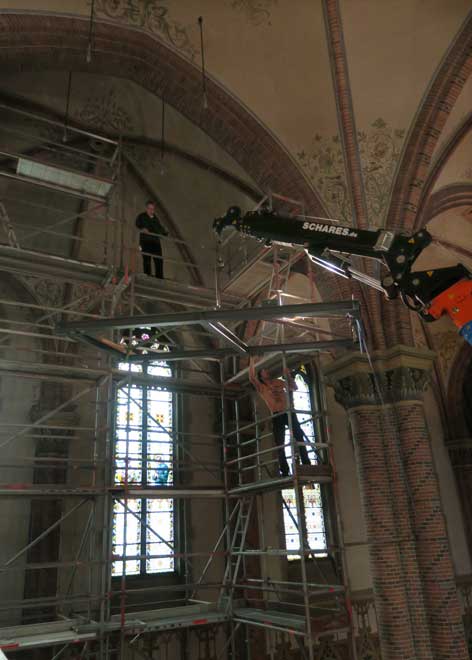
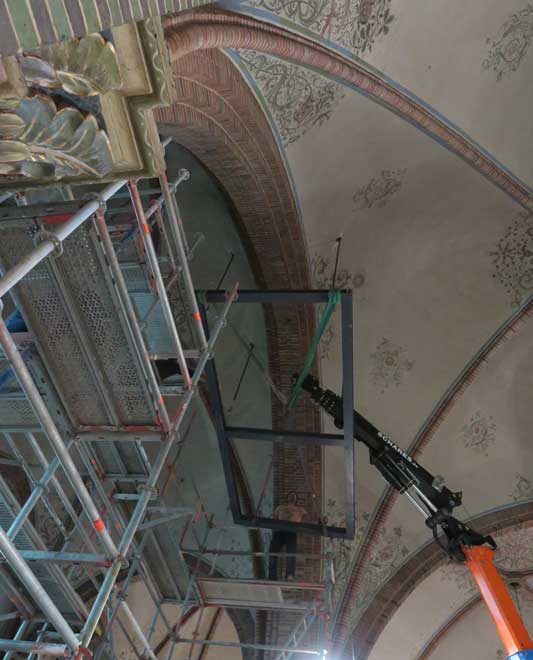
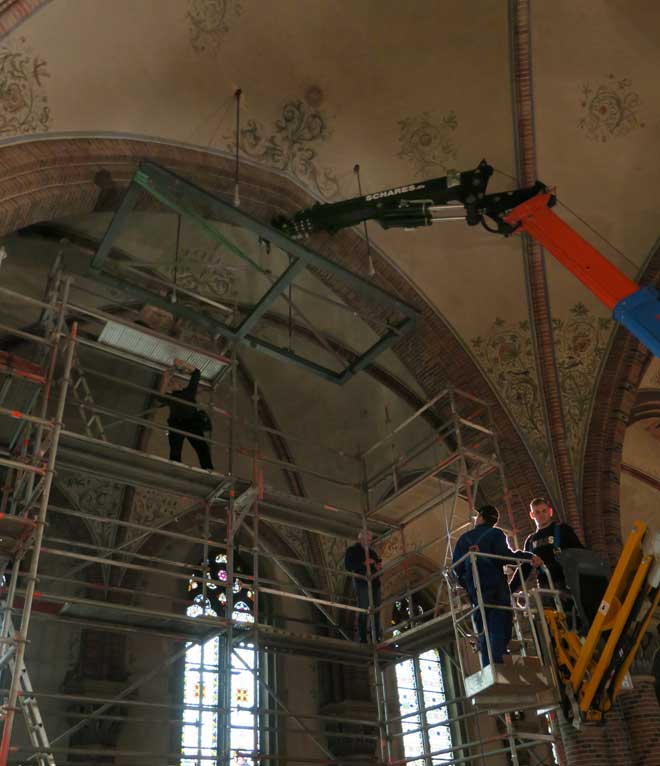
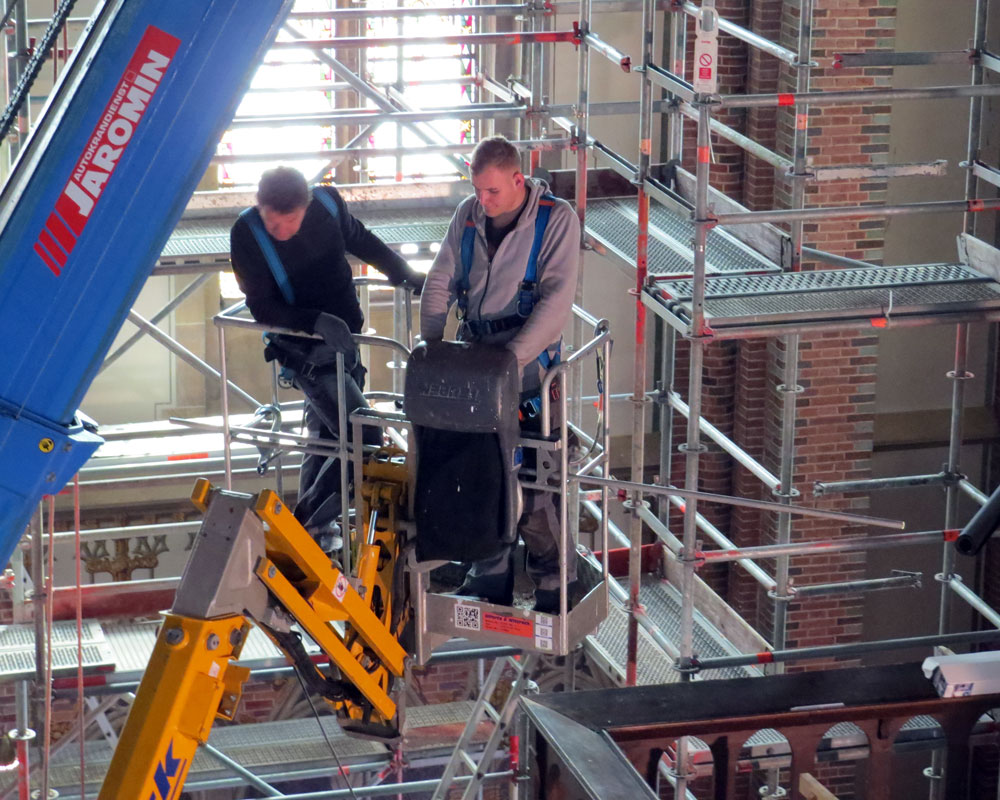
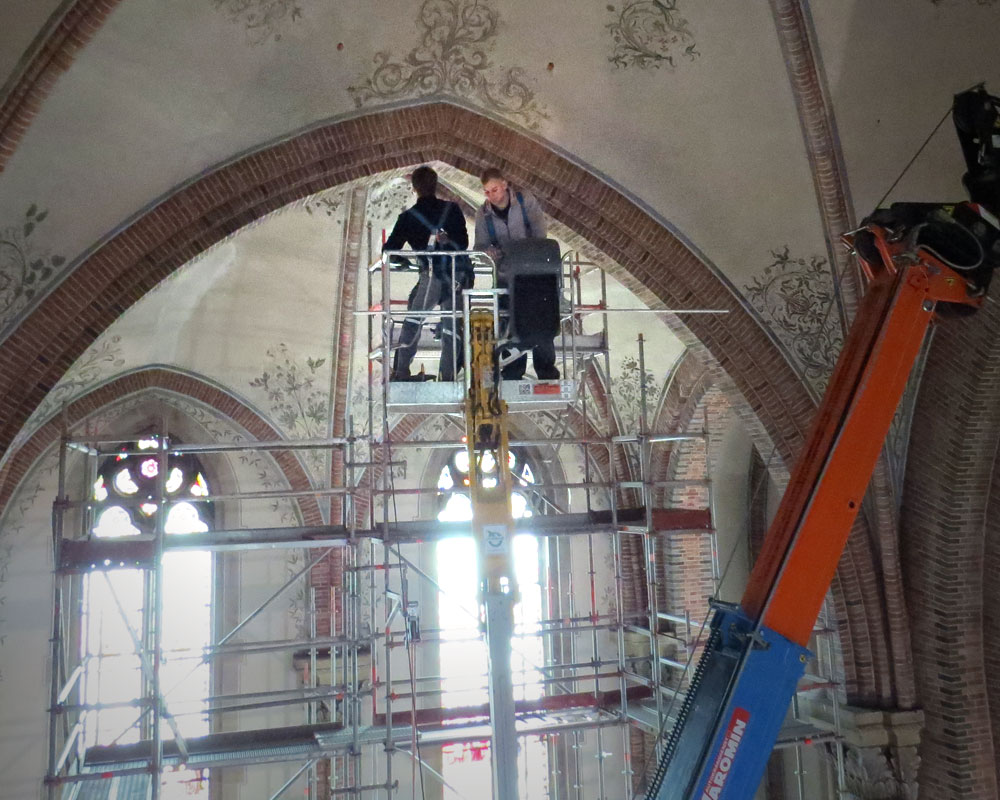
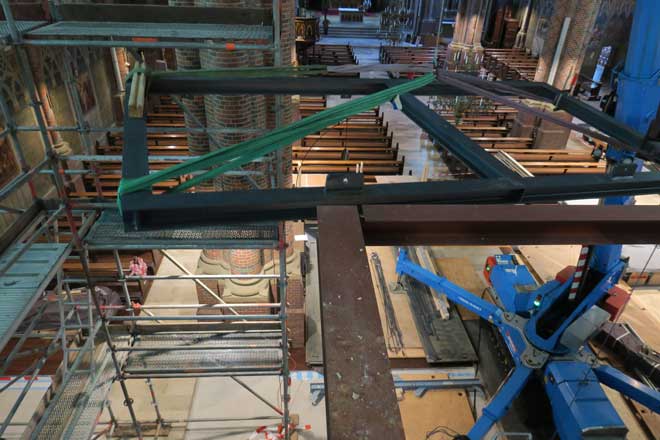
In this picture, you can see the second challenge the crane operator had to overcome. Every centimeter of vertical space had to be used to connect the steel framework to the poles: The two young metalworkers have already made their way up to their high-altitude construction site using an additional ladder to install the connecting bolts.
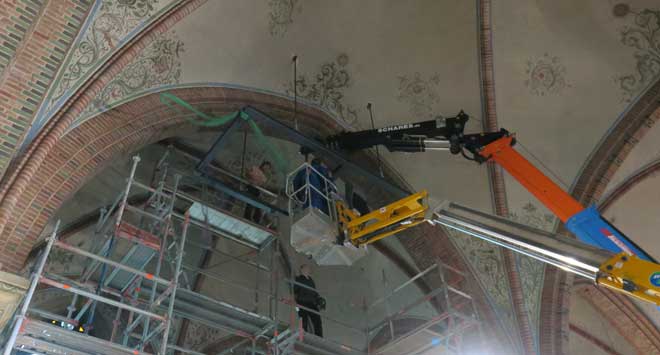
It's hanging there! Now we just need to remove the carrying straps.
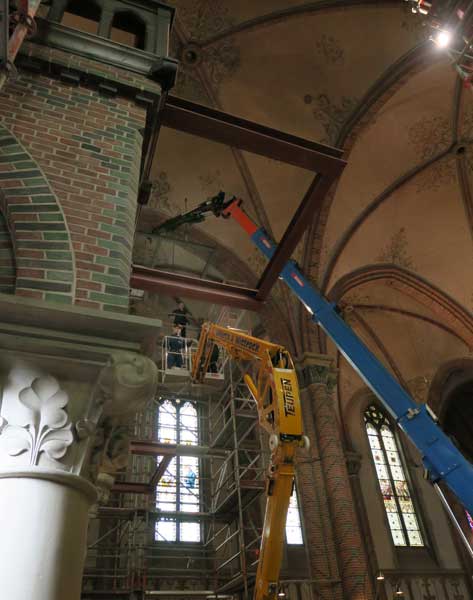
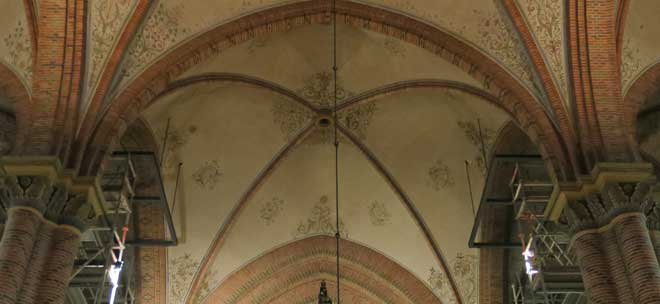
Number two will be up by tonight, too!
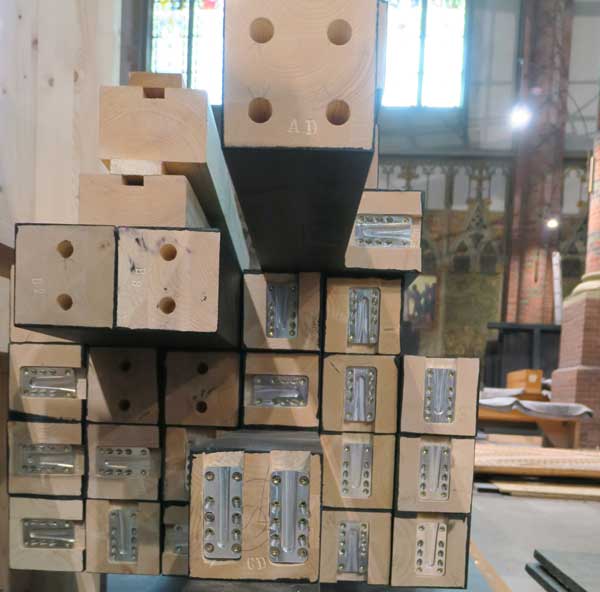
While the large steel frames are being spectacularly hoisted into place, work continues on the timber-frame structure of the organ case (Oct. 17).
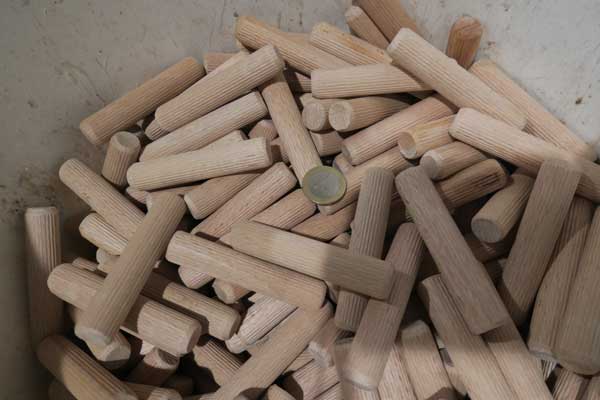
A photo of the thick dowels (with a euro coin in the center for scale) used to connect the beams to one another.
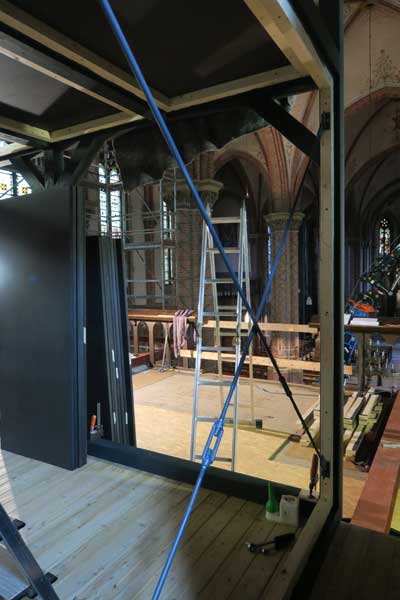
A steel brace provides additional support.
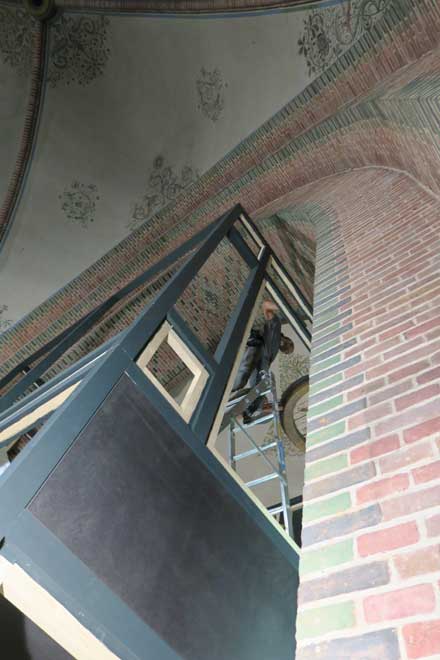
While almost everyone in the church has their heads tilted back to watch the work being done on the large steel frame …
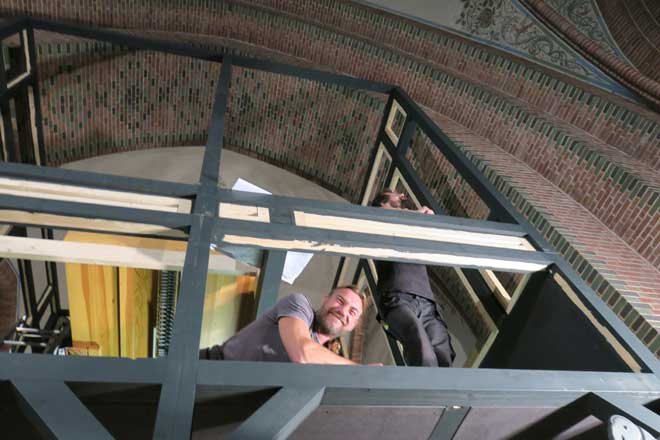
… there’s someone “lying in wait” here, observing the scene from a different perspective.
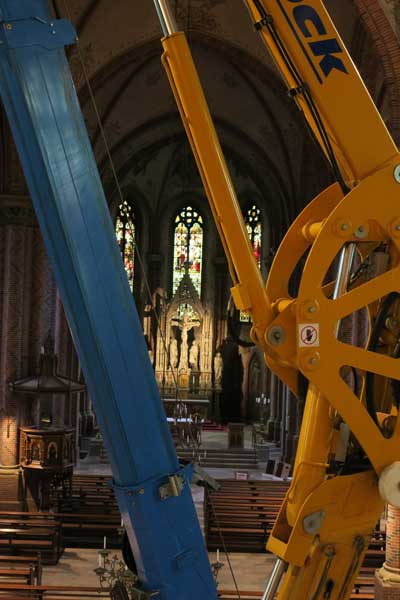
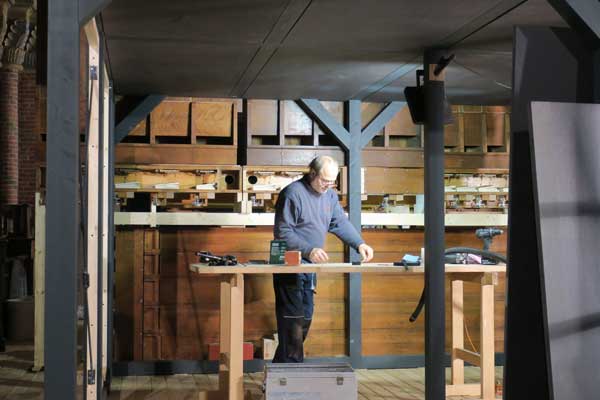
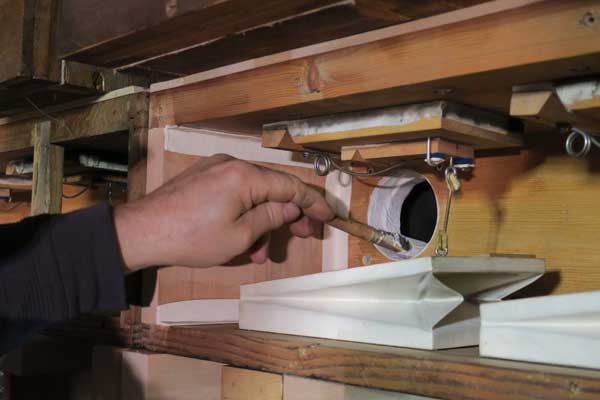
It's very quiet in here. To ensure that the wind tunnels don't let any air escape later on, all the joints must be sealed with felt and special glue.
Preliminary Work (Following the Removal of the Old Organ)
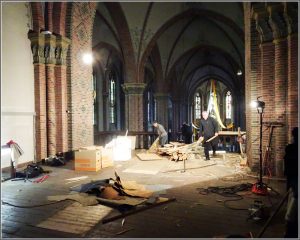
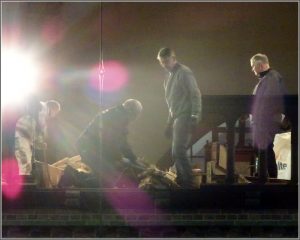
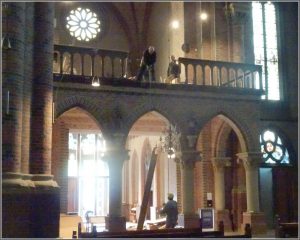
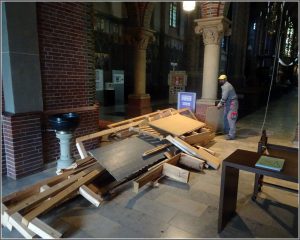

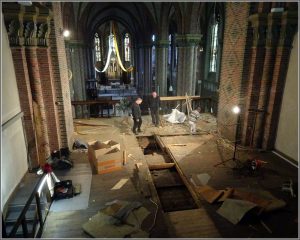
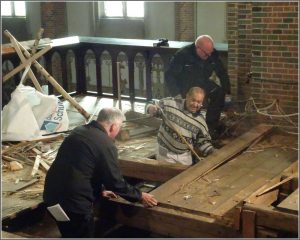
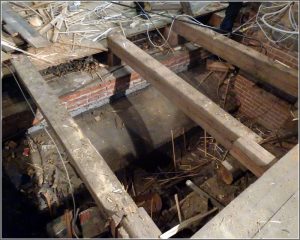
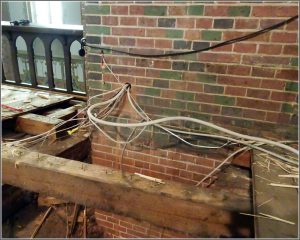
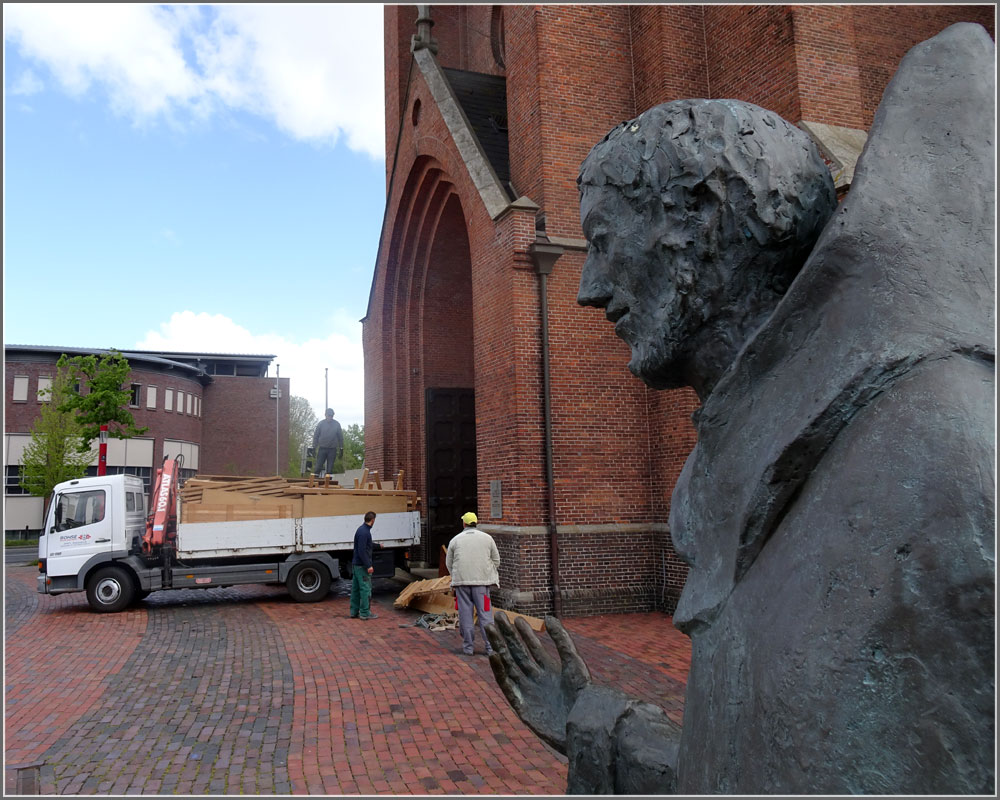
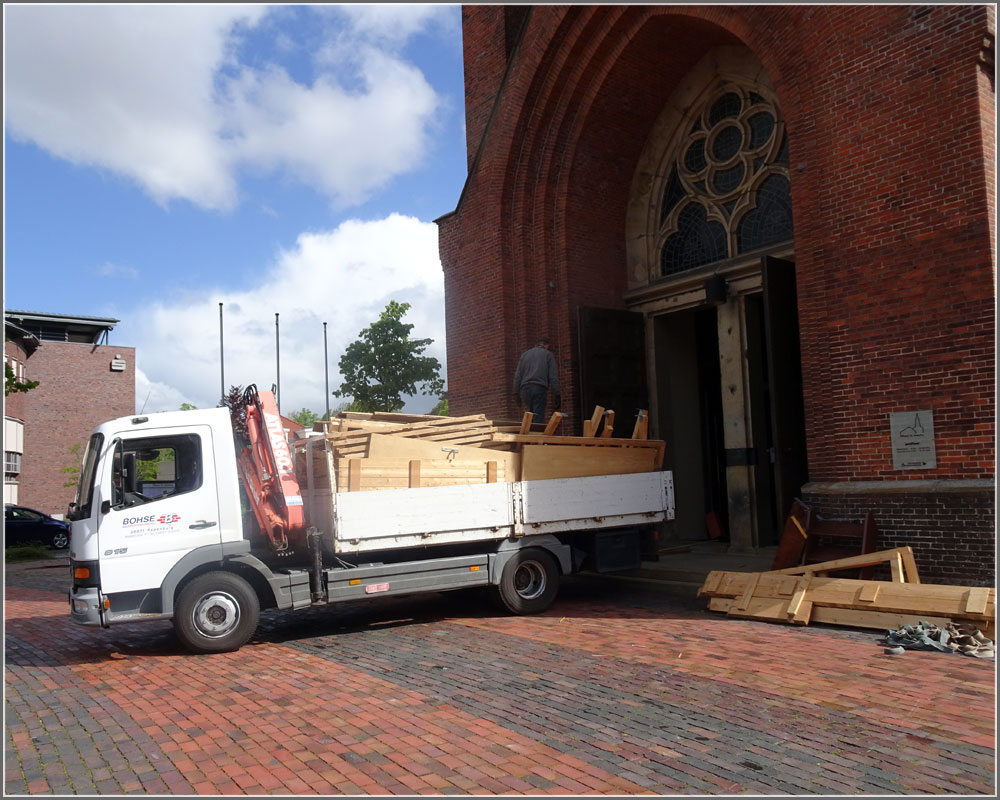
There was something to see again today at St. Antonius.
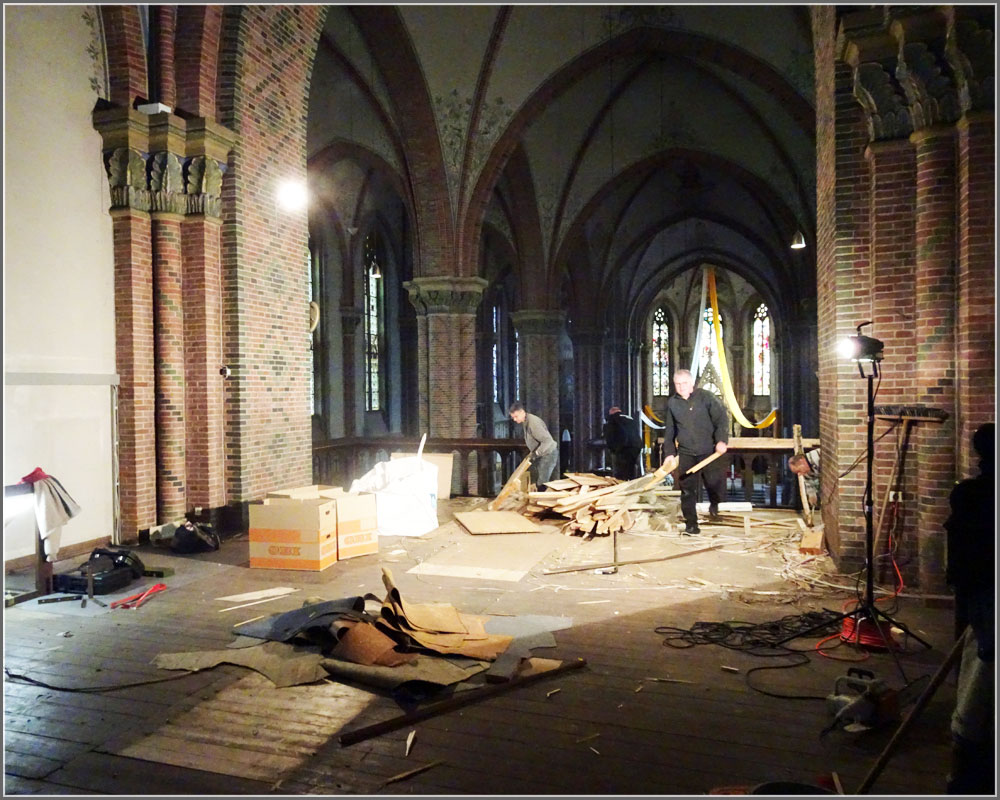
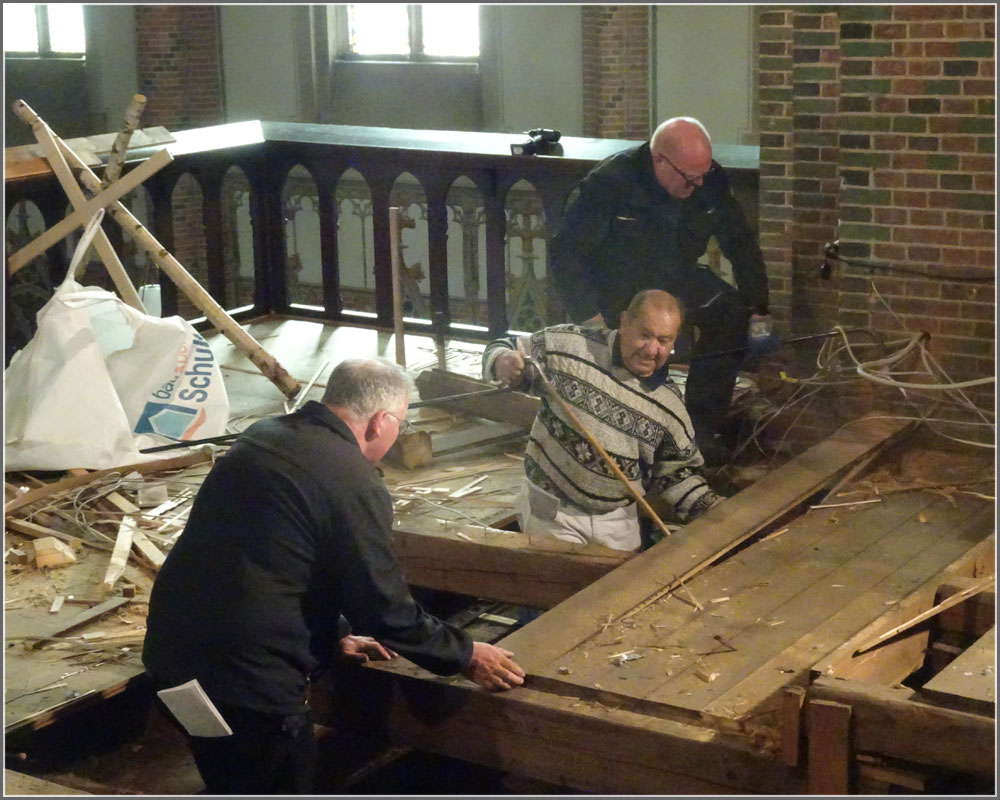
On Saturday (May 4, 2019), part of the wooden structure on which the old organ stood was removed. This was necessary in order to assess the condition of the ground beneath it.
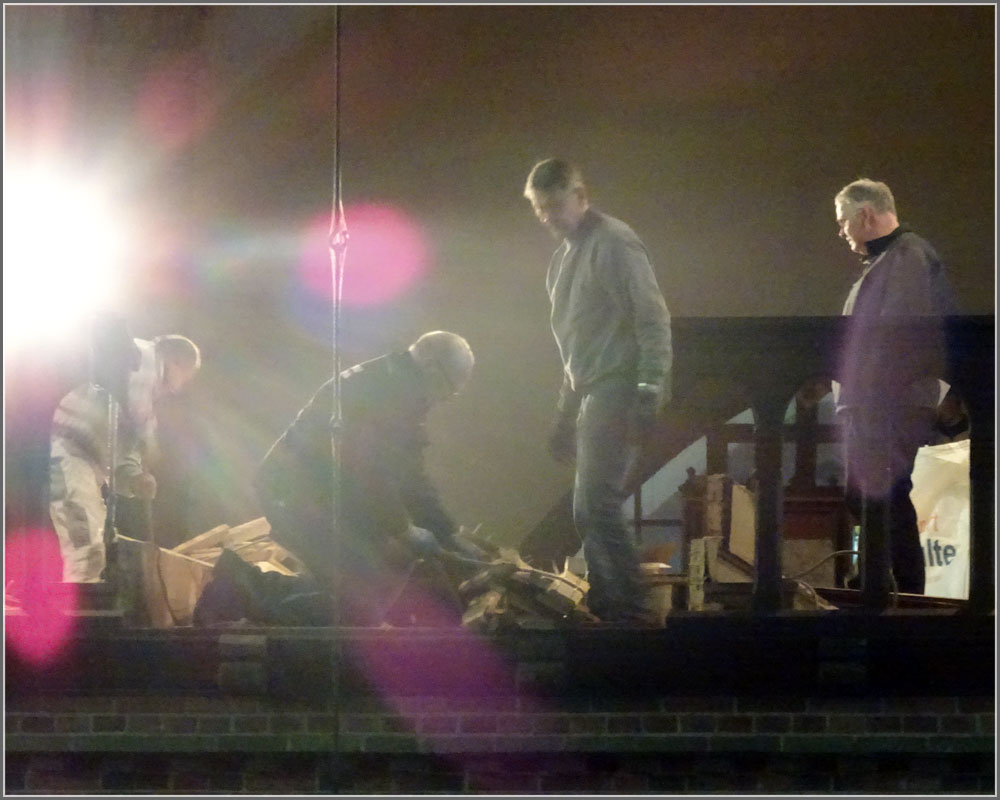
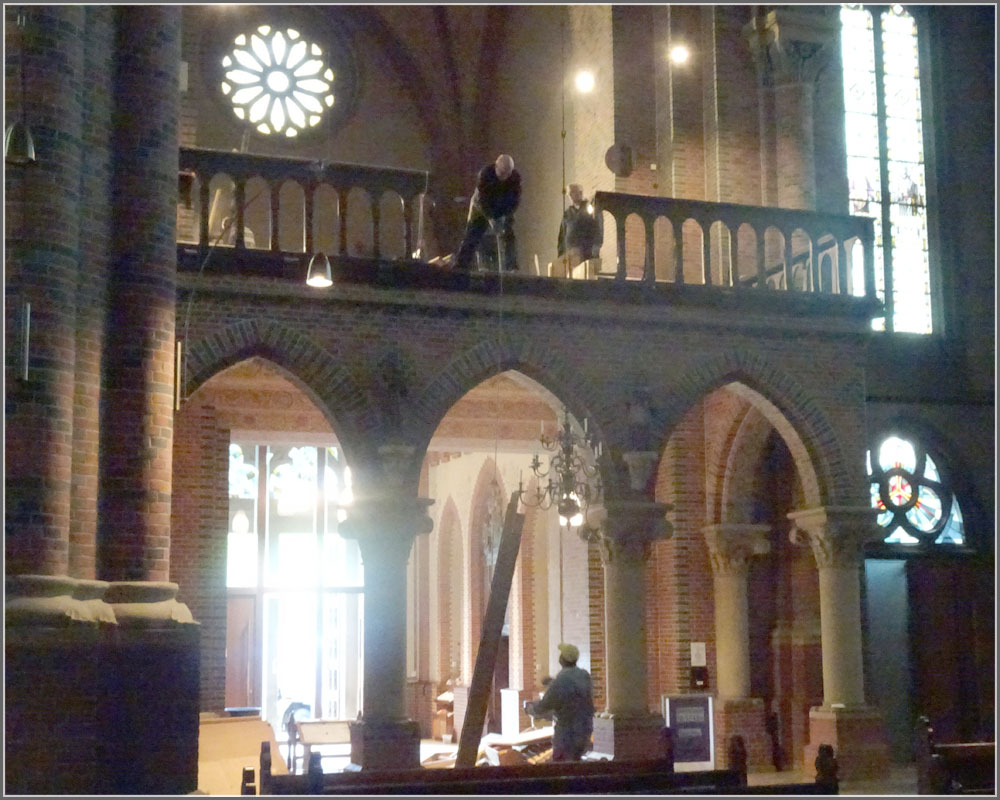
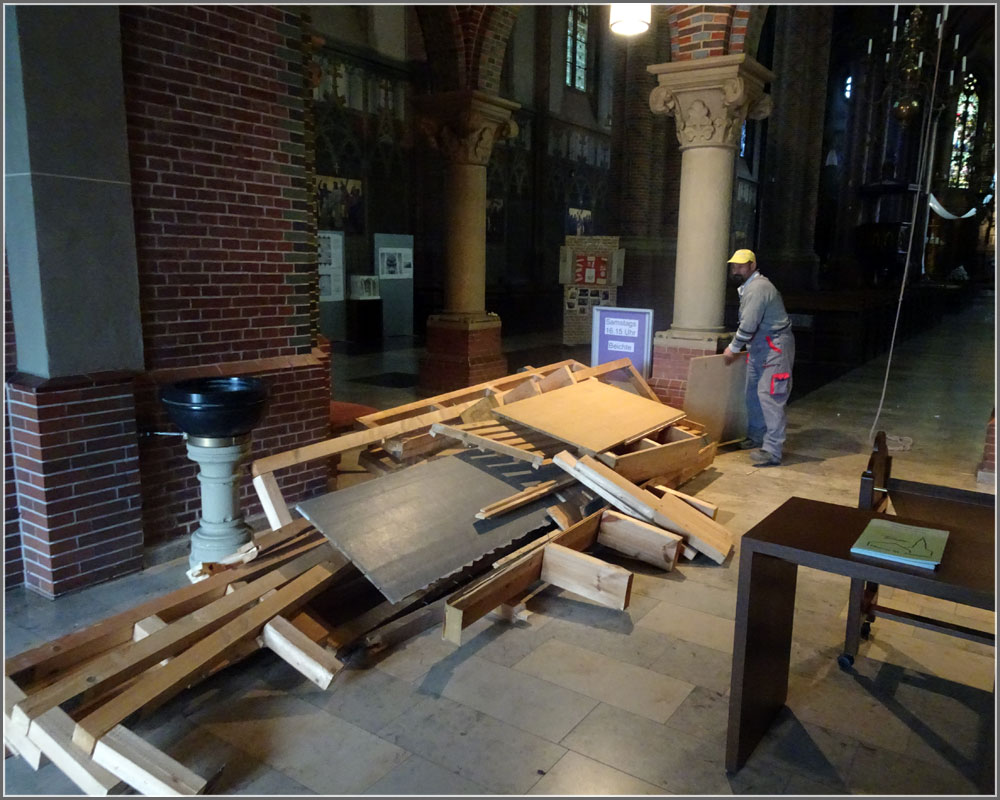
The wood was lowered on a rope.
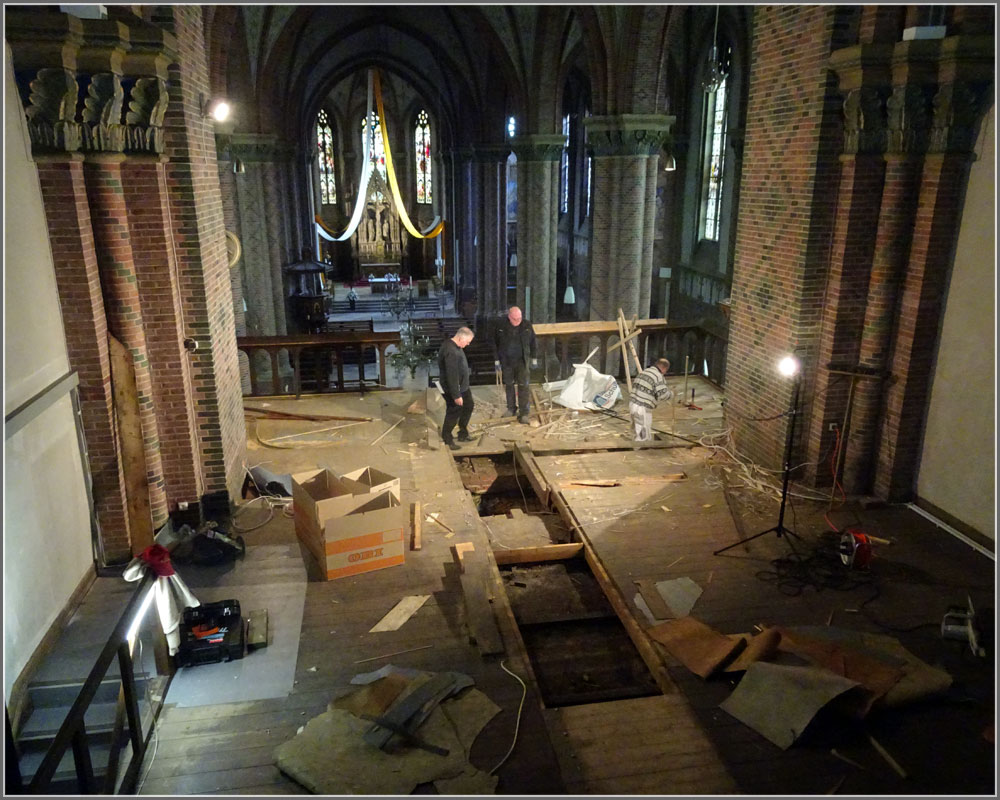
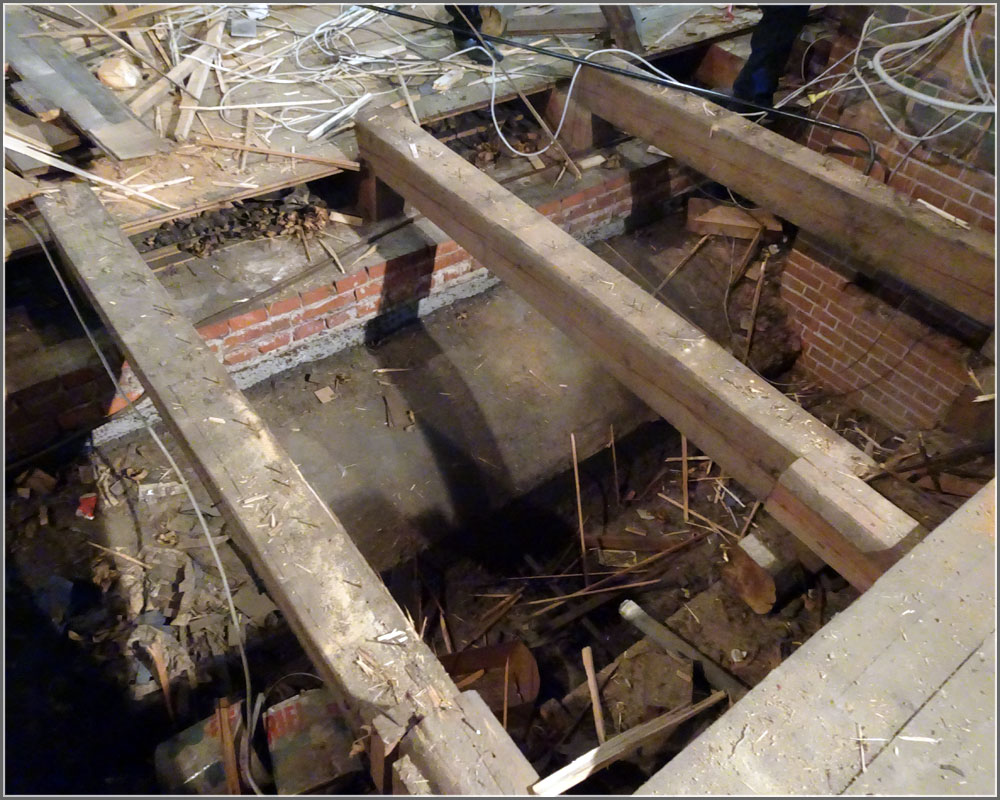
Multiple levels spanning different generations.
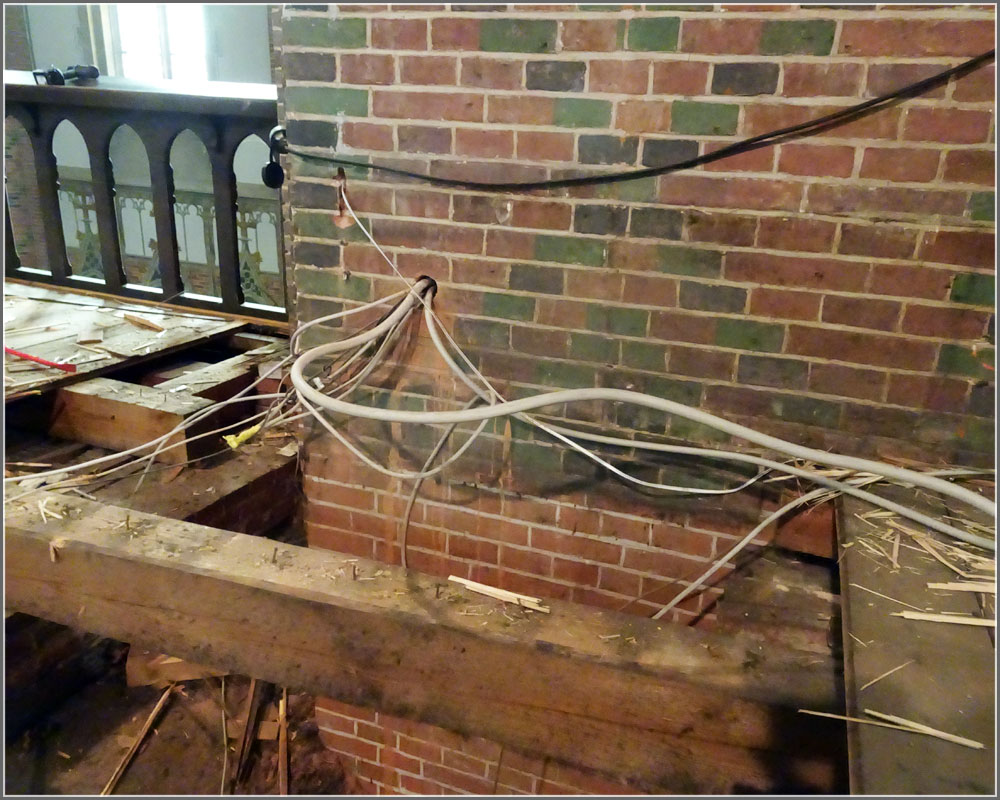
The lower part of the wall is clean and unpainted. At the top, you can see the mural from 1911.